What a chemicals plant in Webster City is actually choosing between
For chemicals wastewater in Webster City in 2026, choose a DAF when the stream carries emulsified oils, solvents, or FOG above roughly 200 mg/L and you need 90%+ oil removal in a compact tank; choose a clarifier when TSS is high (>1,500 mg/L) with low FOG, you need low OpEx, and the Iowa DNR / 40 CFR Part 414 TSS and metals limits can be met by gravity settling. Most chemical plants end up running DAF as a first stage followed by a clarifier.
A chemical-industry wastewater stream is not a generic industrial wastewater. Typical 2026 influent at a Hamilton County chemical plant runs pH 2–11 on a bad day, COD 500–10,000 mg/L, TSS 200–5,000 mg/L, O&G from 50 mg/L up to several thousand, and trace heavy metals — Ni, Cr, Cu, Zn — plus intermittent solvent slugs that can double the organic load in an hour. Those numbers sit well outside the food-plant and mining case studies the top comparison articles are built around.
The physical-separation choice is between two unit operations: a micro-bubble DAF system that floats light particles, oils, and FOG, and a gravity clarifier — conventional or lamella — that settles heavier solids (per Ecologix, 2026). In Iowa, the decision is governed by 40 CFR Part 414 (Organic Chemicals, Plastics & Synthetic Fibers), Iowa DNR NPDES pretreatment rules, and the local Webster City POTW's discharge ordinance, not by which vendor walked in first. The rest of this guide is a working engineer's blueprint for making that call with your own influent data in hand — for context on the regulatory layer, see 40 CFR Part 414 pretreatment compliance for chemical plants.
How DAF and clarifiers treat a chemical wastewater matrix
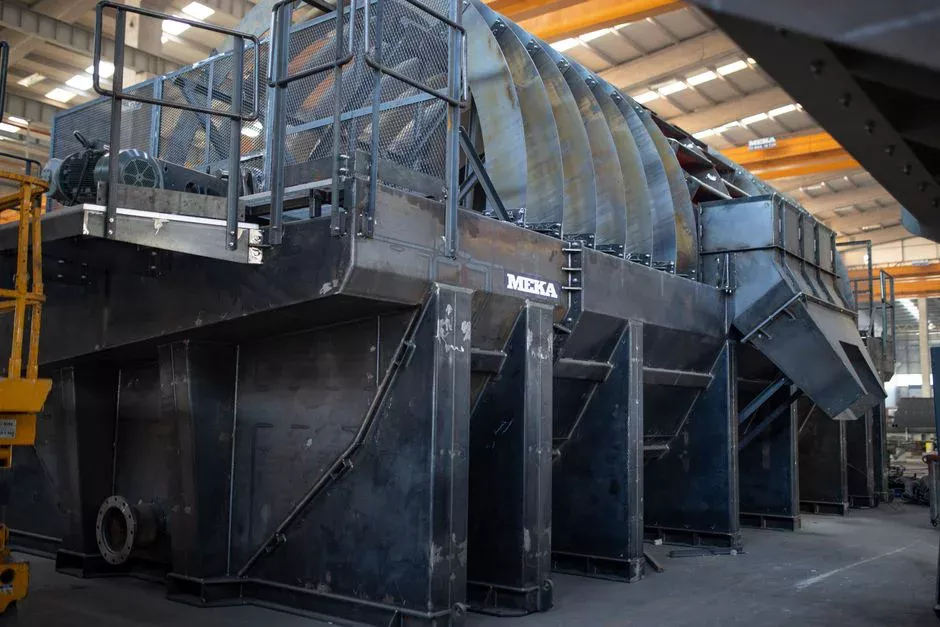
A DAF unit saturates a side-stream of recycle with air at 5–7 bar, then releases it through needle valves into the main tank. The resulting micro-bubbles — 10–80 µm — attach to oil droplets and fine colloids and lift them to the surface in 20–40 minutes, where chain-and-flight or top scrapers skim the float. A DAF almost always runs with coagulant (PAC or alum) and a polyacrylamide flocculant dosed upstream; a typical PLC-controlled coagulant and flocculant dosing skid feeds 5–20 mg/L of polymer.
A gravity clarifier works the opposite way. Coagulation and flocculation happen in a reaction well, then the water enters a 2–4 m deep settling tank for 2–4 hours of retention. Heavy sludge rakes to a central hopper; clarified water overflows peripheral launders. A lamella clarifier for chemical plant TSS and metals replaces the deep tank with inclined plates, cuts retention to roughly 30 minutes, and shrinks the footprint by 60–80% versus a conventional unit.
Which technology wins depends on particle buoyancy, not particle size. DAF wins for oils, FOG, fibers, and emulsified solvents because their density is close to water and bubbles attach faster than gravity pulls them down. Clarifiers win for inert inorganic TSS with high specific gravity — metal hydroxides, catalyst fines, sand-sized grit — because those particles settle readily. The failure modes are symmetric: a clarifier chokes on emulsified chemical solids (settling velocity below 1 m/h), while a DAF cannot capture grit that drops to the floor before bubbles attach. A practical consequence for 2026 specifications: both vessels need 304/316 stainless or FRP linings because chloride, solvent, and low-pH slugs will pit carbon steel in under five years — a gap most generic comparisons never mention. Equipment-level details for the flotation side are covered in the DAF system for chemical plant wastewater spec sheet.
Head-to-head performance on the parameters a chemical plant measures
The only efficiency benchmarks the comparison below relies on are the two Ecologix case numbers (95% O&G for DAF, 70% O&G for clarifier, 90% TSS for the clarifier in the mining case); chemical streams will shift these by roughly ±10%. 40 CFR Part 414 sets categorical pretreatment standards across BOD, TSS, and O&G subparts, and neither technology reliably hits the metals limits on its own — you need pH adjustment and coagulant dosing either way.
| Parameter | DAF | Conventional Clarifier | Lamella Clarifier |
|---|---|---|---|
| O&G removal | ~90–95% | ~60–75% | ~65–80% |
| TSS removal | ~70–85% | ~85–90% | ~80–90% |
| COD removal | ~50–70% (with coagulant) | ~40–60% | ~50–65% |
| Heavy-metal removal (with coagulant, pH 8–9) | ~70–85% | ~80–90% | ~85–95% |
| Footprint per m³/h | ~0.1–0.3 m² | ~1.5–3.0 m² | ~0.3–0.6 m² |
| Hydraulic retention time | 20–40 min | 2–4 h | ~30 min |
| Typical polymer dose | 5–20 mg/L | 5–20 mg/L | 5–20 mg/L |
| Float / sludge solids | 3–6% DS (float, fibrous) | 1–2% DS (underflow) | 1–3% DS (underflow) |
| Cold-weather (< 5 °C) efficiency penalty | 10–15% drop unless enclosed/heated | Modest (5–8%) | Modest (5–8%) |
Two qualitative rules follow from the table. DAF is the right first stage whenever the stream is oily, gassy, or fibrous, because the float is skimmed cleanly and the clarified underflow stays low in oil. Lamella clarifier is the right second stage whenever metals or high TSS drive the permit, because the inclined plates capture hydroxide floc that a DAF would either sink or re-suspend. Conventional clarifier still wins on raw capex and simplicity when the stream is heavy, inert sediment with low FOG — think a catalyst-handling wash water with little oil.
Sludge handling diverges sharply. DAF float at 3–6% DS is fibrous, carries residual polymer, and almost always needs a filter press to reach 20–25% cake for disposal; clarifier underflow at 1–3% DS is denser and easier to dewater on the same press. In a chemical plant, where the float stream is often RCRA hazardous, that extra dewatering step is non-negotiable — see the plate-and-frame filter press sizing for the matching solids throughput.
2026 cost bands for a 50 m³/h chemical plant train
The 2026 dollar bands below are for a 50 m³/h (≈ 1.2 MLD) chemical plant train. Treat them as rule-of-thumb envelopes, not point quotes — stainless selection, PLC scope, and 2026 steel and energy volatility all swing a bid by 20% either way. Procurement should request three separate bid packages: DAF-only, clarifier-only, and DAF + lamella in series.
| Equipment | 2026 CapEx band (USD) | Main OpEx driver |
|---|---|---|
| DAF unit (50 m³/h, 304/316 SS) | $80,000–$180,000 | Saturated-air compressor, 5–10 kWh/m³ |
| Lamella clarifier package | $60,000–$140,000 | Slow rake, 1–3 kWh/m³ |
| Conventional clarifier | $40,000–$100,000 | Slow rake, 1–3 kWh/m³ |
| Chemical dosing skid (coag + floc) | $25,000–$60,000 | Polymer 5–20 mg/L |
| Sludge dewatering press | $70,000–$200,000 | Power, cake disposal |
OpEx side-by-side: a DAF pulls roughly 5–10 kWh per m³ treated for the saturated-air system, while a clarifier pulls 1–3 kWh per m³ for slow rakes and underflow pumps. Polymer consumption is similar at 5–20 mg/L. The line item most engineers miss is sludge volume — clarifier underflow is typically 1.5–2× DAF float on a dry-solids basis, so the clarifier alone produces more mass to haul off. When that mass is RCRA hazardous, hauling cost can flip the TCO in DAF's favor despite DAF's higher power draw. The dosing skid — see the PLC-controlled coagulant and flocculant dosing options — should be in every bid package; it is the single biggest lever on polymer OpEx.
Iowa and Webster City regulatory map for 2026
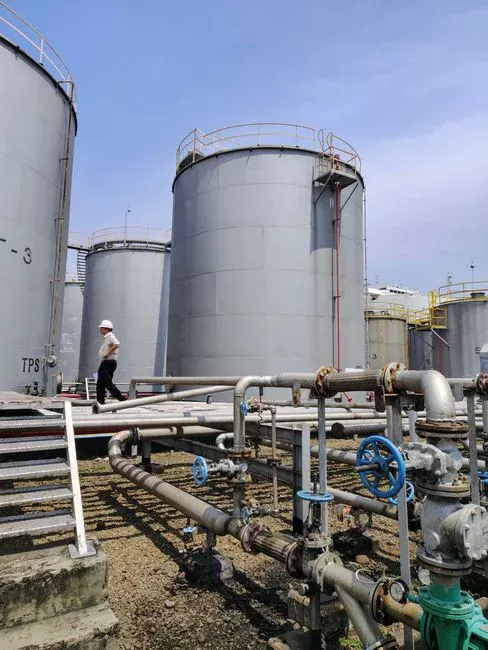
40 CFR Part 414 sets categorical pretreatment standards for the Organic Chemicals, Plastics & Synthetic Fibers sectors, with subpart limits on BOD, TSS, and O&G that drive most of the equipment-sizing math. Metals — Ni, Cr, Cu, Zn — are governed by both the categorical standard and any local limits the POTW imposes, and they almost always require pH adjustment plus coagulant dosing to hit. Iowa DNR administers the NPDES pretreatment program in Iowa; a chemical plant typically holds an industrial discharge permit on top of any federal categorical limit, and the local Webster City POTW — the City of Webster City WWTF — layers its own ordinance on top of that, often stricter for metals, pH, and O&G. Confirm the exact local limits with the POTW before locking the equipment list.
Failure to meet those limits triggers Significant Industrial User (SIU) enforcement under 40 CFR 403, including compliance schedules and surcharges, so the regulator-facing argument is rarely about which technology is "better" — it is about which one lets the plant hit the permit reliably across influent swings. Practical guidance on assembling the compliance case is summarized in 40 CFR Part 414 pretreatment compliance for chemical plants.
Decision framework: which technology should a Webster City chemical plant pick in 2026
Run your current wastewater characterization (COD, BOD, TSS, O&G, pH, temperature, total metals) through these five yes/no questions in order.
- Is O&G > 200 mg/L, or are emulsions present? If yes, lead with a DAF; nothing else floats emulsified oil as cleanly.
- Is TSS > 1,500 mg/L with O&G < 200 mg/L? If yes, lead with a lamella clarifier — gravity settling is cheaper and the inclined plates handle the mass load.
- Are heavy metals a compliance driver? If yes, add pH adjustment to 8–9 and coagulant dosing upstream of a lamella clarifier; hydroxide floc settles cleanly on the plates.
- Is footprint under 30 m² required? If yes, choose DAF or lamella, not a conventional clarifier — a conventional unit needs 1.5–3.0 m² per m³/h, which blows past the budget for a 50 m³/h train.
- Is RCRA hazardous sludge a concern? If yes, run DAF first to lift oils and solvents into a small, concentrated float stream, then a clarifier for the residual metals — two separately managed waste streams beat one mixed one for disposal cost.
For most chemical plants in the Webster City area, the answer is all five "yes" in some form, which points to a DAF + lamella clarifier + chemical dosing train — DAF in front for oils and FOG, lamella behind for metals and residual TSS, dosing skid in between for pH and polymer. That train addresses the O&G and TSS limits in series, hits 40 CFR Part 414 limits more reliably than either unit alone, and produces two sludge streams that can be characterized and disposed of separately. Run a pilot on the actual stream before signing the PO — chemical flows vary enough that a two-week jar test plus a mobile DAF trial will save six figures in mis-sized equipment. For related regional context, see DAF vs clarifier for chemicals wastewater in other US regions.
Frequently Asked Questions
Is DAF or a clarifier better for chemical plant wastewater?
DAF is better when O&G exceeds roughly 200 mg/L or when emulsions are present — it removes 90–95% of oils and FOG versus 60–75% for a clarifier (per Ecologix, 2026). A clarifier — preferably lamella — is better when TSS exceeds 1,500 mg/L and O&G is below 200 mg/L, because gravity settling handles inert inorganic load more cheaply. Most chemical plants in practice run DAF first, then a clarifier.
Can a DAF and a clarifier be used together for chemicals wastewater?
Yes. The common 2026 configuration is a DAF as the first stage for oils, FOG, fibers, and emulsified solvents, followed by a lamella clarifier with pH adjustment and coagulant dosing for residual TSS and heavy metals. The two units hit 40 CFR Part 414 limits more reliably than either alone, and they produce two separately manageable sludge streams — important when the float is RCRA hazardous and the clarifier underflow is not.
How much does a 50 m³/h DAF cost in 2026?
For a 50 m³/h (≈ 1.2 MLD) chemical-plant DAF in 304/316 stainless, the 2026 CapEx band runs roughly $80,000–$180,000 for the unit itself, with $25,000–$60,000 for the chemical dosing skid and $70,000–$200,000 for a matching sludge dewatering press. OpEx is dominated by the saturated-air compressor at 5–10 kWh per m³ treated and polymer at 5–20 mg/L. Get three bid packages — DAF-only, clarifier-only, and DAF + lamella — to make the comparison fair.
Does Iowa weather affect DAF or clarifier choice in Webster City?
Yes. DAF micro-bubble efficiency drops 10–15% below 5 °C unless the saturator and tank are enclosed and heated, which adds steam or building-heat load to the OpEx. Lamella clarifiers tolerate cold better because the longer effective retention inside the plate pack compensates for slower kinetics. If your plant runs through an Iowa winter with outdoor equipment, plan for an enclosed DAF skid or accept the cold-weather efficiency penalty in writing.
What are the 40 CFR Part 414 discharge limits that drive the choice?
40 CFR Part 414 (Organic Chemicals, Plastics & Synthetic Fibers) sets categorical pretreatment standards across subparts for BOD, TSS, and O&G, with metals limits added either by the categorical standard or by the local POTW. Neither DAF nor a clarifier hits the metals limits on its own — you need pH adjustment to 8–9 and coagulant dosing regardless of which physical-separation step you pick. Always confirm the exact subpart limits and the Webster City POTW local limits before final equipment selection.