
Why Transportation Equipment Wastewater in Egg Harbor City Is a DAF-or-Clarifier Question in 2026
Transportation equipment plants clustered under NAICS 336 in Atlantic County—auto parts stamping, marine hardware, trailer chassis, rail components, and small aerospace machining—discharge a stream fundamentally incompatible with passive gravity separation. 40 CFR Part 467 sets the federal ceiling for the metal-finishing subcategory at 1.48 mg/L lead, 1.61 mg/L zinc, 0.69 mg/L cadmium, pH 6.0–9.0, and strict FOG caps, while the Atlantic County Utilities Authority (ACUA) tightens those limits further in its local sewer use ordinance to 100 mg/L FOG and 200 mg/L TSS. In 2026, EPA's renewed enforcement emphasis on PFAS in metal-finishing effluent and tightening zinc limits has raised the financial exposure of a non-compliance event to the $25,000–$100,000/day range, pushing the "clarifier only" option off the table for any plant with more than 50 mg/L emulsified oil. The local climate reinforces that pressure: Egg Harbor City influent temperatures drop to 8–12°C from December through March, causing a gravity clarifier to lose 5–10% of its settling velocity, whereas a DAF in an enclosed, heated skid maintains its 5–15 m/h surface loading with no seasonal derating. This decision shows up directly on the daily sampling log.
What a DAF and a Clarifier Actually Do in a Stamping or Machining Plant
A dissolved air flotation (DAF) unit saturates 10–30% of clarified effluent at 4–6 bar in a pressure vessel, releasing that recycle into the flotation cell at atmospheric pressure to create 20–100 μm micro-bubbles. These bubbles attach to flocculated oil droplets, coolant emulsions, and fine suspended solids, lifting them to the surface in 5–15 minutes for removal by a skimmer; surface loading runs 5–15 m/h (HydropureWater field data, 2025). A conventional gravity clarifier holds wastewater in a 2–4 m deep tank for 2–4 hours at 1–2 m/h surface loading, allowing particles with a specific gravity above ~1.05 to sink to a sloped floor for mechanical collection. Transportation equipment streams are dominated by tramp oils at 200–800 mg/L, emulsified coolants, drawing compounds, and iron fines, with oils and coolants sitting at a specific gravity of approximately 1.0—the exact density at which a clarifier stalls. A 6-meter settling tank cannot remove what a 6-second bubble contact achieves. The DAF engineering and selection guide details the saturation math and recycle-ratio tuning.
DAF vs Clarifier: Parameter Matrix for Transportation Equipment Streams
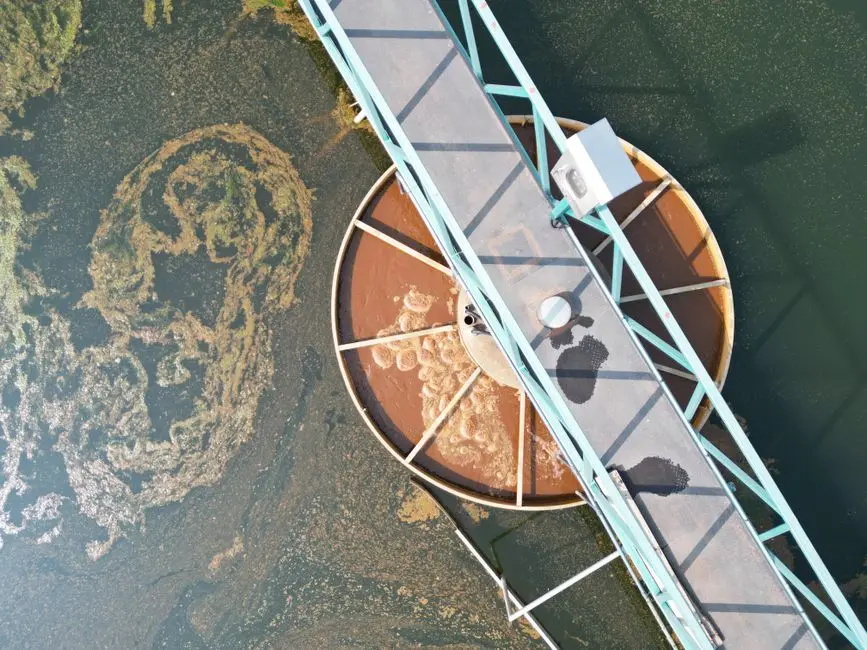
The following side-by-side metrics provide the technical data required for an RFQ. Ecologix's 2026 update documents 95% FOG removal for a DAF on high-oil streams versus 70% for a clarifier, and 90% TSS removal for a clarifier on heavy mining sediment at lower CAPEX. For a transportation equipment plant, this means a DAF is ideal for the coolant/oil/drawing-compound fraction, while a clarifier remains defensible for the iron-swarf, paint-overspray, and shot-blast-dust fraction upstream of the DAF polisher.
| Parameter | DAF | Gravity Clarifier |
|---|---|---|
| TSS removal | 92–97% | 60–80% |
| FOG / emulsified oil removal | Up to 95% | 60–75% |
| Surface loading rate | 5–15 m/h | 1–2 m/h |
| Hydraulic retention time | 15–30 min | 120–240 min |
| Footprint ratio at equal flow | 1× | ~4× |
| Float / sludge solids | 3–5% | 1–2% |
| Polymer consumption | 0.5–5 mg/L (typical) | Optional, low dose |
| Best-fit stream fraction | Oils, coolants, drawing compounds, fine TSS | Iron fines, swarf, grit, paint overspray |
| Major utilities | Air compressor, recycle pump, polymer skid | Sludge pump, occasional mixer |
While a DAF requires an air compressor sized at roughly 0.2–0.5 kWh/m³ and a pressurized recycle loop, a clarifier operates passively but consumes roughly 4× the floor area and produces a thinner underflow that increases hauling costs.
Local Factors That Decide It for Egg Harbor City
The ACUA sewer use ordinance enforces a local FOG limit of 100 mg/L at the discharge manhole, a target clarifiers often miss when processing emulsified oils. Site footprint is the second constraint: many parcels along the Route 30 and Philadelphia Avenue industrial corridors in Egg Harbor City run 1–3 acres with buildings pushed to the front setback, leaving limited space where a 4 m × 6 m DAF skid fits more easily than a 10 m diameter clarifier. Permit timing is the third factor—an NJDEP Treatment Works Approval (TWA) for a factory-packaged DAF skid typically clears in 90–120 days, whereas an in-ground concrete clarifier requires 150–180 days and a more intrusive geotechnical review. Finally, climate impacts performance: influent at 8–12°C from December through March cuts a clarifier's settling rate by 5–10% per Stokes' Law, while an enclosed, heat-traced DAF maintains its rated 5–15 m/h surface loading through a South Jersey winter.
2026 CAPEX, OPEX, and ROI for a 30 m³/h DAF vs Clarifier
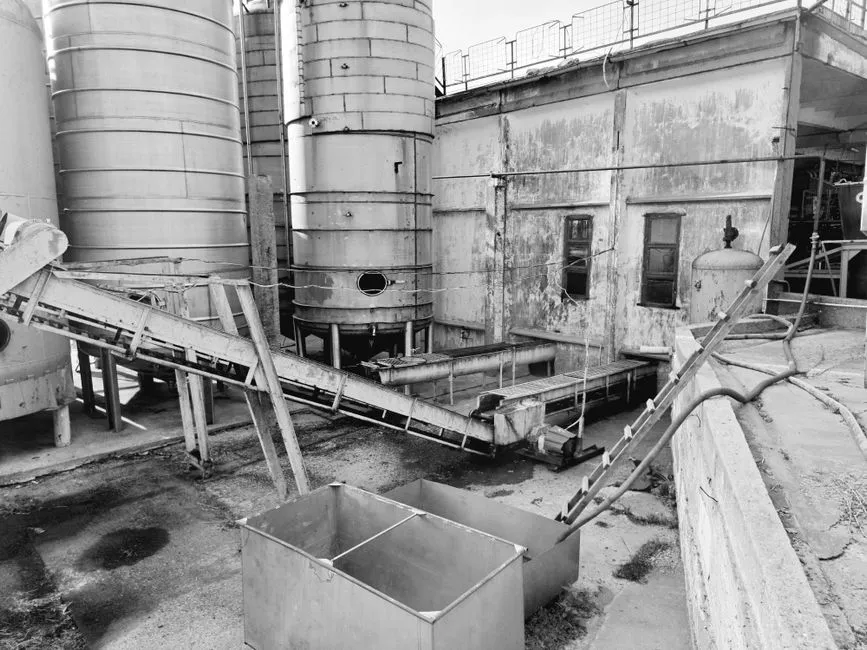
A 30 m³/h DAF system in 304 stainless steel, with PLC controls, freight, and mechanical installation, costs between $90,000 and $160,000 in 2026. A gravity clarifier—a 4-hour-retention coated-steel or concrete tank with a sludge pump and scraper—runs $40,000–$80,000 installed. The decision hinges on the OPEX gap: DAF energy is 0.2–0.5 kWh/m³ and polymer use is 0.5–5 mg/L, while clarifier OPEX is dominated by sludge hauling at a 1–2% underflow solids concentration. A 30 m³/h plant running 16 h/day, 250 days/year generates 50% less hauled volume on a DAF (3–5% float vs. 1–2% underflow), which at $80–$120/yd³ disposal in the Atlantic County corridor saves approximately $40,000/year (HydropureWater benchmark, 2025). Factoring in avoided surcharges for FOG and TSS excursions, the simple payback for the DAF is 1.5–3 years.
| Cost line (2026 USD) | DAF (30 m³/h DAF) | Clarifier (4-h retention) |
|---|---|---|
| Equipment + freight + install | $90,000–$160,000 | $40,000–$80,000 |
| Energy | 0.2–0.5 kWh/m³ | Sludge pump only |
| Polymer / chemical | $0.02–$0.08/m³ | None to minimal |
| Sludge hauled (16 h/day, 250 d/yr) | ~600–800 yd³/yr at 3–5% solids | ~1,200–1,600 yd³/yr at 1–2% solids |
| Annual sludge disposal cost (ACUA corridor) | $50,000–$95,000 | $100,000–$190,000 |
| Footprint | ~20–25 m² | ~80–100 m² |
| Typical 2026 payback vs. clarifier | 1.5–3 years | — |
The float from the DAF feeds a HydropureWater plate and frame filter press to push cake solids to 25–35%, significantly reducing disposal costs. The transportation equipment pretreatment compliance guide provides a broader framework for NAICS 336 sites.
When a Clarifier Still Wins in a Transportation Equipment Plant
A clarifier is the correct tool when the dominant load consists of heavy, inorganic, fast-settling matter. Iron and aluminum swarf from rough machining, sand and grit from shot blasting, and pre-coat paint solids sink quickly, and a passive lamella plate at 2–4 m/h surface loading removes 70–90% of that fraction at lower OPEX than a DAF. Plants with influent FOG under 50 mg/L, no emulsified coolant stream, and ample space can operate a clarifier economically without the overhead of a compressor and polymer skid. The most effective 2026 configurations are hybrid: a HydropureWater lamella clarifier upstream to remove bulk inorganic loads, followed by a DAF to polish the oil and coolant fraction to the ACUA's 100 mg/L FOG ceiling.
Recommended Configuration for a Typical Egg Harbor City Plant in 2026
The optimal deployment for a 30 m³/h stream—achieving 95% FOG and 92–97% TSS removal (HydropureWater field data, 2025)—consists of a GX series rotary bar screen, an equalization tank with mixing, an automatic polymer dosing skid for coagulant and flocculant injection, a DAF (4–6 bar, 15–20% recycle), a plate and frame filter press for float dewatering, and chlorine dioxide polishing. Achieving the 92–97% TSS target depends heavily on performing polymer jar testing on the actual plant water to ensure correct charge density and dosage. For cold-weather sites like Egg Harbor City, specify a factory enclosure with heat tracing on the saturation vessel and polymer feed lines.
Frequently Asked Questions
What influent parameters decide DAF vs clarifier for a transportation equipment plant in Egg Harbor City?
If FOG, emulsified coolants, and drawing compounds dominate the stream, a DAF delivers 92–97% TSS and up to 95% FOG removal. If the stream is heavy on iron swarf, grit, and paint solids with FOG under 50 mg/L, a clarifier or lamella is the lower-CAPEX, lower-OPEX choice.
How much does a 30 m³/h DAF system cost in New Jersey in 2026?
A 30 m³/h DAF skid in 304 stainless steel, including freight, mechanical installation, and PLC controls, costs $90,000–$160,000. While a 4-hour-retention clarifier is cheaper at $40,000–$80,000, DAF sludge hauling savings of roughly $40,000/year in the ACUA corridor provide a 1.5–3 year payback.
Does a DAF still work in winter at Egg Harbor City influent temperatures?
Yes.