Why Paducah Plastics and Rubber Plants Are Rethinking Primary Clarification in 2026
Plastics compounding, rubber molding, polymer-recycling wash lines, and latex/adhesive operations around Paducah generate a wastewater envelope that defeats a plain settling tank: emulsified oils, plasticizers (phthalates, adipates), oligomers, and wax extenders all sit at specific gravities between 0.92 and 1.02, while suspended polymer beads and regrind fines near SG 1.0 refuse to settle in any reasonable residence time (HydropureWater field data, 2026). Discharge to the Paducah Wastewater Treatment Department falls under Kentucky KPDES pretreatment standards, which enforce local limits on TSS, FOG, and pH before municipal acceptance — limits that became tighter in the 2024–2026 NPDES permit cycle and now include surcharges of $0.18–$0.42 per pound of TSS above ceiling (per EPA 40 CFR 133 framework, 2025-09 update). Three 2026 drivers are forcing a technology re-evaluation: rising discharge surcharges averaging 12–18% year-over-year, stricter FOG ceilings (typically 100 mg/L daily max for rubber molders), and growing interest in plant-side water reuse — a closed wash-water loop on a 50 gpm extrusion line can reclaim 70–80% of the flow if the clarifier effluent is clean enough to feed a downstream filter. The same regulatory pressure shows up in adjacent sectors, and the 2026 pretreatment compliance walkthrough outlines a useful parallel framework.
DAF vs Clarifier: How the Two Technologies Actually Work on Polymer Waste
DAF clarification hinges on attaching micro-bubbles to contaminants so buoyancy does the work. A side-stream of clarified effluent (typically 20–30% of the forward flow) is pressurized to 60–80 psig in an air saturation vessel, then released through a pressure-relief valve near the eye of the tank; the dissolved air comes out of solution as bubbles in the 30–50 micron range (ClearStream, 2026; SigmaDAF, 2026), which adhere to oil droplets, latex particles, and polymer fines. The bubble-particle agglomerate rises in 3–5 minutes, forming a float layer that a paddle or scoop skimmer drives to a hopper. Heavier grit and broken floc settle to a bottom cone and are augered out separately. A HydropureWater dissolved air flotation system in this duty typically reaches 92–98% TSS removal and produces a float of 2–4% dry solids (per DAF Corp FC Maximizer reference performance, 2025).
A lamella or sludge-blanket clarifier is a gravity device. Coagulant and flocculant are dosed upstream, a floc blanket forms in the reaction zone, and clarified water rises through inclined plates spaced at 50–80 mm, giving an effective surface loading of 20–40 m/h on the projected plate area (HydropureWater lamella spec, 2026). Solids settle onto the plates, slide down to a hopper, and are removed by auger or scraper; clarified effluent overflows a peripheral weir. The physics favors dense, readily flocculated particles and a flow that can spare 60–90 minutes of residence time — and roughly 2–3× the footprint of a comparably rated DAF unit. On a Paducah rubber-molding stream with 200–400 mg/L FOG and oligomers at SG 0.96, lamella performance drops into the 60–75% TSS band because the floatable fraction never settles; on a plastics wash line below 30 mg/L FOG and 200 mg/L TSS, the same lamella routinely clears 80–85%.
2026 Performance Comparison: DAF vs Lamella Clarifier for Plastics and Rubber Streams
Engineers buying equipment need numbers, not adjectives. The table below is built from manufacturer reference curves (DAF Corp FC Maximizer and RC UniMax, SigmaDAF Compact DAF, HydropureWater DAF and lamella) and from HydropureWater field installations on polymer and rubber streams through 2026-Q1. Treat the figures as design baselines; a jar or pilot test on the actual Paducah stream should always precede final selection.
| Parameter | DAF (micro-bubble flotation) | Lamella / Sludge-Blanket Clarifier |
|---|---|---|
| TSS removal on polymer/rubber streams | 92–98% (FC Maximizer, circular); 85–90% (RC UniMax, rectangular) (DAF Corp, 2025) | 60–85%, drops to 60–75% when FOG >100 mg/L or SG near 1.0 |
| FOG / emulsified oil removal | 85–95% via skimming; ideal for plasticizer and latex carryover | 40–60%; emulsified oil does not settle reliably |
| Float / sludge dry solids | 2–4% float (DAF Corp, 2025) | 1–3% underflow |
| Footprint at 100 gpm | ~10–14 m² for a skid unit; rectangular ClearStream ship fully shop-assembled | ~25–35 m² including floc zone and plate pack footprint |
| Flow range (HydropureWater) | 4–300 m³/h DAF skid range | 10–500 m³/h on the HydropureWater lamella clarifier |
| Surface loading / hydraulic limit | Hydraulic residence 15–25 min; recycle ratio 20–30% | 20–40 m/h on projected plate area; 60–90 min total HRT |
| Chemical consumption | Coagulant + polymer; DAF often needs polymer on polymer-rich streams | Sludge recirculation can cut coagulant use by ~30% (HydropureWater, 2026) |
| Materials of construction | 304SS standard; 316SS and polypropylene available for chloride/solvent service (SigmaDAF, 2026) | 304SS or FRP plates; hopper in carbon steel with coating |
| Best-fit stream profile | FOG >50 mg/L, TSS >500 mg/L with floatable fraction, constrained floor | FOG <30 mg/L, TSS <400 mg/L, abundant floor, high continuous flow |
The takeaway for a 2026 RFQ: if the stream contains FOG, latex, or plasticizer carryover above ~50 mg/L, a HydropureWater dissolved air flotation system is the only one of the two that hits KPDES pretreatment limits without a secondary polish step.
A Paducah-Specific Decision Matrix: Pick DAF or Clarifier in 5 Questions
Before the procurement committee meets, walk the stream through these five filters. Each one is a go/no-go check based on a measurable threshold, not a brand preference.
- Is FOG or latex above 50 mg/L in a 24-hour composite? If yes, spec DAF; if consistently below 30 mg/L, lamella is viable.
- Is influent TSS above 500 mg/L with a visible floatable fraction in a settlability jar? DAF; otherwise, test lamella.
- Is the design flow above 100 gpm continuously, and floor space unconstrained? Rectangular DAF or lamella both qualify; below 50 gpm, default to a compact skid DAF.
- Is the building an older Paducah industrial structure with limited floor area and low ceiling? DAF compact skid.
- Is there a 2026 target for water reuse in a wash-water loop? DAF effluent typically clears 30–50 mg/L TSS, suitable for downstream filtration or RO polish; lamella often needs a secondary stage.
The matrix below compresses those questions into a single lookup a buyer can tape to the spec sheet.
| Flow rate | Influent TSS | FOG / latex | Floor space | Recommended technology |
|---|---|---|---|---|
| ≤50 gpm | <400 mg/L | <30 mg/L | Any | Compact skid DAF for headroom, or lamella if reuse not planned |
| 50–150 gpm | 400–1,500 mg/L | 50–200 mg/L | Constrained | Rectangular shop-assembled DAF (ClearStream-style) with integral floc |
| 50–150 gpm | 400–1,500 mg/L | 50–200 mg/L | Available | Either; DAF preferred if FOG >100 mg/L |
| 150–500 gpm | 500–2,000 mg/L | 100–400 mg/L | Any | Circular FC Maximizer-class DAF; lamella will underperform on FOG |
| >500 gpm, low FOG | <300 mg/L | <30 mg/L | Available | Lamella with sludge recirculation; ~30% coagulant savings (HydropureWater, 2026) |
Pair any of the above selections with an automatic coagulant and flocculant dosing skid sized to the design flow, because both technologies fail when chemistry drifts.
What a Paducah Plastics or Rubber Plant Should Spec in 2026
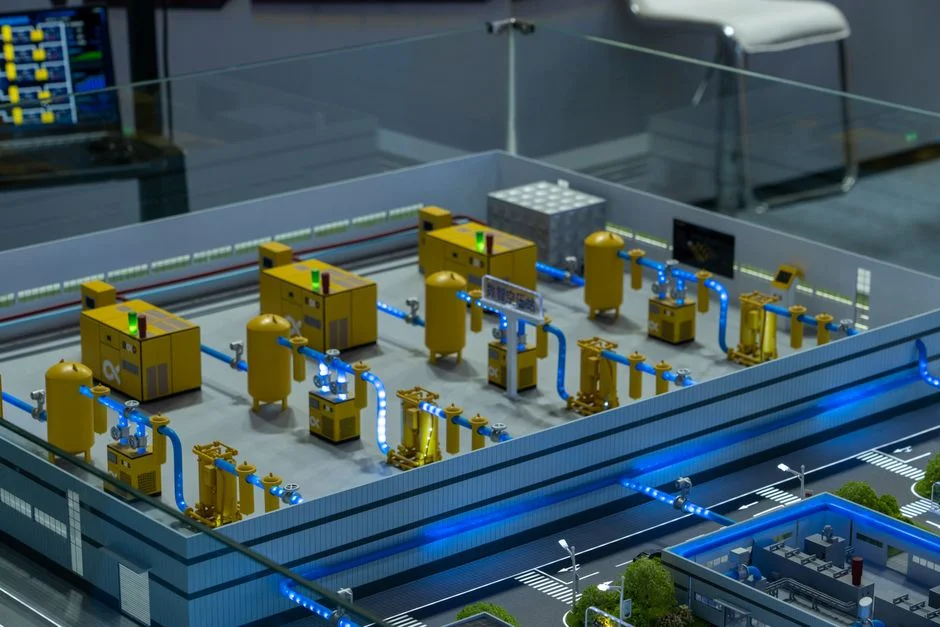
For a DAF unit, write the following into the RFQ: micro-bubble generator producing 20–40 micron bubbles with a turn-down ratio of at least 3:1 (per DAF Corp Micro Bubble Generator reference, 2025); automatic skimmer with variable-speed drive; PLC control with trending on recycle flow, pressure, and float thickness; 304SS wetted parts as standard, upgraded to 316SS or polypropylene where the stream carries chlorides above 200 mg/L or solvents such as toluene and MEK (SigmaDAF material guidance, 2026); rectangular shop-assembled configuration for fast install on a tight 2026 capex window. HydropureWater DAF covers 4–300 m³/h in skid and rectangular packages, and mobile DAF trailer units (47–52 ft) are a credible option for pilot work or peak-season capacity (WesTech mobile DAF spec, 2025).
For a lamella clarifier, spec plate spacing of 50–80 mm, surface loading of 20–40 m/h on the projected plate area, integral flocculation zone with 20–30 min HRT, and a sludge recirculation line rated for 3–5× return to cut coagulant use by roughly 30% (HydropureWater field data, 2026). Downstream of either primary, plan a sludge dewatering filter press sized for the float or underflow rate — a DAF float at 3% dry solids dewatering to 25–35% cake cuts hauled waste volume by an order of magnitude and pays back inside 18 months on most Paducah hauling rates.
2026 Cost and Compliance Snapshot for Paducah Plants
Capex bands in 2026 follow the equipment envelope rather than the brand: skid-mounted compact DAF at the low end (covering pilot, small rubber molder, or wash-water loop under 50 gpm), permanent rectangular or circular DAF at mid-range for 100–500 gpm polymer or recycling streams, and a lamella clarifier at the low end of mid-range where flow is high and FOG is consistently below 30 mg/L. The DAF machine cost and ROI guide gives current 2026 installed-cost benchmarks, and the parallel DAF vs clarifier guide for chemicals plants translates the same envelope into a different waste chemistry for cross-checking. On the compliance side, KPDES pretreatment limits drive the design — DAF effluent typically clears TSS and FOG ceilings without a polish step, while lamella often needs a secondary sand filter or a moving-bed biofilm reactor to consistently meet FOG daily-max limits on a polymer-rich stream. Run a jar test and, where flow justifies it, an on-site pilot on the actual Paducah stream before signing a PO; the DAF Corp feasibility-study protocol (2025) is a useful template and catches chemistry surprises that lab data misses.
Frequently Asked Questions
What is the single decision rule for choosing DAF or a clarifier on a Paducah plastics or rubber stream?
If FOG, latex, or plasticizer carryover exceeds 50 mg/L in a 24-hour composite, specify DAF — it hits 92–98% TSS removal and skims emulsified oil that a lamella clarifier cannot settle. Below 30 mg/L FOG and 400 mg/L TSS, a lamella with sludge recirculation is the more economical choice and cuts coagulant use by roughly 30% (HydropureWater field data, 2026).
How does DAF handle plasticizers, latex, and oligomers that have specific gravity near 1.0?
Micro-bubble flotation does not depend on the particle sinking — 30–50 micron bubbles attach to the contaminant and lift it to the surface in 3–5 minutes, which is why DAF removes 85–95% of emulsified FOG and plasticizer carryover that defeat a gravity clarifier. A lamella plate pack needs the floc to settle, and neutrally buoyant oligomers simply do not (ClearStream, 2026; SigmaDAF, 2026).
Is a mobile DAF trailer unit a viable option for a Paducah plant in 2026?
Yes — mobile DAF trailers measuring 47–52 ft can typically be delivered and brought online within a single day and handle flows from about 50 gpm up to 450 gpm, making them a strong fit for pilot trials, peak-season capacity, or short-term maintenance bypass (WesTech mobile DAF, 2025). They run on standard power and a level surface with no permanent foundation required.
What downstream equipment should a Paducah plant pair with a DAF or clarifier in 2026?
Pair either primary with an automatic coagulant and flocculant dosing skid and a sludge dewatering filter press; the press drops DAF float from 2–4% dry solids to a 25–35% cake and cuts annual hauling cost by 70–85% on most Paducah disposal rates.