What 'Mining and Metals Pretreatment' Actually Means in Florham Park
Florham Park, a 7.4-square-mile borough in Morris County, NJ, has no active hard-rock or ore mine inside its borders — the only mining-class operation is a sand-and-gravel / ready-mix aggregate plant along the I-287 corridor. The realistic "mining and metals" wastewater load here is finishing-shop rinse water (Cu, Zn, Ni, hexavalent Cr), scrap-recycling yard runoff (Pb, Cd, Fe), alloy-processing coolant blowdown, and aggregate wash water carrying suspended fines and trace metals. Federal categorical pretreatment standards at Clean Water Act § 307(b) still govern the design: 40 CFR Part 420 covers iron and steel, 40 CFR Part 421 covers nonferrous metals forming and finishing, and 40 CFR Part 440 covers ore mining and dressing (Subpart B for metals mining, Subpart J for coal preparation). For the finishing-shop and scrap-recycling operators in Florham Park, Part 421 Subpart E (nonferrous metals forming and finishing — cleaning, etching, pickling, plating) is usually the binding federal category. The realistic receiving utility in-borough is the Rockaway Valley Sewerage Authority (RVSA), with haul options to the Passaic Valley Sewerage Commissioners (PVSC) in Newark or the Middlesex County Utilities Authority (MCUA) for larger or out-of-district loads. The local industrial context also matters: Florham Park carries the legacy of the former Exxon Research and Engineering campus (now an office park), active BASF and ADP corporate campuses, and a band of light-industrial finishing and scrap-recycling yards that define the practical pretreatment load.
The 2026 Regulatory Stack: Federal Floor, NJ Overlay, Local Ceiling
Operators in northern NJ have to design to three stacked limits, and the binding ceiling is almost never the federal number. Layer 1 — Federal categorical floor. Under Clean Water Act § 307(b), 40 CFR Parts 420, 421, and 440 set numeric daily-maximum (DM, single-grab) and monthly-average (MA, geometric mean across the reporting month) values that the operator cannot exceed (per EPA NPDES industrial wastewater framework). Layer 2 — NJDEP N.J.A.C. 7:14A NJPDES overlay. The 2024–2026 NJ local-limit cycle lets NJDEP layer water-quality-based effluent limits (WQBELs) on top of the categorical floor for impaired receiving waters — in this case the Passaic River, the Lower Passaic / Newark Bay Study Area, and the Raritan River basin. Layer 3 — Local pretreatment program. RVSA, PVSC, and MCUA each publish local limits that are routinely stricter than the federal floor (a 1.0 mg/L Cu ceiling over the federal categorical value is a realistic overlay from PVSC for industrial users in the Passaic basin), and 40 CFR 403 gives each local pretreatment program independent enforcement authority — including significant-noncompliance (SNC) listings and POTW-side surcharges. Self-monitoring cadence is a minimum of 4 grabs out of any 7 consecutive days, with DM not exceeded on any single grab and MA calculated as the geometric mean across the reporting month (per the EPA NPDES industrial wastewater framework, 2025-08). The 40 CFR Part 440 Subpart B reference values — DM 45 mg/L TSS, 0.6 mg/L Pb, 1.0 mg/L Zn, 0.5 mg/L Cu, pH 6.0–9.0 — are a useful worked example because the aggregate-wash plant in Florham Park defaults to this subpart; NJ local limits will typically cut these further before discharge to RVSA.
| Layer | Authority | Instrument | Typical 2026 binding effect |
|---|---|---|---|
| 1 — Federal floor | EPA | 40 CFR Part 420 / 421 / 440 categorical standards | Sets DM and MA; cannot be weakened by state or POTW |
| 2 — NJ overlay | NJDEP | N.J.A.C. 7:14A NJPDES, WQBELs for impaired waters | Adds Passaic River and Newark Bay WQBELs on top of categorical |
| 3 — Local ceiling | RVSA / PVSC / MCUA | Local sewer-use ordinance, 40 CFR 403 | Usually binding (e.g., 1.0 mg/L Cu); independent enforcement |
The 2026 Reference Treatment Train for Northern NJ Loads
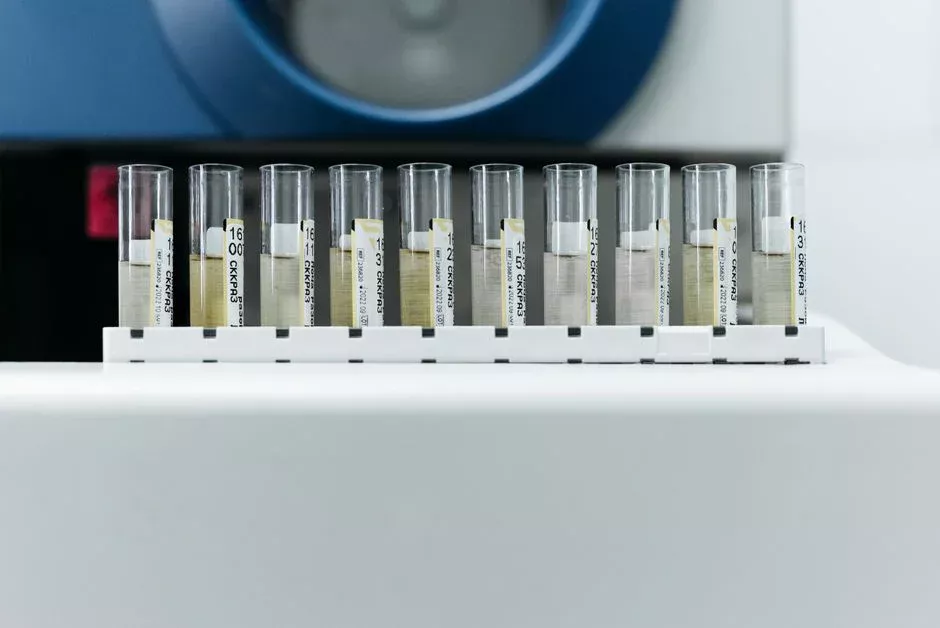
The five-stage physical-chemical train below is sized for a 25–100 m³/h aggregate-wash or finishing-shop load typical of the I-287 corridor, with NJ-specific operating windows that hold up against RVSA's enforcement posture. Stage 1 — Equalization. An 8–24 hour HRT basin with mechanical mixing absorbs flow and pH swings of 2.5–4.5 from intermittent batch wash cycles and haul-road runoff; coarse solids settle here and decanted supernatant is pumped forward (HydropureWater field data, 2025–2026). Stage 2 — pH adjustment. Lime (Ca(OH)₂) or caustic (NaOH) is dosed through a PLC-controlled chemical dosing skid to pH 8.5–9.5 with ±0.2 SU accuracy. The per-metal setpoints matter: Fe³⁺ drops as ferric hydroxide above pH 4, Mn²⁺ needs pH ≥ 9, Cu optimum 9.0–10.0, Pb 9.5–10.5, Zn 10.0–11.0 — operators must hold below pH 11.0 to avoid amphoteric re-solubilization (per standard hydroxide-precipitation chemistry). Stage 3 — Coagulation and flocculation. Rapid mix at G ≈ 700 s⁻¹ for 30–60 s injects ferric chloride or polyaluminum chloride, followed by slow mix at G ≈ 50–100 s⁻¹ for 15–20 min with an anionic polymer; target floc is 1–5 mm so the next stage can float them cleanly. Stage 4 — Dissolved air flotation. A dissolved air flotation system in the 4–300 m³/h range runs pressurized recycle at 5–7 bar; 20–80 µm micro-bubbles attach to the floc and float it to the surface for skimming. Published field data show 85–95% TSS removal and 70–90% total-metals removal in similar mining applications (HydropureWater field data, 2025–2026). Stage 5 — Multimedia filtration. An anthracite-silica-garnet multimedia filter with anthracite 0.8–1.2 mm (SG 0.55) over silica 0.45–0.55 mm (SG 2.65) over garnet 0.20–0.30 mm (SG 4.0+) polishes DAF effluent to under 5 mg/L TSS and under 1 NTU before pH trim and discharge. For alloy and nonferrous finishing sites in NJ, a cyanide-destruction stage (alkaline chlorination at pH ≥ 10.5 with ORP > +600 mV) and a hexavalent chromium reduction step (SO₂ or ferrous sulfate at pH 2.0–2.5) are commonly inserted upstream of pH adjustment.
| Stage | Equipment | Operating window | Expected removal |
|---|---|---|---|
| 1 — Equalization | Concrete or FRP basin, mechanical mixer | 8–24 h HRT; dampens 2.5–4.5 SU pH swings | Coarse-solids settling, flow smoothing |
| 2 — pH adjustment | Ca(OH)₂ or NaOH dosing, PLC PID | pH 8.5–9.5, ±0.2 SU; hold < 11.0 | Sets hydroxide-precipitation stage |
| 3 — Coag/floc | Rapid-mix + slow-mix chambers | G ≈ 700 s⁻¹ (30–60 s); G ≈ 50–100 s⁻¹ (15–20 min) | 1–5 mm floc for DAF capture |
| 4 — DAF | DAF line, 4–300 m³/h | 5–7 bar recycle; 20–80 µm bubbles | 85–95% TSS; 70–90% metals |
| 5 — Multimedia filter | Anthracite / silica / garnet vessel | Anthracite 0.8–1.2 mm (SG 0.55); garnet 0.20–0.30 mm (SG 4.0+) | < 5 mg/L TSS; < 1 NTU |
Direct NJPDES Discharge vs. Routing to an Accepting POTW
For most Florham Park-area finishing and scrap operations, the choice collapses to two paths and one of them is almost always cheaper. Path A — Direct discharge under an NJPDES individual permit (N.J.A.C. 7:14A). This is the right call when no accepting POTW sits within an economic haul radius, when flow exceeds roughly 50,000 gpd, and when the receiving water's classification allows discharge. The operator carries the full treatment train, an on-site lab, a biomonitoring contract, and whole-effluent toxicity (WET) testing — a meaningful capex penalty. Path B — POTW routing under 40 CFR 403. This is the right call when the site is within 5–10 miles of an accepting utility (RVSA, PVSA, MCUA), flow is under roughly 50,000 gpd, and the metals load is dominated by Cu and Zn. The pretreatment train is sized to local limits rather than to receiving-water WQBELs, and the hauler pays the downstream treatment cost through sewer-use fees. Local ordinance can be stricter than the federal categorical limit — a 1.0 mg/L Cu ceiling is a realistic overlay from PVSC for industrial users in the Passaic basin — and the local pretreatment program has independent enforcement authority under 40 CFR 403, including SNC listings and surcharges. For most Florham Park-area finishing and scrap operations, Path B is the lower-capex default because RVSA accepts industrial flows in-borough and haul economics to PVSC or MCUA rarely close the cost gap. Operators with a cyanide or hexavalent chromium load, however, should weigh Path A's tighter federal envelope against Path B's acceptance restrictions — many NJ POTWs will reject CN- or Cr(VI)-laden waste at the headworks. For comparison, the DAF vs clarifier selection guide walks through the same flow tiers for fabricated metals in Birmingham, and the transportation-equipment pretreatment reference covers a comparable POTW-versus-direct analysis in Little Falls, MN.
| Decision factor | Path A — Direct NJPDES | Path B — POTW routing (40 CFR 403) |
|---|---|---|
| Permit authority | NJDEP under N.J.A.C. 7:14A | RVSA / PVSC / MCUA local program |
| Flow threshold (typical) | > 50,000 gpd | < 50,000 gpd |
| Distance to accepting utility | Outside 5–10 mile radius | Within 5–10 miles |
| Operator carries | Full train, on-site lab, biomonitoring, WET | Smaller train sized to local limits |
| Binding limit | Federal categorical + WQBELs | Local ordinance (often stricter than federal) |
| Best fit in Florham Park | Aggregate wash > 50,000 gpd | Finishing, scrap, alloy under 50,000 gpd |
F006 Sludge, Dewatering, and NJ Solid-Waste Disposal
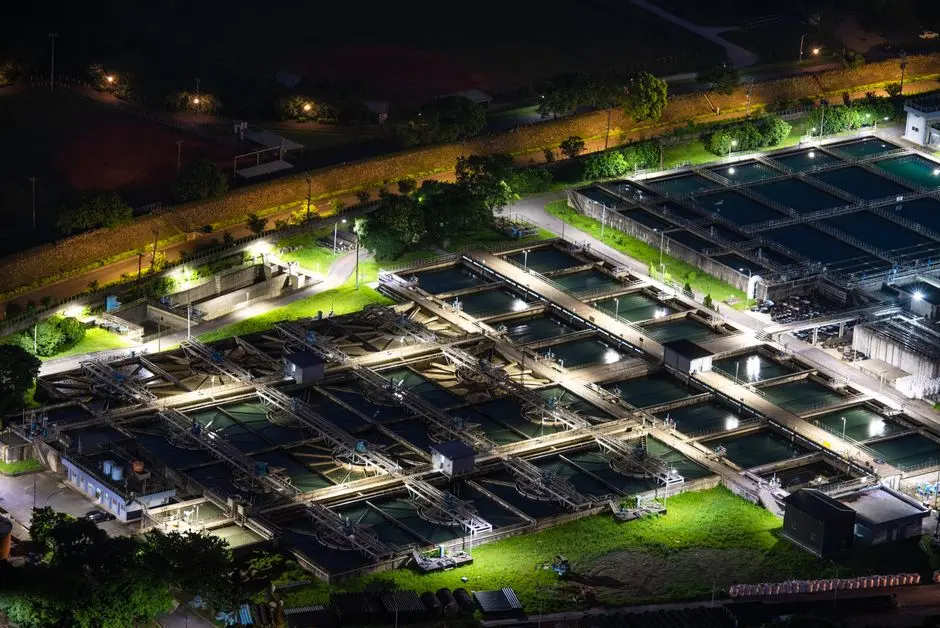
The DAF float and the multimedia-filter backwash combine to a 1–3% dry solids hydroxide-bearing sludge. If a listed metal (Pb, Cd, or similar) exceeds its RCRA toxicity characteristic at 40 CFR 261.24 on a TCLP extract, the sludge is an F006 wastewater treatment sludge and must be managed under RCRA plus N.J.A.C. 7:26 (NJ solid-waste rules) — a step many operators skip in design and trip on at permit renewal. The standard dewatering line begins with a lamella pre-thickener that brings the sludge to 5–8% dry solids — a step that cuts polymer demand 30–50% and shortens press cycle time — followed by a plate-and-frame filter press producing cake at 25–35% dry solids, a 10:1 volume reduction over as-produced sludge. Dewatered cake typically goes to a Subtitle D MSW landfill in NJ after a TCLP pass; metals recovery and smelter reintroduction is available where the load justifies the freight to a Northeast nonferrous smelter (HydropureWater field data, 2025–2026). For the F006 trigger and the dewatering sequence, the 40 CFR Part 414 chemical-plant compliance playbook walks through the same RCRA pathway in a different state context.
2026 Installed Cost and OPEX by Flow Tier
Installed total for a 2026 mining-and-metals pretreatment system in northern NJ runs from $250,000 for a small modular skid to over $2,000,000 for a high-capacity automated facility, with each tier roughly doubling the prior one. Cost drivers are flow rate (gpm), the specific chemical constituents being removed, and whether sludge dewatering is included in the skid or scoped as a separate line item. Annual OPEX — chemical reagents, power, and F006 disposal fees — typically runs 15–20% of initial capex for Tier 1, 12–18% for Tier 2, and 10–15% for Tier 3 (HydropureWater field data, 2025–2026). NJ-specific cost adders to budget: NJPDES permit fees, RVSA/PVSC/MCUA sewer-Use fees, F006 disposal at a Subtitle D MSW landfill (NJ tonnage tipping runs above the U.S. median), and licensed-operator labor if flow exceeds the threshold in N.J.A.C. 7:14A.
| Tier | Flow range | Scope | 2026 installed capex (USD) | OPEX (% of capex/yr) |
|---|---|---|---|---|
| Tier 1 | < 25 m³/h | Modular skid: equalization, pH, DAF, multimedia | $250,000–$500,000 | 15–20% |
| Tier 2 | 25–100 m³/h | Mid-range automated train, PLC dosing, on-site lab | $500,000–$1,100,000 | 12–18% |
| Tier 3 | > 100 m³/h | High-capacity containerized train, full dewatering, WET-ready | $1,100,000–$2,000,000+ | 10–15% |
Frequently Asked Questions
Does the federal categorical pretreatment standard at 40 CFR Part 421 apply to a nonferrous finishing shop in Florham Park?
Yes. A finishing shop doing cleaning, etching, pickling, or plating defaults to 40 CFR Part 421 Subpart E (nonferrous metals forming and finishing), and the operator must design to the Part 421 daily-maximum and monthly-average values before NJDEP N.J.A.C. 7:14A WQBELs or RVSA's local limits are layered on top (per the EPA NPDES industrial wastewater framework, 2025-08).
Which POTW is the default receiving utility for a Florham Park industrial discharger?
The Rockaway Valley Sewerage Authority (RVSA) is the in-borough receiving POTW for Florham Park industrial flows; for sites outside RVSA's service area or with loads RVSA will not accept, haul options are the Passaic Valley Sewerage Commissioners (PVSC) in Newark or the Middlesex County Utilities Authority (MCUA), each with its own local sewer-use ordinance under 40 CFR 403.
What pH window does the hydroxide-precipitation stage need to hit for a Cu/Zn finishing load?
Hold pH 9.0–10.0 for Cu and pH 10.0–11.0 for Zn, with an absolute ceiling of pH 11.0 to prevent amphoteric re-solubilization; the dosing skid should target pH 8.5–9.5 as the operating setpoint when the feed carries mixed metals and a downstream multimedia filter polishes the residual (HydropureWater field data, 2025–2026).
When does DAF float sludge become an F006 in New Jersey?
DAF float and multimedia backwash sludge becomes an F006 wastewater treatment sludge under RCRA when a listed metal exceeds its toxicity characteristic at 40 CFR 261.24 on a TCLP extract, and the cake must then be managed under N.J.A.C. 7:26 in addition to RCRA — a Subtitle D MSW landfill in NJ is the typical 2026 disposal route after a passing TCLP.