Why Kennett Square's Sewer Authority Sets Tight Pretreatment Limits
Kennett Square's POTW discharges to West Branch Red Clay Creek at outfall 001, and PADEP classifies that stream as TSF/MF — trout stocking and migratory fishes — within Delaware River Basin Water Quality Zone C5 (per DRBC docket D-1999-017 CP-2, 2018). The receiving water's mile chain runs West Branch Red Clay → Red Clay → White Clay → Christina → Delaware at 70.7-10.0-2.6-13.4-3.3, so any contaminant that passes the treatment plant eventually reaches the Christina basin, a public water-supply source roughly 17 miles downstream (Suez/United Water Delaware intake, per S3). Trout-stocking streams sit at the top of Pennsylvania's surface-water hierarchy; effluent limits track the most stringent industrial envelope, not a regional average.
The hydraulic geometry leaves no room for dilution. The WWTP's existing design flow is 1.1 mgd, expanding to 1.4 mgd after the oxidation-ditch-to-MLE conversion authorized in 2018, while the receiving water's Q7-10 (seven-day, ten-year low flow) at the outfall is only 0.5 mgd (S3). That 0.35:1 ratio means the discharge is roughly three times the receiving stream's low flow — slug loads cannot be diluted and show up almost verbatim at the outfall. A temperature clause in docket condition (e) caps any ambient rise at 5°F below 50°F, 2°F between 50°F and 58°F, and an absolute ceiling of 58°F (S3). For an industrial user, every number in your local sewer-use ordinance — BOD, TSS, ammonia, FOG, pH — is downstream of those receiving-water facts.
The Regulatory Stack: Federal, State, POTW, and Basin Commission
Four overlapping jurisdictions govern a single discharge tap at a Kennett Square food or beverage plant. 40 CFR Part 403 is the federal floor: it defines Significant Industrial Users (SIUs), sets categorical pretreatment standards where they apply, and gives the POTW authority to enforce local limits more stringent than the federal baseline. Pennsylvania's Clean Streams Law and Title 25 Chapter 97 layer state industrial-wastewater requirements on top, and PADEP issued NPDES permit PA0024058 on 3 Oct 2016 to govern the Kennett Square WWTP itself (S3). The DRBC docket D-1999-017 CP-2 adds Zone C5 water-quality and temperature conditions that apply to the WWTP and, by extension, to any industrial discharger whose load would impair the receiving stream. The Borough of Kennett Square (or its operating POTW authority) issues the sewer-use ordinance, the SIU permit, the surcharge schedule, and the slug-control plan requirement that plant managers interact with day to day.
Most food and beverage plants in the corridor are non-categorical SIUs — there is no federal categorical standard for mushroom wash water, dairy processing, or confectionery manufacture — but they still trigger SIU status by crossing the 25,000-gpd threshold, by contributing more than 5% of POTW average dry-weather flow, or by virtue of process changes (40 CFR 403.3). Even plants below those thresholds face the same BOD, TSS, FOG, and pH limits through the local ordinance, plus self-monitoring and reporting. Categorical users (e.g., centralized meat products under 40 CFR 432) are rare in this corridor; mushroom and dairy operations are governed by local limits, not federal categorical numbers.
| Layer | Authority | Key Instrument | What It Controls |
|---|---|---|---|
| Federal | EPA | 40 CFR Part 403 | SIU definition, categorical standards, POTW enforcement authority |
| State | PADEP | Title 25 Ch. 97, NPDES PA0024058 (issued 3 Oct 2016) | Industrial wastewater requirements; WWTP discharge permit |
| Basin | DRBC | Docket D-1999-017 CP-2 (2018) | Zone C5 WQC, temperature control, MLE upgrade approval |
| Local | Borough of Kennett Square POTW | Sewer-use ordinance, SIU permit | Local limits, surcharges, BMPs, slug-control plan |
Kennett Square POTW Discharge Limits: What the Plant Tap Must Hit
Effluent Table A-1 in the DRBC docket (S3) sets the surface-water numbers the WWTP itself must meet at outfall 001, and the local POTW applies equivalent or stricter limits at the industrial user's tap. The binding parameters for a high-strength food discharger are TSS, seasonal CBOD, seasonal ammonia, and pH; fecal coliform matters only if your process carries a sanitary stream. The 85% minimum removal clause means even a weak influent must be cut by at least five-fold — a raw 1,000 mg/L BOD has to leave the plant at or below 150 mg/L regardless of the absolute number.
Monitoring frequency is set by the local POTW. For most SIUs in the Kennett Square service area, that translates into twice-monthly to monthly 24-hour composite sampling for BOD, TSS, FOG, and ammonia, plus continuous pH and flow on a chart recorder or SCADA. Surcharge parameters that drive the monthly bill are BOD, TSS, FOG, and total flow — exceeding the local strength threshold (typically 250–300 mg/L BOD and 100–200 mg/L FOG) adds a per-pound surcharge on top of the base rate.
| Parameter | Limit (NPDES/DRBC) | Season | Notes |
|---|---|---|---|
| pH | 6–9 SU | All year | Continuous monitoring |
| TSS | 30 mg/L | All year | Composite sample |
| CBOD₅ | 17 mg/L | May 1 – Oct 31 | 85% min removal |
| CBOD₅ | 25 mg/L | Nov 1 – Apr 30 | 85% min removal |
| NH₃-N | 2.0 mg/L | May 1 – Oct 31 | Drives biological-stage design |
| NH₃-N | 6.0 mg/L | Nov 1 – Apr 30 | Winter relaxation |
| Fecal Coliform | 200 CFU/100 mL | All year | Geometric mean |
Food & Beverage Wastewater Profile in the Kennett Square Corridor
Mushroom processing dominates the F&B sector in southern Chester County — Kennett Square bills itself as the Mushroom Capital — and the waste signature reflects that. Wash water, blancher overflow, and canning/cooking lines generate BOD in the 3,000–10,000 mg/L range, TSS in the 500–3,000 mg/L range from substrate debris, and relatively low FOG (typically under 200 mg/L) but high suspended solids (per industry characterization, S1). Dairy and confectionery operations in the same service area run cooler (BOD 1,000–5,000 mg/L) but spike on sugars, lactose, and milk proteins — easy to biodegrade but capable of driving rapid oxygen demand swings that destabilize downstream biology (S1). Meat and poultry processors in the wider region produce FOG-rich waste, frequently 100–1,000+ mg/L, that congeals in sewer lines without flotation (S1). Every F&B stream also carries a CIP signature — alternating alkaline (NaOH) and acid (HNO₃, phosphoric) rinse cycles that swing pH between 4 and 11 in a single shift and must be equalized before biological treatment (S1).
The 6–9 pH envelope is non-negotiable: anything outside that range at the plant tap is a violation regardless of how good the BOD number looks. The implication for design is straightforward — a raw stream at pH 11 will kill nitrifying bacteria in an MBR within hours, so equalization and automated dosing are not optional.
| Sector | BOD (mg/L) | TSS (mg/L) | FOG (mg/L) | pH Range (raw) | Key Challenge |
|---|---|---|---|---|---|
| Mushroom processing | 3,000–10,000 | 500–3,000 | <200 | 5–9 | High TSS, substrate debris |
| Dairy / confectionery | 1,000–5,000 | 200–1,000 | 50–300 | 4–11 | Rapid BOD swings, foaming |
| Meat / poultry | 2,000–8,000 | 500–2,500 | 100–1,000+ | 6–10 | FOG coagulation, pipe blockages |
The On-Site Pretreatment Train: Four Stages to Compliance
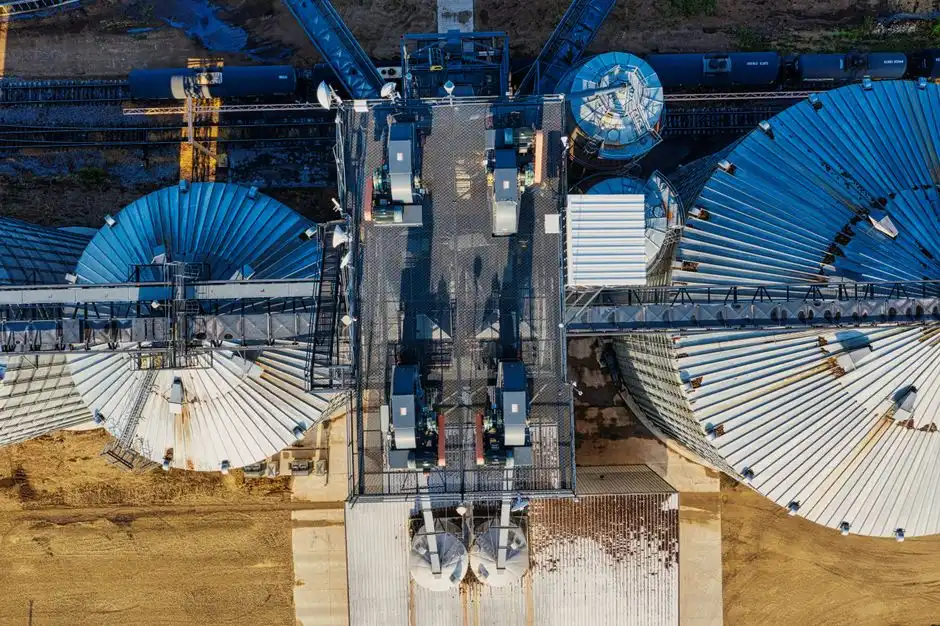
A complete food-and-beverage pretreatment train for the Kennett Square corridor runs four to five unit processes. Each stage has a defined removal budget, and the train only works if every stage hits its share.
Stage 1 — Screening. A rotary bar screen for headworks protection with 2–6 mm openings strips rags, mushroom substrate, packaging fragments, and CIP debris before they hit pumps or DAF internals. Field experience shows that 30–50% of total suspended solids can be removed here with no chemical input, which dramatically reduces downstream sludge production (HydropureWater field data, 2026).
Stage 2 — Equalization and pH adjustment. A 24–48 hour HRT equalization basin damps batch spikes from CIP, while an automated chemical dosing system for pH and coagulant control holds the stream inside the 6–9 envelope. This stage typically delivers no meaningful BOD or TSS reduction, but it stabilizes the stream so downstream biology stays alive.
Stage 3 — DAF / coagulation-flocculation. A DAF system for food and beverage wastewater with 25–35% recycle and PAC plus polymer dosing removes 70–90% of TSS and 50–90% of FOG in a single pass, taking 5,000 mg/L TSS down to 500–1,500 mg/L. This is the workhorse stage for FOG compliance and a prerequisite for the MBR (S1).
Stage 4 — Biological. An MBR membrane bioreactor for high-BOD food wastewater cuts BOD from 3,000–10,000 mg/L to under 30 mg/L, achieves partial nitrification, and provides <1 μm physical filtration in a compact footprint — important when the local ammonia limit is 2.0 mg/L in summer (S3). MBBR is a lower-cost alternative where ammonia targets are looser.
Stage 5 — Disinfection and sludge handling. UV or chlorine dioxide hits the 200 CFU/100 mL fecal coliform target without leaving a residual that would trip a downstream chlorine limit, and a plate-and-frame filter press for sludge dewatering brings DAF float and waste activated sludge to 18–25% dry solids for off-site disposal (per S1 process logic).
| Stage | Equipment | TSS Removal | BOD Removal | FOG Removal | Effluent Target |
|---|---|---|---|---|---|
| 1. Screening | Rotary bar screen (2–6 mm) | 30–50% | 10–20% | — | Protect downstream equipment |
| 2. Equalization / pH | EQ basin + dosing | — | — | — | pH 6–9, damped spikes |
| 3. DAF | DAF + coag/polymer | 70–90% | 30–50% | 50–90% | TSS 500–1,500 mg/L |
| 4. Biological | MBR or MBBR | 90%+ | 95%+ | — | BOD <30 mg/L, NH₃-N <6 mg/L |
| 5. Disinfection / sludge | UV or ClO₂; filter press | — | — | — | Fecal <200 CFU/100 mL; cake 18–25% DS |
Sizing the System: A Worked Example for a 50 m³/day Mushroom Processor
Consider a 50 m³/day (≈13,200 gpd) mushroom-processing line with an influent profile of BOD 6,000 mg/L, TSS 2,000 mg/L, FOG 200 mg/L, and pH 7.5. Mass loads are 300 kg BOD/day, 100 kg TSS/day, and 10 kg FOG/day — these set both the biological reactor and the DAF sizing. The equalization basin at 48-hour HRT works out to roughly 100 m³; the DAF unit needs to handle about 5 m³/h peak hydraulic with 30% recycle, which falls inside a standard packaged 5–10 m³/h DAF system for food and beverage wastewater envelope. The MBR runs at 0.5–0.8 kg BOD/m³·day volumetric loading, so a 400–600 m³ reactor volume is the design centerline — compact enough to retrofit into an existing building footprint.
Order-of-magnitude 2026 capex for a packaged system in the US: DAF $40–80k, MBR $120–250k, equalization civil works $60–120k, controls and instrumentation $30–60k — turnkey budget $250–600k depending on site constraints. Final sizing requires a jar test and a DAF pilot on the actual stream (HydropureWater field data, 2026). On the OPEX side, on-site DAF+MBR typically runs $0.02–0.05 per liter treated; off-site hauling of 50 m³/day at $0.10–0.30 per gallon works out to $13k–40k per month. The math favors on-site treatment once a plant runs more than one shift, and the breakeven for a mushroom operation of this size is typically under 18 months. For a deeper dive on DAF sizing, the DAF vs clarifier decision guide for food and beverage plants lays out the selection logic stage by stage.
2026 Compliance Checklist for Food & Bev Operators in the Kennett Square Service Area
- Confirm SIU status with the local POTW — discharge volume, BOD/TSS loads, and process changes can all trigger reclassification under 40 CFR 403.3.
- Pull a baseline waste characterization: 24-hour composite (or 7-day flow-proportional) for BOD₅, TSS, FOG, pH, NH₃-N, TKN, and flow.
- Match the profile to local limits (Effluent Table A-1 numbers above) and identify the binding parameter — usually BOD or summer ammonia for food processors.
- Run a jar test or DAF pilot to validate coagulant/flocculant dose and float-removal efficiency on the actual stream. The DAF configuration for fermentation broth and food waste streams guide walks through the pilot protocol.
- Install or upgrade on-site pretreatment; budget $250k–$600k turnkey for a small-to-mid F&B plant in 2026 dollars.
- Set up self-monitoring and reporting — continuous pH, flow, and temperature; composite BOD/TSS/FOG per the POTW schedule; maintain the slug-control plan required by 40 CFR 403.8(f)(2).
- File periodic compliance reports and benchmark against surcharge thresholds; a single BOD excursion can cost more in surcharges than a month of chemical dosing.
Frequently Asked Questions
What are the Kennett Square POTW discharge limits for food and beverage plants?
Per DRBC docket D-1999-017 CP-2 and NPDES PA0024058, the WWTP outfall must meet TSS 30 mg/L, CBOD 17 mg/L (May–Oct) / 25 mg/L (Nov–Apr) with 85% minimum removal, NH₃-N 2.0 mg/L summer / 6.0 mg/L winter, pH 6–9, and Fecal Coliform 200 CFU/100 mL as a geometric mean. The local POTW applies equivalent or stricter limits at the industrial user's tap, and a 24-hour composite monitoring schedule is typical for SIUs.
Does a small food plant in Chester County need a pretreatment permit?
If the plant discharges more than 25,000 gpd, contributes more than 5% of the POTW's average dry-weather flow, or operates a categorical process, it is a Significant Industrial User under 40 CFR Part 403 and must hold a pretreatment permit. Smaller plants are usually Non-Significant Industrial Users but still face BOD/TSS/FOG/pH limits through the local sewer-use ordinance and must self-monitor.
What is the best on-site treatment for high-BOD food wastewater?
A DAF followed by an MBR (or MBBR where ammonia targets are looser) is the most space-efficient path to under 30 mg/L BOD with partial nitrification. Coagulant and polymer dosing upstream of the DAF tightens FOG and TSS removal, and equalization with automated pH control protects the biological stage from CIP swings. The Pacific-region DAF vs clarifier comparison for food and beverage covers the same selection logic in more depth.
Why is FOG monitored so closely in food and beverage discharge?
Fats, oils, and grease coagulate in sewer lines, cause blockages and pass-through interference at the WWTP, and trigger surcharges on the monthly bill. Most local sewer-use ordinances cap FOG at 100–200 mg/L at the discharge point; exceeding the cap is both a violation and a surcharge event.
How often must a food plant self-monitor its discharge?
Typically pH and flow are recorded continuously, with monthly 24-hour composite sampling for BOD, TSS, and FOG. The exact schedule — twice-monthly versus monthly, composite versus grab — is set in the local POTW permit or general sewer-use ordinance, and the slug-control plan required by 40 CFR 403.8(f)(2) must be kept current.