Why the DAF-vs-Clarifier Question Hits Hard for Monroe Chemicals Plants in 2026
Monroe, Louisiana is home to organic and specialty-chemicals manufacturers whose wastewater combines emulsified oils, residual solvents, suspended catalyst fines, and BOD/COD often exceeding 5,000 mg/L on a batch basis. Discharges from these plants flow to the Monroe Water Treatment facility (POTW) and ultimately to the Ouachita River, which puts every significant industrial user under 40 CFR Part 403 categorical pretreatment standards — including oil and grease caps, total toxic organics (TTO), and pH limits. In 2026, EPA Region 6 enforcement is trending toward tighter categorical and local limits on PFAS-precursor surfactants and trace organics, so a single-unit design is increasingly failing categorical compliance on mixed streams. The technology choice is a defensibility question for the next permit cycle.
A dissolved air flotation (DAF) system injects saturated water at 60–80 psig to generate 20–80 micron micro-bubbles that attach to oil droplets, emulsified organics, and fine suspended solids, floating them to the surface for skimming. A gravity clarifier relies on quiescent settling — heavier settleable solids drop to a conical or hopper bottom for removal as underflow sludge. Both are proven, but they exploit opposite physical principles, and that is what makes the selection rule defensible. For more on the broader pretreatment-compliance picture, see the 40 CFR Part 403 compliance for chemical plants guide.
Head-to-Head: DAF vs. Clarifier on the Metrics Chemicals Plants Care About
The comparison for a chemicals plant in Monroe must be made on the same influent, specifically on the axes that decide a categorical pretreatment pass or fail. A food-processing DAF reference case achieved 95% oil and grease removal, while the same oily stream through a clarifier achieved roughly 70% removal (Ecologix Systems, 2026 selection guide). Conversely, a mining-style heavy-solids stream through a clarifier dropped TSS by 90% at lower OPEX than an equivalent DAF train. The 25-percentage-point gap on oil and grease is the largest selection driver for a chemicals site, because local POTW limits on oil and grease are typically set around 100 mg/L, and clarifier-only effluent will often exceed that on emulsified organics streams.
| Parameter | DAF System | Clarifier (incl. Lamella) |
|---|---|---|
| Primary removal mechanism | Micro-bubble flotation & surface skimming | Gravity settling & bottom sludge removal |
| Oil & grease removal | ~95% on oily streams | ~70% on the same oily stream |
| TSS removal | 60–85% (fine & light solids) | ~90% on heavy settleable solids |
| Typical influent window | Oil/grease 50–5,000 mg/L; TSS up to ~3,000 mg/L | TSS 1,000–10,000 mg/L; oil/grease <100 mg/L |
| Footprint class | Compact (skid or mobile trailer) | Large for conventional; compact for lamella |
| OPEX class | Moderate (air compressor, saturator, polymer) | Lower energy; no compressed air |
| Chemical demand | Coagulant + flocculant (PAM) typical | Coagulant/polymer often lighter |
| Operator skill | Moderate (air system, pumps, chemistry) | Lower (sludge pump, rake, basic chemistry) |
Clarifier subtypes worth specifying on a chemicals line are the lamella (inclined-plate) clarifier, the high-rate solids-contact clarifier (HRSCC), and the tube settler — each trades footprint for hydraulic complexity (WTE Infra, 2024). DAF subtypes commonly bid on chemicals work are rectangular, circular, and mobile trailer units — mobile DAF skids run about 47.5 ft × 8.5 ft and can be commissioned within a day, which is often the deciding factor on a constrained Monroe retrofit (WesTech, 2026). The OPEX summary from the same source material indicates that while clarifiers have lower day-to-day costs, DAF can be more cost-effective per pound of oil removed on the right stream.
A Chemicals-Stream Decision Matrix: When Each Technology Wins
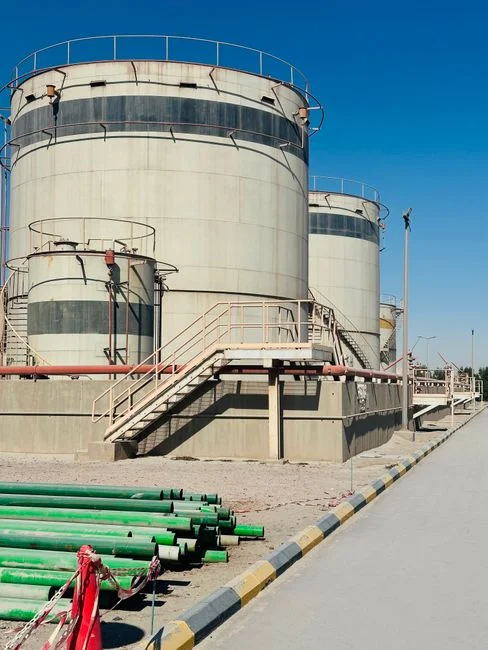
Influent characterization, rather than vendor preference, dictates the primary unit selection. Three parameters cover most chemicals streams: oil and grease (mg/L), TSS (mg/L), and design flow (m³/h). The matrix below maps each combination to a defensible primary unit, with a hybrid override whenever mixed loadings threaten categorical compliance.
| Influent Profile | Flow (m³/h) | Primary Unit | Notes |
|---|---|---|---|
| O&G ≥ 100 mg/L, TSS < 500 mg/L (emulsified organics dominant) | 4–300 | DAF alone | Size via hydraulic loading 5–25 m/h on the flotation cell |
| TSS ≥ 1,500 mg/L, O&G < 100 mg/L (catalyst fines, salts) | Any | Lamella or HRSCC clarifier | Lamella surface loading 20–40 m/h; compact vs. conventional |
| O&G ≥ 100 mg/L and TSS ≥ 1,500 mg/L (mixed chemicals stream) | 4–300 | DAF primary → lamella clarifier polish | Defensible hybrid for 40 CFR Part 403 categorical compliance |
| Variable batch discharges (O&G swings 50–1,000 mg/L) | 4–300 | DAF with equalization upstream | Equalization dampens loading on the flotation cell |
The flow window of 4–300 m³/h is the standard industrial DAF sizing range across 13 catalog models for the dissolved air flotation system, which covers everything from a single reactor vent scrubber blowdown to a 200 m³/h specialty-chemicals line. The 20–40 m/h lamella surface-loading range is the same basis used to size a downstream high-efficiency lamella clarifier when a hybrid train is selected. The 100 mg/L oil and grease threshold is a typical categorical-pretreatment trigger — exceeding it is what flips the recommendation from a clarifier to a DAF primary, and what turns a single-unit design into a hybrid train.
2026 Compliance Check: 40 CFR Part 403, Monroe POTW Limits, and Why One Unit Is Rarely Enough
The categorical pretreatment framework under 40 CFR Part 403 layers federal categorical standards on top of local POTW limits. The Monroe POTW enforces local limits on BOD, TSS, oil and grease, pH, and a metals suite, and the city's sewer use ordinance prohibits discharge of any substance that "causes interference or pass-through" at the treatment plant. On a typical Monroe chemicals line, the binding constraint is almost always oil and grease, because clarifier-only effluent on an emulsified organics stream sits near 70% removal — which still leaves the discharge above the local 100 mg/L cap when the influent runs above ~330 mg/L.
Single-unit designs fail this check more often than not in 2026. EPA Region 6 enforcement on industrial users has tightened categorical inspections and pretreatment audits. Local limits on PFAS-precursor surfactants and total toxic organics are trending downward, and DAF is the more effective primary barrier for those compound classes because it captures the oil and surfactant matrix that carries them. On mixed streams with both organic and particulate loadings, a hybrid DAF primary + lamella clarifier polish is the configuration that lets the plant defend both an oil and grease cap and a TSS cap simultaneously (Ecologix Systems, 2026 hybrid systems FAQ). Treat the hybrid as the 2026 default for any Monroe chemicals line that must clear categorical pretreatment.
OPEX, Footprint, and Operating Complexity for a Monroe Retrofit
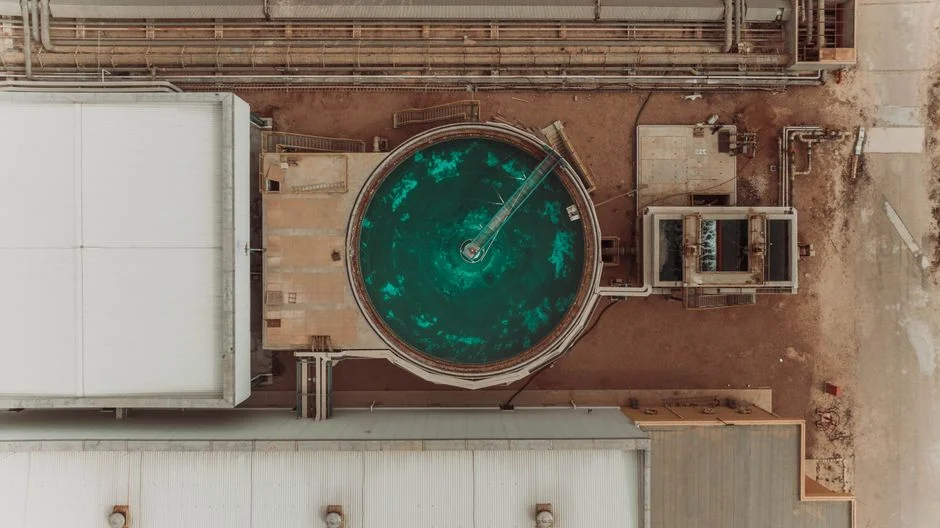
Clarifier OPEX is dominated by sludge pumping and downstream dewatering — typically a plate and frame filter press sized to the underflow solids, with chemical conditioning (lime or polymer) ahead of the press. Energy use is low: no compressed-air system, no saturator pump, and modest mixing duty. DAF OPEX adds the air compressor, recycle pump, saturator, and a polymer-dosing skid — the latter often handled by an automatic chemical dosing skid to keep jar-test results consistent across shifts. Operating complexity on DAF is rated Moderate because of the air system, pump controls, and flotation-cell level management (Ecologix Systems, 2026).
Footprint is where the hybrid train usually wins a Monroe retrofit. A mobile DAF skid at ~47.5 ft × 8.5 ft (WesTech, 2026) plus a lamella clarifier at 20–40 m/h surface loading will fit inside a building footprint that a single conventional concrete clarifier cannot — and the lamella cuts clarifier area by 5–10× versus a conventional basin at equivalent flow. For plants with constrained pads, a discharge-permit deadline in 2026, and a categorical compliance gap on oil and grease, the DAF + lamella combination is the configuration that closes all three requirements.
Frequently Asked Questions
When should a Monroe chemicals plant choose a DAF over a clarifier?
Choose a DAF when oil and grease exceed roughly 100 mg/L, when the stream is emulsified rather than free-oil, or when TSS is dominated by light, fine, or catalyst-carrier particles. DAF routinely delivers ~95% oil and grease removal versus ~70% for a clarifier on the same oily feed (Ecologix Systems, 2026), which is the difference between passing and failing a categorical pretreatment cap.
Can a DAF and a clarifier be used together?
Yes — and on a Monroe chemicals line in 2026, a DAF primary followed by a lamella clarifier polish is often the only configuration that meets both oil and grease and TSS categorical limits on a mixed stream. The DAF strips emulsified organics and light fines; the lamella, sized at 20–40 m/h surface loading, polishes settleable solids before biological or discharge steps.
What is the 40 CFR Part 403 implication for DAF or clarifier selection?
Under 40 CFR Part 403, categorical industrial users must meet both federal categorical standards and local POTW limits. A clarifier-only design on an emulsified chemicals stream typically cannot meet a 100 mg/L oil and grease cap once influent rises above ~330 mg/L, so DAF or DAF + lamella becomes the defensible compliance path (per EPA 40 CFR Part 403, 2026).
What flow range does an industrial DAF cover?
Standard industrial DAF systems cover roughly 4–300 m³/h across catalog model lines, suitable for everything from a single reactor blowdown stream to a 200 m³/h specialty-chemicals line. A lamella clarifier downstream is then sized on surface loading of 20–40 m/h rather than on flow alone, which keeps the hybrid train compact on a constrained Monroe site.