
Which Springfield pretreatment program actually governs a pharma discharge
"Springfield" in a pharma engineer's compliance plan is three different cities with three different pretreatment authorities, and the wrong one means a rejected permit application, a missed 90-day window, or a discharge permit that names the wrong control authority. The disambiguation below is the first step on every Springfield-area project because the rest of the design — the local limits you must hit, the contact who issues your permit, and the ordinance cited in any enforcement action — is set by the city whose sewer you actually discharge to.
Springfield, Oregon discharges to the Eugene/Springfield regional plant on River Avenue, which is regulated by the Metropolitan Wastewater Management Commission (MWMC) under its Model Sewer Use Ordinance. The City of Springfield's Environmental Services Division is the day-to-day authority; staff are reachable at 541-726-3694, [email protected], and signed forms are submitted to the main office at 225 5th Street, Springfield, OR 97477 (source: springfield-or.gov, 2026).
Springfield, Massachusetts is served by the Springfield Water & Sewer Commission Industrial Pretreatment Program (IPP), established in 1986, with jurisdiction over eight municipalities — Agawam, a portion of Chicopee, East Longmeadow, Longmeadow, Ludlow, Springfield, West Springfield, and Wilbraham — whose wastewater flows to the Springfield Regional Wastewater Treatment Facility (SRWTF) and onward to the Connecticut and Chicopee Rivers. The Commission can be reached at 413-310-3449, [email protected], or by mail at 71 Colton Street, Springfield, MA 01109 (source: waterandsewer.org, 2026).
Springfield, Missouri runs an IPP that was approved by the U.S. Environmental Protection Agency and the Missouri Department of Natural Resources in 1985 and is codified in Chapter 120 of the city code. The program logged laboratory analysis on more than 10,800 wastewater pollutant samples discharged to the City of Springfield collection system from industrial and commercial facilities in calendar year 2023 (source: springfieldmo.gov, 2026). A pharma plant in any of these three cities is a Significant Industrial User (SIU) by categorical-subject status under 40 CFR Part 439, which satisfies the first SIU trigger at 40 CFR 403.3(v) (per EPA, 2026). For a parallel compliance playbook applied to a different metro, see our Des Moines pharma pretreatment compliance guide.
The three-layer rule stack every Springfield pharma plant must clear
A Springfield pharma plant must clear a three-layer rule stack on every pollutant, and the most stringent applicable number on any single pollutant controls the design. The layers are stacked, not alternative — a discharge that is acceptable under one layer can still fail under another, so equipment sizing has to be benchmarked against the tightest of the three.
Layer 1 is the general and specific prohibitions in 40 CFR 403.5(a) and 403.5(b). 40 CFR 403.5(a) bans pass-through — defined at 40 CFR 403.3(p) as any discharge that exits the POTW in quantities or concentrations that cause an NPDES permit violation — and 40 CFR 403.5(b) bans interference, defined at 40 CFR 403.3(k) as any discharge that inhibits or disrupts the POTW, its collection system, or its sludge-handling process. The same subsection lists specific prohibited pollutants, including ignitable, corrosive, and toxic-gas discharges, that are banned regardless of numeric concentration (per EPA, 2026).
Layer 2 is the categorical pretreatment standard. For pharmaceutical manufacturing the binding subpart is 40 CFR Part 439, which sets numeric limits for BOD, COD, total suspended solids, pH, residual chlorine, and a list of toxic organics and metals tied to API synthesis and formulation. The federal number is the floor; a categorical industrial user (CIU) cannot fall below it on any regulated pollutant.
Layer 3 is the site-specific local limit published by the controlling authority. For Springfield, OR it is the MWMC Model Sewer Use Ordinance; for Springfield, MA it is the Commission IPP's allowable-discharge list; for Springfield, MO it is Chapter 120 of the city code. Local limits can be more stringent than the federal floor when the receiving plant's hydraulic or biological capacity is constrained, and they are enforced through the discharge permit itself. Layer 1 also triggers the 40 CFR 403.12(p) hazardous-waste notification when a discharge exceeds 33 lbs / 15 kg of any material classified as hazardous under 40 CFR 261; the City of Springfield, OR codifies the same requirement in Municipal Code section 4.016 (source: springfield-or.gov, 2026).
| Layer | Citation | What it controls | Numeric or qualitative? |
|---|---|---|---|
| 1 — General & specific prohibitions | 40 CFR 403.5(a)/(b); 40 CFR 403.3(k)/(p) | Pass-through, interference; ignitable, corrosive, toxic-gas ban | Qualitative |
| 2 — Categorical standard | 40 CFR Part 439 | Subpart-specific BOD/COD, TSS, pH, residual chlorine, toxic organics, metals | Numeric effluent limits |
| 3 — Local limit | MWMC Model SUO (OR); Commission IPP (MA); Chapter 120 (MO) | Site-specific pollutant caps; hydraulic and biosolids protection | Numeric; can exceed federal floor |
| 1 — Hazardous-waste trigger | 40 CFR 403.12(p); 40 CFR 261 | Discharges ≥ 33 lb (15 kg) of hazardous material | Notification; mass-based |
Pharma wastewater characteristics that drive the design
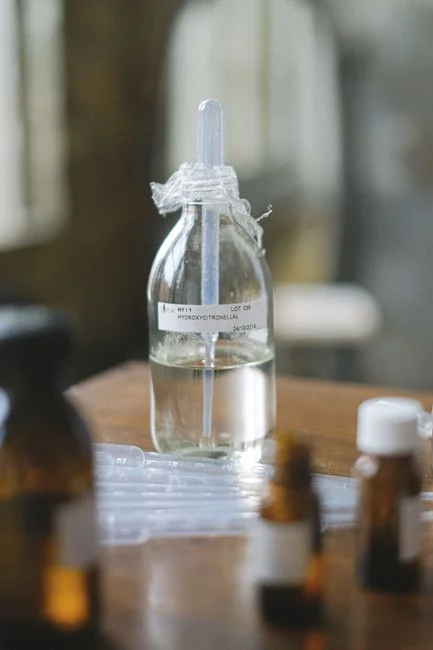
Pharma streams are not a generic industrial wastewater, and the pollutant mix dictates which unit operations move from optional to mandatory. The dominant loadings are active pharmaceutical ingredient (API) residuals, fermentation residues, cleaning-in-place (CIP) chemistries, and organic solvents such as acetonitrile, methanol, and dichloromethane — not the heavy-metal profile that drives the metal-finishing categorical standards (per EPA, 2026).
Batch release is the norm for campaign-style API manufacturing and shared CIP skids, which is why 40 CFR 403.8(f) slug load control plans are typically required for pharma SIUs. A slug load is any non-routine pollutant release or hydraulic surge that can cause pass-through or interference at the POTW, and a campaign-style facility generates slugs by design — every batch turndown, every CIP rinse, every campaign changeover is a slug-load event unless the equalization system absorbs it.
pH swings between acid CIP rinses and caustic neutralization steps are common, and the local pH envelope (typically 6–9 at the discharge point) is the most-cited permit excursion. High BOD/COD from fermentation residues, intermediates, and solvent-bearing mother liquors push the design toward advanced biological polishing — typically a membrane bioreactor (MBR) rather than conventional activated sludge — when the local limit is tight. For a deep dive on the membrane-side maintenance that comes with that choice, see our MBR maintenance protocol.
Unit-operation train that consistently meets 40 CFR Part 439 plus local limits
Six unit operations, in roughly this order, handle the vast majority of pharma wastewater streams that go to a POTW. Not every plant needs all six — the right subset is a function of the controlling pollutant — but this is the default train an engineer should defend in a permit application, then trim or expand based on the local limit and the influent profile.
Equalization dampens batch swings in pH, flow, temperature, and concentration; retention is typically hours to days for batch pharma plants, driven by 40 CFR 403.5(a) and 40 CFR 403.8(f). pH neutralization handles strong acid or caustic batches against the local pH envelope, driven by 40 CFR 403.5(b) and the local limit; pair with a PLC-controlled automatic chemical dosing system for closed-loop stability. Dissolved air flotation (DAF) removes oils, FOG, and TSS using micro-bubble flotation; a dissolved air flotation system covers 4–300 m³/h with automatic skimming, driven by 40 CFR 403.5(a) plus the categorical and local TSS limit. Chemical precipitation followed by a clarifier precipitates dissolved metals (Cd, Cr, Cu, Ni, Pb, Zn) when trace metal catalysts appear in the stream; a HydropureWater lamella clarifier runs at 20–40 m/h surface loading, driven by 40 CFR Part 439 and the local metal limits. Biological polishing (activated sludge or a HydropureWater MBR membrane bioreactor) hits the categorical BOD/COD limit and the local limit; the MBR path delivers <1 μm effluent at roughly 60% smaller footprint than a conventional basin. Multimedia and carbon filtration handle final polishing for residual COD, color, and trace organics against the local limit and any reuse-quality target. The same chemistry used in the DAF and precipitation stages is dosed through a PLC-controlled automatic chemical dosing system for coagulant, flocculant, and pH adjustment stability. Plants running a parallel oxidation polish (for example, a vitamin-manufacturing stream) can review our ozone oxidation for vitamin manufacturing wastewater engineering guide.
| Step | Unit operation | Influent problem | Parameter controlled | Regulatory driver |
|---|---|---|---|---|
| 1 | Equalization | Batch swings in pH, flow, temperature, concentration | Slugs, hydraulic surges | 40 CFR 403.5(a); 40 CFR 403.8(f) |
| 2 | pH neutralization | Acid CIP, caustic wash | pH (typically 6–9 local limit) | 40 CFR 403.5(b); local pH limit |
| 3 | DAF | Oils, FOG, TSS | O&G, TSS | 40 CFR 403.5(a); 40 CFR Part 439; local TSS limit |
| 4 | Chemical precipitation + clarifier | Dissolved metals (Cd, Cr, Cu, Ni, Pb, Zn) | Trace metal limits | 40 CFR Part 439; local metal limits |
| 5 | Biological polishing (AS or MBR) | High BOD/COD from APIs and solvents | BOD, COD | 40 CFR Part 439; local BOD/COD limit |
| 6 | Multimedia / carbon filtration | Residual COD, color, trace organics | Residual organics, color | Local limit; reuse-quality targets |
Selecting the right unit operations for a given plant
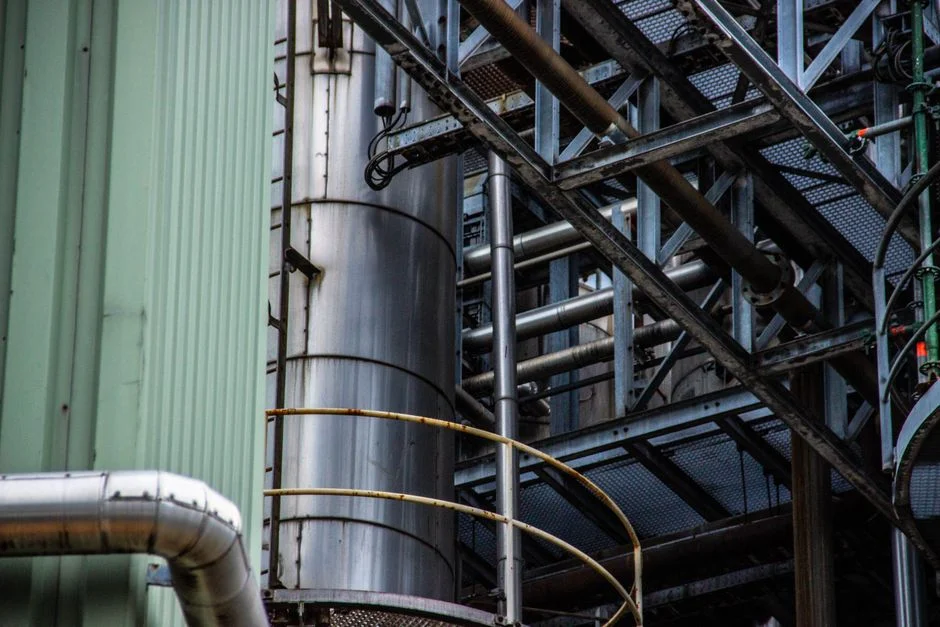
Four decision axes, walked in order, turn the unit-operation menu into a defensible train. The order matters: the controlling pollutant sets the first unit, the SIU status sets the numeric floor, the flow pattern sets the equalization volume, and the reuse decision sets the polish step.
Axis 1 — controlling pollutant: oils and TSS point to a dissolved air flotation system first; dissolved metals point to chemical precipitation followed by a HydropureWater lamella clarifier; high COD/BOD points to biological polishing via a HydropureWater MBR membrane bioreactor; pH swings point to equalization plus a PLC-controlled automatic chemical dosing system. Axis 2 — SIU status: pharma plants are SIUs by categorical-subject status under 40 CFR Part 439, so the federal number is the floor and the local limit is the binding constraint; the design must still prevent pass-through and interference under 40 CFR 403.5(a) regardless of which number is lower (per EPA, 2026). Axis 3 — flow pattern: batch operations with long cycle times need equalization sized for hours to days; continuous operations can run 4–8 hours of retention — over-sizing equalization is cheaper than a single pass-through excursion. Axis 4 — reuse: plants moving toward reuse should evaluate the MBR-plus-RO path; pure discharge-to-sewer operations can stay on conventional activated sludge or a simpler aerobic basin.
Permit timing, BMR, and the paperwork the SIU actually owes
Compliance does not end at startup, and the permit calendar is the part of a Springfield project that most often slips. The first milestone is the application itself: in Springfield, OR, the city requires a Wastewater Discharge Permit Application from an SIU or CIU at least 90 days before process water discharge; staff review the application, schedule a site visit, and then issue a permit listing discharge standards, parameters, and other conditions (source: springfield-or.gov, 2026). Springfield, MA follows the same logic through the Commission's Wastewater Discharge Permit Application and Temporary Discharge Permit path; Springfield, MO applies Chapter 120 to the same SIU/CIU paperwork stack.
A Baseline Monitoring Report (BMR) is owed at the point of categorical standard promulgation or new-discharge startup, then 90-day compliance reports on the schedule the controlling authority sets (per EPA, 2026). A slug load control plan under 40 CFR 403.8(f) is typically required for batch SIUs and combines equalization capacity, flow and pH monitoring, and written operating procedures for batch releases. Hazardous-waste notification under 40 CFR 403.12(p) is triggered when more than 33 lbs / 15 kg of any material classified as hazardous under 40 CFR 261 is discharged to the sewer; the notification must be made immediately and follow the authority's spill-contact order, which in Springfield, OR routes to the Environmental Services Division at 541-726-3694 in the first instance (source: springfield-or.gov, 2026).
Frequently Asked Questions
Is a pharma plant an SIU in all three Springfields?
Yes — under 40 CFR 403.3(v), a pharma plant is an SIU by categorical-subject status because 40 CFR Part 439 applies, regardless of city (per EPA, 2026). The SIU status then triggers the BMR, 90-day compliance report, and slug load control plan obligations at every Springfield authority.
Which Springfield authority does a plant in Eugene's metro actually call first?
Springfield, OR plants contact the City of Springfield Environmental Services Division at 541-726-3694 or [email protected] and submit signed forms to 225 5th Street, Springfield, OR 97477; the wastewater is treated at the regional plant on River Avenue under the MWMC Model Sewer Use Ordinance (source: springfield-or.gov, 2026).
What is the binding numeric limit on a single pollutant — the federal floor or the local limit?
The most stringent applicable number controls on any single pollutant (per EPA, 2026). The local limit — MWMC Model SUO for Springfield, OR, the Commission IPP list for Springfield, MA, or Chapter 120 for Springfield, MO — can be more stringent than 40 CFR Part 439 when the receiving plant's hydraulic or biological capacity is constrained.
When does the 40 CFR 403.12(p) hazardous-waste notification fire?
It fires when a discharge exceeds 33 lbs (15 kg) of any material classified as hazardous under 40 CFR 261 (per EPA, 2026). The notification must be made immediately and follow the controlling authority's spill-contact order — for Springfield, OR that order is documented on the city's Industrial Pretreatment page.