Why the Forest Food & Beverage Cluster Faces a Real DAF-vs-Clarifier Choice in 2026
Food and beverage plants in the Forest, US corridor — bottling, dairy, sauce, snack, and meat lines — generate wastewater that almost always carries high TSS, FOG, BOD, COD, TKN, and TP at once, with CIP surges producing 2–3× flow swings on a typical weekday (Clearwater Industries, 2023-09). That load profile collides directly with the 2026 state POTW pretreatment envelope most Forest dischargers must meet: surface-water TSS limits in the 30–50 mg/L range, BOD caps near 250–300 mg/L for indirect dischargers, FOG ceilings commonly 50–100 mg/L, and a pH window of 6.0–9.0. A standalone gravity clarifier cannot reliably hit those numbers on a high-FOG stream because light oils and emulsified grease will not settle in the 1–3 hours a clarifier gives them. A DAF unit attaches micro-bubbles to those same droplets and floats them in roughly 3 minutes — which is why DAF, not sedimentation, is the default primary clarifier in this cluster. A conventional clarifier still has a role, but only as a low-cost TSS polisher downstream of DAF or a biological step, or for a stream dominated by heavy inorganic settleables.
DAF vs Clarifier: How Each Technology Actually Works
A DAF system saturates a side-stream of clarified water with air at 60–80 psi, then releases that pressure inside a flotation tank; the resulting 20–80 micron micro-bubbles attach to FOG droplets and fine suspended solids, lifting them to the surface in roughly 3 minutes of hydraulic retention. A surface skimmer then drives the float into a sludge hopper while clarified effluent exits from below (Wang & Wang, 2022). Clarification capacity runs 4–5 GPM/ft² — a 12.2 m diameter DAF at the BARHI CETP in India is rated for 670 m³/h combined industrial flow (BARHI CETP, 2023). A conventional clarifier does the opposite job: feed enters a center well, heavy settleables drop to a sludge bed under gravity, and clarified water overflows peripheral launders. Retention runs 60–180 minutes, footprint scales with plan area rather than tank diameter, and the unit has essentially no mechanism to capture light FOG. For a Forest plant targeting reuse or a tight surface-water TSS cap, the hybrid answer is DAF as the primary FOG/TSS step followed by a HydropureWater lamella clarifier, whose inclined-plate pack delivers roughly 60% the footprint of an equivalent conventional clarifier while polishing residual TSS. A standalone DAF package, sized 4–300 m³/h, is specified in the HydropureWater DAF system catalog.
Side-by-Side Parameters: DAF vs Clarifier for Food & Beverage Streams
Before any cost model runs, the engineer needs the parameter matrix in one place. The table below consolidates the operating envelope a Forest food or beverage buyer will compare against an actual wastewater characterization. DAF holds a clear edge on FOG and footprint; the lamella clarifier variant closes some of the footprint gap when used as a polish step rather than a primary clarifier.
| Parameter | DAF (primary) | Conventional Clarifier | Lamella Clarifier (polish) |
|---|---|---|---|
| FOG removal | 90–95% (Ecologix 2026) | 60–70% (Ecologix 2026) | 20–40% on floatables; TSS polishing only |
| Effluent TSS | 20–30 mg/L (Wang & Wang 2022) | 50–150 mg/L | 5–30 mg/L with coagulant |
| Hydraulic retention | ~3 minutes | 60–180 minutes | 15–30 minutes |
| Surface loading | 4–5 GPM/ft² (≈ 24–30 m³/m²·h) | 0.3–0.7 GPM/ft² (≈ 1.8–4.2 m³/m²·h) | 2–4 GPM/ft² effective |
| Footprint at 100 m³/h | ~10 m² (≈ 3.6 m circular) | ~80–100 m² | ~12–18 m² |
| Sludge consistency | 2–3% DS float (Wang & Wang 2022) | 0.5–2% DS underflow | 1–3% underflow |
| Chemical demand | Coagulant + flocculant; polymer 1–5 mg/L typical | Polymer only at low TSS; coagulant if emulsified oil | Often polymer only |
| Energy intensity | Saturation pump + air compressor; 0.05–0.15 kWh/m³ | Slow-moving rake; 0.01–0.03 kWh/m³ | Similar to conventional |
| Best fit at a Forest F&B plant | Primary FOG/TSS removal | Heavy inorganic settleables, low FOG | Polish after DAF or biology |
The 12.2 m DAF in the BARHI cluster reference handles 670 m³/h of combined industrial wastewater in a footprint a clarifier of equal hydraulic capacity cannot approach (BARHI CETP, 2023).
The 95% vs 70% Food-Plant Case Study and What It Tells Forest Buyers
Ecologix's 2026 industrial selection guide documents a food processing plant with high oil content that installed a DAF and consistently removed 95% of oils and greases from its stream, while a clarifier on the identical influent only achieved 70% (Ecologix, 2026). That 25-percentage-point gap is the headline number a Forest plant manager can take into a procurement meeting: a clarifier alone leaves one to two and a half times the FOG load to the downstream POTW or surface water, which is exactly the parameter a state pretreatment inspector will scrutinize first. Translate it to a Forest bottling or dairy line: CIP cycles discharge emulsified cleaning solution plus residual product, sauce cookers generate high-temperature FOG spikes, and product changeovers dump concentrate streams — the load profile is not steady, and a clarifier's long retention cannot absorb the swings. Ecologix's counter-example matters too: a mining facility with heavy sediment loads cut solids 90% at lower cost with a clarifier than it could have with DAF. The boundary condition is clear — if the stream is mostly heavy settleables and low FOG, the clarifier wins on cost; if FOG is the dominant contaminant, DAF wins on compliance.
2026 Cost Picture: CAPEX, OPEX, and Sludge Hauling for a Forest Food Plant
Defending the equipment choice to procurement in 2026 means putting numbers against the polymer drums, the haul trucks, and the kWh. The table below is built from typical planning ranges for 2026 USD; absolute numbers vary with steel index, skimmer automation, and polymer selection, but the order-of-magnitude relationship is consistent across U.S. food-plant bids.
| Cost line | DAF (primary) | Lamella Clarifier (polish) | Notes |
|---|---|---|---|
| Installed CAPEX per m³/h (skid + civil, 2026) | Moderate-to-high; ~1.0–1.5× relative to lamella of equal hydraulic capacity | Lower per m³/h for the same TSS polish duty | HydropureWater DAF catalog covers 4–300 m³/h |
| Energy OPEX | Saturation pump, compressor, skimmer drive | Sludge rake, low recycle pump | DAF 3–5× the kWh of a clarifier |
| Polymer/coagulant OPEX | Coagulant (e.g., PAC) + flocculant; total 1–10 mg/L | Often polymer only at 0.5–3 mg/L | DAF cost partly offset by higher clarifier polymer for oil |
| Sludge dry solids | 2–3% DS float (Wang & Wang 2022) | 0.5–2% DS underflow | DAF float feeds a plate and frame filter press directly |
| Sludge hauling | Lower volume due to higher DS and skimming of float | Higher wet volume; needs thickener or pond | Hauling $/ton is the line item that swings the 20-year model |
| Operator attention | Daily skimmer, polymer dose, saturation pressure checks | Sludge pumping, rake torque monitoring | Both fit a 1-hour/day operator load |
The sludge line is usually where the 20-year model tips. A DAF float at 2–3% DS can be pumped straight to a filter press, reaching 25–35% cake without an intermediate thickener; a clarifier underflow at under 2% DS typically needs a thickener first (Wang & Wang, 2022). For a Forest plant hauling 2,000–4,000 tons of dewatered cake per year, eliminating a dedicated sludge thickener pays back the DAF energy premium in 3–5 years. Dosing accuracy matters as well — polymer over-feed on a clarifier is the single most common cause of clarifier failure on emulsified FOG streams, which is why an automated HydropureWater automatic chemical dosing system typically accompanies either choice.
When to Pair DAF With a Clarifier (or an MBR) in 2026
Two-unit trains are not over-spec — they are the right answer once the Forest plant pushes past a single-unit envelope. The two patterns we see most often in 2026 bids: DAF + lamella clarifier when the goal is tight surface-water TSS or water reuse for CIP pre-rinse, and DAF + MBR when the plant is moving toward full reuse or has a total nitrogen cap that biology must address. In the first train, the DAF does the heavy lifting on FOG and floatables, and the lamella clarifier drops residual TSS into the 20–30 mg/L band without the footprint of a conventional clarifier. In the second train, the DAF protects MBR membranes from oil fouling — a documented failure mode when raw F&B wastewater hits ultrafiltration directly — and the MBR delivers near-reuse effluent suitable for boiler feed or cooling-tower make-up after polishing; CAPEX and ROI tradeoffs for that train are covered in the 2026 MBR cost and ROI guide. A clarifier-only skid remains justified only on a low-FOG stream — vegetable wash water with mostly soil, for example, or final polishing of an already-treated biological effluent. The broader regulatory pressure on F&B water reuse in 2026 is captured in the Food Processing Australia's August 2026 F&B water rethink piece, which is written for an Australian audience but tracks the same discharge economics U.S. plants are now facing.
3-Step Selection Checklist for a Forest Food & Beverage Buyer
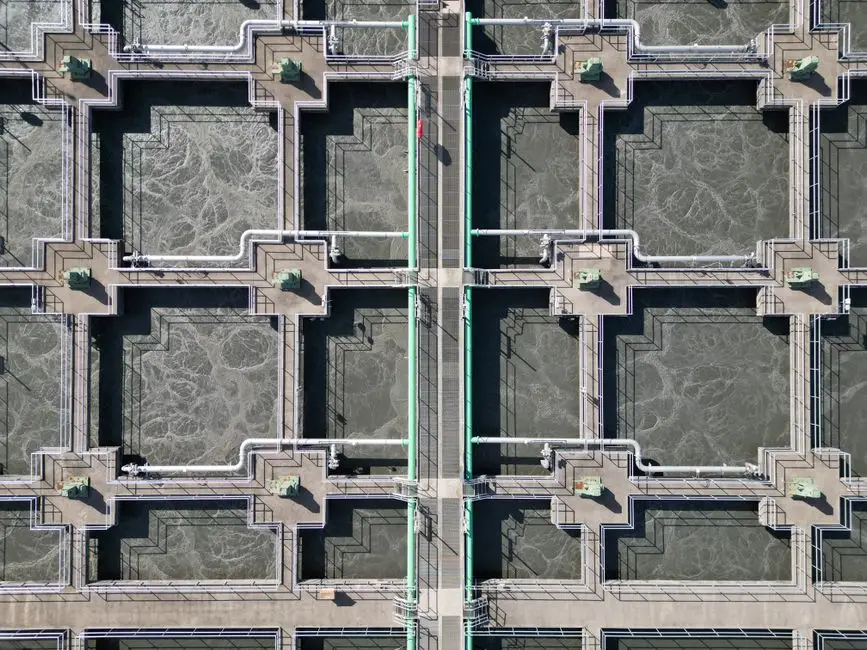
Run this on Monday morning before the procurement meeting.
Step 1 — Quantify the FOG and the flow swing. Pull the last 30 days of CIP and production logs. If average FOG exceeds 100 mg/L, or peak:average hourly flow exceeds 3:1, DAF is the default primary; the swings are what a clarifier cannot absorb. If FOG is consistently under 50 mg/L and the stream is dominated by settleable soil or pulp fiber, a clarifier-only train is defensible.
Step 2 — Check the 2026 discharge envelope. Read the latest state POTW pretreatment letter or NPDES permit. If the FOG ceiling is under 50 mg/L or the surface-water TSS limit is under 30 mg/L, DAF is required — a clarifier alone will not hit either reliably. If the ceiling is 100 mg/L FOG and 50 mg/L TSS and the stream is low-FOG, a lamella clarifier may suffice.
Step 3 — Run a 20-year cost model. Combine installed CAPEX, kWh at the local industrial tariff, polymer at current $/lb, and sludge hauling at the nearest licensed hauler's $/ton wet weight. DAF wins on chemical and sludge; the clarifier wins on energy and CAPEX for low-FOG streams. Include a sensitivity row for hauling cost — Forest food plants that have seen hauling rates double since 2024 should weight the sludge line more heavily than the energy line. For a Crossett pulp & paper analog, the Crossett pulp & paper DAF vs clarifier guide walks the same three-step method against a different load profile.
Frequently Asked Questions
What influent FOG level forces a DAF over a clarifier in a food or beverage plant?
Once wastewater FOG routinely exceeds 100 mg/L — common at dairy, sauce, and meat plants during CIP — DAF becomes the default primary, because DAF hits 90–95% FOG removal while a clarifier on the same stream stalls at 60–70% (Ecologix, 2026). A HydropureWater DAF system sized at 4–300 m³/h covers the typical Forest plant envelope.
Can a DAF and a lamella clarifier be used together, and why would a plant do that?
Yes. DAF as the primary removes FOG and floatables in about 3 minutes; a HydropureWater lamella clarifier downstream polishes residual TSS down toward 20 mg/L in roughly 60% of the footprint a conventional clarifier would need. This train is the right answer when the Forest plant is targeting water reuse or a surface-water TSS limit under 30 mg/L.
How much dry solids does DAF sludge produce, and does it need a separate thickener?
DAF float typically leaves the skimmer at 2–3% dry solids — thick enough to pump straight to a plate and frame filter press for dewatering to 25–35% cake without an intermediate gravity thickener (Wang & Wang, 2022). That step is usually the line item that swings a 20-year OPEX model in DAF's favor for high-FOG streams.