Why fabricated metals wastewater is a different decision
For fabricated metals plants in Buffalo in 2026, choose a DAF when the dominant load is free or emulsified oil, tramp cutting fluid, or drawing compound (DAF typically removes 90–95% of FOG); choose a clarifier when the load is metal-hydroxide sludge, scale, and heavy fines from alkaline cleaning or precipitation (clarifiers settle 85–90% of TSS at lower cost). Most Buffalo job shops run a hybrid: DAF for the oily first stream, clarifier for the metals-precipitation second stream.
The DAF-vs-clarifier question in a fabricated-metals plant is set by the specific mix of sub-streams the shop generates — not by a rule of thumb written for food processing or mining. A typical Buffalo-area job shop (machining, stamping, structural steel, sheet metal) will see at least three of the following four sub-streams: machine coolant overflow carrying free and emulsified oil at 1–20 μm droplet size, stamping and drawing oils that drag into floor drains, alkaline cleaning rinse water at pH 10–12 with dissolved Fe, Zn, and Al, and quench water contaminated with tramp oil and iron scale. Each sub-stream has a different dominant contaminant, and that contaminant picks the unit operation.
The reason generic DAF-vs-clarifier content falls short here is oil density. Cutting and stamping oils sit at 0.85–0.95 g/mL — close enough to water that gravity settling is impractically slow, and emulsified oil droplets at 1–20 μm will not settle at all without air bubble attachment. Ecologix's 2026 selection guide quantifies the gap: a food plant with high oil content hit 95% FOG removal on a DAF versus 70% on a clarifier for the same stream, while a mining facility with heavy sediment cut TSS by 90% on a clarifier at lower cost. Apply those two reference points to a fabricated-metals plant and the choice becomes sub-stream by sub-stream. Buffalo's concentration of heavy manufacturing — steel service centers, structural fabricators, machining job shops along the I-90 corridor — means most plants combine at least two of these sub-streams, which sets up the hybrid recommendation later. For comparison logic applied to a nearby industrial market, the Sharon fabricated metals DAF vs clarifier guide walks the same decision tree.
How DAF actually performs on fabricated metals streams
DAF removes free oil, emulsified oil, and fine suspended solids in a single pass by attaching 30–50 μm micro-bubbles (per SigmaDAF/Clearwater spec) to oil droplets and flocculated metal fines, then floating the combined particle to the surface for skimming. The air is dissolved into a pressurized recycle stream and released through a pressure-relief valve at the bottom of the tank; the resulting bubble cloud nucleates on hydrophobic oil surfaces and on conditioned floc. Rectangular DAF units ship fully shop-assembled (per ClearStream) and can be dropped into an existing concrete basin, which matters for retrofitting into older Buffalo plant buildings where floor space is tight and outdoor installation is not viable from November through March.
DAF must be paired with coagulation and flocculation to break emulsions and grow a floatable floc. On fabricated-metals streams the typical conditioning train uses a coagulant — alum, PAC (polyaluminum chloride), or ferric chloride — to neutralize the surface charge on emulsified oil droplets and destabilize colloidal metal fines, followed by a small dose of anionic or non-ionic polymer flocculant to build a strong, low-density floc the bubbles can lift. Without that chemistry, a DAF on straight coolant overflow performs poorly; with it, removal reaches the 90–95% FOG range cited by Ecologix (2026) and sub-100 μm TSS carryover is realistic. A shop interested in a packaged unit should look at the DAF system as a baseline reference for a 50–150 GPM class skid.
The operating-cost driver for a DAF is the air compressor and saturation pump plus the polymer dose — Ecologix (2026) rates DAF complexity as "moderate" and OPEX higher than a clarifier. Cold-climate placement is a real Buffalo constraint: saturation efficiency drops and water viscosity rises in freezing conditions, so DAFs in this region are typically installed indoors or under cover rather than outdoors. For a full EV-battery or automotive coolant stream with similar emulsion chemistry, the EV/auto DAF vs clarifier guide shows the same micro-bubble mechanism at higher flow rates.
How a clarifier performs on fabricated metals streams
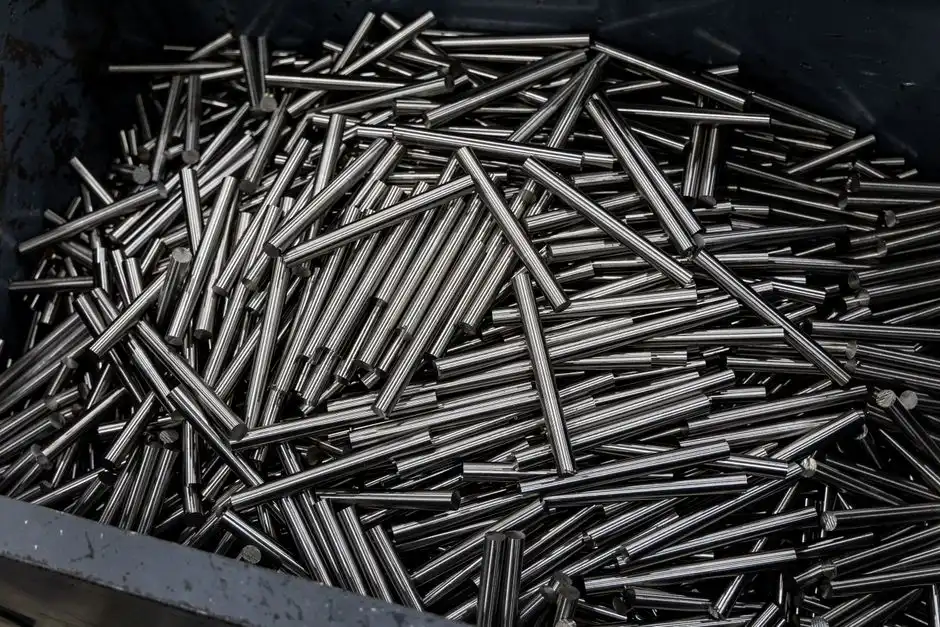
A clarifier relies on gravity sedimentation: heavier metal fines, metal-hydroxide floc, and scale settle to the bottom of the tank and are raked to a central hopper for removal as sludge (per Ecologix, 2026). On a fabricated-metals stream dominated by metal-hydroxide precipitate from pH-adjusted alkaline cleaning rinse — Fe(OH)₃, Zn(OH)₂, Al(OH)₃ — a clarifier is the right primary unit, and the Ecologix mining example (90% TSS reduction at lower cost) is a reasonable directional reference for any heavy-solids stream. Metal-hydroxide floc is denser than water and settles readily in a quiescent basin, which is exactly the operating regime a clarifier is designed for.
The 2026 default for fabricated-metals plants in older Buffalo buildings is the lamella or inclined-plate clarifier, because the small footprint solves the retrofit problem. The HydropureWater high-efficiency sedimentation tank is a representative lamella design rated for 20–40 m/h surface loading rates, which is roughly 5–10× the loading of a conventional rectangular clarifier of equal plan area. That footprint advantage is decisive when the plant has to install a 75–100 GPM clarifier inside an existing treatment room with 3 m of headroom.
The clarifier's hard limit on fabricated-metals streams is emulsified oil. A clarifier cannot remove emulsified oil — the 1–20 μm droplets do not settle, and any free oil that does reach the lamella plates coats them, fouls the surface, and floats over the weir. A clarifier alone on a coolant overflow stream will fail to meet the 95% FOG removal a DAF achieves (Ecologix, 2026). This is the single most common procurement error in fabricated-metals pretreatment: specifying a clarifier as the primary unit because it is cheaper, then discovering six months after startup that the POTW is surcharging on oil.
DAF vs clarifier: sub-process decision matrix for fabricated metals
The matrix below is the artifact to take into a vendor meeting. It maps each fabricated-metals sub-stream to its dominant contaminant, the recommended primary unit, and the watch-out that drives the second unit in a hybrid train. Performance numbers anchor the cells: 30–50 μm micro-bubbles (SigmaDAF/Clearwater spec), 95% DAF FOG and 70% clarifier FOG, 90% clarifier TSS (Ecologix, 2026).
| Sub-stream | Dominant contaminant | Recommended primary | Why | Watch-out |
|---|---|---|---|---|
| Machine coolant overflow | Free + emulsified oil (1–20 μm), tramp metal fines | DAF with coagulation/flocculation | Micro-bubbles (30–50 μm) attach to oil droplets; 90–95% FOG removal (Ecologix, 2026); clarifier would only hit ~70% | Polymer carryover into downstream clarifier — oversize the clarifier or add a small equalization basin |
| Stamping / drawing oil | Free oil, drawing compound, low TSS | DAF (or oil-water separator + DAF for very high free oil) | Free and emulsified oil both float; DAF handles them in one pass; no benefit to a clarifier | High free oil can overwhelm a DAF — install a coalescing oil-water separator upstream |
| Alkaline cleaning rinse (pH 10–12, dissolved Fe/Zn/Al) | Dissolved metals, metal-hydroxide floc after pH adjustment | Clarifier (after chemical precipitation) | Hydroxide floc settles readily; 90% TSS removal at lower OPEX (Ecologix, 2026) | pH excursion — confirm precipitation pH is held in the 8.5–9.5 range before the clarifier |
| Quench water | Tramp oil + iron scale | Clarifier (with DAF polish if oil exceeds ~50 mg/L) | Iron scale is heavy and settles; clarifier is the lower-OPEX primary | Oil coating on lamella plates — skim free oil upstream or dose a small polymer |
| Mixed floor drain | Variable FOG + TSS + trace metals | Hybrid: DAF first, clarifier second | Hybrid trains handle the variable load (Ecologix, 2026); DAF strips oil, clarifier catches floc and fines | Hydraulic surge from storms — equalize upstream of the DAF |
The typical 2026 treatment train for a Buffalo fabricated metals plant
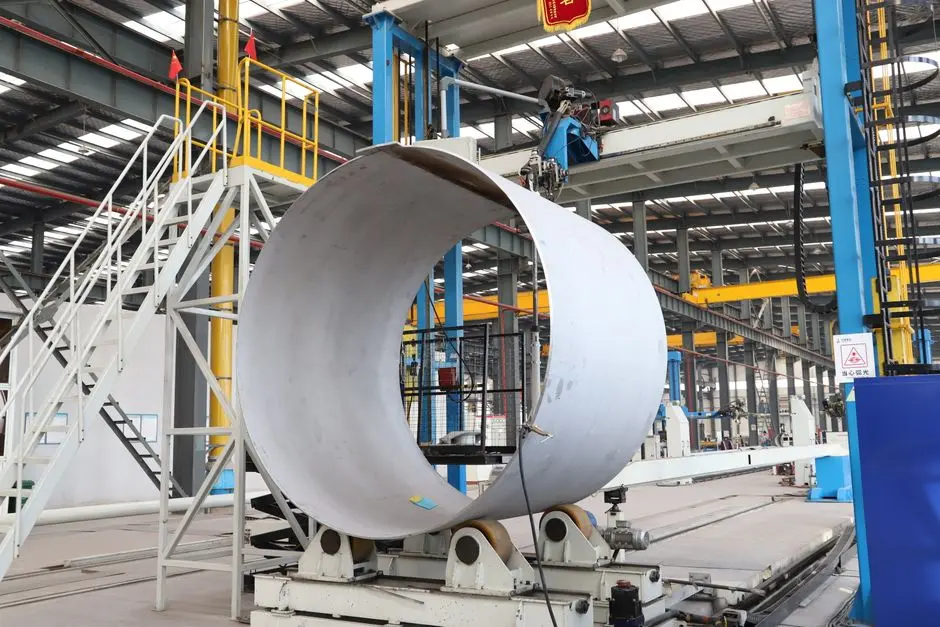
Realistic fabricated-metals pretreatment in 2026 is a sequence of unit operations, not a single vessel. The DAF and the clarifier each handle a different job inside that train, and the chemistry between them is what makes the whole system work. The typical order for a Buffalo job shop discharging to the Buffalo Sewer Authority POTW is: oil-water separator or coalescer (free oil removal) → equalization basin (flow and load dampening) → DAF system with integral coagulation/flocculation (emulsified oil and fine TSS) → chemical precipitation and pH adjustment to 8.5–9.5 (metals dropout) → lamella clarifier (hydroxide sludge) → pH neutralization to 6–9 → HydropureWater multi-media filter polish (residual TSS to meet sewer limits) → discharge.
Between the DAF and the clarifier sits the chemical conditioning step, and the automatic chemical dosing system is the typical way to feed coagulant, flocculant, and pH adjusters — skid-mounted, PLC-controlled, paced by flow. Coagulant goes in ahead of the DAF to break emulsions; flocculant goes in just before the DAF to build floatable floc; caustic or acid goes in after the DAF to set the precipitation pH for the clarifier. Sludge from both the DAF float and the clarifier underflow is then sent to a plate-and-frame filter press for dewatering to a cake suitable for disposal. This same train logic, applied to a different metals sector, is laid out in the 2026 pretreatment compliance for metals plants reference.
Cost, footprint and compliance considerations in Buffalo
The 2026 capital and operating comparison for a fabricated-metals plant in the 50–150 GPM class is straightforward: a packaged DAF skid carries higher CAPEX than a comparably sized lamella clarifier, but the DAF removes what the clarifier physically cannot — emulsified oil at 1–20 μm. Operating-cost direction is the reverse. Clarifiers generally have lower OPEX (no air compressor, lower chemical demand); DAF OPEX is driven by compressor kWh, polymer consumption, and skimmer maintenance (per Ecologix, 2026). The honest framing is that neither is cheaper in absolute terms — the right question is which contaminant is forcing the spend.
Footprint favors DAF in narrow retrofit buildings because rectangular units ship fully shop-assembled (per ClearStream) and can be lowered into an existing concrete basin. A lamella clarifier is the better choice when vertical headroom is constrained and the stream is metal-hydroxide sludge rather than oil. The table below summarizes the trade-offs a Buffalo procurement manager should weigh against local conditions.
| Factor | DAF | Lamella clarifier |
|---|---|---|
| CAPEX (50–150 GPM packaged) | Higher | Lower |
| OPEX driver | Air compressor kWh, polymer, skimmer maintenance | Polymer (lower dose), rake torque, periodic sludge pumpout |
| Footprint | Rectangular, ships fully shop-assembled, retrofit-friendly (ClearStream) | Compact inclined-plate design, 20–40 m/h surface loading |
| Best on | Emulsified oil, free oil, fine TSS (90–95% FOG, Ecologix 2026) | Metal-hydroxide floc, scale, heavy fines (90% TSS, Ecologix 2026) |
| Fails on | Dissolved metals (no removal without precipitation) | Emulsified oil (1–20 μm will not settle, plates foul) |
| Buffalo climate | Indoors or enclosed — saturation efficiency drops in freezing conditions | Indoors typical; less sensitive to cold than DAF saturation system |
Compliance in Buffalo flows through the Buffalo Sewer Authority POTW, whose local limits are derived from 40 CFR Part 403 general pretreatment standards. Fabricated-metals plants with on-site plating or other metal-finishing operations typically also fall under 40 CFR Part 433 (Metal Finishing) categorical standards; shops without plating may discharge under local limits only. Confirm the applicable categorical standard with the Buffalo Sewer Authority pretreatment coordinator before specifying equipment, because the oil and metals limits on the discharge permit will set the actual performance bar the system has to hit.
Frequently asked questions
Can a fabricated metals plant use DAF and clarifier together?
Yes. A hybrid train is the 2026 default for most Buffalo fabricated-metals plants. Ecologix (2026) confirms that DAF and clarifier can be combined, with the DAF handling the oily first stream and the clarifier handling the metal-hydroxide sludge from chemical precipitation. This is the only configuration that reliably hits both the FOG and the dissolved-metals limits in the Buffalo Sewer Authority discharge permit.
If my dominant load is emulsified cutting oil, is DAF the right choice alone?
Yes, for the oil removal step. A DAF with coagulation and flocculation typically removes 90–95% of FOG (Ecologix, 2026), versus roughly 70% for a clarifier on the same stream. A clarifier alone on a coolant overflow stream will foul its lamella plates and fail to meet discharge oil limits; DAF is the correct primary unit, with optional downstream filtration for residual TSS.
Which system is cheaper to operate long-term?
A clarifier is generally lower OPEX because it has no air compressor and a lower polymer demand (Ecologix, 2026). A DAF costs more to run but may be more cost-effective overall for oil-dominated streams because it removes what a clarifier physically cannot. For a plant with both oil and metals sub-streams, the hybrid train is the lowest-total-cost path because each unit is sized for the contaminant it actually handles.