Why Sarasota Pulp & Paper Mills Are Re-Evaluating Primary Solids Removal in 2026
A Sarasota tissue mill manager opens the monthly hauling invoice and sees what every regional operator now sees: tipping fees up, Sarasota County pretreatment limits tightening on fats, oils, and grease (FOG) and total suspended solids (TSS), and a 2026 re-permitting window that forces a real decision on primary solids removal. The question is no longer whether to upgrade, but which unit process to install before the next hurricane season starts in June.
Pulp and paper effluent is the exact mix that punishes gravity clarifiers and rewards dissolved air flotation (DAF). Per the Ecologix pulp and paper industry profile, mill wastewater typically runs high in TSS, biochemical oxygen demand (BOD), chemical oxygen demand (COD), color, wood fibers, and inorganic fillers, and DAF attaches micro-bubbles to particles with densities close to water that conventional sedimentation cannot remove efficiently. Federal effluent limits under 40 CFR Part 430 already constrain this sector, and Sarasota County's industrial pretreatment program layers FOG caps and local discharge limits on top of those rules.
Local climate is the second pressure. Florida's hurricane season runs June through November, and storm-driven infiltration at the mill's intake or pump station can swing feed flow by 2–4× in a single event, a shock load that a long-residence clarifier cannot absorb without carryover. Add Sarasota's warm, algae-prone surface water, a documented DAF use case for raw water clarification per the Krofta pulp and paper applications page, and the case for shorter hydraulic residence times gets stronger. Tissue, towel, and recycled-fiber lines in the region also want to recover fiber as a saleable by-product rather than pay to haul it as dewatered sludge. A side-by-side framing for this region is also covered in the Crossett pulp & paper DAF vs clarifier guide, which covers parallel Gulf South conditions.
DAF vs Clarifier: Head-to-Head Comparison
DAF clears suspended solids in 3–5 minutes, whereas a conventional gravity clarifier requires 60–120 minutes of hydraulic residence, and this difference drives most of the other trade-offs on a Sarasota site. The table below compares the two technologies on the parameters that matter for a 2026 RFQ.
| Parameter | Dissolved Air Flotation (DAF) | Lamella Clarifier | Best Fit |
|---|---|---|---|
| TSS removal efficiency | 85–95% typical on pulp & paper feed | 50–80% without coagulant aids; lower on light fibers | DAF for fiber-bearing streams; clarifier for filler streams |
| FOG and stickies handling | 60–80% FOG removal; floats and skims light fractions | Poor; light fractions re-suspend into overflow | DAF |
| Fiber recovery | Yes; long fibers float and are skimmed, suitable for recycled furnish | No; light fibers exit with overflow or settle in underflow | DAF |
| Hydraulic residence time | 3–5 minutes (per Krofta) | 60–120 minutes | DAF for variable feed |
| Footprint (m² per m³/h) | ~0.05–0.10 m² per m³/h for compact DAF designs | ~0.03–0.05 m² per m³/h at 20–40 m/h lamella loading | Clarifier on tight filler-only sites |
| Polymer demand | Moderate; tuned for floc-bubble attachment | Up to 30% lower than conventional clarifiers | Clarifier for low-FOG streams |
| Mechanical complexity | Saturated recycle loop, air compressor, skimmer, level controls | Lamella packs, sludge scraper, no aeration | Clarifier for small crews |
| Sludge consistency | 2–4% dry solids float; thinner than clarifier underflow | 3–6% dry solids underflow; denser, easier to press | Clarifier when press throughput matters |
| Hurricane-season surge response | Absorbs 2–4× flow swings with minor TSS carryover | Susceptible to washout during peak flow | DAF |
| CAPEX lever | Higher equipment cost, smaller basin | Lower equipment cost, larger basin or taller lamella stack | Site-dependent |
| OPEX lever | Air compressor energy, polymer, fiber revenue offset | Polymer, sludge hauling | DAF if fiber is sold; clarifier if no fiber value |
The 3–5 minute DAF residence time cited above is the same Krofta benchmark used for raw water clarification against algae, and it explains why hurricane-season surge tolerance is structurally different between the two technologies. The HydropureWater DAF system covers 4–300 m³/h across 13 standard models, which lines up with both small tissue lines and large containerboard machines in the Sarasota region.
When DAF Is the Right Pick for a Sarasota Mill
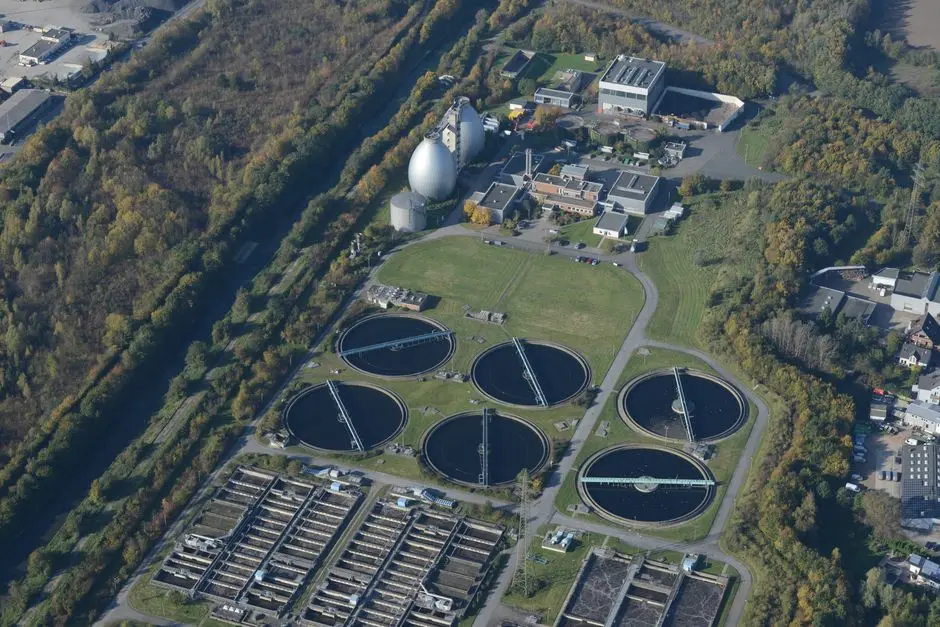
DAF wins whenever the feed carries wood fiber, FOG, coatings, or de-inking residues that are near-neutral density relative to water. The Krofta Supracell DAF was designed specifically for fiber recovery from virgin and recycled paper streams, redirecting longer fibers back into the sheet and reducing furnish cost, which is a direct OPEX offset for any tissue, towel, or recycled-fiber line. FOG, coatings, and stickies from de-inking operations float readily on a DAF and are scraped off the surface as a concentrated float; in a clarifier the same light fractions re-suspend into the clarified overflow and show up as TSS noncompliance on the daily plant report.
Warm whitewater reuse is a documented DAF + Krofta Spray Filter pairing that protects shower nozzles from plugging and recaptures heat that would otherwise be lost to cooling. For a 2026 capex line item, that energy recovery is often the financial lever that flips the decision. Raw water clarification against Sarasota's algae-laden surface water is a parallel DAF use case per the Krofta applications page, which matters for any mill drawing process water from a river or reservoir rather than a deep well. The HydropureWater DAF system flow band of 4–300 m³/h across 13 standard models gives Sarasota mills a stocked configuration range, and the same saturated-recycle architecture handles both fiber recovery and algae removal duties when paired with a parallel polishing filter.
When a Lamella Clarifier Still Wins
A lamella clarifier is the right call when the stream is dominated by inorganic filler rather than fiber, the operator headcount is small, and polymer OPEX is the controlling cost line. Calcium-carbonate-rich coating wastewater, broke from a coated-paper line, and some precipitated-load streams from de-inking chemistry all settle cleanly in a lamella without the aeration energy a DAF requires. Lamella surface loading of 20–40 m/h delivers a compact footprint, and the up to 30% lower chemical consumption versus conventional clarifiers (per the HydropureWater lamella clarifier spec) cuts recurring polymer spend.
There is no air-handling equipment, no saturated recycle loop, and fewer rotating parts, which is a maintenance profile that fits a mill where the wastewater crew is two people, not eight. The denser underflow from a clarifier (3–6% dry solids versus 2–4% from a DAF float) is also a real advantage when the downstream HydropureWater plate and frame filter press is the bottleneck, because thicker feed cuts press cycle time. If fiber recovery is not a goal, FOG is not a compliance driver, and the feed TSS is moderate, a lamella clarifier will outperform a DAF on lifecycle cost. The HydropureWater lamella clarifier is the candidate unit for these streams.
Sarasota-Specific Selection Matrix for 2026
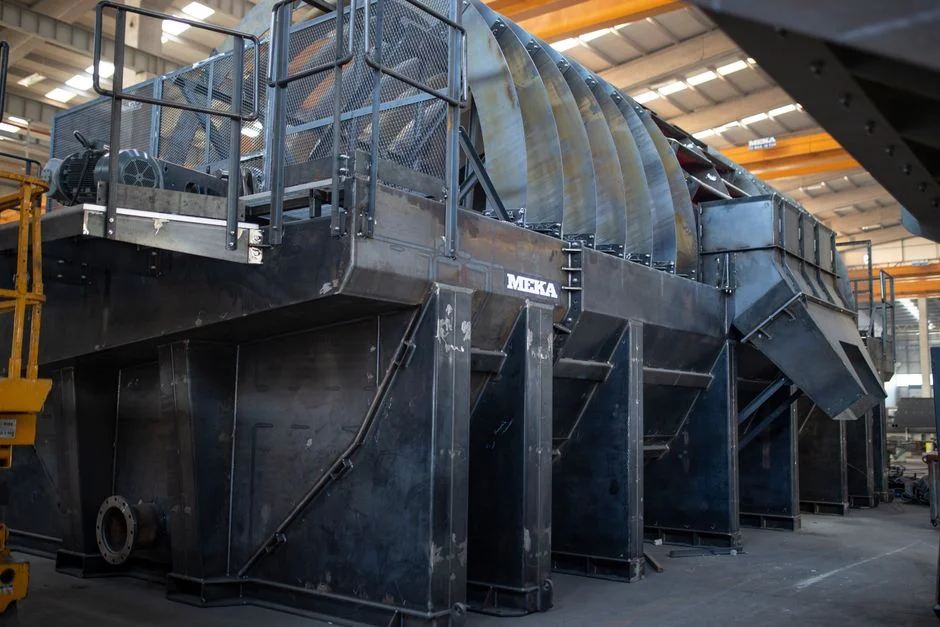
The decision turns on five local inputs: feed type, FOG and stickies load, whether fiber recovery has revenue value, hurricane-season flow variability, and whether warm whitewater is being reused. The matrix below maps each combination to a unit process.
| Feed / Site Condition | FOG / Stickies Load | Fiber Recovery Goal | Hurricane Surge Risk | Warm Whitewater Reuse | Recommended Unit |
|---|---|---|---|---|---|
| Virgin pulp / OCC recycled | High | Yes | High | Yes | DAF + spray filter polish |
| Tissue / towel | Moderate | Yes (premium furnish) | High | Yes | Hybrid DAF + lamella polish |
| De-inking line | High (stickies, FOG) | Yes | Moderate | Optional | DAF |
| Coating wastewater (filler-dominated) | Low | No | Low | No | Lamella clarifier |
| Algae-laden surface raw water | Low | No | N/A | N/A | DAF (raw water side) |
| Variable FOG, moderate TSS, no fiber revenue | Moderate | No | High | Optional | DAF (smaller model) |
Two local rules override the table. Sarasota's algae-prone surface raw water pushes raw water clarification toward DAF regardless of the process line, because lamella clarifiers do not handle algal cell suspensions reliably. Warm-process-water and energy-cost pressure in 2026 favor DAF whenever warm whitewater can be polished by a spray filter and returned to the showers, which the Krofta application note documents as a standard pairing. Any line exceeding 2× design TSS or with significant seasonal variation should still go through a jar test and an on-site pilot before any capex commitment, and polymer program design is covered in the chemical dosing cost optimization guide.
2026 RFQ Checklist for Sarasota Pulp & Paper Buyers
Before a Sarasota mill issues a 2026 RFQ for primary solids removal, the specification sheet must lock down the inputs the bidder will size against, not just the flow. Spec the full influent envelope: TSS, BOD, COD, FOG, temperature, pH, and peak flow including a hurricane-season factor (typically 2–4× daily average for a Florida mill). Require each bidder to guarantee TSS removal at design flow, polymer consumption in kg per ton of dry solids, saturated recycle air-to-solids ratio, and sludge dry solids from a similar pulp and paper feed, not a generic municipal number.
Ask specifically for skimmer versus bottom-scraper sludge withdrawal, controls integration with the existing SCADA platform, and NSF/ANSI or equivalent wetted-part certifications. Demand documented pulp and paper references that can be cross-checked, since both Ecologix and Krofta publish named mill applications that serve as defensible baselines. Plan a 4–8 week pilot with a rental DAF or rental lamella unit before any capex commitment; the Crossett mining analogue in the Sarasota mining wastewater RFQ reference shows how a pilot catches hurricane-season surge issues that a desktop design misses. Saturated-recycle and polymer-pump packages should be sourced as a matched automatic chemical dosing system rather than integrated ad hoc on site.
Frequently Asked Questions
DAF or clarifier for pulp and paper — short verdict?
For a Sarasota pulp or paper mill in 2026, DAF is the better default for fiber recovery, FOG and stickies, and warm whitewater reuse, because it clears suspended solids in 3–5 minutes and recovers wood fibers a clarifier would lose to the underflow. A lamella clarifier still wins when the stream is mostly inorganic filler, TSS is moderate, and the mill values minimum polymer and low mechanical complexity.
Can a lamella clarifier recover fiber like a DAF?
Light, low-density fibers either exit with the clarifier overflow or end up in the underflow mixed with filler, which is why fiber-recovery lines in tissue, towel, and recycled-fiber mills use DAF or a DAF plus spray filter train,
Frequently Asked Questions
DAF or clarifier for pulp and paper wastewater — which is better?
The choice depends on the specific fiber density and hydraulic loading requirements. DAF (Dissolved Air Flotation) is generally superior for pulp and paper wastewater containing high concentrations of lightweight, hydrophobic fibers or resins that tend to float, achieving surface loading rates of 5 to 10 m/h. Clarifiers are better suited for heavy mineral fillers or high-density sludge applications where gravity sedimentation is more efficient than bubble-assisted flotation.
Can a lamella clarifier recover fiber the way a DAF does?
While a lamella clarifier can remove settleable solids, it is significantly less effective than DAF at recovering low-density cellulose fibers. DAF systems use micro-bubbles to attach to fibers, lifting them to the surface for mechanical skimming, which typically results in a higher solids concentration (3% to 5% consistency) in the recovered sludge compared to the 1% to 2% consistency typically achieved by gravity lamella settlers.
What TSS removal can a DAF achieve on pulp and paper wastewater?
A properly optimized DAF unit can achieve Total Suspended Solids (TSS) removal efficiencies of 90% to 98% in pulp and paper applications. When integrated with appropriate coagulant and flocculant dosing, DAF systems can consistently reduce raw effluent TSS from 500–2,000 mg/L down to discharge concentrations below 50 mg/L, meeting most local environmental standards in Florida.
How much space does a DAF need compared to a clarifier for the same flow?
DAF systems typically require 60% to 80% less physical footprint than conventional circular clarifiers. Because DAF units utilize high-rate separation through air-induced buoyancy, they can handle higher hydraulic loads in a smaller vessel, making them ideal for paper mills in Sarasota where land availability may be limited or land costs are high.
Is a pilot study required before buying a DAF or clarifier for a paper mill?
A pilot study is strongly recommended, especially given the variability in paper mill furnish, chemical additives, and seasonal water temperature fluctuations. Testing confirms the specific polymer dosage rates, air-to-solids ratios, and bubble size distribution required to meet your facility’s 2026 discharge permits, preventing costly undersizing or operational failure during full-scale implementation.