Why Plastics and Rubber Wastewater Is Different in Marshfield
Plastics molding, extrusion, and rubber goods plants in Marshfield, MA do not produce a textbook "solids removal" wastewater problem. They produce an emulsified-oil and low-density-solids problem. The wash water and cooling-water blowdown from a plastics molder or rubber goods line typically carries mold-release oils and wax emulsions, plasticizer and stabilizer surfactants (phthalates, stearates, epoxidized soybean oil), polymer fines and off-spec pellets, latex carryover from dipped rubber goods, and hydrocarbon oils from extrusion cooling. These contaminants are mostly buoyant or surface-active, not settleable. The local receiving POTW — typically the Town of Marshfield Sewer Commission, or Pembroke/Rockland for some sites — cares first about oil and grease (typical local limit 50–100 mg/L) and TSS, not just COD. A 2026 inspection will lead with "what is your oil and grease number?"
This is why generic clarifier advice fails plastics and rubber streams. As Spectrum Water puts it, DAF is the right tool for "oil, grease and low-density solids that will not fall out of suspension under gravity" (source: Spectrum Water, 2026). A conventional clarifier is designed to drop heavy, settleable solids out of suspension. Light polymer flakes float. Emulsified oils do not coalesce under quiescent settling. Surfactant-stabilized fines stay in the water column indefinitely. Marshfield's mix of smaller specialty molders, gasket shops, and rubber goods manufacturers produces intermittent, high-FOG batch dumps rather than steady high-TSS streams — which is exactly the duty a clarifier handles worst. Any primary separator sized for this matrix in 2026 has to remove what floats, not what sinks.
How a DAF Clarifier Works on Plastics and Rubber Streams
A dissolved air flotation unit separates the things a clarifier cannot. Air is dissolved into a pressurized recycle stream (typically 60–80 psig, 20–30% recycle ratio) and released into the flotation cell at near-atmospheric pressure. The dissolved air comes out of solution as a cloud of 30–50 micron microbubbles (per SigmaDAF USA, 2026), which attach to chemically conditioned oil, FOG, plasticizer surfactants, and polymer fines. The bubble-floc aggregate has a bulk density lower than water, so it rises to the surface in minutes, where a paddle skimmer scrapes the float layer into a sludge trough. Heavier grit that does settle is removed by a bottom auger. Clarified effluent flows out under a baffle and on to pH adjustment, biological polishing, or direct discharge.
Chemical conditioning is what makes a DAF work on a plastics or rubber stream. Emulsified oils and plasticizer surfactants carry negative surface charge and will not attach to bubbles without a coagulant (typically a cationic blend — PAC, alum, or a formulated emulsion breaker) followed by a flocculant (anionic or cationic polyacrylamide) to build a strong, low-density floc. Jar testing on the actual plant sample — not generic dose rates — is the only defensible way to pick the chemistry. Spectrum Water runs jar tests in its in-house lab and supplies the chemistry and the unit together, which is the right model for a small Marshfield plant that does not have a bench-scale program in-house (source: Spectrum Water, 2026).
For a Marshfield plastics or rubber plant, the relevant equipment map looks like this: the SigmaDAF FPAC for small-to-medium flows with very high TSS/FOG loads; the FPBC with built-in lamella pack for low-to-medium solids and low-buoyancy particles; the FPHF for higher flows; and the COMPACT DAF as a pre-assembled turnkey skid with chemical conditioning, sensors, and PLC controls — single skid up to 66 GPM, modular two-skid above 66 GPM (source: SigmaDAF USA, 2026). For permanent North American installations, the HydropureWater DAF system covers 4–300 m³/h across 13 models, which encompasses the typical 10–100 gpm envelope of a small specialty plastics or rubber plant plus its batch dumps.
How a Conventional Clarifier Handles the Same Stream
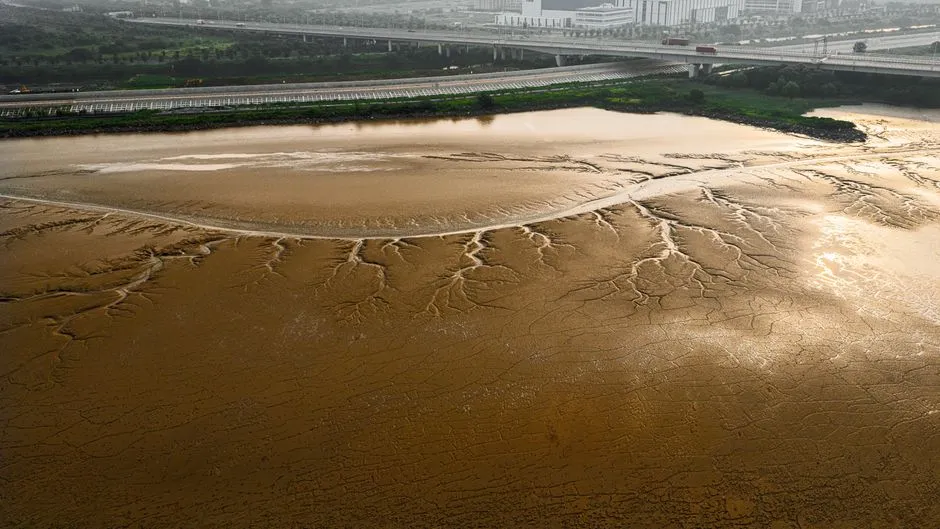
A conventional gravity clarifier and its lamella plate variant are one-tank units that combine flocculation, sludge recirculation, and inclined-plate separation. Water flows upward through a stack of inclined plates at a controlled surface loading rate; heavy solids settle onto the plate surfaces and slide down into a sludge hopper, while clarified water exits over a weir. A lamella clarifier is the right shape for the job it was designed to do. HydropureWater's lamella design runs at surface loading rates of 20–40 m/h and delivers up to 30% lower chemical consumption than a conventional settling tank (source: HydropureWater product data, 2026). It is a compact, well-understood, low-CAPEX piece of equipment. The HydropureWater lamella clarifier is a strong fit when the stream is mostly heavy, settleable solids.
Where the clarifier falls short on a plastics or rubber stream is the FOG and low-density-solids fraction. Light polymer flakes and pellets float to the surface in a clarifier and accumulate as a scum layer that is hard to skim cleanly. Emulsified oils do not coalesce under quiescent gravity conditions — the surfactant charge that kept the oil droplets dispersed in the first place keeps them from merging in a clarifier. Surfactant-stabilized polymer fines stay in the water column. The result is high FOG carryover in the effluent, periodic scum overflow events, and a sludge that is wet and hard to dewater. Clarifiers also do well on heavy inorganic grit, sand, metal shavings from upstream machining, and dense sludge blankets — duties that are common in fabricated metals but rare in a clean plastics or rubber wash stream. The clarifier is the right tool for the wrong job here, which is why most Marshfield plastics and rubber plants that install a clarifier as primary end up retrofitting a DAF within two to three years.
DAF vs Clarifier for Plastics and Rubber: 2026 Comparison
Side-by-side, on a typical plastics or rubber wash stream, the DAF and the clarifier are not equivalent choices. The table below is what an EHS manager would screenshot and forward to a plant manager.
| Parameter | DAF Clarifier | Gravity / Lamella Clarifier |
|---|---|---|
| Separation mechanism | 30–50 µm microbubbles attach to floc and float it to the surface (per SigmaDAF, 2026) | Gravity settling of dense solids onto inclined plates; sludge recirculation |
| Target contaminant | Free and emulsified oil, FOG, plasticizer surfactants, polymer fines, latex carryover | Heavy grit, sand, metal shavings, dense inorganic sludge |
| Typical TSS removal on plastics/rubber wash | 80–95% | 50–70% |
| Typical FOG / oil removal | 80–95% | 30–50% (poor on emulsified oil) |
| Footprint (same flow) | Compact; skid or trailer | Compact; lower profile but larger surface footprint for same flow |
| Chemical demand | Coagulant + flocculant, jar-tested; polymer make-up skid | Coagulant only; up to 30% lower chemical use than conventional settling (per HydropureWater, 2026) |
| Sludge characteristics | Thickened float (3–5% DS), easy to dewater | Thin bottom sludge (1–2% DS), high water content |
| CAPEX class | Higher; equipment + chemistry integration | Lower; mature, low-cost technology |
| OPEX driver | Polymer and compressed air | Sludge hauling, periodic plate cleaning |
| Flow range (relevant models) | 50–1,000 gpm (Spectrum); 4–300 m³/h (HydropureWater, 13 models); ≤66 GPM single skid / >66 GPM two-skid (SigmaDAF COMPACT) | 20–40 m/h surface loading; sized to flow and TSS |
| Best-fit plastics/rubber substream | Mold-release wash, extrusion cooling blowdown, latex carryover, batch dumps with FOG > 50 mg/L | Heavy grit from upstream machining, sand, metal shavings — rare in a clean plastics/rubber plant |
The DAF is higher CAPEX, but the OPEX math closes when you factor in the FOG and TSS surcharges a Marshfield POTW will levy on a clarifier's effluent. A clarifier that delivers 50–70% TSS removal on a plastics wash stream is still discharging enough suspended solids to trigger surcharges every month. A DAF that delivers 80–95% TSS and FOG removal typically drops the plant below surcharge thresholds and may produce effluent good enough for cooling-tower makeup or rinse-water reuse, which materially changes the project payback. Spectrum DAF systems are delivered plug-and-play with chemical feed integrated (source: Spectrum Water, 2026), which compresses the install timeline and reduces the risk of a poorly conditioned DAF underperforming on day one.
Marshfield-Specific Sizing, Permitting and Pretreatment in 2026
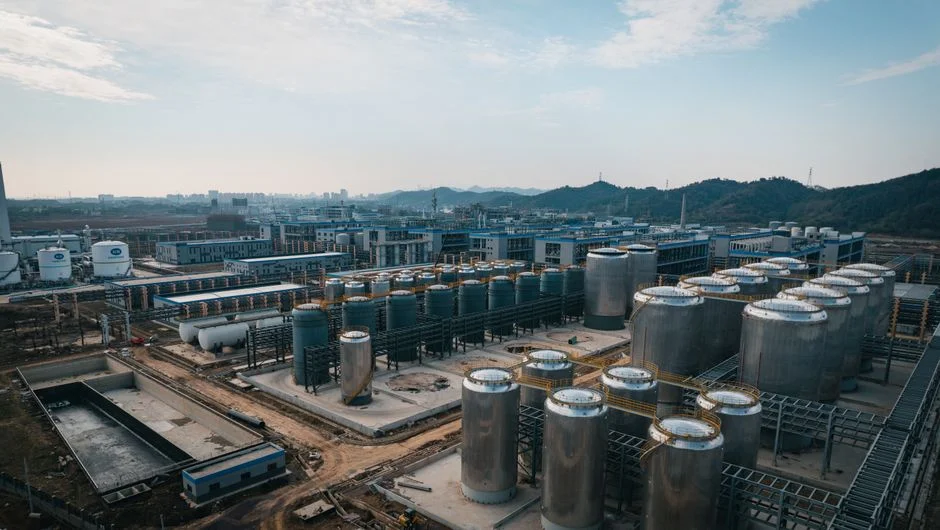
The regulatory baseline a Marshfield plastics or rubber plant has to hit in 2026 is the EPA 40 CFR Part 403 General Pretreatment framework, the Massachusetts Surface Water Quality Standards at 314 CMR 4.00, and the local sewer use rules enforced by the Town of Marshfield Sewer Commission (or Pembroke/Rockland for some sites). For most plastics and rubber manufacturers the parameters a 2026 inspector will check are FOG (often capped at 50–100 mg/L at the POTW), TSS, pH, and — for rubber curing operations — zinc and sometimes hexavalent chromium. Pretreatment is mandatory, not optional, and a Notice of Violation is usually the trigger that forces a primary-treatment technology decision.
Flow-wise, a small-to-mid Marshfield plastics or rubber plant typically generates 10–100 gpm of process wash water plus intermittent batch dumps. That envelope sits comfortably inside the Spectrum 50–1,000 gpm DAF range and the HydropureWater DAF 4–300 m³/h range, so sizing is not the hard part. The hard part is hydraulic retention and recycle ratio: a defensible starting point for a 2026 design is 15–20 minutes of hydraulic retention in the flotation cell with a 20–30% recycle ratio, with coagulant and flocculant doses selected by jar testing on the actual plant sample. Pair the DAF with a HydropureWater automatic chemical dosing skid so the jar-test chemistry is delivered reliably on the line, not hand-mixed in a tote. For plants responding to a NOV, doing a trial, or testing capacity, mobile and rental DAF units (per WesTech, 2026) can be delivered and brought online within a single day, which makes them a fast path to compliance without a capital commitment.
2026 Selection Framework: When to Choose DAF, Clarifier, or Both
For most Marshfield plastics and rubber plants, the 2026 default is clear: DAF as the primary separator, paired with a sludge dewatering step downstream. The table below is the one-page decision rule a process engineer can apply tomorrow.
| If the stream looks like this… | Choose… | Why |
|---|---|---|
| FOG > 50 mg/L, free or emulsified oil present, polymer fines present, batch wash with surfactants | DAF primary, sized 15–20 min HRT, 20–30% recycle, jar-tested chemistry | Microbubble flotation is the only mechanism that reliably removes emulsified oil and low-density polymer fines |
| Mostly heavy inorganic grit, sand, metal shavings, low FOG | Lamella clarifier | Gravity settling on inclined plates is efficient and cheap for dense, settleable solids |
| High flow, tight discharge limit, or existing clarifier already on site | DAF primary + lamella polishing | DAF does the FOG and fines work; lamella polishes residual TSS for the tightest limits |
| Temporary trial, capacity test, or Notice of Violation response | Mobile / rental DAF | Trailer-mounted, delivered within a day, no permanent foundation (per WesTech, 2026) |
The 2026 default for a Marshfield plastics or rubber plant is therefore: HydropureWater DAF system as primary, with the HydropureWater lamella clarifier only if the plant has unusually heavy grit from upstream machining or wants a polishing step under a tight TSS limit. Sludge from the DAF float should go to a HydropureWater plate and frame filter press for dewatering to 25–35% DS, which cuts sludge hauling cost and keeps the DAF sludge hopper from becoming the operating bottleneck. Jar-test the chemistry, integrate the polymer make-up skid, and size the recycle ratio off the data, not the catalog. For a peer-engineer sanity check on a different matrix, see our DAF vs clarifier selection for fabricated metals wastewater guide, and for oily-tank-bottom applications, the DAF configuration for tank bottom water and oily waste reference.
Frequently Asked Questions
DAF or clarifier for plastics and rubber wastewater in Marshfield — which should a factory choose in 2026?
DAF. A dissolved air flotation unit is almost always the right primary separator for plastics and rubber wash streams because the dominant contaminants — free and emulsified oil, plasticizer surfactants, polymer fines, and latex carryover — are buoyant or surface-active, not settleable. The 30–50 micron microbubble mechanism (per SigmaDAF, 2026) attaches to chemically conditioned floc and floats it out of the water column in minutes, which a gravity clarifier cannot do. A clarifier delivers 50–70% TSS removal on a plastics or rubber stream versus 80–95% for a properly conditioned DAF.
What FOG removal can a DAF achieve on a plastics molding wash stream?
A properly jar-tested and chemically conditioned DAF typically achieves 80–95% FOG removal on a plastics molding wash stream, with effluent FOG in the 10–30 mg/L range when the influent is 200–500 mg/L. The 80–95% band is consistent with the operating range published by SigmaDAF and Spectrum Water (2026) for industrial wastewater applications with coagulant and flocculant conditioning.
Is a lamella clarifier ever the right primary choice for a rubber plant?
Only when the stream is dominated by heavy inorganic grit, sand, or metal shavings with little FOG or emulsified oil. That is rare in a clean rubber molding or extrusion plant. The more common 2026 use case for a lamella clarifier in this industry is as a polishing step downstream of a DAF when the discharge TSS limit is tight or the flow is high enough that a single DAF would be overloaded.
What size DAF does a small Marshfield plastics or rubber plant need?
Most small Marshfield plastics and rubber plants fall in the 10–100 gpm process wash range, plus intermittent batch dumps. That is served by a SigmaDAF COMPACT DAF (single skid up to 66 GPM, modular two-skid above 66 GPM, per SigmaDAF 2026) or the HydropureWater DAF line, which spans 4–300 m³/h across 13 models and covers the same envelope. A jar test on the actual plant sample should be run before final sizing, because FOG loading and recycle ratio both shift the cell volume required.
Does the Town of Marshfield require pretreatment for plastics or rubber manufacturers?
Yes, under 40 CFR Part 403 General Pretreatment and the local sewer use rules enforced by the Town of Marshfield Sewer Commission (or Pembroke/Rockland for some sites). The parameters most often flagged in 2026 inspections are FOG and TSS, with pH, zinc, and occasionally hexavalent chromium from rubber curing also on the checklist. Mobile or rental DAF is a defensible fast path to compliance for plants responding to a Notice of Violation, running a trial, or testing capacity before a permanent install (per WesTech, 2026). For a comparison on a different but related matrix, see our DAF vs clarifier selection for pulp and paper wastewater guide.