Why Agricultural Chemicals Wastewater Breaks Generic DAF-vs-Clarifier Advice
A Cordele, GA ag-chem plant in 2026 should pick a dissolved air flotation (DAF) system when its stream contains emulsified oils, surfactants, and fine suspended pesticide or fertilizer solids below roughly 2,000 ppm TSS, expecting 85–98% TSS removal and ~95% FOG removal in a compact footprint; pick a gravity clarifier (lamella type) when the stream is dominated by heavy, settleable grit or inorganic fertilizer carrier solids, accepting ~90% solids settling but only ~70% oil removal. Most ag-chem plants run DAF as primary, with a clarifier as a sludge thickener.
Generic selection guides anchor on food processing free-oils and mining grit. Ag-chem wastewater is neither. Cordele pesticide formulation lines generate emulsified active ingredients — pyrethroids, organophosphates, glyphosate salts — held in surfactant carriers that behave more like food-processing emulsion than free-phase oil. Fertilizer blending and crop-protection packaging add suspended urea, potassium sulfate, and micronutrient fines that are lighter than mining tailings and do not always settle cleanly. Equipment-cleanout rinsate spikes the load with mixed batches. The cited food-plant case showed DAF at 95% oil/grease removal versus clarifier at 70% on the same stream (Ecologix, 2026); the cited mining case showed the clarifier at 90% sediment reduction on heavy grit (Ecologix, 2026). Ag-chem influent sits between those benchmarks, which is why copy-paste guidance fails.
Every Cordele pesticide formulator, fertilizer blender, and crop-protection packager shipping waste to a publicly owned treatment works (POTW) must also satisfy EPA categorical pretreatment under 40 CFR Part 455 (pesticide chemicals), which establishes federal limits for metals, BOD, TSS, and pesticide actives applicable to formulations, repackaging, and equipment-cleanout wastewater. The Part 455 framework runs on top of 40 CFR Part 403 general pretreatment rules, so local POTW limits — typically issued by the Cordele Utilities wastewater system — can be tighter than the categorical floor. Selection logic that ignores Part 455 leads to undersized or misapplied primary units and compliance risk during the 2026 capital cycle.
How DAF and Clarifiers Actually Separate Ag-Chem Contaminants
DAF works by dissolving air into a pressurized recycle stream and then releasing that pressure inside a flotation tank. The air comes out of solution as a cloud of 20–40 micron microbubbles (DAF Corp) that attach to oil droplets, surfactant-stabilized emulsions, and fine floc. The attached bubble reduces the particle's effective density and lifts it to the surface, where a skimmer sweeps the float into a discharge hopper (Komline-Sanderson). Heavier carrier grit that does not float is captured by bottom collectors — a useful feature when influent composition drifts between batches.
A gravity clarifier relies on quiescent settling. Suspended particles denser than water drop to a sludge cone at rates set by Stokes' law; clarified water overflows a peripheral or lamella-launder weir. Inclined-plate (lamella) designs pack the equivalent of a large settling area into a small footprint by shortening the vertical distance a particle must fall — typical surface loading rates run 20–40 m/h for primary units, with the higher end of that range used on grit-dominated streams. Lamella plates are sensitive to grease fouling, which is one reason emulsified pesticide streams do not always clarify cleanly without chemical aid.
Chemical conditioning increases the effectiveness of DAF (Komline-Sanderson). For Cordele ag-chem operators, a DAF without a coagulant/flocculant dosing skid will not reliably destabilize emulsified pyrethroid or glyphosate actives, and a clarifier without polymer will not flocculate colloidal fertilizer fines. A lamella clarifier with light polymer can match a DAF on TSS for settleable streams, but it cannot match DAF on the surfactant-stabilized emulsion fraction that dominates pesticide formulation rinsate.
Side-by-Side Comparison: DAF vs Clarifier for Cordele Ag-Chem Plants
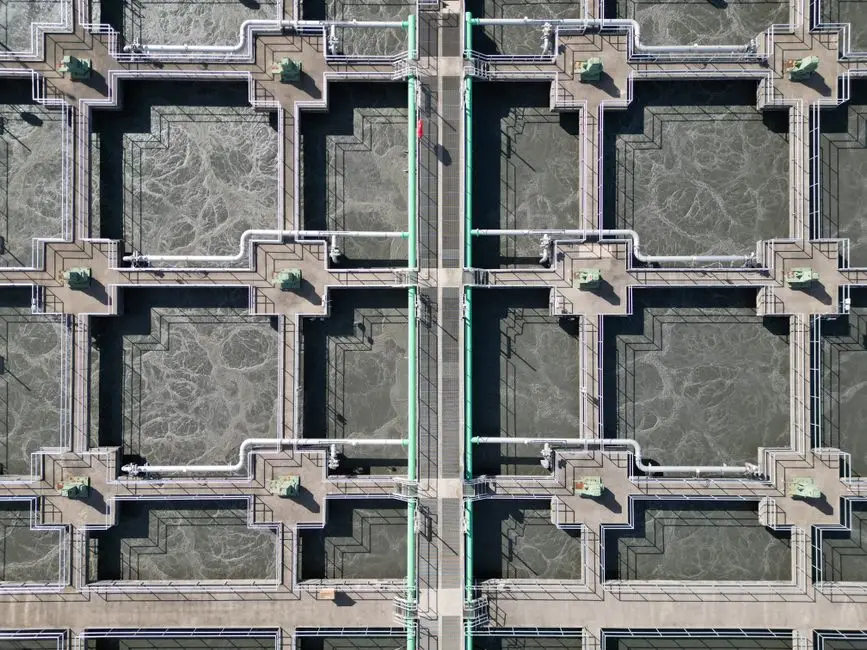
The table below tunes the standard head-to-head to the ag-chem influent a Cordele plant actually discharges — emulsified actives, surfactant carriers, and suspended fertilizer fines — rather than the free-oil or mining-grit benchmarks used in generic guides.
| Parameter | DAF (e.g., HydropureWater DAF, DAF Corp FC Maximizer / RC UniMax) | Gravity / Lamella Clarifier (e.g., HydropureWater lamella clarifier) |
|---|---|---|
| TSS removal | 85–98% (FC Maximizer 92–98%; RC UniMax 85–90%, per DAF Corp) | ~90% on heavy settleable grit; lower on colloidal pesticide actives and light fertilizer carriers |
| Oil/grease & surfactant removal | ~95% (Ecologix, 2026) | ~70% (Ecologix, 2026) |
| Best-fit influent | Emulsified pesticide actives, surfactant carriers, FOG, fine suspended solids < 2,000 ppm TSS | Heavy inorganic grit, settleable fertilizer carrier solids, mineral fines |
| Footprint | Compact, shallow tank; skid- or trailer-mountable; can deploy within a day (WesTech mobile DAF) | Moderate plan area, taller vessel; lamella plates compress area but require headroom |
| Typical flow range | 48 gpm–11,000 gpm (DAF Corp); 4–300 m³/h skid range (HydropureWater) | Comparable flows; throughput limited by surface loading rate (20–40 m/h) |
| CAPEX | Higher (tank + air system + recycle pump + saturation tank) | Generally lower; no air compressor or saturation system (Ecologix, 2026) |
| OPEX drivers | Compressed air, chemical dosing, recycle pump energy | Polymer dosing, sludge pumping; minimal utilities |
| Operator skill | Moderate — manage air saturation, recycle ratio, chemical dose | Low — mostly hands-off, periodic sludge draw-off |
| Sludge consistency | Thickened float 2–4% solids (DAF Corp); dewaters well on a filter press | Underflow typically 1–3% solids; larger volume to dewater |
| Downstream impact | Often eliminates need for a separate oil/water separator or sand filter | Usually paired with a sand filter or polishing step for residual FOG |
| 2026 regulatory fit (40 CFR Part 455) | Strong on TSS, FOG, and many active-ingredient surrogate limits; jar test required to confirm | Adequate for settleable-solids limits; weaker on FOG and emulsified actives |
DAF achieves ~95% FOG removal versus a clarifier at ~70% (Ecologix, 2026). On a Cordele pesticide formulation line, that difference can determine whether you hit a local limit on oil and grease without adding a downstream polishing stage.
2026 Cordele-Specific Selection Framework
Work through these four operational questions before you commit CAPEX. The right answer depends on your batch mix, your local POTW discharge route, and the categorical pretreatment envelope you operate inside.
- What is your typical influent TSS, and what is in it? Under 2,000 ppm with a high fraction of emulsified actives or surfactant carriers → DAF. Over 2,000 ppm dominated by inorganic fertilizer carrier grit → lamella clarifier first, DAF polish. Cordele fertilizer blenders tend to fall in the second bucket; pesticide formulators and crop-protection packagers fall in the first.
- Is FOG or surfactant load significant? Yes → DAF (~95% removal, Ecologix 2026). No, mostly water-soluble actives with low surfactant → clarifier is fine; focus CAPEX on biological downstream.
- Where does your effluent go? If it discharges to a POTW under a 40 CFR Part 455 categorical permit — which is the default for any Cordele pesticide formulator — confirm by jar testing that your chosen technology can meet local limits, including the categorical pesticide-chemicals standards, before purchase. A common 2026 finding is that DAF effluent meets FOG and TSS limits with a single stage, while a clarifier needs a downstream air-stripping or carbon step to address dissolved actives.
- What is your flow rate and footprint? DAF fits the 4–300 m³/h range with skid mounting (see the HydropureWater DAF system for a representative skid footprint); a HydropureWater lamella clarifier handles similar flows in a taller but smaller plan-area vessel.
Hybrid configurations are the practical default. Many Cordele ag-chem plants run DAF as primary to capture the 95% oil-removal benefit, then use the clarifier as a sludge thickener or as a guard unit ahead of the biological stage. Ecologix (2026) supports hybrid DAF-plus-clarifier configurations for complex streams. The companion Crossett pulp & paper DAF-vs-clarifier guide walks through the same hybrid logic in a different influent envelope, and the Columbus chemical plant pretreatment compliance guide is a useful parallel for 40 CFR Part 455 paperwork sequencing.
Pilot Testing, CAPEX Signals, and 2026 Procurement Tips
Komline-Sanderson and DAF Corp recommend lab or pilot testing to confirm separation characteristics for a given waste stream before purchase. For a Cordele ag-chem plant, a 2–4 week on-site pilot on a representative batch window is the most defensible 2026 procurement path: it generates the jar-test and continuous-flow data your POTW will want to see, and it de-risks the categorical pretreatment sign-off under 40 CFR Part 455. WesTech mobile DAF units can be delivered and brought online within a single day for pilot or short-term deployment, which is useful if you want proof-of-performance before committing capital in 2026.
Do not anchor on a sticker price. Treat CAPEX in three tiers — small skid (pilot or low-flow packaging line), mid-scale integrated system (typical Cordele formulator at 50–200 gpm with chemical dosing and sludge handling), and large custom (multi-line facilities or 1,000+ gpm). OPEX scales with chemical demand (coagulant + flocculant dose, typically 50–200 ppm total for DAF on ag-chem streams) and compressed-air demand for the saturation system. A DAF requires a chemical dosing skid, and the 7-step wastewater treatment process breakdown is a useful map of where primary clarification hands off to the rest of the train. Run the pilot, then size the skid to the dose the pilot actually required — not to a generic book value.
Frequently Asked Questions
What is the best wastewater treatment for a pesticide formulation plant in Cordele, GA?
A DAF primary unit sized to handle emulsified pesticide actives and surfactant carriers, designed to meet 40 CFR Part 455 categorical pretreatment limits and any tighter local POTW limits. Run a 2–4 week on-site pilot with jar testing first to confirm FOG, TSS, and active-ingredient surrogate removals before purchase.
Can a DAF system handle suspended fertilizer solids?
Yes. DAF systems routinely treat suspended fertilizer fines and other light carriers, with TSS removal in the 85–98% range at up to 2,000 ppm loading (DAF Corp). Chemical conditioning with a coagulant and flocculant is normally required to flocculate colloidal fines before the air bubble can attach and lift them.
Is a clarifier or DAF cheaper to operate for ag-chem wastewater?
A lam