Why Glasgow Fabricated Metals Plants Are Re-evaluating Primary Clarification in 2026
A typical Glasgow, KY fabricated metals plant generates a wastewater stream that does not behave like municipal sewage, and that mismatch is the reason capital-justification conversations about primary clarification are accelerating in 2026. Routine sampling at stamping, machining, welding, and coating shops in the South-Central Kentucky industrial corridor shows influent oil and grease in the 100–500 mg/L range from cutting fluids, hydraulic leaks, and tramp oil, total suspended solids (TSS) between 200 and 2,000 mg/L from grinding swarf and weld-slag fines, and intermittent metals — chiefly iron, aluminum, zinc, and occasional hexavalent chrome from rinse operations. EPA categorical pretreatment standards at 40 CFR Part 433.10 cap oil and grease at 52 mg/L daily maximum and 26 mg/L monthly average for discharge to a POTW, with total metals ceilings of 5.2 mg/L for lead, 4.0 mg/L for zinc, and 0.6 mg/L for chromium on the same cadence.
Two regulatory shifts are pushing the issue forward. First, the Glasgow POTW pretreatment program, like most Kentucky POTWs in 2026, has tightened local limits and now requires continuous pH and flow monitoring on any discharger exceeding 5,000 gpd, effectively retiring the open settling pit as a defensible control point. Second, Kentucky Department for Environmental Protection enforcement actions in 2024–2025 against metal-finishing shops along the I-65 corridor have made ownership groups aware that a single oil-exceedance event can trigger surcharges and consent orders that exceed the cost of a packaged primary-treatment skid. For a peer audience evaluating fabricated-metals pretreatment, see the 2026 metals-plant pretreatment compliance guide for a regional benchmark. This article provides a side-by-side engineering comparison of flotation versus sedimentation.
How a DAF System Actually Treats Fabricated Metals Wastewater
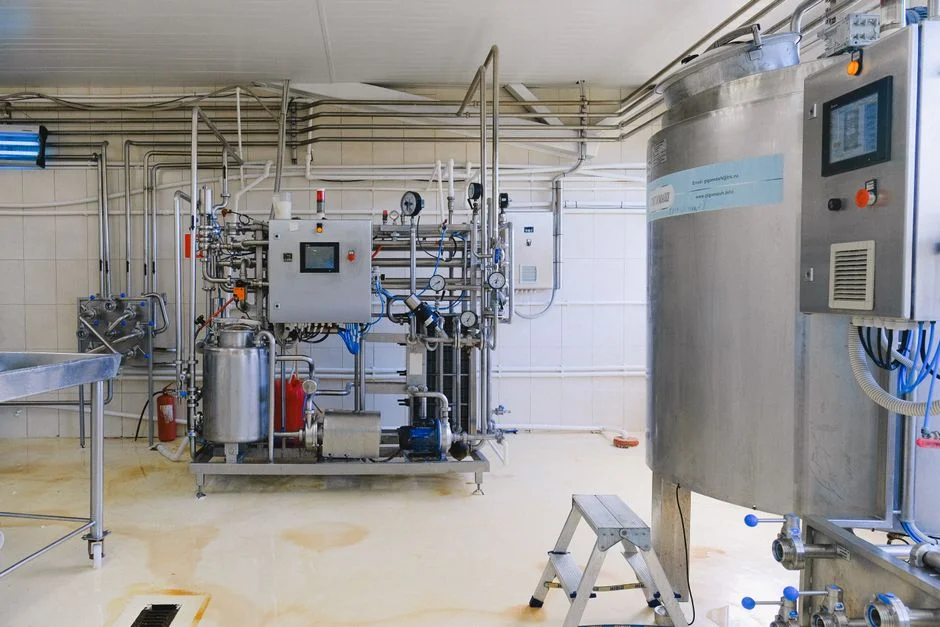
Dissolved air flotation (DAF) works by attaching micro-bubbles to contaminants that would otherwise stay in suspension, then skimming the resulting float from the tank surface. In a packaged unit like the HydropureWater DAF system, 10–30% of clarified effluent is pressurized to roughly 5–7 bar in a saturation vessel with 5–8% air by volume, then released through needle valves at the tank floor. The pressure drop nucleates 10–80 micron bubbles that attach to oil droplets and pre-formed floc, lifting them to the surface where a top-mounted scraper removes the float at 18–25% dry solids. The mechanism is what gives DAF its decisive edge on emulsified oil: chemical demulsifier and polymer break the oil-in-water emulsion, and the bubble cloud collects droplets a gravity tank physically cannot reach.
Independent data anchor the performance claim. A peer-reviewed study of tertiary DAF duty reported 95% microplastic and fine-particle removal (per PMC, 2024), and an industrial DAF case study documented 95% oil and grease removal on a comparable high-oil stream versus 70% for a parallel clarifier (per Ecologix, 2026). For fabricated metals specifically, this matters because tramp oil and synthetic cutting fluids carry surfactants that keep droplets stable in the 1–20 micron range — exactly the size class that escapes a quiescent clarifier. DAF units in the DAF catalog span 4–300 m³/h, which covers the full range of a 50–200-employee Glasgow shop. The one operational prerequisite is reliable coagulant and polymer dosing, typically polyaluminum chloride (PAC) at 50–150 mg/L plus a cationic polymer at 1–5 mg/L, delivered through a packaged automatic chemical dosing skid.
How a Clarifier Handles the Same Stream — and Where It Wins
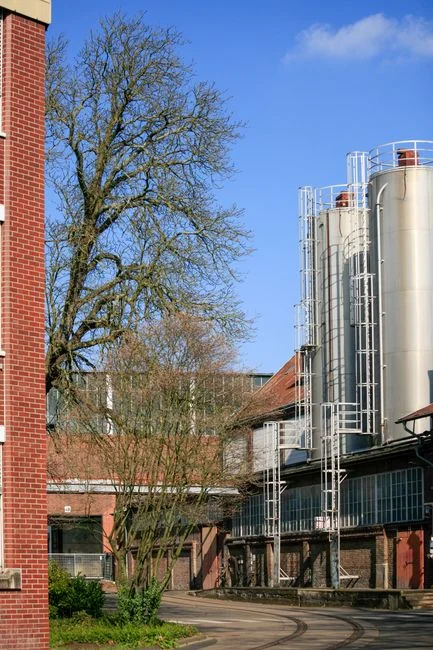
A gravity clarifier is a quiescent tank where settleable solids fall to a conical or hopper bottom, are raked to a central sump, and are pumped out as underflow while clarified water overflows a peripheral launder. Conventional units operate at 1–3 gpm/ft² surface overflow rate with 2–4 hours of hydraulic retention; inclined-plate (lamella) designs push the effective surface loading rate to 20–40 m/h by stacking parallel settling surfaces inside a compact footprint, as documented in the HydropureWater lamella clarifier specification. A 90% TSS reduction is achievable on heavy mineral or grit streams, which is why mining and aggregate operations continue to specify clarifiers as their primary workhorse (per Ecologix, 2026).
For a small Glasgow, KY fabricated metals plant, the clarifier still has three honest advantages. First, no compressed-air service is required — the unit needs only a sludge pump and an occasional rake-drive inspection, which matters in rural facilities where 3-phase power and air headers are limited. Second, no polymer or coagulant feed is required for inorganic grit, removing a recurring chemical line item and one operator skill requirement. Third, the capex floor is the lowest in primary treatment: a site-poured concrete tank with a rake drive can be installed for a fraction of a packaged DAF skid. Where the clarifier fails is on the dominant contaminant in a fabricated metals stream: emulsified oil typically leaves at around 70% removal, and performance falls further when wash-water temperatures drop below 15 °C in winter because viscosity rises and Stokes-law settling slows. That gap explains why most 2026 fabricated-metals retrofits have moved away from standalone clarifiers.
DAF vs Clarifier: Side-by-Side Comparison for Fabricated Metals
The matrix below serves as a reference for capital-approval meetings, with scores of 1 (poor fit) to 5 (excellent fit) for a typical Glasgow, KY fabricated metals stream of 100–500 mg/L O&G and 200–2,000 mg/L TSS.
| Parameter | DAF | Gravity / Lamella Clarifier | DAF fit (1–5) | Clarifier fit (1–5) |
|---|---|---|---|---|
| Oil & grease removal | ~95% (Ecologix, 2026) | ~70% (Ecologix, 2026) | 5 | 2 |
| TSS removal (oil-dominated stream) | 85–95% | 60–80% | 5 | 3 |
| TSS removal (grit-dominated stream) | 70–85% | ~90% (Ecologix, 2026) | 3 | 5 |
| Footprint at 50 m³/h | ~12–20 m² (skidded) | ~40–80 m² (concrete basin) | 5 | 2 |
| Capex, 50 m³/h (2026 indicative) | $180,000–$280,000 installed | $60,000–$120,000 installed | 2 | 5 |
| Opex (annual, polymer + power + hauling) | $22,000–$35,000 | $30,000–$50,000 | 4 | 3 |
| Operator skill required | Intermediate (chemistry, pH, sludge) | Basic (sludge pumping, rake drive) | 3 | 5 |
| Sludge dryness after press | 18–25% DS | 15–20% DS | 5 | 3 |
| Sensitivity to flow swings >2× | Tolerates with equalization | Poor — scour at high overflow | 4 | 2 |
DAF wins 6 of 9 categories against a typical Glasgow influent. The three categories where a clarifier still wins — TSS on grit-heavy streams, lowest capex, and lowest operator skill — are precisely the conditions that justify selecting it. For facilities with both signatures, hybrid DAF + lamella configurations are now the most common 2026 specification in the metals-finishing sector, with the clarifier handling tramp grit upstream and the DAF polishing emulsified oil downstream. For a neighboring-county comparison with a different influent profile, see the DAF-vs-clarifier guide for a neighboring Kentucky county.
The 2026 Glasgow-Specific Decision Framework
This matrix translates current effluent sampling data into actionable engineering decisions.
| Question | If Yes → | If No → |
|---|---|---|
| Q1: Is routine O&G >100 mg/L in effluent? | DAF or hybrid DAF + clarifier is required to meet 52 mg/L daily max (40 CFR 433.10). | Clarifier may suffice if other questions also lean low-oil. |
| Q2: Is flow <100 m³/day with high grit (machining + grinding swarf)? | Lamella clarifier wins on capex and operator simplicity; consider DAF as polish step. | Flow + oil load likely justify a single DAF skid. |
| Q3: Does the plant have 3-phase power and compressed-air header? | DAF becomes practical; bubble generation is reliable. | Clarifier is the realistic option until utilities are upgraded. |
| Q4: Will float sludge be pressed on site, or hauled liquid? | DAF float dewaters to 18–25% DS on a plate-and-frame filter press, cutting hauling tonnage. | Clarifier underflow at 15–20% DS makes hauling the dominant opex line. |
Remember: Oils and emulsions → DAF; grit and tight capex → clarifier; both → hybrid.
Sample ROI: What a DAF Retrofit Costs a 50 m³/h Glasgow Plant in 2026
A 50 m³/h packaged DAF retrofit for a Glasgow, KY fabricated metals plant typically lands between $180,000 and $280,000 installed in 2026, depending on tank material, controls, and building enclosure requirements. A concrete gravity clarifier of equal hydraulic capacity runs $60,000–$120,000, which is the source of the capex objection that usually ends the conversation before the opex side is heard. Annual opex flips the picture: DAF polymer plus power typically totals $22,000–$35,000 per year, while a clarifier's dominant line is sludge hauling, which lands at $30,000–$50,000 per year because underflow solids only reach 15–20% DS. At a $150/ton sludge-hauling rate and roughly 8,000 operating hours per year, the DAF opex advantage alone closes the $120,000–$160,000 capex premium in approximately 3–5 years.
The hidden number is the regulatory risk premium. Kentucky POTW surcharges for oil and grease exceedances stack on top of the base treatment charge and routinely push a 50 m³/h discharger past $50,000 in a single surcharge year if a chronic violation is documented. Against that exposure, the DAF retrofit pays back in under 18 months for any plant with a documented O&G compliance gap.
Frequently Asked Questions
What oil and grease limit must a Glasgow, KY fabricated metals plant meet on discharge?
52 mg/L daily maximum and 26 mg/L monthly average, per EPA categorical pretreatment standards at 40 CFR Part 433.10, enforced locally by the Glasgow POTW pretreatment program.
How does DAF oil removal compare with a clarifier on the same fabricated metals stream?
DAF achieves approximately 95% oil and grease removal while a clarifier typically reaches about 70% on the same stream (per Ecologix, 2
Frequently Asked Questions
Should a fabricated metals plant pick DAF or a clarifier?
The choice depends on the specific gravity and state of the contaminants. Dissolved Air Flotation (DAF) is generally superior for fabricated metals because it effectively removes low-density suspended solids, emulsified oils, and greases that often fail to settle by gravity. DAF systems typically achieve 90-95% removal efficiency for oil and grease, whereas a standard clarifier is limited to removing settleable solids with a specific gravity greater than 1.0.
If your facility processes high volumes of metal fines or heavy grit alongside oils, a primary clarifier may be used as a pre-treatment step to remove heavy solids before the DAF unit. In the Glasgow industrial sector, DAF is increasingly preferred due to tighter discharge regulations regarding FOG (Fats, Oils, and Grease) and the need for a smaller physical footprint.
What is the oil and grease limit for metal finishing under EPA 40 CFR 433?
Under EPA 40 CFR 433, the categorical pretreatment standards for metal finishing establish a maximum concentration for oil and grease of 52 mg/L for any single day, and a monthly average limitation of 26 mg/L. These standards apply to all facilities performing core metal finishing operations such as electroplating, coating, chemical etching, or milling.
Compliance with these limits often necessitates robust chemical precipitation and separation technologies. Because metalworking fluids and lubricants are common in fabricated metals, plants must ensure their separation systems are calibrated to consistently meet these low-milligram thresholds to avoid surcharges or permit violations.
How much does a DAF system cost for a 50 m³/h industrial plant in 2026?
For a 50 m³/h industrial wastewater treatment plant, a fully automated, skid-mounted DAF system typically ranges from $185,000 to $260,000 in 2026. This price includes the flotation tank, air saturation system, sludge skimming mechanisms, and local control panels.
Total project costs, including installation, chemical dosing skids, balancing tanks, and integration into existing Glasgow-area utility infrastructure, generally add an additional 30-50% to the equipment base price. Operational expenditures for such a system are estimated at $0.45 to $0.75 per cubic meter, depending on chemical coagulant and polymer consumption rates.
Can a clarifier remove emulsified cutting oil?
No, a standard gravity clarifier cannot effectively remove emulsified cutting oil. Emulsified oils have droplet sizes typically ranging from 1 to 20 microns, which are too small to settle within the residence times provided by conventional clarifiers; these droplets are held in suspension by electrical charges or surfactants.
To remove emulsified oils, the treatment process must first include chemical de-emulsification—usually involving pH adjustment and the addition of coagulants and flocculants—to break the emulsion. Once the oil droplets are destabilized and coalesced into larger flocs, a DAF system or an inclined plate settler with specialized media is required to lift or separate the contaminants from the water stream.
What is the best wastewater treatment for a small Glasgow KY metal stamping shop?
For a small-scale metal stamping operation in Glasgow, the most cost-effective and compliant solution is typically a compact, batch-treatment DAF system combined with an oil-water separator. Batch treatment allows the facility to manage intermittent discharge cycles common in smaller shops without the high capital expense of a continuous-flow plant.
This setup should include a pH neutralization tank, a coagulation-flocculation chamber, and a DAF unit to address the specific stamping lubricants and metal particulates generated. Given the local utility requirements in Barren County, focusing on a modular system that allows for easy sludge management is recommended to keep labor and waste disposal costs within a small-business budget.