
Why Bismarck Food & Beverage Plants Face a Real DAF-vs-Clarifier Choice in 2026
Bismarck-area food and beverage facilities — dairy processors, meat packers, grain and sugar adjuncts, beverage bottlers — run waste streams that are FOG- and TSS-heavy with strong diurnal flow swings, and the equipment choice is driven as much by Bismarck's climate and permit structure as by the chemistry of the effluent. North Dakota administers discharges through NDPDES permits that are written case-by-case under the federal NPDES framework using best professional judgment (BPJ), so local effluent limits for oil & grease, TSS, and CBOD drive equipment selection, not a one-size rule (per EPA NPDES permit abstracts, 2025). The state does not publish a single FOG limit that fits every food plant; each permit reflects receiving-water quality, pretreatment requirements, and plant-specific loading. That variability means a Bismarck engineer cannot copy a competitor's design — the permit parameters at the receiving POTW or state water quality stream are the binding constraint.
Winter operation sharpens the choice further. Bismarck averages roughly four months of sub-zero daily highs, and that climate penalizes any outdoor open clarifier through surface icing, short-circuiting, and reduced biological activity in downstream lagoons. A 2026 retrofit that puts primary clarification outside creates a maintenance problem from day one; an enclosed DAF skid inside a heated envelope does not. The 2026 capital-planning premise is not "which is cheaper" but "which technology matches the FOG/TSS load, the NDPDES limits, and a Bismarck winter" — a question answered only when DAF, lamella, and conventional gravity clarifier are compared on the same axes.
How a DAF and a Gravity Clarifier Actually Work
A dissolved air flotation (DAF) unit works by pressurizing a recycle stream of clarified effluent to 4–6 bar, saturating it with air, and then releasing that stream into the flotation cell at atmospheric pressure (per Fluence, 2025). The dissolved air comes out of solution as a cloud of micro-bubbles roughly 10–100 µm in diameter, attaches to chemically conditioned oil droplets, grease globules, fibers, and low-density solids, and lifts them to the surface where a skimmer scrapes them off into a sludge sump. The clarified underflow exits the bottom of the cell. The unit is a physical-chemical primary: chemistry (coagulant + flocculant) makes the particles hydrophobic enough for bubble attachment, and the bubbles do the lifting that gravity cannot.
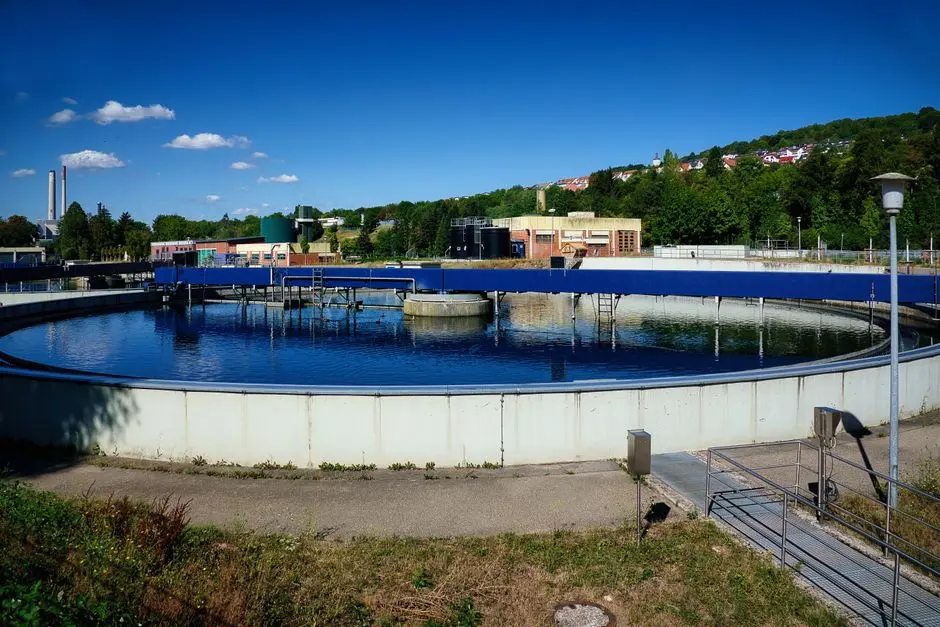
A gravity clarifier operates through sedimentation. Chemically conditioned influent enters a large tank, flow slows, and particles settle under gravity to a sludge bed on the floor; clarified water rises over a weir. A lamella clarifier is a gravity clarifier with a pack of inclined plates at 55–60° inside the tank — those plates shorten the effective settling path and raise the surface loading rate to roughly 20–40 m/h (per HydropureWater lamella clarifier product data, 2026). Conventional circular or rectangular clarifiers run much lower — typically 1–2 m/h — which is why they need significant surface area.
The physics implication is straightforward: DAF wins for buoyant, low-density, emulsified particles; gravity wins for heavy, settleable, inorganic solids. Both are physical-chemical primaries. Neither removes dissolved BOD or COD on its own — their job is to protect downstream biological treatment (MBR, SBR, or trickling filter) from a solids or FOG load that would smother biomass. DAF is the tool for material a clarifier struggles with — free and emulsified oil, grease, fiber, and low-density solids that will not fall out of suspension under gravity (per Spectrum Water, 2025). A HydropureWater DAF system and a HydropureWater high-efficiency lamella clarifier are both engineered around that principle.
Head-to-Head: DAF vs Lamella Clarifier vs Conventional Clarifier
The table below puts the three technologies on the same axes. Cost bands are kept relative because no scraped source provides a Bismarck-specific 2026 dollar figure, and any absolute number cited here would be fabricated.
| Parameter | DAF (enclosed skid) | Lamella Clarifier | Conventional Gravity Clarifier |
|---|---|---|---|
| Best influent match | Free + emulsified FOG, low-density TSS, fibers, dairy/meat/brewery | Settleable TSS, low FOG, steady flow | High flow, low FOG, mostly inorganic settleable solids |
| FOG removal | High (handles free and emulsified oil a clarifier cannot) | Low to moderate (only free oil that rises) | Low (free oil only; skim poorly in cold weather) |
| TSS removal (conditioned) | High on chemically conditioned influent | Moderate to high (60–85% typical, depends on plate pack) | Moderate (50–75% typical) |
| Footprint vs. conventional | ~25% of equivalent clarifier surface area (per Fluence, 2025) | ~10–20% of conventional footprint | Basis (1×) |
| Sludge DS concentration | 8–10% DS (per Fluence, 2025) | ~1–3% DS | ~1% DS |
| CAPEX band (relative) | Medium-high (mechanical, controls, chemistry) | Medium (passive, no compressor) | High for new builds (large civil works) |
| OPEX drivers | Electricity (compressor, recycle pump) + coagulant + flocculant + sludge hauling | Flocculant + sludge hauling (high water content) | Flocculant + sludge hauling (very high water content) |
| Cold-climate suitability (Bismarck) | Strong if enclosed/indoor; ice is not an issue | Acceptable if covered; plates still need freeze protection | Poor outdoors — surface ice, short-circuiting, sludge freeze-up |
Three points are worth restating. First, DAF sludge at 8–10% dry solids is a significant OPEX lever — a clarifier producing ~1% DS sludge is shipping roughly five times more water to the hauler per pound of solids, and in 2026 hauling surcharges in the upper Midwest have risen with diesel and landfill fees (HydropureWater field data, 2026). Second, the 25% footprint figure for DAF versus conventional clarification is real, but it is also the reason a DAF carries higher mechanical complexity (saturator, recycle pump, skimmer drive) than a passive lamella pack. Third, a DAF is only as effective as its coagulant and polymer dosing — integrating that chemistry afterwards is where projects lose weeks (per Spectrum Water, 2025). A quote that lists a DAF tank without a chemistry package is not a complete 2026 spec.
DAF Sizing Parameters Food Plants Should Spec in 2026
Translating the comparison into a spec the reader can hand to a vendor means fixing five parameters before the RFQ goes out. The table below is the shortlist; the notes that follow are non-negotiable.
| Parameter | Typical 2026 Range / Target | Source / Note |
|---|---|---|
| Hydraulic capacity per train | 30–130 m³/h (wastewater) / 5–20 m³/h (digestate thickening) | Per Fluence, 2025 |
| Packaged skid range | 50–1,000 gpm (≈11–227 m³/h) | Per Spectrum Water, 2025 |
| Recycle ratio | 20–40% of influent flow | Industry standard; confirm with vendor (Fluence, 2025) |
| Saturation pressure | 4–6 bar | Per Fluence, 2025 |
| Surface hydraulic loading | 5–20 m/h typical for food/bev DAF | Confirm against FOG load; vendor-specific |
| Air-to-solids ratio | 0.005–0.060 kg air / kg solids (application-dependent) | Set by jar testing on actual effluent |
| Sludge DS target downstream | 8–10% DS at DAF outlet | Per Fluence, 2025 |
For a Bismarck mid-size food plant at 50–150 m³/h peak flow, a packaged skid DAF is the realistic 2026 default — it ships in weeks, fits inside a heated enclosure, and avoids field-erected civil work. Recycle ratio and saturation pressure are the two mechanical knobs that decide whether the DAF skims clean effluent or carries solids over the effluent weir; both must be confirmed by the vendor against the site's FOG load. Chemical conditioning is not optional: Spectrum's model is to jar-test the customer's actual sample to pick the coagulant, the flocculant, and the dose, then supply the chemistry alongside the unit and the polymer blending skids that deliver it properly hydrated (per Spectrum Water, 2025). A Bismarck buyer should refuse any 2026 quote that does not include jar testing on their own effluent and an integrated automatic coagulant and polymer dosing skid. Sludge handling matters too — with DAF sludge at 8–10% DS, a downstream plate-and-frame filter press cuts hauling cost further and produces a cake that can often be land-applied or co-rendered rather than sent to a landfill. For background on how DAF chemistry interacts with biological polishing, see DAF Machine Manufacturer: How to Choose the Right System for Industrial Wastewater (2026 Guide).
When Each Technology Wins — A 2026 Selection Rule
The decision reduces to four branches.
- Pick DAF when the influent is FOG-rich (dairy whey, meat rendering washdown, frying oil carryover, brewery trub), the diurnal flow is variable, the footprint is constrained by an existing building, or the NDPDES permit carries a tight oil-and-grease limit. This is the default 2026 answer for most Bismarck food plants.
- Pick a lamella clarifier when the influent is mostly settleable TSS with little FOG, the flow is steady, and CAPEX is the binding constraint. A grain-handling facility with high inert TSS and no FOG is a typical fit.
- Pick a conventional gravity clarifier only for very large municipal-style flows with low FOG — rare in Bismarck food-plant builds in 2026, and almost never defensible against the local winter.
- Run DAF + biological polishing when the NDPDES permit has both strict FOG/TSS limits and an ammonia or total nitrogen limit that primary clarification cannot meet on its own. The ClearFox pattern is to put DAF upstream of an MBR or SBR for biological polishing, which is the safest 2026 path for dairy and meat processors that face nutrient limits alongside FOG limits (per ClearFox, 2025). An MBR integrated wastewater treatment unit downstream of a DAF is the configuration most often specified for North Dakota dairy expansions in the current cycle.
The binding rule: match the technology to the limiting permit parameter, not to the lowest sticker price. A $40,000 clarifier that misses the FOG limit every month and triggers a NOV costs more in 18 months than a properly sized DAF did on day one.
Frequently Asked Questions
Can a lamella clarifier handle FOG in a Bismarck food plant?
A lamella clarifier removes only free oil that rises under gravity and a fraction of settleable TSS; it does not effectively remove emulsified oil, grease, or low-density fiber. For a dairy, meat, or brewing waste stream with emulsified FOG, DAF is the correct primary (per Spectrum Water, 2025).
What sludge concentration should a Bismarck plant expect from a DAF?
A well-operated DAF on conditioned food-and-beverage waste produces float sludge at 8–10% dry solids, versus roughly 1% DS from a conventional clarifier (per Fluence, 2025).
Frequently Asked Questions
DAF or clarifier for food and beverage wastewater in Bismarck, ND — which is better in 2026?
For most food and beverage applications in Bismarck in 2026, Dissolved Air Flotation (DAF) is the preferred technology over traditional primary clarifiers. DAF systems offer superior performance for the light, organic-heavy solids common in food processing, typically achieving 80% to 95% removal efficiency for Total Suspended Solids (TSS) and Fats, Oils, and Grease (FOG) within a significantly smaller physical footprint.
While clarifiers rely on gravity settling and require large surface areas, DAF units utilize micro-bubbles to float contaminants to the surface, making them more effective at managing high-strength influent with variable densities. Given the cold-weather constraints and land costs in the Bismarck region, the speed and efficiency of DAF systems generally provide a faster return on investment for pre-treatment compliance.
How much FOG can a DAF remove from dairy or meat processing wastewater?
A properly optimized DAF system can consistently remove between 85% and 98% of Fats, Oils, and Grease (FOG) from dairy and meat processing influent. By injecting saturated air into the recycle stream at pressures typically ranging from 40 to 60 PSI, the system generates micro-bubbles that attach to hydrophobic particles, lifting them to the surface for mechanical skimming.
In high-load scenarios common to Bismarck meat processors, influent FOG concentrations can exceed 2,000 mg/L; however, DAF systems maintain stable effluent quality by adjusting chemical coagulation and flocculation dosages. When paired with effective pH adjustment and polymer dosing, treated effluent FOG levels can often be reduced to below 50 mg/L, meeting stringent municipal sewer discharge standards.
Is a lamella clarifier good enough for a small food plant in North Dakota?
A lamella clarifier is a viable option for a small North Dakota food plant if the wastewater stream is characterized by heavy, inorganic solids or if the facility has very low organic loading. Because lamella plates increase the effective settling area within a compact footprint, they can be more space-efficient than traditional circular clarifiers, but they lack the ability to effectively separate low-density fats and oils that characterize most food processing waste.
If the plant's waste stream contains significant emulsified fats or biological solids, a lamella clarifier may fail to meet local discharge limits without expensive tertiary filtration. For most small food processors in Bismarck, a DAF remains the safer choice to ensure compliance with municipal BOD and FOG surcharges, even if the initial capital expenditure is higher than a simple gravity settler.
How does a Bismarck winter affect open clarifier vs enclosed DAF performance?
Bismarck’s extreme winter temperatures significantly impact wastewater treatment, as low temperatures increase fluid viscosity and slow biological settling rates. Open clarifiers are highly susceptible to freezing, ice bridging, and surface crusting, which can impede mechanical scrapers and disrupt the settling process, often requiring the installation of expensive heating elements or dome covers to maintain operational stability.
In contrast, enclosed DAF units are highly recommended for North Dakota climates because they are contained within a pressurized, temperature-controlled vessel or housing. The closed-loop nature of the DAF system minimizes heat loss and prevents the formation of surface ice, ensuring that bubble-particle attachment remains consistent even when ambient temperatures drop well below freezing.
What OPEX should a food plant budget for DAF chemical dosing in 2026?
In 2026, food processing facilities should budget between $0.15 and $0.45 per 1,000 gallons of treated wastewater for DAF chemical dosing, depending on the specific influent loading and local chemical supply costs. This OPEX figure accounts for the primary coagulant (typically aluminum sulfate or ferric chloride) and the secondary flocculant (polymer) required to destabilize colloids and build stable flocs.
Costs may fluctuate based on the specific strength of the waste stream; facilities with high protein or heavy oil loads will require higher dosing rates to achieve required removal efficiencies. It is recommended to conduct jar testing at least quarterly to optimize dosing concentrations, as over-dosing can lead to excessive sludge volume while under-dosing results in non-compliance fines from municipal authorities.