
The Three-Layer Compliance Stack for Lebanon Transportation Plants
Transportation equipment plants discharging to the Lebanon, Ohio POTW must satisfy three regulatory layers simultaneously: 40 CFR Part 403 (the National Pretreatment Program framework), 40 CFR Part 467 (the categorical standard for the Transportation Equipment Cleaning Point Source Category), and the City of Lebanon's 2025 Local Limits table. Numeric compliance with the city table alone is insufficient; the plant is also bound by the categorical effluent limits in Part 467 and by the pass-through and interference prohibitions at 40 CFR 403.3(p) and 403.3(k), which allow the POTW to take enforcement action even when a pollutant number is technically met.
Layer 1 is the federal framework at 40 CFR Part 403, which defines the Industrial User (IU), the Significant Industrial User (SIU), the POTW, and the prohibited discharge standards at 40 CFR 403.5(b). The framework also defines Significant Noncompliance (SNC), a status that triggers public notice and escalated enforcement once specific duration or magnitude criteria are exceeded.
Layer 2 is 40 CFR Part 467, the categorical standard that applies to process wastewater from metal cleaning, paint stripping, and parts washing at transportation equipment facilities. Part 467 sets technology-based effluent limits for lead, hexavalent chromium, zinc, oil and grease, and other pollutants generated by the cleaning subcategory — and these limits apply whether or not the Lebanon local limit is numerically tighter.
Layer 3 is the City of Lebanon Industrial Pretreatment Program Local Limits (2025), which establish end-of-pipe daily concentration ceilings for 11 heavy metals and cyanide. The full table is reproduced below for direct use in the plant's compliance matrix:
| Pollutant | Daily Concentration Limit (mg/L) |
|---|---|
| Arsenic | 0.052 |
| Cadmium | 0.054 |
| Chromium, total | 2.00 |
| Chromium, hexavalent | 2.00 |
| Copper | 2.07 |
| Cyanide | 1.12 |
| Lead | 2.10 |
| Mercury | 0.002 |
| Molybdenum | 0.56 |
| Nickel | 2.00 |
| Selenium | 0.40 |
| Silver | 0.40 |
| Zinc | 1.48 |
The pass-through and interference doctrine closes the loop by addressing operational hazards. Per 40 CFR 403.3(p), pass-through is a discharge that exits the POTW in quantities or concentrations that cause or contribute to a violation of the POTW's NPDES permit. Per 40 CFR 403.3(k), interference is a discharge that disrupts POTW treatment processes, operations, or sludge use or disposal. Both definitions allow the POTW to act on discharges that are numerically compliant but operationally harmful — which is why pH, oil and grease, and slug-control planning are non-negotiable even when the metal numbers look fine.
What Comes Out of a Transportation Equipment Plant — Pollutants by Process
Each manufacturing stream in a transportation equipment plant generates a unique pollutant fingerprint, and the Lebanon POTW tests at the end-of-pipe monitoring manhole regardless of which process produced the load. Mapping the streams before specifying equipment prevents under-scoped equalization tanks and under-sized chemical dosing systems.
Stamping and machining operations discharge suspended metals (iron, zinc from galvanized stock), drawing compounds, and tramp oils, with high total suspended solids. The applicable Lebanon table targets are TSS, Zinc 1.48 mg/L, and Lead 2.10 mg/L. Parts washing and alkaline cleaning generate high pH, free and emulsified oils, COD, and total phenols — the targets are the pH 5–11 typical POTW envelope and oil and grease. Phosphating and zinc-rich coatings release zinc, phosphate, nickel, and fluoride; the binding numbers are Zinc 1.48 mg/L and Nickel 2.00 mg/L. Paint spray and overspray washwater contribute suspended paint solids, hexavalent chromium from conversion coatings, and solvents — the binding numbers are Hexavalent Chromium 2.00 mg/L, Total Chromium 2.00 mg/L, and TSS. Floor wash and sump flows are the wildcard: they contain episodic slugs of all the above, making equalization the first unit operation in the train (per 40 CFR 403.5(b)(6) prohibited discharge standards).
| Process Stream | Primary Pollutants | Lebanon 2025 Target (mg/L) |
|---|---|---|
| Stamping and machining | Fe, Zn from galvanized stock, drawing compounds, tramp oils, TSS | Zinc 1.48; Lead 2.10; TSS |
| Parts washing, alkaline cleaning | High pH, free/emulsified oils, COD, total phenols | pH 5–11; oil and grease |
| Phosphating, zinc-rich coatings | Zn, phosphate, Ni, fluoride | Zinc 1.48; Nickel 2.00 |
| Paint spray and overspray washwater | Suspended paint solids, hex chrome, solvents | Hexavalent Cr 2.00; Total Cr 2.00; TSS |
| Floor wash and sump | Episodic slugs of any of the above | All Lebanon limits; 40 CFR 403.5(b)(6) slug rule |
Slug-control math is straightforward. A slug is any discharge that, by volume or concentration, has a reasonable potential to cause pass-through or interference. The plant SOP must define triggers (e.g., pH excursions, flow spikes, sump pump-outs) and corrective actions (diversion to equalization, pH correction, notification), and that SOP must be retained under 40 CFR Part 403.12 recordkeeping rules.
The 2026 Treatment Train Lebanon Plants Are Specifying
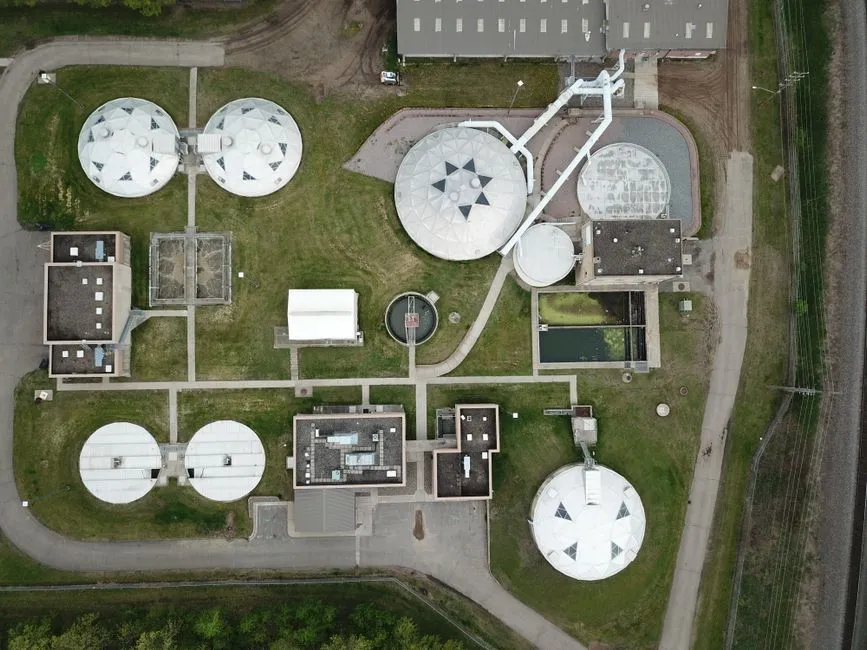
A defensible treatment train for a transportation equipment plant in the Lebanon service area runs in seven sequential steps. Each step is anchored to a specific value from the City of Lebanon 2025 table or to a categorical standard under 40 CFR Part 467.
Step 1 — Flow equalization. A 24-hour buffer tank damps slug loads from batch dumps, sump pump-outs, and washdown events. Equalization is the first line of defense against pass-through violations because it prevents a discrete slug of concentrated metal-bearing or high-pH water from reaching the POTW in a single pulse.
Step 2 — Mechanical bar screening. A rotary mechanical bar screen protects downstream pumps and the DAF from rags, packaging debris, and large solids that would otherwise foul skimmers and nozzles.
Step 3 — Oil/water separation and dissolved air flotation. An API or CPI separator captures free oil; an industrial DAF system removes emulsified oil and fine suspended solids by attaching micro-bubbles to floc, then floating the layer for skimming. DAF units in this duty class handle 4–300 m³/h flows and routinely skim FOG into the sub-100 mg/L range typical for industrial DAF service.
Step 4 — pH adjustment and chemical precipitation. pH is raised into the 8.5–9.5 band for hydroxide precipitation of zinc, lead, copper, and nickel. Hexavalent chromium is reduced to trivalent (typically with sodium bisulfite or ferrous sulfate at low pH), then precipitated as chromium hydroxide. A PLC-controlled chemical dosing system meters coagulant, flocculant, and pH reagent against the equalized feed. Each reagent ties back to a Lebanon table value: Zinc 1.48, Lead 2.10, Copper 2.07, Hexavalent Chromium 2.00 mg/L.
Step 5 — Lamella clarification. A lamella clarifier with sludge recirculation settles the metal-hydroxide floc on inclined plates, producing a thickened underflow for dewatering and a clarified overflow for final polishing.
Step 6 — Sludge dewatering. A plate and frame filter press drops sludge volume for off-site hazardous-waste disposal, cutting disposal cost and reducing the residual metal load that the POTW sludge handling system must absorb. Operators following the same general approach as a chemical dosing cost optimization guide typically see reagent consumption drop noticeably once sludge recirculation is tuned.
Step 7 — Effluent pH adjustment and flow monitoring. Final pH correction to within the POTW envelope, a pH/flow recorder at the monitoring manhole, and tie-in to the POTW's automatic sampler complete the train. For plants comparing DAF and clarifier architecture, a DAF vs clarifier selection guide for transportation equipment plants walks through the sizing tradeoffs. The same logic used in a Grand Rapids transportation plant pretreatment guide applies to the Lebanon envelope — the unit operations are the same, only the local-limit numbers change.
Monitoring, Sampling, and the POTW Manhole — 2026 Practice
Compliance evidence at the City of Lebanon POTW is built from 24-hour composite samples collected automatically at the end-of-pipe monitoring manhole. Grab samples fail to characterize slug discharges because the slug volume is often smaller than a single grab interval; only time-weighted composites across a full operational day capture the realistic load the POTW receives.
Significant Industrial Users are typically required to self-monitor on a quarterly basis using a certified laboratory, with the analytical list covering all 11 Lebanon metals plus oil and grease, pH, flow, and total phenols. Results are reported on the standard discharge monitoring report cadence defined under 40 CFR Part 403.12, and records — discharge reports, BMP certifications, slug control plans, calibration logs — must be retained on site and made available for POTW inspection.
The slug control plan itself is a mandatory deliverable. Under 40 CFR 403.5(b)(6), the plan must define what counts as a slug in the plant's SOP, list the triggers that activate it, and list the corrective actions that operators are expected to take. Accidental discharge notifications go to the POTW immediately; the standard 24-hour written follow-up window applies once the immediate call is logged.
Avoiding Surcharges and Enforcement — The 2026 ROI of Doing It Right
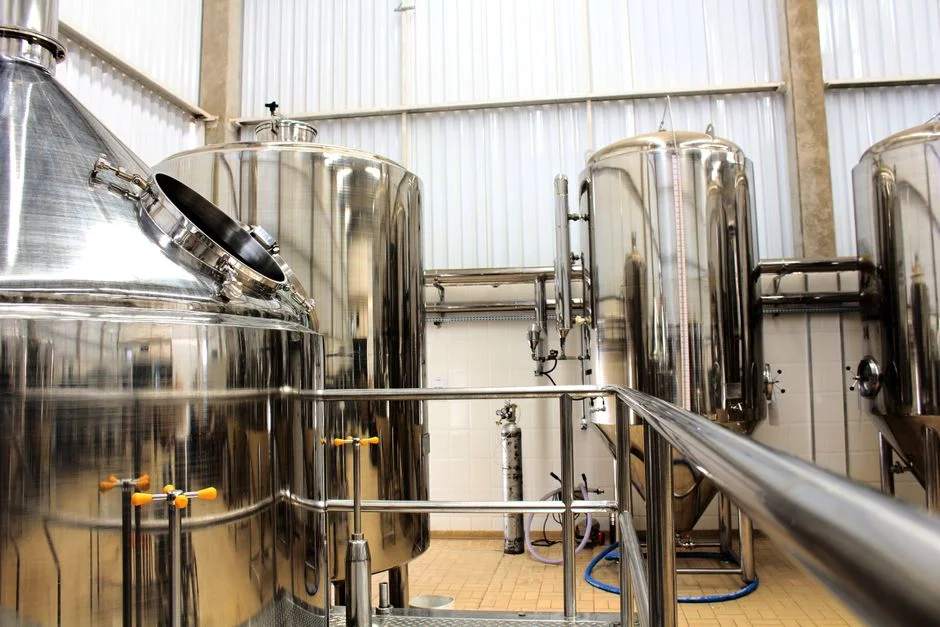
A working DAF plus chemical precipitation program typically cuts BOD, TSS, and oil and grease by roughly an order of magnitude versus an untreated equalized stream, which directly reduces POTW surcharge assessments. The marginal CAPEX of a properly sized DAF and dosing system is small compared with a single Significant Noncompliance finding, a slug-spill cleanup, or a consent order — and SNC status is publicly reportable, exposes the plant to permit revocation risk, and surfaces in corporate EHS audits.
Reuse of clarified effluent for non-contact cooling or washdown reduces both sewer volume surcharges and freshwater intake, turning a compliance cost into a water-reuse asset. The project review board should consider that the avoided surcharge and avoided enforcement exposure over a five-year horizon exceed the installed cost of the unit operations described above; the engineering stack — equalization, screening, DAF, precipitation, lamella, dewatering, monitoring — is what closes the loop on the City of Lebanon 2025 numbers in real operating conditions.
Frequently Asked Questions
What is the City of Lebanon's daily limit for zinc in 2025?
The City of Lebanon Industrial Pretreatment Program Local Limits (2025) set the daily concentration limit for zinc at 1.48 mg/L at the end-of-pipe monitoring point, alongside lead at 2.10 mg/L, hexavalent chromium at 2.00 mg/L, and copper at 2.07 mg
Frequently Asked Questions
What are the City of Lebanon Ohio pretreatment local limits for 2025?
The City of Lebanon, Ohio, enforces local limits for industrial discharges into the municipal sewer system to protect the wastewater treatment plant. As of 2025, typical daily maximum concentration limits include 0.5 mg/L for Cadmium, 0.5 mg/L for Chromium, 1.0 mg/L for Copper, 0.5 mg/L for Lead, 0.5 mg/L for Nickel, and 1.0 mg/L for Zinc. Facilities must also maintain a pH range between 5.0 and 10.5 standard units to prevent pipe corrosion and biological inhibition.
Which EPA categorical standard applies to transportation equipment manufacturing wastewater?
Transportation equipment manufacturing facilities generally fall under the Metal Molding and Casting Point Source Category (40 CFR Part 464) or the Metal Finishing Point Source Category (40 CFR Part 433), depending on the specific processes utilized. Facilities engaged in electroplating, coating, chemical milling, or etching are subject to the 40 CFR Part 433 standards, which dictate stringent mass-based or concentration-based limitations for pollutants such as cyanide, total metals, and toxic organics.
How do you remove hexavalent chromium from industrial wastewater before sewer discharge?
Hexavalent chromium (Cr6+) is typically removed through a two-stage chemical reduction and precipitation process. First, the wastewater is acidified to a pH of 2.0 to 3.0, and a reducing agent such as sodium metabisulfite or ferrous sulfate is added to convert Cr6+ to trivalent chromium (Cr3+). Subsequently, the pH is raised to between 8.5 and 9.5 using lime or caustic soda, causing the Cr3+ to precipitate as chromium hydroxide, which is then removed via clarification or filtration.
What is a Significant Industrial User under 40 CFR Part 403?
Under 40 CFR 403.3(v), a Significant Industrial User (SIU) is defined as any industrial user that is subject to categorical pretreatment standards or discharges an average of 25,000 gallons or more per day of process wastewater. Additionally, an SIU includes any facility that contributes a process waste stream which makes up 5 percent or more of the average dry weather hydraulic or organic capacity of the treatment plant, or is designated as such by the Control Authority due to a reasonable potential for adversely affecting the plant's operation or violating any pretreatment standard.
How often does a transportation equipment plant have to self-monitor for NPDES pretreatment compliance?
Under 40 CFR 403.12, Significant Industrial Users are required to submit periodic compliance reports at least twice per year, typically in June and December. These reports must include the results of sampling and analysis for all pollutants regulated by the applicable categorical standards. While the minimum federal requirement is semi-annual, local Control Authorities often mandate more frequent monitoring, such as monthly or quarterly sampling, based on the facility’s historical compliance record and the specific nature of their discharge.