Why EV and Auto Plants Near Wayne Trip Pretreatment Before They Discharge
An EV cell-coating line roughly 12 miles north of Wayne discharged a single 4,000-gallon reactor dump from a cathode active material (CAM) precursor run and tripped the federal Significant Industrial User (SIU) definition under 40 CFR 403.3(v) on a single event. The plant was issued a 90-day compliance window by the Aquarius POTW and forced into Baseline Monitoring Report (BMR) preparation before its first scheduled production run was complete. That sequence — surprise SIU status, immediate paperwork, equipment retrofit — is the most common path for a small Wayne-area EV or auto assembly facility, and it is the one this guide is built to prevent.
EV and auto assembly plants near Wayne, NE generate a wastewater fingerprint that no single federal categorical standard fully covers. CAM precursor synthesis contributes Li-, Co-, and Ni-bearing rinsewater; electrode coating lines contribute NMP solvent carryover; cell formation and aging loops contribute glycol coolant leakage; metal-finishing lines for busbars, battery enclosures, and structural stampings contribute the phosphate, oil, and total suspended solids (TSS) profile that falls under 40 CFR 433; and stamping floors contribute the oily washwater that is the subject of dedicated stamping-press oily water pretreatment before DAF design. These streams overlap 40 CFR 433 (metal finishing), 40 CFR 414 (organic chemicals/plastics when CAM chemistry is on-site), and 40 CFR 419 (petroleum where parts washing remains), but they are independent of the chemical sector that most existing pretreatment guides treat as the proxy. Wayne's Aquarius POTW is a 0.750 MGD facility (per cityofwayne.org, 2010 groundbreaking record), and at that capacity a single batch dump can easily hit 5% of dry-weather hydraulic capacity and flip a plant into SIU status on day one. The 25,000 gpd federal flow trigger and the categorical applicability trigger under 40 CFR 403.3(v) are the other two routes in, and any one of the three is sufficient.
The Three-Layer Compliance Stack: 40 CFR 403.5, 40 CFR 433, and Wayne Chapter 54
40 CFR 403.5(a) and (b) prohibit any discharge that causes pass-through or interference, and list specific prohibited pollutants — ignitable, corrosive, or toxic gases in particular — that are forbidden regardless of numeric concentration (per EPA, 2026). This is the qualitative floor, and it sits above every numeric limit in the federal and local stack. A plant that meets 40 CFR 433 to the milligram can still be in violation if its effluent kills the POTW's biomass or strips dissolved oxygen in the receiving stream, because the qualitative prohibition is enforced independently of any numeric exceedance.
Layer 2 is the numeric categorical pretreatment standard, and 40 CFR 433 (metal finishing) is the binding subpart for most Wayne-area EV/auto plants because busbar plating, battery-enclosure anodizing, and structural-stamping rinses all fall under the "metal finishing" definition at 40 CFR 433.10. Where CAM synthesis or solvent recovery is on-site, 40 CFR 414 (organic chemicals, plastics, and synthetic fibers) and 40 CFR 419 (petroleum refining) layer in. The Clean Water Act §307(b) authorizes these categorical standards; CWA §402(n) authorizes POTW pretreatment programs under the NPDES framework (per EPA, 2026).
Layer 3 is the site-specific local limit developed by the Control Authority and published in the approved pretreatment program. For Wayne, that is Chapter 54 §(B)(5), which sets the floors at BOD ≤300 ppm by weight, TSS ≤350 ppm by weight, and pH within the Sewer Commissioner's acceptable range, and may impose additional conditions on flows greater than 2% of the city's average sewage flow. Chapter 54 §(B)(4) gives the Sewer Commissioner parallel narrative authority to prohibit discharges "likely" to harm the sewers, the treatment process, the receiving stream, or public property — even absent a numeric limit. Sections §(B)(4)(e)–(g) extend that narrative authority to metals, phenols, and radioactive isotopes, which is the legal hook for limiting Li/Co/Ni/F at Wayne-area plants even though no federal categorical number exists for those analytes. EPA can enforce local limits developed and approved in accordance with 40 CFR 403.5(c) as pretreatment standards (per EPA, 2026).
| Layer | Authority | What it sets | Example for a Wayne EV/auto plant |
|---|---|---|---|
| 1 — Qualitative | 40 CFR 403.5(a)–(b) | Pass-through and interference prohibition; ignitable, corrosive, or toxic gas ban | NMP solvent carryover that strips dissolved oxygen in the Aquarius biological train |
| 2 — Federal categorical | 40 CFR 433, 414, 419 | Numeric daily and monthly limits per subpart | 40 CFR 433 metal-finishing daily-max and monthly-average limits for Zn, Cu, Ni, Cr, Pb |
| 3 — Local limit (Wayne) | Chapter 54 §(B)(5) | BOD ≤300 ppm, TSS ≤350 ppm, pH in Commissioner's acceptable range | Site-specific cap on Li/Co/Ni/F under §(B)(4)(e)–(g) narrative authority |
When a Wayne-Area EV Plant Becomes a Significant Industrial User
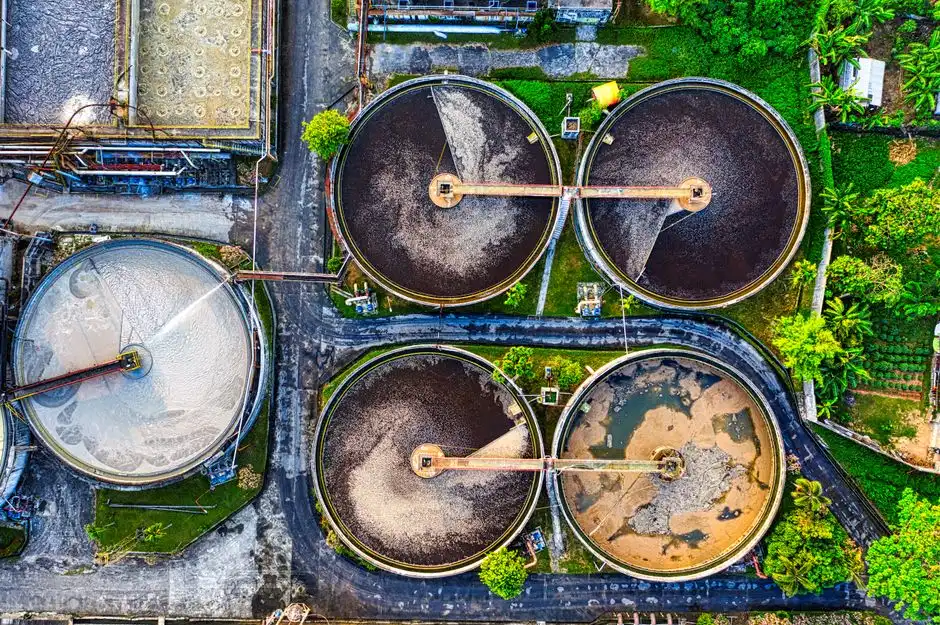
The 40 CFR 403.3(v) definition lists three independent triggers, and any one is sufficient to flip a plant into SIU status (per EPA, 2026). The triggers stack: a plant that is subject to categorical standards under 40 CFR 433 is already an SIU on day one regardless of flow, but flow and the 5% rule often catch small EV startups that have not yet mapped their categorical applicability.
Trigger 1 is categorical applicability. An EV plant with a metal-finishing line for busbars, battery enclosures, or any decorative or functional plating is subject to 40 CFR 433 and is therefore an SIU at startup. The categorical standard does the SIU designation; flow does not matter.
Trigger 2 is ≥25,000 gpd of process wastewater, roughly 95 m³/day sustained. Modest Wayne-area EV lines cross this in a single coating shift once you sum CAM precursor washwater, coating-line overflow, and metal-finishing rinses. A pilot line running 8 hours/day at 50 gpm hits 24,000 gallons; add one more rinse station and you are over the 25,000 gpd federal floor.
Trigger 3 is ≥5% of the POTW's average dry-weather hydraulic or organic capacity. At Wayne's 0.750 MGD Aquarius facility, 5% of hydraulic capacity is 37,500 gpd, but EPA's organic-capacity test uses BOD load, and the Aquarius plant's small biological train means the 5% organic trigger typically fires well below 37,500 gpd for high-strength streams. EPA's 2026 pretreatment guidance treats this as the most common enforcement surprise in the chemical sector, and the same logic applies to EV/auto plants because of the same solvent and metal-loading risk. A single batch dump from a Wayne-area CAM reactor can hit 3,750 gpd in an hour and the operator is suddenly answering for BMR paperwork, 90-day compliance reports, a written control mechanism from the POTW, and routine inspections under 40 CFR 403.12 (per EPA, 2026).
The Pass-Through and Interference Floor That Catches Engineers Who 'Meet the Number'
Pass-through is defined at 40 CFR 403.3(p) as a discharge that exits the POTW into waters of the U.S. (per EPA, 2026). Interference is defined at 40 CFR 403.3(k) as a discharge that both (1) inhibits or disrupts the POTW, its treatment processes, or its sludge processes, use, or disposal and (2) therefore is a cause of an NPDES permit violation or a violation of sewage sludge use or disposal requirements under CWA §405 or RCRA. Both definitions are independent of any numeric limit, and both are enforced as pretreatment standards in their own right.
EPA's 2026 pretreatment guidance treats pass-through and interference as the most common enforcement surprise in the chemical sector, and the same logic applies to EV/auto plants because of the same solvent and metal-loading risk (per EPA, 2026). Engineers who design to "meet the number" and ignore the qualitative floor are the ones who get shut off. An EV plant that meets 40 CFR 433 for dissolved nickel on a 24-hour composite can still be in violation if a slug of NMP solvent from a coating-line dump kills nitrification in the Aquarius biological train, because the qualitative floor at 40 CFR 403.5(a) is what the Aquarius POTW's NPDES permit ultimately defends against.
Wayne §(B)(4) imports the same pass-through/interference logic into local enforcement and lets the Sewer Commissioner act absent a numeric exceedance, on a "likely to harm" standard rather than a "caused harm" standard (Wayne, NE Code §(B)(4)). For batch operators — and cell-coating and CAM synthesis are batch processes — a slug load control plan under 40 CFR 403.8(f) is typically required. That plan is the single most overlooked deliverable in the EV/auto pretreatment stack, because the engineers who write it are usually the same engineers who spec the equipment, and the slug control narrative is treated as a paperwork exercise rather than as a design constraint.
Pretreatment Train for an EV or Auto Plant Discharging to the Wayne POTW
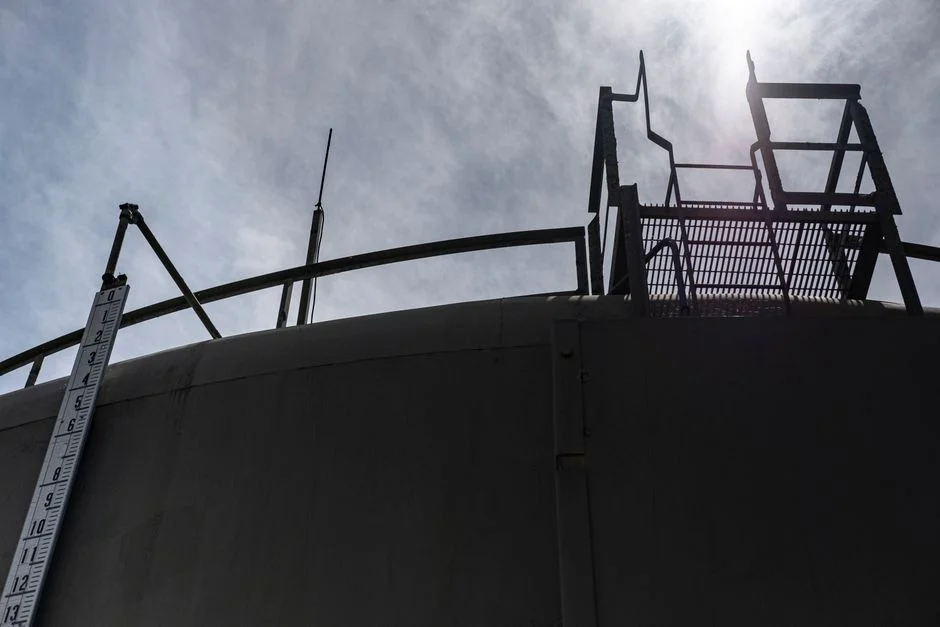
The parameter-to-unit-operation mapping below is the same logic the Aquarius POTW's Control Authority will check during a 40 CFR 403.12 inspection: identify the parameter most likely to exceed the most stringent applicable limit, then point to the unit operation that handles it (per EPA, 2026). For a Wayne-area EV/auto plant that mapping resolves to a five-step train.
Step 1 is equalization with PLC-controlled pH adjustment, sized to absorb the largest single batch dump from CAM synthesis or coating-line cleanup. Equalization smooths the pH and flow swings that would otherwise shock the downstream biological train, and the PLC dosing loop is the simplest place to defend pH compliance against the Wayne Commissioner's acceptable range.
Step 2 is dissolved air flotation (DAF) for oils, TSS, and FOG from stamping and parts washing. The dissolved air flotation system covers 4–300 m³/h across 13 standard models, which fits most Wayne-area plant sizes without custom tankage. Stamping-floor oily water is the largest single TSS and oil load on most Wayne-area EV/auto plants, and DAF is the right unit operation for it; see the dedicated stamping-press oily water pretreatment before DAF process guide for the design math.
Step 3 is chemical precipitation for dissolved metals (Co, Ni, Cu, Li) followed by a lamella clarifier, typically a high-efficiency sedimentation tank rated at 20–40 m/h surface loading and achieving up to 30% chemical reduction on metals. pH is raised to the 9–10 range for hydroxide precipitation, and a coagulant/polymer feed from an automatic chemical dosing system is the standard control loop.
Step 4 is biological polishing with an MBR for COD/BOD and ammonia. A HydropureWater MBR membrane bioreactor system delivers <1 μm effluent filtration in roughly 60% of the footprint of a conventional activated-sludge basin, which is often the difference between fitting pretreatment inside an existing Wayne plant and a greenfield expansion. MBR effluent is consistent enough that Step 5 can be a multimedia or carbon polish for tight local limits, or RO when reuse is in scope.
Pure discharge-to-sewer operations can stay on conventional activated sludge or a simpler aerobic basin; if reuse is in scope, the MBR-plus-RO path becomes the stronger candidate (per EPA, 2026). For a parallel worked example in a different municipality, see the chemical-plant pretreatment guide for Chicago and the EV/auto plant pretreatment guide for Heber Springs.
| Wastewater parameter | Source in an EV/auto plant | Unit operation | Reference |
|---|---|---|---|
| Oils, TSS, FOG | Stamping, parts washing, machine coolant leaks | DAF (4–300 m³/h) | 40 CFR 433 + Wayne §(B)(5) TSS floor |
| Dissolved metals (Co, Ni, Cu, Li) | CAM precursor washwater, plating rinses | Chemical precipitation + lamella clarifier | 40 CFR 433 + Wayne §(B)(4)(e)–(g) narrative cap |
| COD/BOD, ammonia | CAM synthesis, coating-line solvent carryover | MBR or conventional activated sludge | Wayne §(B)(5) BOD 300 ppm floor + 40 CFR 433 |
| pH swings | CAM batch dumps, plating line upsets | Equalization + PLC dosing | Wayne §(B)(5) pH range |
| Tight local limits or reuse | Final polish | Multimedia / carbon / RO | Site-specific reuse target |
The 2026 SIU Documentation Checklist for Wayne-Area EV and Auto Plants
Hand the following list to QA, regulatory affairs, and procurement the same morning the SIU designation letter arrives. Each item is a deliverable that the Aquarius POTW's Control Authority will check during a 40 CFR 403.12 inspection, and each is easier to assemble proactively than under a 90-day compliance window.
First, the Baseline Monitoring Report (BMR) at the point of categorical standard promulgation or new-discharge startup (per EPA, 2026). Second, 90-day compliance reports on the schedule set by the Control Authority — Wayne's published pretreatment program will specify the exact reporting day. Third, a written control mechanism from the POTW that codifies the local limits, narrative caps, and any BMPs the Sewer Commissioner has added under §(B)(4). Fourth, a slug load control plan under 40 CFR 403.8(f), which is mandatory for any batch EV operation and is the deliverable that most often gets written last and audited first. Fifth, routine inspections and self-sampling under 40 CFR 403.12; record retention is the easiest item to fail in an audit, so build the chain-of-custody and lab-certification file before the first sample is collected. Sixth, confirm that local limits are pulled from Wayne's approved pretreatment program and not from a generic EPA table, because local limits can be more stringent than the federal categorical numbers when the receiving plant's hydraulic or biological capacity is constrained (per EPA, 2026).
Frequently Asked Questions
When does an EV plant near Wayne, NE become a Significant Industrial User?
Under 40 CFR 403.3(v), any one of three triggers is sufficient: (1) the plant is subject to categorical pretreatment standards such as 40 CFR 433 for metal finishing; (2) it discharges ≥25,000 gpd of process wastewater, roughly 95 m³/day; or (3) it contributes ≥5% of the Aquarius POTW's average dry-weather hydraulic or organic capacity, which at the 0.750 MGD facility can fire well below 37,500 gpd for high-strength streams. A plant that trips any one of the three inherits the BMR, 90-day reporting, control mechanism, and 40 CFR 403.12 inspection obligations (per EPA, 2026).
What happens if a plant meets 40 CFR 433 but its effluent still causes pass-through or interference?
40 CFR 403.5(a) and (b) prohibit pass-through and interference independently of any numeric limit, so the plant is still in violation. Pass-through under 40 CFR 403.3(p) and interference under 40 CFR 403.3(k) are enforced as pretreatment standards in their own right, and Wayne §(B)(4) gives the Sewer Commissioner parallel authority to act on a "likely to harm" standard. The fix is a slug load control plan under 40 CFR 403.8(f), not a tighter numeric limit (per EPA, 2026).
Can the Aquarius POTW narrative-cap lithium, cobalt, nickel, or fluoride when no federal categorical number exists?
Yes. Wayne Chapter 54 §(B)(4)(e)–(g) authorizes the Sewer Commissioner to impose narrative caps on metals, phenols, and radioactive isotopes, and §(B)(4) extends the same authority to any discharge "likely" to harm the sewers, treatment process, receiving stream, or public property. EPA enforces local limits developed and approved in accordance with 40 CFR 403.5(c) as pretreatment standards, so a properly promulgated narrative cap on Li/Co/Ni/F is legally defensible (per EPA, 2026).
Is DAF alone enough to clear Wayne's BOD 300 / TSS 350 floor?
Usually not. DAF removes free and emulsified oils, FOG, and a fraction of TSS, but dissolved COD/BOD from CAM precursor washwater and coating-line solvent carryover passes through DAF unaffected. A Wayne-area EV/auto plant typically needs DAF plus chemical precipitation for dissolved metals and an MBR or conventional activated-sludge basin for COD/BOD reduction before the BOD 300 and TSS 350 floors are reliably cleared (per EPA, 2026).