The Three-Layer Compliance Stack Chemical Plants Near Wayne Must Hit
Chemical plants near Wayne, US meet pretreatment limits before sewer discharge by satisfying three stacked legal floors: the qualitative prohibitions at 40 CFR 403.5(a) and (b), the numeric categorical standards in 40 CFR Parts 414, 415, 417, 419, or 433, and Wayne's local numeric limits — including the Chapter 54 floors of BOD ≤300 ppm, TSS ≤350 ppm, and pH within the Sewer Commissioner's acceptable range — enforced through a control mechanism issued by the Control Authority (per EPA, 2026; Wayne, NE Code §(B)(5)). The most stringent applicable layer controls, so a plant that meets only the federal number can still be in violation if the local POTW has set a tighter cap.
Layer 1 is the general and specific prohibitions at 40 CFR 403.5(a) and (b). It bans any discharge that causes pass-through or interference and lists specific prohibited pollutants — ignitable, corrosive, or toxic gases in particular — that are forbidden regardless of numeric concentration (per EPA, 2026). Layer 2 is the categorical pretreatment standards in 40 CFR Parts 414 (organic chemicals, plastics, and synthetic fibers), 415 (inorganic chemicals), 417 (soap and detergent), 419 (petroleum refining), and 433 (metal finishing). These are the numeric limits most chemical plant engineers actually have to hit; confirm current values in 40 CFR rather than relying on memory because EPA revises subparts on a multi-year cycle (per EPA, 2026).
Layer 3 is the site-specific local limit, developed by the POTW's Control Authority and published in the approved pretreatment program. Local limits can be more stringent than the federal categorical numbers when the receiving plant's hydraulic or biological capacity is constrained (per EPA, 2026). Wayne, NE's Chapter 54 makes this explicit: under §(B)(5), the Sewer Commissioner may require pretreatment to reduce BOD to 300 ppm by weight and TSS to 350 ppm by weight, may impose additional conditions on flows greater than 2% of the city's average sewage flow, and may issue narrative caps on metals, phenols, and radioactive isotopes under §(B)(4)(e)–(g). The statutory hooks are Clean Water Act §307(b) for the categorical standards and §402(n) for POTW pretreatment program authority under the NPDES framework (per EPA, 2026).
Why Pass-Through and Interference Trip Plants That Pass the Numeric Test
Pass-through and interference are enforced independently of any numeric exceedance, and EPA's 2026 pretreatment guidance treats them as the most common enforcement surprise in the chemical sector (per EPA, 2026). Engineers who design to "meet the number" and ignore the qualitative floor are the ones who get shut off.
Pass-through is defined at 40 CFR 403.3(p) as a discharge that exits the POTW into waters of the U.S. in quantities or concentrations that, alone or in conjunction with discharges from other sources, is a cause of a violation of any requirement of the POTW's NPDES permit, including an increase in the magnitude or duration of a violation (per EPA, 2026). Interference is defined at 40 CFR 403.3(k) as a discharge that both (1) inhibits or disrupts the POTW, its treatment processes, or its sludge processes, use, or disposal and (2) therefore is a cause of an NPDES permit violation or a violation of sewage sludge use or disposal requirements under CWA §405 or RCRA (per EPA, 2026). Either trigger fires a violation on its own — no numeric exceedance is required.
Wayne Chapter 54 §(B)(4) gives the Sewer Commissioner parallel authority to prohibit discharges "likely" to harm the sewers, the treatment process, the receiving stream, or public property — even absent a numeric limit. That language effectively imports the pass-through/interference logic into local enforcement (Wayne, NE Code §(B)(4)). The operational consequence is straightforward: equalization, slug-load control plans under 40 CFR 403.8(f), and continuous pH/flow monitoring are not optional even for plants comfortably below the categorical number. The Control Authority can inspect within 24 hours of notice under Chapter 54 §(G), so a one-hour excursion is not a private event.
When a Wayne Chemical Plant Becomes a Significant Industrial User
SIU status is the gateway to the heaviest monitoring, reporting, and BMR obligations in the federal pretreatment program, and the definition sits in 40 CFR 403.3(v) with three independent triggers — any one of which is sufficient (per EPA, 2026). Most chemical plants near Wayne trip at least one on day one.
Trigger 1: subject to categorical pretreatment standards. This is true for the vast majority of chemical plants under 40 CFR Part 414, 415, 417, 419, or 433 — the engineer does not have to make a separate flow case to be an SIU. Trigger 2: discharges an average of 25,000 gpd or more of process wastewater, regardless of categorical status. Trigger 3: contributes a process waste stream making up 5% or more of the POTW's average dry-weather hydraulic or organic capacity. The 5% rule matters for batch chemical operators whose reactor dumps swamp a small Wayne-area POTW on cycle days.
Once the plant is an SIU, the obligations stack quickly: a Baseline Monitoring Report at the point of categorical standard promulgation or new-discharge startup, 90-day compliance reports on a defined schedule, a written control mechanism from the POTW, and routine inspections and sampling under 40 CFR 403.12 (per EPA, 2026). For batch operators — and most specialty chemical plants run batch — a slug load control plan under 40 CFR 403.8(f) is also typically required to prevent discharge surges that could trip pass-through or interference at the receiving plant. The BMR establishes the baseline pollutant envelope the rest of the compliance program measures against, so getting it wrong is a multi-year liability.
The Standard Six-Operation Equipment Train for Chemical Plant Pretreatment
Six unit operations, in roughly this order, handle the vast majority of chemical plant wastewater streams that go to a POTW. Not every plant needs all six — the right subset is a function of the controlling pollutant, which the next section works through as a decision matrix.
Step 1 is equalization, sized to dampen batch swings in pH, flow, temperature, and concentration before downstream unit operations see them. Continuous operations typically need 4–8 hours of retention; batch operations need hours to days, and over-sizing is cheaper than one pass-through excursion (per EPA, 2026). The regulatory drivers are 40 CFR 403.5(a) for pass-through prevention and 40 CFR 403.8(f) for slug-load control. Step 2 is pH neutralization, typically a PLC-controlled acid/caustic dosing loop with a target of 6–9 to satisfy both 40 CFR 403.5(b) specific prohibitions and the local POTW pH range; an automatic chemical dosing system handles the reagent control on a 24/7 basis without operator attention.
Step 3 is dissolved air flotation or a coalescer to remove free and emulsified oils, FOG, and TSS. A HydropureWater dissolved air flotation system is rated 4–300 m³/h across 13 standard models, which covers most Wayne-area chemical plant flows without custom tankage. Step 4 is chemical precipitation followed by a clarifier, targeting dissolved metals such as Cd, Cr, Cu, Ni, Pb, and Zn. A high-efficiency sedimentation tank (lamella clarifier) operating at 20–40 m/h surface loading rate and roughly 30% chemical savings versus conventional clarifiers is the common workhorse here; the regulatory driver is 40 CFR Part 433 for metal finishing and the categorical subpart governing the plant.
Step 5 is biological polishing — activated sludge or MBR — to knock down residual COD/BOD before the local limit. A HydropureWater MBR membrane bioreactor system delivers <1 μm effluent filtration in roughly 60% of the footprint of a conventional activated-sludge basin, which is the difference between fitting pretreatment inside an existing Wayne plant and a greenfield expansion. Step 6 is multimedia and/or carbon filtration to polish for tight local limits or reuse-quality targets; RO is added on the back end when reuse is in scope. The table below links each operation to the parameter it controls and the citation behind it.
| Step | Unit operation | Controlling pollutant / parameter | Typical range | Regulatory citation |
|---|---|---|---|---|
| 1 | Equalization basin | pH, flow, temperature, concentration swings | 4–8 h continuous; h–days batch | 40 CFR 403.5(a); 40 CFR 403.8(f) |
| 2 | pH neutralization + PLC dosing | pH | 6–9 (local limit) | 40 CFR 403.5(b); local POTW limit |
| 3 | DAF or coalescer | Free/emulsified oils, FOG, TSS | 4–300 m³/h (DAF) | 40 CFR 403.5(a); categorical; local limit |
| 4 | Chemical precipitation + lamella clarifier | Dissolved metals (Cd, Cr, Cu, Ni, Pb, Zn) | 20–40 m/h SLR; ~30% chemical savings | 40 CFR Part 433 (metal finishing); categorical subpart; local limit |
| 5 | Biological polishing (activated sludge / MBR) | COD, BOD | <1 μm effluent (MBR); ~60% footprint reduction | Categorical standard; local BOD/COD limit |
| 6 | Multimedia / carbon filtration (± RO) | Residual TSS, organics, TDS (reuse) | Site-specific | Local limit; reuse-quality target |
Decision Framework: Choosing the Right Train for Your Plant
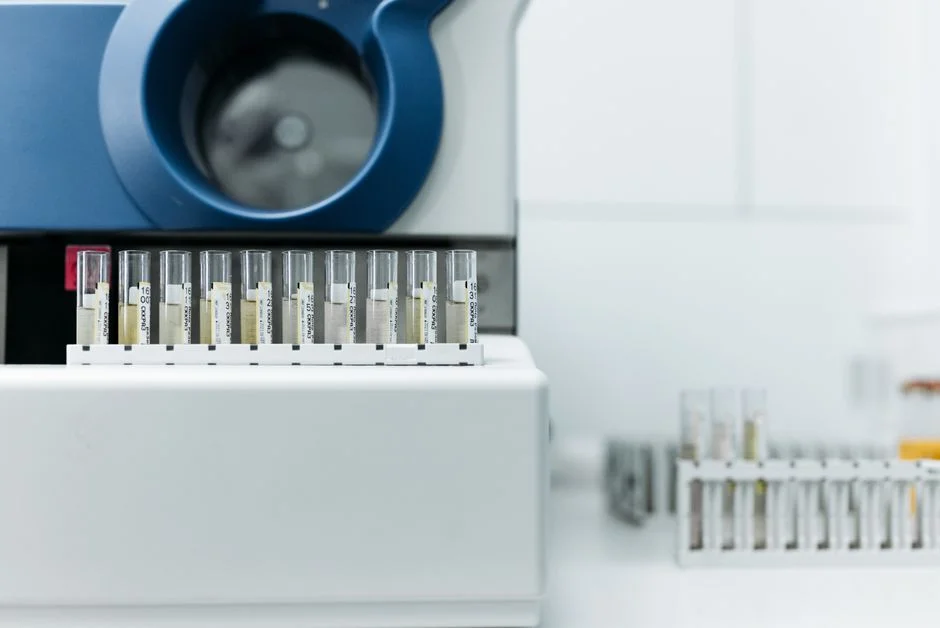
Four decision axes determine which combination of unit operations to build. Walking through them in order produces a defensible equipment train the procurement lead can take to an RFQ without translating the regulatory framework into spec language themselves.
Axis 1 is the controlling pollutant. Identify the parameter most likely to exceed the most stringent applicable limit: oils and TSS point to a dissolved air flotation system for chemical plant pretreatment; dissolved metals point to chemical precipitation followed by a clarifier such as a high-efficiency sedimentation tank; high COD/BOD points to biological polishing; pH swings point to equalization plus PLC-controlled dosing (per EPA, 2026). In practice, most chemical plants hit two or three of these simultaneously, which is why the full six-step train is the common case rather than the exception.
Axis 2 is SIU status and the applicable standard. If the plant is an SIU under a categorical standard, the federal number is the floor and the local limit is often the binding constraint. If the plant is non-categorical, the design still has to prevent pass-through and interference under 40 CFR 403.5(a) — qualitative but no less enforceable (per EPA, 2026). Axis 3 is flow pattern. Batch operations with long cycle times or shared collection systems need equalization sized for hours to days; continuous operations can usually get away with 4–8 hours of retention. The cost penalty for over-sizing equalization is small compared with the cost of a pass-through excursion, so most engineers err on the long side (per EPA, 2026). Axis 4 is water reuse. If the plant is moving toward reuse, the MBR-plus-RO path becomes a stronger candidate than discharge-only activated sludge; pure discharge-to-sewer operations can stay on conventional activated sludge or a simpler aerobic basin (per EPA, 2026). The trade-off note: equalization and PLC-controlled dosing are the lowest-cost insurance against compliance excursions — under-sizing either is the most common root cause of failed compliance events at chemical plants (per EPA, 2026).
| Decision axis | If … | Then the train tilts toward … |
|---|---|---|
| Controlling pollutant | Oils / TSS dominate | DAF (Step 3) as primary |
| Controlling pollutant | Dissolved metals (Cd, Cr, Cu, Ni, Pb, Zn) | Chemical precipitation + lamella clarifier (Step 4); 40 CFR Part 433 if metal finishing |
| Controlling pollutant | High COD/BOD to local POTW | Biological polishing (Step 5), MBR if footprint-constrained |
| Controlling pollutant | pH swings from batch reactors | Equalization (Step 1) + PLC-controlled dosing (Step 2) |
| SIU status / applicable standard | Categorical SIU (Parts 414/415/417/419/433) | Federal floor + local limit; BMR + 90-day reports required |
| SIU status / applicable standard | Non-categorical IU | Design to 40 CFR 403.5(a) — no pass-through, no interference |
| Flow pattern | Batch with long cycle / shared collection | Equalization sized h–days; slug load control plan under 40 CFR 403.8(f) |
| Flow pattern | Continuous operation | Equalization sized 4–8 h typically sufficient |
| Reuse intent | Reuse in scope (cooling, rinse, boiler) | MBR + RO (Step 5 + Step 6); reuse-quality target governs |
| Reuse intent | Discharge-to-sewer only | Conventional activated sludge acceptable; RO not required |
For a worked example of a metal-finishing stream under 40 CFR Part 433, see DAF or Clarifier for Fabricated Metals Wastewater in Muncie, IN: 2026 Buyer's Guide. For MBR operating pain points and fixes after the train is built, MBR Common Problems and Solutions: 2026 Engineering Troubleshooting Guide covers the failure modes that bite in year two.
Wayne-Specific Compliance Checklist Before You Sign a Permit
Hand this list to legal, EHS, and operations as a single page. Each line ties back to a specific Wayne Chapter 54 section or a federal CFR citation, so the rationale is documented in the permit file rather than carried in someone's head.
- Confirm connection requirements under Wayne Chapter 54 §(B)(1)–(4): no storm water, surface water, ground water, roof runoff, subsurface drainage, or uncontaminated cooling water to any sanitary sewer (Wayne, NE Code §(B)(1)).
- Confirm pretreatment performance against the §(B)(5) floors: BOD ≤300 ppm by weight, TSS ≤350 ppm by weight, pH within the Sewer Commissioner's accepted range, and a review of any flow greater than 2% of the city's average sewage flow.
- If the plant discharges metals, phenols, or radioactive isotopes, request a written narrative limit from the Sewer Commissioner under §(B)(4)(e), (f), and (g) before the first batch is released, not after an excursion (Wayne, NE Code §(B)(4)).
- Submit a slug load control plan under 40 CFR 403.8(f) if the plant operates batch reactors or shared collection, and tie it to the equalization basin sizing in Step 1 of the equipment train.
- Maintain 24-hour inspection responsiveness — the Sewer Commissioner may inspect within 24 hours of notice under Chapter 54 §(G), and the Commissioner's authority extends only to inquiries bearing directly on the kind and source of discharge (Wayne, NE Code §(G)).
- Build a 60-day connection window into any new build schedule. Chapter 54 §(A)(4) requires connection to an available public sewer within 60 days of official notice, and §(H) requires the private disposal system to be cleaned of sludge and filled with clean bank-run gravel or dirt at that point (Wayne, NE Code §(A)(4), §(H)).
For a parallel worked example in a different municipality, How Chemical Plants Near Little Rock Meet Pretreatment Limits (2026 Guide) walks through the same three-layer stack against a different local code.
Frequently Asked Questions
What triggers SIU status for a chemical plant near Wayne?
SIU status is defined at 40 CFR 403.3(v) with three independent triggers: (1) the plant is subject to categorical pretreatment standards under 40 CFR Parts 414, 415, 417, 419, or 433; (2) the plant discharges an average of 25,000 gpd or more of process wastewater; or (3) the plant contributes a process waste stream making up 5% or more of the POTW's average dry-weather hydraulic or organic capacity. Any one trigger is sufficient. Most chemical plants near Wayne trip trigger (1) on day one because they fall under one of the categorical subparts, which brings BMR, 90-day compliance reports, written control mechanism, and routine inspections under 40 CFR 403.12 (per EPA, 2026).
When is a slug load control plan required for a chemical plant near Wayne?
A slug load control plan is typically required for any SIU under 40 CFR 403.8(f). A slug load is any non-routine pollutant release or hydraulic surge that can cause pass-through or interference at the POTW. Batch chemical operators with long reactor cycle times or shared collection systems are the most common triggers; the plan combines equalization capacity, flow and pH monitoring, and written operating procedures for batch releases, and it should be sized to match the Step 1 equalization basin in the equipment train (per EPA, 2026).
Which 40 CFR subpart applies to a given chemical plant near Wayne?
Match the plant's primary product to the subpart: 40 CFR Part 414 covers organic chemicals, plastics, and synthetic fibers; Part 415 covers inorganic chemicals; Part 417 covers soap and detergent manufacturing; Part 419 covers petroleum refining; Part 433 covers metal finishing. Confirm the current numeric values in 40 CFR before committing to a design, because EPA revises subparts on a multi-year cycle (per EPA, 2026).
What is the role of local limits versus federal categorical standards?
Local limits are site-specific numeric or narrative effluent discharge limits, including BMPs, developed by the POTW's Control Authority and published in its approved pretreatment program. They protect the specific POTW, its sludge, and its receiving waters, and they can be more stringent than the federal categorical floor when the receiving plant's hydraulic or biological capacity is constrained. EPA can enforce local limits developed and approved in accordance with 40 CFR Part 403.5(c) as pretreatment standards (per EPA, 2026). For Wayne, that means the Chapter 54 §(B)(5) floors of BOD ≤300 ppm and TSS ≤350 ppm are the local limit the engineer designs to, not the federal number.
What is the difference between pass-through and interference under 40 CFR 403?
Pass-through, defined at 40 CFR 403.3(p), is a discharge that exits the POTW into waters of the U.S. in quantities or concentrations that, alone or in conjunction with other sources, is a cause of a violation of any requirement of the POTW's NPDES permit, including an increase in the magnitude or duration of a violation. Interference, defined at 40 CFR 403.3(k), is a discharge that both (1) inhibits or disrupts the POTW, its treatment processes, or its sludge processes, use, or disposal and (2) therefore is a cause of an NPDES permit violation or a violation of sewage sludge use or disposal requirements under CWA §405 or RCRA. Either trigger fires a violation independently of any numeric exceedance, which is why the qualitative prohibitions at 40 CFR 403.5(a) are enforced regardless of whether a limit was exceeded (per EPA, 2026).