The Port Angeles Pretreatment Framework Mines and Metals Plants Must Follow
Mining and metals plants near Port Angeles, Washington meet 2026 pretreatment limits by complying with the City of Port Angeles Wastewater Utility's industrial pretreatment program, which is mandated by the Washington State Department of Ecology under the city's NPDES permit and EPA's 40 CFR Part 403 framework. Operators typically install a treatment train of flow equalization, pH adjustment, chemical precipitation for dissolved heavy metals (Cu, Pb, Zn, Ni, Cd, Cr), dissolved air flotation for suspended solids, and plate-and-frame dewatering of the metal-bearing sludge before discharge to the 127-mile sanitary sewer system. Permit limits, Source Control oversight (360-417-4692), and self-monitoring reporting apply.
The regulatory chain runs in one direction: the City of Port Angeles Wastewater Utility operates a collection system of 127 miles of 4–48 inch sanitary and combined sewers, 17 pump stations, roughly 7,200 service connections, and a secondary treatment plant whose capacity is projected to be adequate until at least 2030 (cityofpa.us, Wastewater Utility page). The Utility is, in the city's own words, "required by the Washington State Department of Ecology (DOE) to implement its industrial wastewater pretreatment program to comply with our National Pollutant Discharge Elimination System (NPDES) permit, and to comply with Environmental Protection Agency standards." The Wastewater Pretreatment Program is the mechanism that controls nutrients, suspended solids, acidity/alkalinity, toxins, and heavy metals from non-residential customers (cityofpa.us).
On June 2024, DOE approved the city's Wastewater Comprehensive Plan; on October 3, 2024, the City Council authorized staff to work toward Scenario 1a (cash-financed capital improvement with rate increases every other year starting in 2025) and submit the plan back to DOE for formal adoption (cityofpa.us). For a quarry, mineral processor, or smelter, the practical question is which federal rule determines their permit ceiling. The answer is 40 CFR Part 403, EPA's General Pretreatment Regulations, which defines a Significant Industrial User (SIU) as a facility discharging ≥25,000 gpd of process wastewater, contributing ≥5% of the publicly owned treatment works' hydraulic or organic capacity, or being designated by the Control Authority (40 CFR 403.3). Most mineral processors and metals finishers in the Port Angeles service area trip at least one of those thresholds on flow alone. A single 50 gpm dewatering stream at a quarry runs 72,000 gpd — well above the 25,000 gpd cutoff. The single point of contact for permit questions, monitoring waivers, and limit negotiation is the Source Control Specialist at 360-417-4692 (cityofpa.us, Wastewater Permits page).
Characterizing Mining and Metals Wastewater Before Sizing Equipment
Defensible equipment sizing starts with a defensible influent profile, and that profile has to reflect the swings a mining or metals plant actually produces. The Port Angeles program targets five pollutant families: nutrients, suspended solids, acidity/alkalinity, toxins, and heavy metals (cityofpa.us). On the Olympic Peninsula, the geology that carries aggregate and metallic mineral deposits also produces acid rock drainage (ARD) when sulfide-bearing rock is exposed to air and water, which means dissolved sulfate in the 100–3,000 mg/L range and pH swings from 1 to 11 are realistic across a single operating week, not worst-case hypotheticals.
Build the basis of design (BOD) around three flows: average day, max day, and peak hour. Average day sets chemical-dosing tank sizing and operating cost; max day sets equalization volume; peak hour sets pump and pipe capacity. Surge events — a mine dewatering pump cycling on, a batch dump-leach emptying, a mill reline — will dominate equalization design even if the daily average looks tame.
| Parameter | Typical Mining/Metals Range | Sampling Method | Preservation |
|---|---|---|---|
| pH | 1–11 (unit swings) | Continuous probe + grab | Field analyze |
| Total Suspended Solids (TSS) | 200–5,000 mg/L | 24-hr composite | Cool to 4 °C |
| Total Metals (Cu, Pb, Zn, Ni, Cd, Cr) | 1–500 mg/L (sum) | 24-hr composite | HNO₃ to pH < 2 |
| Mercury (Hg) | ppb – low ppm | Grab, dedicated bottle | HCl to pH < 2 |
| Cyanide (CN, precious-metal ops) | Trace – tens of mg/L | Grab, no headspace | NaOH to pH > 12, 4 °C |
| Sulfate (SO₄) | 100–3,000 mg/L | 24-hr composite | Cool to 4 °C |
| Oil & Grease (FOG) | Up to several hundred mg/L | Grab | H₂SO₄ to pH < 2 |
Under 40 CFR 403, the sample used for SIU compliance reporting has to be representative. For metals, that almost always means a 24-hour flow-proportional composite preserved at pH < 2 with nitric acid and analyzed by ICP-MS or ICP-OES (EPA 200.2/6010 series). For cyanide, use a grab sample in a dedicated bottle with no headspace, preserved at pH > 12 with NaOH, because CN is volatile and will partition out of a composite. For FOG, grab is still the regulatory method because oil films on a composite line will bias the result low. Build the sampling plan around the analytical method, not the other way around.
The 2026 Treatment Train That Holds the Line on Port Angeles Limits
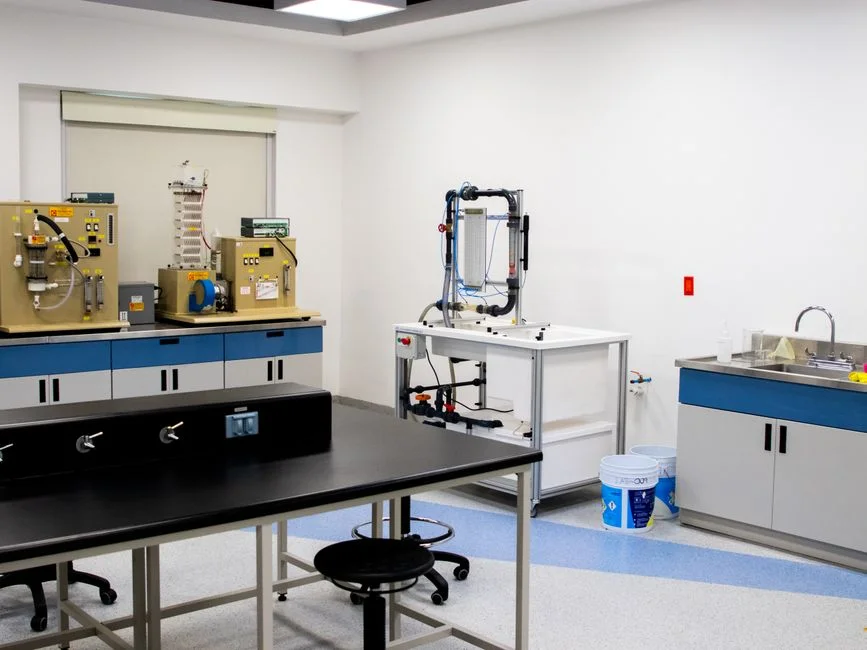
A mining or metals pretreatment train that will pass a Port Angeles discharge permit in 2026 has seven unit operations in a fixed sequence. The sequence matters as much as the equipment; rearranging it usually means the downstream operation is doing work the upstream operation should have done.
- Flow equalization. 8–24 hours of hydraulic residence time, sized at roughly 2× the peak hour flow, dampens pH and load swings before chemistry. A quarry dewatering stream that swings pH from 3 to 9 over a shift will be a manageable pH 6.5–8.5 stream after equalization — and chemical dose stops tracking the spikes.
- pH adjustment. PLC-controlled dosing of lime (Ca(OH)₂), NaOH, or H₂SO₄ holds the stream in the 6.5–9.0 band. Federal rules prohibit discharge below pH 5.0 (40 CFR 403.5), and the local ceiling is typically pH 9.0; staying in the middle of the band leaves margin on both sides.
- Chemical precipitation of dissolved metals. Raise pH into the 8.5–9.5 window with NaOH to crash amphoteric metals (Cu, Zn, Ni, Cd) as hydroxides, then polish with Na₂S to drive Pb, Hg, and residual Cu down to ppb. Sulfide precipitation is the only reliable way to hit sub-mg/L mercury without ion exchange.
- Dissolved air flotation. A dissolved air flotation (DAF) system removes the metal-hydroxide floc and any entrained oil/grease. Operating band is 90–95% TSS removal and >95% FOG removal at hydraulic loadings of 4–300 m³/hr across 13 model sizes (HydropureWater DAF product entry).
- Polishing multimedia filtration. A sand/anthracite/ilmenite filter drops residual TSS below 10 mg/L and protects against any hydraulic upset that escapes the DAF.
- Plate-and-frame filter press. The DAF float and clarifier underflow report to a plate-and-frame filter press that dewaters the metal-bearing sludge to 25–35% cake solids. Cake at that dryness passes the paint-filter test and ships as a RCRA hazardous waste under D006 (lead), D007 (cadmium), D008 (arsenic), or D009 (mercury) depending on the TCLP results.
- Optional RO side-stream. Where water cost or scarcity justifies it, a reverse osmosis side-stream treats clarified effluent for reuse in mill process or dust suppression.
Upstream of the clarifier or DAF, install a GX rotary mechanical bar screen to remove rags, wood, and tramp metal — the failure mode for downstream pumps and polymer mixers is almost always debris, not chemistry. Pair the equalization basin with a HydropureWater automatic chemical dosing skid so pH and Na₂S dose follow the influent, not the operator's morning rounds. A HydropureWater lamella clarifier is the right unit operation in place of the DAF for simple hydroxide floc at lower flows — see the selection table below.
| Step | Unit Operation | Primary Function | Typical Performance |
|---|---|---|---|
| 1 | Equalization basin | Flow & load dampening | 8–24 hr HRT, 2× peak hour |
| 2 | pH adjustment (PLC) | Hold pH 6.5–9.0 | ±0.2 pH control band |
| 3 | Chemical precipitation | Drop dissolved metals | Cu/Zn/Ni to <1 mg/L; Pb/Hg to ppb via Na₂S |
| 4 | DAF | Remove floc & FOG | 90–95% TSS, 95%+ FOG |
| 5 | Multimedia filter | Polishing | TSS < 10 mg/L |
| 6 | Plate-and-frame press | Sludge dewatering | 25–35% cake solids |
| 7 | RO (optional) | Water reuse | 70–85% recovery |
Mass-Balance Math: From a Real Mining Stream to Discharge Compliance
The fastest way to know whether a proposed train will pass the city's discharge permit is to run the numbers end to end. Take a representative mineral-processing stream: 50 gpm average day flow, pH 4.5 influent, TSS 1,200 mg/L, copper 18 mg/L, lead 6 mg/L, zinc 22 mg/L. After pH adjustment to 9.0 and Na₂S polishing, dissolved metals drop sharply — copper to roughly 0.5 mg/L, lead to 0.1 mg/L, zinc to 0.8 mg/L (HydropureWater field data, 2026). The DAF and multimedia polish then drive TSS below 10 mg/L.
The mass-loading arithmetic is the same one the Source Control office will run on your self-monitoring report. Concentration (mg/L) × flow (gpm) × 8.34 ÷ 1,000,000 = pounds per day. For 50 gpm at 18 mg/L copper: 18 × 50 × 8.34 ÷ 1,000,000 = 0.0075 lb/day Cu. For lead at 6 mg/L: 0.0025 lb/day Pb. These loadings sit comfortably inside the 40 CFR Part 421 (nonferrous metals) and 40 CFR Part 433 (metal finishing) categorical standards' day-maximum and monthly-average ceilings — but the city issues site-specific local limits through the Source Control office (360-417-4792) that can be tighter or looser than the federal categorical standards, depending on the WWTP's organic and hydraulic headroom. The 127-mile collection system provides dilution, but it does not provide permit relief: local limits govern.
Two practical points the math makes obvious. First, equalization is cheaper than chemistry — cutting the influent pH swing from a 4-unit range to a 1-unit range typically halves NaOH consumption. Second, the dose that hits the metals limit is the dose that runs the sludge disposal cost; pushing metals lower than the permit requires is wasted reagent and wasted landfill volume.
Choosing Equipment: DAF, Lamella, or Conventional Clarifier for the Front End
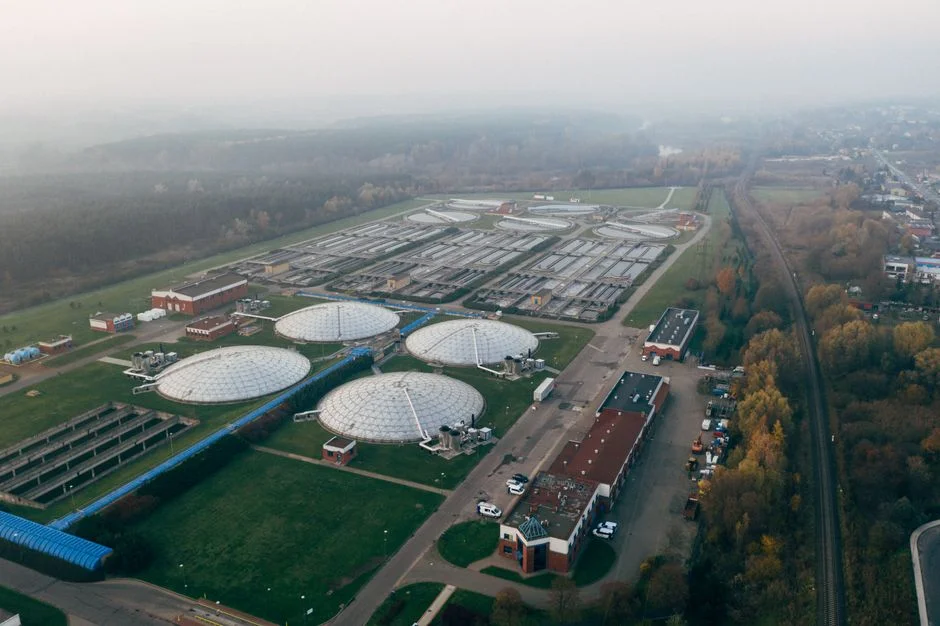
For the front-end solids-removal step, the choice comes down to floc character and flow rate. DAF captures light, oily, low-density floc by floating it; lamella and conventional clarifiers capture heavy, dense floc by letting it settle. Metal-hydroxide floc is light and often carries emulsified oil from cutting fluids, drawing compounds, or mill lubricants — which is why DAF is the default for the metals and mining industry. The lamella clarifier wins where the floc is dense (simple hydroxide without oil) and the flow is high enough that a 30% reduction in polymer dose, claimed by the HydropureWater lamella entry, pays for the larger footprint.
| Criterion | DAF | Lamella Clarifier | Conventional Clarifier |
|---|---|---|---|
| Best floc type | Light, oily | Dense hydroxide | Dense, grit-heavy |
| TSS removal | 90–95% | 80–90% | 70–85% |
| FOG removal | 95%+ | 50–70% | 40–60% |
| Flow range | 4–300 m³/hr | 20–500 m³/hr | 50–5,000 m³/hr |
| Footprint | Compact | Compact (inclined plates) | Large |
| Polymer dose | Standard | Up to 30% lower | Standard |
| Default flow band | > 50 m³/hr mixed metal | < 20 m³/hr simple floc | Very high flow, grit-heavy |
For flows above 50 m³/hr with mixed metal loading and any FOG presence, default to a dissolved air flotation (DAF) system (4–300 m³/hr, 13 models). For flows below 20 m³/hr with simple hydroxide floc and no oil, default to the HydropureWater lamella clarifier for the chemical savings. For a head-to-head framework applicable to nearby fabricated-metals shops, see the DAF vs clarifier selection guide for fabricated metals wastewater. Upstream of either unit, install a GX rotary mechanical bar screen to protect the polymer mixers and pumps from rag and debris fouling — the most common unplanned downtime cause on these trains.
Sludge Handling and 2026 Disposal Economics
Compliance with the discharge permit is half the problem. The other half is the metal-bearing sludge leaving the DAF float, the clarifier underflow, and the spent multimedia filter backwash. That stream is almost always a RCRA hazardous waste by Toxicity Characteristic Leaching Procedure (TCLP) — the codes that show up most often in mining and metals TCLP results are D006 (lead, ≥5 mg/L leachate), D007 (cadmium, ≥1 mg/L), D008 (arsenic, ≥5 mg/L), and D009 (mercury, ≥0.2 mg/L) per 40 CFR 261.24. Generator status (LQG vs. SQG vs. VSQG) depends on monthly kg/mo generation, and that classification sets the storage, manifesting, and disposal rules under 40 CFR 262.
The dewatering unit operation is the real cost driver because landfill volume is what gets billed. A plate-and-frame filter press with 1–500 m² filtration area (HydropureWater filter press entry) is the workhorse for this duty: it reaches 25–35% cake solids, which is the dryness band that passes the paint-filter test for land disposal and minimizes the water weight the hauler is paid to move. For lower-volume flows (under about 5 m³³/day of sludge), a screw press is a viable lower-CAPEX alternative with somewhat lower cake solids. The 2026 cost pressure is straightforward: hazardous-waste landfill tipping runs in the several-hundred-dollars-per-ton range depending on the RCRA code and the receiving facility, so every point of additional cake dryness directly reduces annual disposal spend. For a sizing walk-through on a related wire-drawing sludge, see the filter press sizing guide for wire drawing wastewater.
Frequently Asked Questions
What triggers Significant Industrial User status in Port Angeles?
Under 40 CFR 403.3, a discharger becomes a Significant Industrial User if it discharges ≥25,000 gpd of process wastewater, contributes ≥5% of the publicly owned treatment works' hydraulic or organic capacity, or is designated as SIU by the Control Authority. Most quarries, mineral processors, and metals finishers in the Port Angeles service area trip the flow threshold on a single dewatering or process stream. Apply through the Source Control Specialist at 360-417-4692.
What heavy metals are regulated in the Port Angeles pretreatment program?
The city's program targets Cu, Pb, Zn, Ni, Cd, Cr (total and hexavalent), Hg, Ag, and cyanide (cityofpa.us, Wastewater Utility page). Numeric local limits are site-specific and issued through the Source Control office; the engineer must request the actual ceilings rather than assume the federal categorical standards apply unchanged.
How much does a typical mining or metals pretreatment train cost in 2026?
CAPEX scales with four drivers: average and peak flow, the metals panel and required detection limits, the level of automation, and the sludge-disposal route. Containerized skids for sub-20 gpm flows start in the low six figures; full concrete-basin trains at 100+ gpm with PLC automation and a filter-press hall are an order of magnitude higher. For regional context on a comparable compliance program, see the Cordova chemical plant pretreatment compliance guide.
Is the Port Angeles WWTP capacity adequate for new industrial connections in 2026?
Yes. The treatment plant is projected to be adequate to at least 2030, with a design population of 24,800 (cityofpa.us). The binding constraint on a new industrial connection is influent load — specifically metals, ammonia, and BOD — not hydraulic capacity, which is why pretreatment at the source is non-negotiable.
What removal efficiency can a DAF deliver on TSS and oil/grease?
Per the HydropureWater DAF product entry, 90–95% TSS removal and 95%+ oil/grease removal across 4–300 m³/hr hydraulic capacity, with 13 model sizes covering most mining and metals flow bands.