
Why Universities Are Deploying Anaerobic Digestion Now
State and federal regulations, coupled with escalating energy costs and ambitious sustainability targets, are driving universities to adopt anaerobic digestion (AD) as a core waste management and energy generation strategy. The EPA's 40 CFR Part 503 biosolids rule and state-level organics bans, such as California's SB 1383, Massachusetts, Vermont, and New York regulations, increasingly mandate the diversion of organic waste from landfills, making traditional disposal methods financially and legally untenable for institutions (per EPA 40 CFR 503, 2026). campus energy costs are rising at an average rate of 4–6% annually, creating a compelling financial incentive for combined heat and power (CHP) systems fueled by biogas, which can offset grid electricity purchases costing $0.08–0.12/kWh and provide thermal energy for district heating (HydropureWater market analysis, 2026). Universities also face pressure to meet rigorous sustainability reporting standards like STARS/AASHE and fulfill Scope 1, 2, and 3 carbon neutrality pledges, where AD projects offer measurable waste-to-energy conversion; for example, the UC Davis Renewable Energy Anaerobic Digester (READ) facility reduces greenhouse gas emissions by 13,500 tons of CO2e per year (source: S3). This shift is further incentivized by the potential for tipping fee revenue, typically $40–60/ton for commercial food waste, which can transform an AD facility from a cost center into a significant revenue asset, as demonstrated by the Michigan State University (MSU) model which integrates community feedstock (source: S5).Characterizing Your Campus Waste Streams for AD Feedstock
Accurate characterization of campus organic waste streams is the foundational step for designing an effective anaerobic digester. Dining halls typically generate food waste with 25–35% total solids (TS) and a chemical oxygen demand (COD) of 150–250 g/L, exhibiting high biodegradability (HydropureWater field data, 2026). A typical university dining operation can produce 0.3–0.5 lb of food waste per meal served, though this varies seasonally during academic breaks and summer sessions. Wastewater treatment plant (WWTP) sludge, comprising primary and waste activated sludge, provides a steady, year-round base load with COD ranging from 3,000–5,000 mg/L (industrial sewage typically 4,320 mg/L per S1) and volatile solids (VS) content of 60–70%. Animal facilities, common at agricultural universities, contribute manure (e.g., dairy, equine, poultry) which can be an excellent co-substrate; MSU utilizes dairy manure with 15–20% TS to buffer the carbon-to-nitrogen (C:N) ratio of food waste (source: S5). Landscaping and grounds waste, such as yard waste and leaf litter, generally have low biodegradability due to high lignin content and are often better suited for separate composting or require advanced pretreatment like hydrothermal processing if included in the AD feedstock. A robust waste audit follows these steps:- Map all organic waste generation points across campus, including dining halls, research labs, animal facilities, and groundskeeping operations.
- Conduct a 7-day weigh and sampling program for each identified stream to establish daily generation rates and variability.
- Perform comprehensive laboratory analysis on samples for key parameters: total solids (TS), volatile solids (VS), chemical oxygen demand (COD), carbon-to-nitrogen (C:N) ratio, and biochemical methane potential (BMP) (e.g., industrial sewage BMP of 76 mL/gTDS per S1).
- Develop a seasonal projection model to account for fluctuations in waste generation during academic terms, holidays, and summer.
- Implement a contaminant screening process to identify and quantify plastics, glass, metals, and other inert materials that could disrupt AD operations.
Technology Selection: HSAD vs CSTR vs UASB vs Egg-Shaped for Campus Sites
| Criterion | HSAD (Dry) | CSTR (Wet) | UASB/EGSB | Egg-Shaped Digester |
|---|---|---|---|---|
| Feedstock TS Range | 15–35% | 3–10% | 1–3% (soluble) | 3–10% |
| Footprint | Small (garage-style) | Medium-Large (tank farm) | Small (compact) | Medium (optimized) |
| Solids Tolerance | High (whole food waste) | Medium (pre-processed slurry) | Low (soluble only) | Medium (pre-processed slurry) |
| Turndown Ratio (Feedstock) | Good (batch/semi-continuous) | Moderate (continuous feed) | Poor (sensitive to flow changes) | Moderate (continuous feed) |
| Operator Skill Level | Moderate | Moderate-High | High (process control) | Moderate-High |
| Digestate End-Use | Solid (compost, bedding) | Liquid/Solid (fertilizer, compost) | Liquid (fertilizer) | Liquid/Solid (fertilizer, compost) |
| Capital Cost (Relative) | Moderate | Moderate-High | Low-Moderate | High |
Design Parameters & Process Control Setpoints from Operating Campuses
Establishing precise design parameters and maintaining tight process control setpoints are critical for optimizing biogas production and digestate quality in university anaerobic digesters. The optimal hydraulic retention time (HRT) for mixed organic waste streams typically falls within 18–22 days, a range validated through RSM optimization studies at 50L scale on industrial sewage and sugar refinery streams (source: S1). Mesophilic operating temperatures of 37 ± 1°C are standard, balancing microbial activity with energy demand; thermophilic operation at 55°C is only considered if greater than 90% pathogen kill is required for Class A biosolids, as it significantly increases thermal energy input (HydropureWater engineering guidelines, 2026). pH control is maintained at a target of 7.0–7.2, supported by an alkalinity of 2,500–3,500 mg/L as CaCO3, often achieved through auto-dosing sodium bicarbonate or recirculating treated digestate. Organic loading rates (OLR) vary by technology: HSAD systems typically operate at 3–6 kg VS/m3·d, while CSTRs are designed for 1.5–3 kg VS/m3·d. Digester volume is sized by the formula: Volume (m3) = (Daily VS load, kg) × HRT (days) / OLR (kg VS/m3·d). Magnetite (Fe3O4) dosing at 0.4–0.6 g/L with the feed has been shown to reduce the methanogenic lag phase from 9 days to 3 days, enhancing direct interspecies electron transfer (DIET) and improving overall biogas production stability (source: S1). Biogas quality targets include a methane (CH4) content of 60–70% (with 90% achievable through in-situ upgrading and advanced sensors per S1), hydrogen sulfide (H2S) levels below 200 ppm, and siloxanes below 5 mg/m3 to protect combined heat and power (CHP) engines (source: S5). The digestate, post-treatment, typically yields a liquid fraction of 3–5% TS suitable for land application (UC Davis produces 4 million gallons/year), and a solids fraction of 20–25% TS for composting or animal bedding (source: S3). Both fractions must be regularly tested for heavy metals and pathogens to ensure compliance with 40 CFR 503 regulations.| Parameter | Typical Range / Target | Notes |
|---|---|---|
| Hydraulic Retention Time (HRT) | 18–22 days | Optimal for mixed waste (source: S1) |
| Operating Temperature | 37 ± 1°C (Mesophilic) | Higher for pathogen kill (55°C Thermophilic) |
| pH Target | 7.0–7.2 | Alkalinity 2,500–3,500 mg/L as CaCO3 |
| Organic Loading Rate (OLR) - HSAD | 3–6 kg VS/m3·d | Higher for high-solids systems |
| Organic Loading Rate (OLR) - CSTR | 1.5–3 kg VS/m3·d | Lower for wet systems |
| Magnetite Dosing | 0.4–0.6 g/L Fe3O4 | Reduces lag phase from 9 to 3 days (source: S1) |
| Biogas Methane (CH4) | 60–70% | Up to 90% with upgrading (source: S1) |
| Biogas H2S | <200 ppm | Critical for CHP engine protection (source: S5) |
| Digestate Liquid TS | 3–5% | For direct land application (source: S3) |
| Digestate Solid TS | 20–25% | For composting/bedding (post-dewatering) |
Pretreatment Train: Protecting Biology and CHP from Campus Contaminants
CHP Sizing, Digestate Management & Revenue Stack
Optimizing the combined heat and power (CHP) system and establishing robust digestate management and revenue streams are vital for the long-term economic viability of a university anaerobic digester. CHP sizing is directly linked to biogas production; an approximate calculation is: Biogas flow (m3/d) × 0.6 CH4 content × 9.97 kWh/m3 CH4 × 0.4 electrical efficiency = kWe. The MSU system, for example, generates 400 ekW from approximately 1,200 m3/d of biogas, with an additional thermal recovery of 474 kW for campus district heating or absorption chilling (source: S5). Lean-burn gas engines from manufacturers like 2G agenitor, Jenbacher, or MWM are commonly selected, but they require strict biogas quality: H2S levels below 200 ppm and siloxanes below 5 mg/m3. Budgeting $300–500/kW for biogas treatment systems, including H2S scrubbers and siloxane removal, is essential to protect engine integrity (HydropureWater engineering estimates, 2026). Digestate management offers multiple revenue streams. Liquid digestate, with 3–5% TS, can be sold as a nutrient-rich liquid fertilizer for $5–15/ton, with UC Davis utilizing 4 million gallons/year on local farmlands (source: S3). Solid digestate, after dewatering to 20–25% TS, can be composted and sold for $10–25/ton or used as animal bedding for $15–30/ton (source: S5). A comprehensive nutrient management plan is required for land application. Tipping fees for accepting commercial food waste, typically $40–65/ton, represent a significant revenue component (source: S5); universities should model these revenues based on 30–50% external waste to de-risk feedstock supply. Capital expenditure (CapEx) for AD systems scales with capacity, often ranging $150–250/kWe installed for HSAD and $200–300/kWe for CSTR. The UC Davis 50 t/d facility, with an $8.5M CapEx, translates to approximately $1,700 per ton of daily capacity (source: S3). Operational expenditure (OpEx) includes 2–3 full-time equivalent (FTE) operators, $0.015–0.025/kWh for maintenance, chemical dosing, and grid interconnection fees. Note that small-scale systems (e.g., 50L pilot) often show OpEx exceeding revenue, highlighting the importance of scaling for economic viability (source: S1).| Revenue/Cost Component | Typical Range / Value | Notes |
|---|---|---|
| Electrical Output (CHP) | 300–400 kWe | MSU: 400 ekW from 16,800 t/yr (source: S5) |
| Thermal Output (CHP) | 400–500 kWth | MSU: 474 kWth (source: S5) |
| Liquid Digestate Revenue | $5–15/ton | UC Davis: 4M gal/yr for 145 acres/day (source: S3) |
| Solid Digestate Revenue (Compost) | $10–25/ton | Requires dewatering to 20–25% TS (source: S5) |
| Solid Digestate Revenue (Bedding) | $15–30/ton | Alternative use for dewatered solids |
| Tipping Fee Revenue | $40–65/ton | Crucial for ROI; model 30–50% external waste |
| CapEx (HSAD) | $150–250/kWe installed | UC Davis: $8.5M for 50 t/d (~$1,700/ton capacity) (source: S3) |
| CapEx (CSTR) | $200–300/kWe installed | Generally higher than HSAD |
| OpEx (Maintenance) | $0.015–0.025/kWh | Excludes labor and chemicals |
Phased Implementation Roadmap: Pilot to Full Scale
- Phase 0 (Months 1–3): Feasibility & Planning
Conduct a detailed waste audit, including biochemical methane potential (BMP) testing for all potential feedstocks. Initiate a utility interconnection study for biogas-to-grid or CHP integration. Begin pre-application discussions for all necessary permits, including air quality, wastewater discharge (NPDES for digestate), and solid waste handling.
- Phase 1 (Months 4–9): Pilot Scale Validation
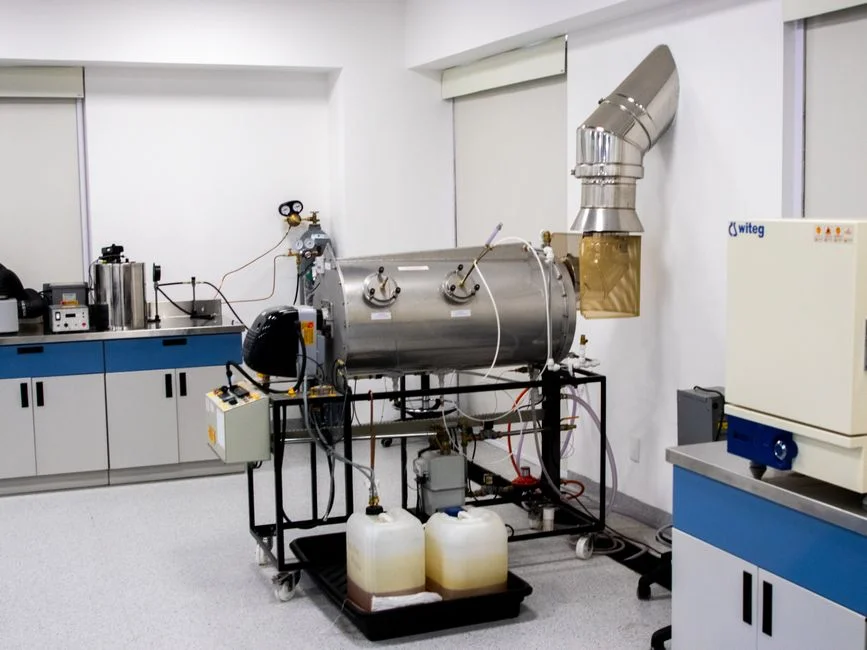
Deploy a pilot-scale HSAD or CSTR system (typically 5–10% of planned full scale) to validate kinetics, biogas quality, and digestate characteristics for specific campus waste streams. This phase is crucial for de-risking the project, as scaling data (e.g., 1L to 50L) shows increasing benefit-cost ratios with larger systems (source: S1). Key decision gates include a pilot BMP greater than 60 mL/gTDS (municipal WW is 45 mL/gTDS, industrial sewage 76 mL/gTDS per S1) and biogas CH4 content exceeding 55%.
- Phase 2 (Months 10–18): Full-Scale Design & Procurement
Based on pilot results, finalize full-scale design-build plans. Procure long-lead items such as CHP units, digester tanks, and gas treatment systems. HSAD systems, like the UC Davis facility, have demonstrated rapid deployment, with full installation achievable within six months of groundbreaking (source: S3).
- Phase 3 (Months 19–24): Construction & Commissioning
Oversee construction, followed by commissioning and biological startup. The digester should be seeded with approximately 20% active digester sludge from an operating facility to accelerate startup. Gradually ramp up magnetite dosing to a target of 0.4 g/L as per optimized conditions (source: S1).
- Phase 4 (Months 25+): Optimization & Long-Term Operation
Continuously monitor key performance indicators such as volatile fatty acid (VFA) levels, HRT, and co-substrate blending ratios. Pursue digestate certification (e.g., 40 CFR 503 metals and pathogen compliance). Formalize tipping fee contracts with community partners and continuously optimize operations for maximum biogas yield and revenue.
Frequently Asked Questions
What is the minimum campus size for an economically viable anaerobic digester?
An economically viable anaerobic digester typically requires a minimum combined feedstock of approximately 3,000 tons per year of food waste and wastewater sludge, often corresponding to a campus population of around 15,000 students. Below this threshold, regional collaborations or robust third-party digestate/biogas offtake agreements are generally needed to achieve a benefit-cost ratio (BCR) of 1.0 or greater, as small-scale systems (e.g., 50L) have shown BCRs as low as 0.4 (source: S1).
Can a campus digester handle both wastewater sludge and dining hall food waste?
Yes, co-digestion of wastewater sludge and dining hall food waste is highly beneficial. It improves the overall carbon-to-nitrogen (C:N) ratio, buffering the high nitrogen content of sludge with the high carbon content of food waste, which can enhance biogas yield by 20–30% (HydropureWater field data, 2026). The MSU CSTR system successfully blends dairy manure, food waste, and wastewater sludge, while the UC Davis HSAD facility primarily processes food and yard waste (source: S5, S3).
What pretreatment is required for post-consumer dining waste?
For post-consumer dining waste, a comprehensive pretreatment train is essential. This typically includes depackaging to separate food from containers, followed by a 2–6 mm rotary screen to remove coarse contaminants like plastics and cutlery. Subsequent steps involve hydrocyclone grit removal to prevent abrasion and accumulation, and dissolved air flotation (DAF) or gravity traps for FOG separation. If off-campus food waste is accepted, pasteurization (e.g., 70°C for 1 hour) is also required to meet Class A biosolids regulations.
How long does biological startup take with magnetite dosing?
With optimized magnetite dosing at 0.4–0.6 g/L, the biological lag phase in an anaerobic digester can be significantly reduced from 9 days to approximately 3 days (source: S1). Full stabilization of the digester, where consistent biogas production and stable process parameters are achieved, typically takes 30–45 days. Seeding the digester with 20% active sludge from an existing, stable digester further accelerates this process.
What permits are needed for a campus anaerobic digester?
A campus anaerobic digester requires several permits. These commonly include an Air Permit (e.g., Title V or Minor NSR) for the combined heat and power (CHP) engine emissions, an NPDES (National Pollutant Discharge Elimination System) permit for any discharge of liquid digestate to surface waters, compliance with EPA 40 CFR 503 for biosolids management (land application or disposal), a state solid waste facility permit for accepting and processing organic waste, and local fire/building codes for construction and operation.