
Transportation Equipment Wastewater Profile in North Manchester
Transportation equipment manufacturing in North Manchester, operating under EPA Region 1 oversight, faces complex influent profiles dominated by machining coolants, hydraulic oils, and metal finishing residues. Typical influent characteristics include FOG concentrations of 150–500 mg/L, TSS levels from 200–800 mg/L, and heavy metal concentrations (Zn, Ni, Cr) ranging from 5–50 mg/L. Facilities must comply with 40 CFR 433 Metal Finishing pretreatment standards, which mandate stringent oil and grease limits (100 mg/L daily max) and TSS limits (30 mg/L monthly average) prior to POTW discharge (per EPA 40 CFR 433.17).
Seasonal temperature fluctuations in New England significantly impact treatment kinetics; influent temperatures dropping to 5–10°C during winter months reduce microbubble formation efficiency in DAF systems by 15–20%. Engineers must account for larger saturation tank volumes or heated recycle streams to maintain performance. Batch discharge from parts washing lines often creates peak hydraulic loads 2–3 times higher than average daily flows, necessitating a minimum 4–6 hour industrial wastewater equalization capacity to prevent surge-induced bypass of primary treatment units.
| Parameter | Typical Range | Regulatory/Impact Note |
|---|---|---|
| FOG (Coolants/Oils) | 150–500 mg/L | 40 CFR 433 Limit: 100 mg/L (Max) |
| TSS (Metal Fines/Paint) | 200–800 mg/L | 40 CFR 433 Limit: 30 mg/L (Avg) |
| Heavy Metals (Zn, Ni, Cr) | 5–50 mg/L | Requires chemical precipitation |
| Winter Temp Impact | 5–10°C | 15–20% efficiency loss in DAF |
DAF vs Lamella Clarifier: Mechanism Match to Contaminants
Selecting the correct technology depends on the physics of the contaminant: DAF systems utilize 30–50 µm microbubbles to achieve buoyant separation of hydrophobic particles, while a lamella clarifier with 20–40 m/h surface loading relies on gravity-driven sedimentation for heavy solids. For emulsified oils and coolants prevalent in the transportation sector, DAF is the superior primary treatment, consistently removing 95%+ of FOG and 85–95% of TSS within a 3-minute residence time in circular configurations (source: SigmaDAF 2026 data).
Lamella plate settlers are optimized for high-density, settleable solids. While they remove 90–95% of inorganic TSS, they typically achieve only 40–60% FOG removal without intensive emulsion breaking. A critical engineering distinction is that DAF units lift light/emulsified contaminants, whereas clarifiers sink heavy particulates. Most transportation facilities require a two-stage approach: DAF for primary oil and metal-laden floc removal, followed by lamella clarification for polishing. Chemical requirements differ as well; DAF systems utilize 50–200 mg/L of coagulant and 1–5 mg/L of anionic polymer to facilitate bubble-floc attachment, whereas lamella systems require higher polymer doses (3–8 mg/L) to promote dense floc settling (per HydropureWater field data, 2026).
| Metric | DAF (Flotation) | Lamella Clarifier (Sedimentation) |
|---|---|---|
| Primary Target | FOG, Emulsified Oil, Light Floc | Heavy Metal Fines, TSS |
| FOG Removal | 95%+ | 40–60% |
| TSS Removal | 85–95% | 90–95% |
| Surface Loading | 4–300 m³/h | 20–40 m/h |
Sizing and Footprint Comparison for 50-500 GPM Flows
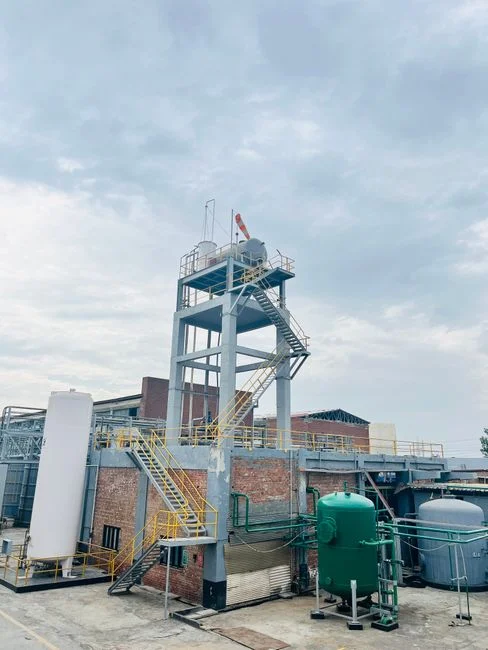
Equipment footprint is a primary constraint in North Manchester industrial parks, where space-efficient vertical designs often outperform traditional rectangular basins. For a 100 GPM (22.7 m³/h) flow, a DAF systems (4–300 m³/h) model typically requires a circular footprint of 3.5m diameter and 2.5m height. Modular COMPACT DAF skids are highly effective for flows under 66 GPM, while flows exceeding this range transition to modular configurations that maintain a smaller vertical profile than equivalent rectangular lamella systems (source: Clearwater 2026 technical specs).
Lamella clarifiers offer high surface area in a compact horizontal footprint, but they necessitate larger upstream chemical mixing zones to ensure proper flocculation. At a standard 20 m/h surface loading rate, a 100 GPM influent requires approximately 4.3 m² of effective plate area, typically housed in a 3m L x 2m W x 3.5m H unit containing 10–15 plates. When sizing for 500 GPM, both technologies require substantial equalization (25,000–50,000 gallons for 100–200 GPM average) to mitigate hydraulic shocks. DAF systems generally provide a 30% smaller footprint than lamella systems of equal capacity due to the vertical orientation of circular flotation tanks.
| Flow Rate | DAF Footprint (Approx) | Lamella Clarifier Footprint (Approx) |
|---|---|---|
| 66 GPM | 2.5m x 2.5m (Compact Skid) | 2.0m x 1.5m |
| 150 GPM | 4.0m x 2.0m (Rectangular FPBC) | 3.0m x 2.0m |
| 500 GPM | Modular DAF Array | Parallel 4m x 3m units |
Chemical Consumption, Sludge Handling, and 5-Year OPEX
Operational expenditure (OPEX) is driven by chemical dosing and sludge management, with DAF systems consuming 2–3 times more energy due to recycle pumps (15–25 HP) and air compressors (5–10 HP). The resulting sludge is distinct: DAF float sludge typically contains 2–5% solids with high FOG, requiring heated storage to maintain pumpability. In contrast, lamella-settled sludge achieves 3–8% solids density and is more compatible with a plate-frame filter press for final dewatering (per 2026 engineering benchmarks).
Chemical costs for DAF are estimated at $0.15–0.25/kgal, compared to $0.18–0.30/kgal for lamella systems, which require higher polymer dosing to ensure settled floc integrity. Over a 5-year period, DAF systems at 150 GPM average $1.8–2.5/kgal, while lamella systems average $1.2–1.8/kgal. DAF is frequently mandatory for transportation wastewater because lamella systems cannot meet FOG discharge limits independently, leading to potential regulatory fines that outweigh the cost savings.
| Cost Driver | DAF OPEX | Lamella Clarifier OPEX |
|---|---|---|
| Chemical Cost | $0.15–$0.25/kgal | $0.18–$0.30/kgal |
| Energy Usage | 20–35 kW | 7–12 kW |
| Sludge Density | 2–5% (High FOG) | 3–8% (High Mineral/Metal) |
Three Scenario Decision Framework for North Manchester Factories
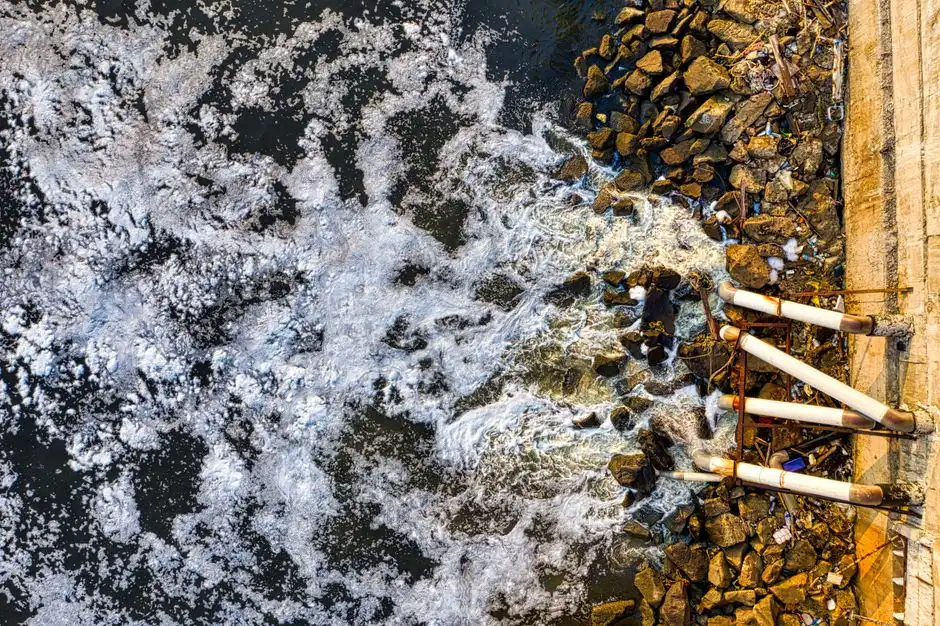
Determining whether to implement a DAF or clarifier for transportation equipment wastewater in North Manchester depends on specific influent profiles.
- Scenario A (High FOG/Emulsified Oils >150 mg/L): Prioritize a DAF system. Emulsified synthetic coolants will bypass lamella plates; DAF microbubbles are required to break the emulsion and float the oils.
- Scenario B (High Settleable Solids >300 mg/L, Low FOG <50 mg/L): A lamella clarifier is sufficient. This is common in rail component grinding where hydraulic oil usage is minimal and metal fines dominate.
- Scenario C (Variable Flow/Job Shop Mix): Deploy a two-stage approach. Use DAF as primary treatment to handle shock loads of FOG and dissolved metals, followed by a lamella clarifier to polish TSS to meet permit levels.
For North Manchester facilities, NHDES compliance often requires robust documentation of FOG removal. DAF systems with PLC-controlled coagulant and polymer dosing provide consistent effluent quality (CV <15%), which is critical for maintaining compliance during EPA Region 1 inspections.
Regulatory Compliance Checklist for EPA Region 1
Pretreatment compliance for transportation equipment is governed by 40 CFR 433.17, requiring rigorous monitoring of heavy metals and organics. DAF systems, when paired with appropriate chemical precipitation, consistently meet limits for lead (0.6 mg/L), copper (2.0 mg/L), and zinc (1.5 mg/L). NHDES Env-Wq 305/306 requires that facilities maintain a Best Management Practices (BMP) plan for coolant management, and automated DAF systems assist in this by providing continuous data logging for skimmer performance and effluent quality.
Before final equipment selection, verify local POTW limits with the Manchester Environmental Protection Division. Some local authorities impose stricter FOG limits (e.g., 50 mg/L) than the federal 100 mg/L standard. A DAF system provides a more consistent effluent profile than a lamella clarifier, reducing the risk of 24-hour composite sampling failures during monthly reporting cycles.
Frequently Asked Questions
Can a lamella clarifier replace DAF for machining coolant wastewater?
No. Lamella clarifiers are designed for gravity sedimentation and typically remove less than 60% of emulsified FOG. Machining coolants require the microbubble flotation mechanism of a DAF to achieve the 95%+ removal efficiency needed for sewer discharge compliance.
What DAF size is appropriate for 200 GPM transportation wastewater?
A DAF-50 unit (rated for 50 m³/h, approximately 220 GPM) is the standard selection for this flow rate. High-solids applications may require the FPHF model, which combines cross-flow and countercurrent separation to handle high loading.
Does NHDES require pilot testing before DAF installation?
Pilot testing is not strictly required for standard metal finishing applications, but NHDES usually mandates 90 days of performance data post-commissioning to verify that the effluent consistently meets the facility's specific discharge permit parameters.
Related Equipment
- lamella clarifier with 20–40 m/h surface loading — specifications, capacity range, and technical data