
Why Taiwan's Textile Sector Faces a Treatment Inflection Point in 2026
Strict enforcement of the Water Pollution Control Act and chronic water scarcity have made advanced on-site treatment a mandatory operational requirement for the Taiwanese textile industry. In 2023, high-profile environmental failures—specifically the February illegal discharge into New Taipei City’s Dongmen Creek and the September blue dye leak in Hsinchu County’s Desheng Creek—resulted in severe EPA fines and compulsory facility upgrades (source: 2023 iGEM Taiwan field data). These incidents, combined with Taiwan’s status as the 18th most water-scarce region globally (UN, 2026), have placed the textile sector—the fifth largest industrial water consumer—under intense regulatory and public scrutiny. Extreme weather patterns have made reservoir levels increasingly unpredictable, forcing factories to decouple their production cycles from municipal water dependency.
For mid-to-large scale facilities, the current challenge is defined by the reuse-limiting nature of residual dyes. As noted by the R&D director at Far Eastern New Century, facilities like Shinkong Textile consume 3 tons of water per wash cycle, yet conventional systems fail to remove enough color to permit process-water recycling. With household water consumption reaching 326 L/day (IWA 2023 data), industrial allocations are increasingly vulnerable to curtailment. The 2022-2024 amendments to the Water Pollution Control Act mandate online continuous monitoring for COD, pH, flow, and ammonia for any plant exceeding 100 CMD, leaving no room for manual reporting errors or bypasses. The 2026 regulatory roadmap indicates that future audits will prioritize "mass balance" tracking, meaning plants must account for every cubic meter of water from intake to evaporation or discharge, effectively ending the era of hidden water losses.
Taiwan EPA Discharge Standards Mapped to Textile Wastewater Pollutant Profiles
Compliance requires balancing the stringent Taiwan EPA effluent limits against the highly variable nature of dyeing and finishing influent. Textile wastewater is characterized by high organic loads and recalcitrant colorants that conventional biological treatment alone cannot mitigate. The following table summarizes current EPA discharge limits for surface water compared to typical influent profiles observed in Taiwanese dyeing operations (source: S2 critical review, 2026 update). These influent values are median averages; during peak production periods or color-changeovers, concentrations of surfactants and auxiliary chemicals can spike by an additional 40%, requiring the treatment system to possess significant buffering capacity.
| Parameter | EPA Surface Water Limit | Typical Dyeing Influent |
|---|---|---|
| COD (mg/L) | ≤100 | 500 - 2000 |
| BOD (mg/L) | ≤30 | 200 - 800 |
| SS (mg/L) | ≤30 | 100 - 400 |
| Color (PCU) | ≤200 | 2000 - 6000 |
| pH | 6 - 9 | 6 - 11 |
| Total Chromium (mg/L) | ≤2 | 0.5 - 5 |
The primary compliance hurdle is color removal; standard biological processes typically remove only 60-70% of COD and less than 30% of color, falling far short of the 200 PCU threshold. Effective treatment requires a multi-stage approach, often necessitating chemical precipitation for heavy metal control (Cr, Cu, Zn) upstream, followed by advanced oxidation or membrane separation to ensure the final effluent meets discharge and potential reuse requirements. Engineers must also account for the temperature of the effluent, as high-temperature dye baths can inhibit the microbial population in biological reactors, necessitating cooling heat exchangers before the water reaches the biological treatment stage.
Technology Comparison: MBR vs DAF + Bio vs RO Train for Taiwanese Textile Flows
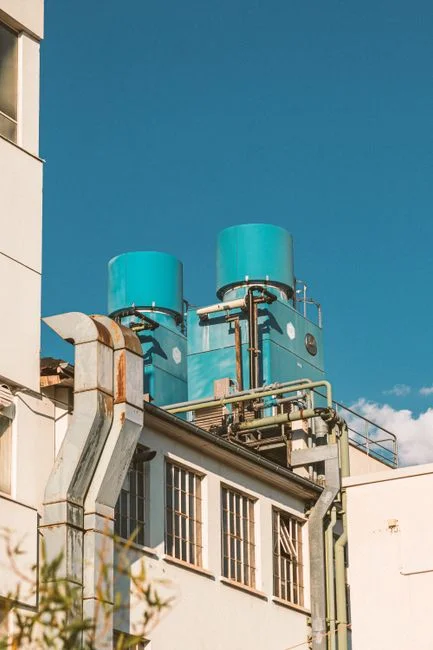
Selecting the appropriate technology train depends on the target reuse grade and available site footprint. An integrated MBR system for near-reuse-quality effluent provides a compact, high-efficiency solution for plants targeting process water recovery. When the influent contains high concentrations of oils and suspended solids, utilizing a DAF for textile SS/color pretreatment is essential to protect downstream biological and membrane stages from fouling. This pretreatment layer acts as a critical safeguard, extending the lifespan of expensive membranes by preventing the premature accumulation of hydrophobic oils and sticky dye residues common in synthetic fiber processing.
| Technology | COD Removal | Color Removal | Footprint | Reuse Readiness |
|---|---|---|---|---|
| MBR | 92-98% | 70-85% | Compact | RO Feed |
| DAF + Bio | 85-92% | 40-60% | Moderate | Discharge Only |
| RO Train | 98%+ | 99%+ | High | Process/Boiler |
For plants requiring high-purity water, an industrial RO for water reuse and ZLD is the industry standard. However, RO systems require strict SDI (Silt Density Index) control—ideally <3—to maintain flux rates of 15-20 LMH. The economic decision often hinges on the trade-off between the higher CAPEX of membrane trains and the rising cost of industrial freshwater. For a detailed analysis of these investment factors, refer to the MBR vs CAS economic decision framework. Operators should also factor in the cost of membrane cleaning chemicals (CIP) and potential replacement cycles, which typically occur every 3 to 5 years depending on the intensity of the pretreatment and the quality of the influent stream.
Sizing Logic for Typical Taiwanese Dyeing/Finishing Facilities
Proper equipment sizing must account for the batch-heavy nature of textile operations and high organic concentrations. Mid-size facilities (100-300 CMD) should design for a peak flow factor of 1.5 to 2.0 to accommodate batch discharge surges. Biological reactor sizing for MBR systems is typically calculated at 0.15-0.25 kg COD/m³/day, while IFAS configurations may handle 0.3-0.5 kg COD/m³/day depending on the specific dye chemistry. Include an equalization tank with a volume equivalent to at least 24 hours of flow to dampen the variability in pollutant concentrations and pH levels that occur during shift changes.
DAF sizing requires a hydraulic loading rate of 10-15 m/h and an air-to-solids ratio of 0.02-0.04. To maintain stable performance, integrate an PLC-controlled chemical dosing for coagulation/pH adjustment, utilizing PAC (50-150 mg/L) and PAM (1-3 mg/L). For sludge management, a plate and frame filter press is required to reach 25-30% solids, ensuring compliance with local disposal regulations. RO systems should be configured as a 2-stage process with concentrate recycle to achieve >90% recovery, optimizing water yield in water-stressed regions. Real-time feedback loops between the influent monitoring sensors and the dosing pumps prevent chemical overdosing during low-flow periods, which avoids unnecessary sludge production and increased waste management costs.
Water Reuse Economics: From Compliance Cost to Asset Recovery
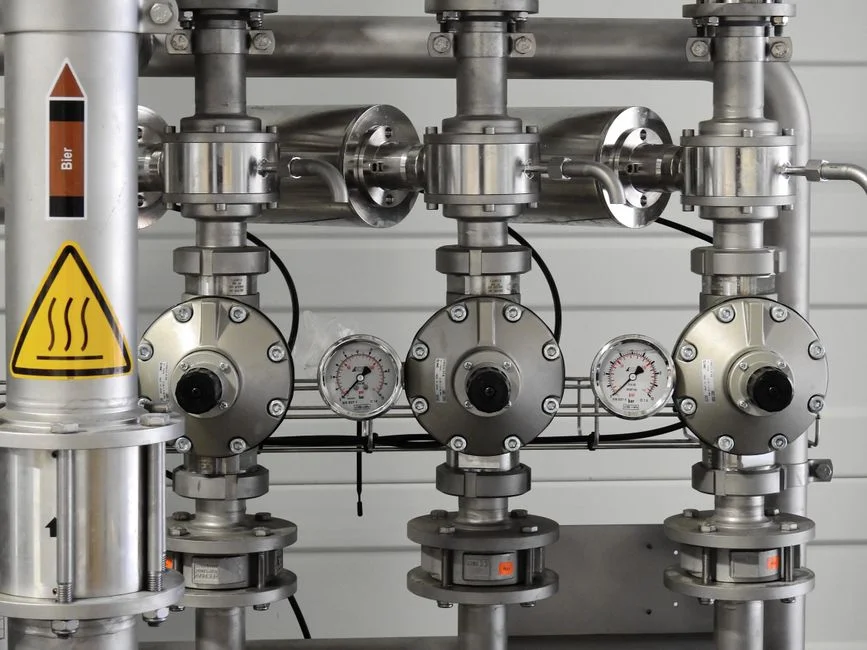
Water reuse in Taiwan has transitioned from an ESG objective to a core survival strategy. With industrial freshwater costs averaging NT$30-50/m³ and rising by 3-5% annually, the production cost of MBR+RO treated water—estimated at NT$15-25/m³—offers a clear ROI. A 200 CMD reuse system can generate annual savings of NT$11-25 million, with a payback period of approximately 2.5 to 4 years on a typical NT$30-60 million investment. As local authorities continue to tighten water allocation permits, the ability to reuse water is becoming a prerequisite for obtaining permits to expand production capacity or upgrade equipment.
Beyond direct savings, the Ministry of Economic Affairs (MOEA) provides subsidies covering up to 30% of equipment costs for water conservation and ZLD projects. The operational risk of drought-induced production curtailment—as seen in 2021—is effectively mitigated by on-site recycling, which serves as an "insurance policy" for factory output. For international context on how these parameters align with broader standards, see the Nordic textile treatment benchmark for comparison or the Swedish STWI guidelines and BAT reference. By adopting these global best practices, Taiwanese firms are protecting their local environment and positioning themselves as preferred suppliers for international fashion brands that demand high sustainability standards throughout their supply chain.
Frequently Asked Questions
What are the current Taiwan EPA color discharge limits for textile wastewater?
For direct discharge into surface water, the limit is ≤200 PCU. Discharges into industrial sewer systems may have specific local limits, typically capped at 400 PCU depending on the local sewerage agency’s requirements.
Can MBR alone meet Taiwan discharge standards without RO?
MBR is highly effective for COD, BOD, and SS, consistently meeting discharge limits for these parameters. However, color removal is typically 70-85%. If the influent color is high (e.g., >1000 PCU), an additional polishing step like RO or advanced oxidation is usually required to reach the 200 PCU limit.
What is the typical footprint for a 200 CMD textile MBR system?
A complete 200 CMD MBR system, including the bioreactor, membrane tank, blower room, and chemical dosing equipment, generally requires 150-200 m². This represents roughly a 60% reduction in space compared to conventional activated sludge systems.
Is online effluent monitoring mandatory for my plant?
Yes, if your facility discharges more than 100 CMD or is located within a water quality protection zone, the Taiwan EPA requires continuous transmission of COD, pH, flow, and ammonia data to their central monitoring platform. Failure to maintain these sensors or report data accurately can result in immediate operational suspension and heavy administrative penalties.