Fort Lauderdale Chemical Wastewater: What Your Permit Actually Requires in 2026
Choosing between DAF and a lamella clarifier for Fort Lauderdale chemical wastewater in 2026 depends on the contaminant profile and available site footprint. DAF is the standard choice when emulsified oils, FOG, or fine colloids dominate, offering 92-98% TSS removal and 95% FOG removal. Alternatively, a lamella clarifier handles heavy settleable solids or metal hydroxides with 90% solids reduction and lower O&M requirements. The decision hinges on FDEP/Broward County local limits and the necessity for hurricane-hardened infrastructure. Facility managers must also account for the increasing frequency of "flash-load" events, where sudden production surges overwhelm standard biological systems, making robust primary treatment a mandatory safeguard for meeting effluent quality standards.
Chemical manufacturing facilities in the Port Everglades basin face stringent regulatory pressure under FDEP Chapter 62-620.610. Compliance with EPA 40 CFR 403 categorical standards is mandatory in 2026, while the Broward County Sewer Use Ordinance Sec. 27-187 introduces tighter local limits: FOG must remain below 100 mg/L, TSS under 300 mg/L, and total heavy metals (Fe, Cu, Zn) below 2.0 mg/L. Given the proximity to the coast, NPDES permits often mandate hurricane-resilience protocols, requiring tanks to be designed for 25-year storm events and equipped with secondary containment. A typical facility in this district handles a complex waste stream: emulsified solvents (50-500 mg/L), colloidal metal hydroxides (5-50 mg/L), soluble COD (800-3,000 mg/L), and frequent pH swings between 2 and 11. The Florida Department of Environmental Protection is increasingly focusing on "emerging contaminants" in industrial discharge, meaning that future-proofing your treatment train with advanced oxidation or carbon polishing is a strategic investment to avoid reactive retrofitting.
Contaminant Class Determines Technology: Mapping Your Wastewater to DAF or Clarifier
The physical state of contaminants in your industrial influent dictates the selection of primary treatment technology. Emulsified oils and FOG (50-500 mg/L) are best addressed by the 20-40 micron micro-bubbles generated by the DAF for chemical wastewater FOG removal, which achieves 95% removal efficiency compared to approximately 70% in standard gravity systems (source: Ecologix 2026). For colloidal metal hydroxides, a lamella clarifier for metal hydroxide solids relies on chemical flocculation to achieve 85-90% solids reduction, whereas DAF can reach 92-98% TSS removal if paired with a PLC-controlled coagulant dosing for either technology. Neither technology effectively removes soluble COD, which typically necessitates downstream biological treatment; however, DAF reduces the influent load on these systems by stripping the colloidal COD fraction. If your wastewater exhibits a high "floatability" index—common in surfactant-rich chemical plants—the DAF will outperform the clarifier by forcing solids upward, preventing the resuspension issues that often plague traditional sedimentation tanks during high-flow events.
| Contaminant Class | DAF Efficiency | Clarifier Efficiency | Chemical Dose | Footprint Factor |
|---|---|---|---|---|
| Emulsified Oils (50-500 mg/L) | 95% | 70% | Moderate | Low |
| Colloidal Metals (5-50 mg/L) | 92-98% | 85-90% | High | Low |
| Settleable Solids (>200 mg/L) | 80% | 95% | Low | High |
EPA Cost Curves Adjusted to 2026 Fort Lauderdale: CAPEX, OPEX, and Land Reality
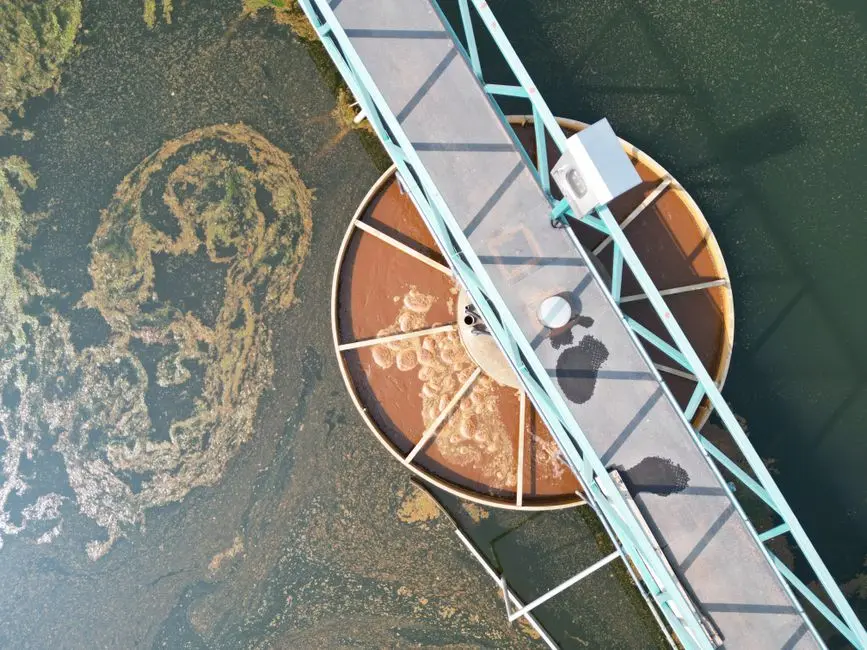
Adjusting 1998 EPA costing data (EPA 821-R-98-016) to 2026 South Florida economic conditions requires applying an ENR CCI multiplier of 1.85, a local labor factor of 1.12, and a 15% premium for hurricane-hardened tank fabrication. A 150 GPM DAF system, which carried an EPA baseline capital cost of $380,000 in 1998, equates to approximately $895,000 in 2026 Florida dollars. Conversely, a lamella clarifier system scaled to 150 GPM adjusts from $280,000 to approximately $600,000. Land costs in Broward County industrial zones have escalated to $185,000/acre (CoStar 2025-Q4); therefore, the DAF’s 400 ft² footprint consumes roughly $17,000 in land value, while the clarifier’s 1,200 ft² footprint requires $51,000. Annual O&M costs for DAF are estimated at $115,000, driven by electricity ($0.11/kWh) and polymer consumption, while clarifiers incur $102,000 due to lower power requirements but higher chemical demand for colloidal settling. Choosing the right primary treatment balances these immediate costs against the long-term utility of your facility's physical space.
| Cost Category | DAF (150 GPM) | Clarifier (150 GPM) |
|---|---|---|
| Estimated CAPEX (2026 FL) | $895,000 | $600,000 |
| Land Cost (Broward Industrial) | $17,000 | $51,000 |
| Annual O&M | $115,000 | $102,000 |
| Sludge Consistency | 2-4% | 1-2% |
Decision Matrix: 8 Criteria Scored for Fort Lauderdale Chemical Plants
Engineers can utilize this weighted scoring system (total 100 points) to evaluate technology suitability for specific wastewater profiles. DAF systems score higher in permit risk mitigation for FOG-heavy streams and footprint efficiency, while clarifiers score higher on O&M simplicity and lower initial CAPEX. For complex streams, a hybrid approach—using DAF as primary treatment followed by a lamella clarifier—can achieve 98% contaminant removal at a 15% CAPEX premium. Failure to meet discharge limits can lead to daily fines, potential shutdown of production lines, and public disclosure of environmental violations, impacting a company’s local operational standing with the Broward County regulatory board.
| Criteria (Weight) | DAF Score | Clarifier Score |
|---|---|---|
| Contaminant Match (25) | 9 | 6 |
| Footprint (20) | 9 | 4 |
| Hurricane Resilience (15) | 8 | 6 |
| O&M Complexity (15) | 6 | 8 |
| Chemical Consumption (10) | 7 | 5 |
| Sludge Handling (5) | 8 | 5 |
| CAPEX (5) | 5 | 8 |
| Permit Risk (5) | 9 | 6 |
| Total Weighted Score | 7.85 | 5.95 |
10-Year TCO Scenario: 150 GPM Specialty Chemical Plant Near Port Everglades
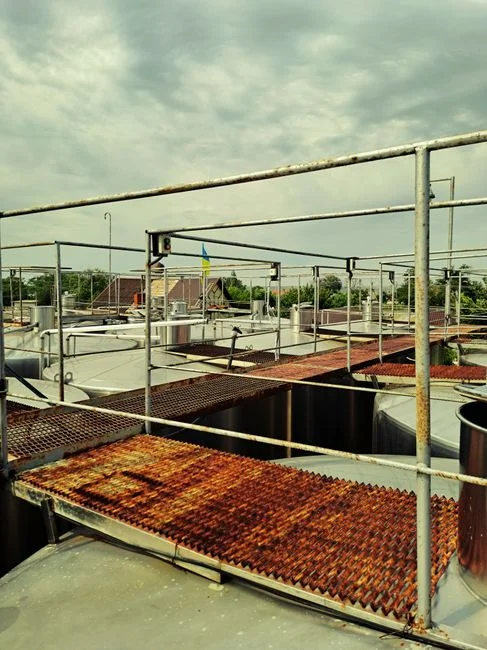
The TCO model for a 150 GPM facility operating 24/7 with a waste profile of 120 mg/L FOG and 250 mg/L TSS favors the technology that eliminates the most significant surcharges. The DAF system, with a total investment of $1.09M (CAPEX + land + install) and $1.15M in cumulative OPEX, is offset by $680,000 in saved surcharges, resulting in a 10-year net cost of $1.56M. The clarifier, while cheaper to install at $801,000, only mitigates 60% of the FOG surcharges, resulting in a 10-year net cost of $1.56M. DAF is the preferred choice if FOG surcharges exceed $45,000/year, whereas the clarifier is viable only if land is available at no cost and FOG remains below 30 mg/L. The DAF system produces a drier sludge (up to 4% solids), which directly reduces the volume of hazardous waste requiring transport and disposal—a factor that often makes DAF more cost-effective over a decade of operation.
| Financial Metric | DAF TCO | Clarifier TCO |
|---|---|---|
| Total Installed Cost | $1,092,000 | $801,000 |
| 10-Year OPEX | $1,150,000 | $1,020,000 |
| 10-Year Surcharge Savings | ($680,000) | ($260,000) |
| 10-Year Net TCO | $1,562,000 | $1,561,000 |
Frequently Asked Questions
Can I retrofit DAF into my existing clarifier footprint?
Skid-mounted DAF units (such as a 150 GPM FC-style system) typically fit on a 20x20 ft pad. You must ensure the site has access to 480V/3ph power and an indoor space for the air compressor assembly. Before finalizing a retrofit, verify the structural integrity of your slab, as the dynamic load of a water-filled DAF tank differs from a passive clarifier.
Does Broward County require pilot testing before permit modification?
Section 27-191 of the Broward County code requires 30-day pilot data for new primary treatment installations. Rental mobile units can be deployed on-site to generate this data within one day of utility connection. This pilot study provides local authorities with proof that your specific chemical effluent chemistry responds favorably to the proposed treatment technology, which helps fast-track the permitting process.
How does hurricane hardening add cost?
Per FBC 2023 Section 1609, tanks must be designed for 170 mph winds (Category 4). This requirement adds approximately 12-15% to fabrication costs due to the need for reinforced anchor chairs, flanged connections, and thicker shell plate construction. This investment ensures your facility remains operational post-storm, avoiding the costs of environmental cleanup and regulatory shutdown after severe weather.