Why Malaysia Is the 2026 Hedge After the 1260H Ruling
WuXi AppTec's June 2026 addition to the Pentagon's 1260H list of "Chinese military companies" converted the Biosecure Act from a draft into a binding procurement constraint, exposing roughly 75% of the firm's revenue to federal-funding restrictions (C&EN, 2026-06). The Act allows a 5-year transition starting in 2028, but the practical restriction horizon extends to 2033, and US customers must commit to alternative supply chains several years earlier (RBC Capital Markets, cited in C&EN, 2026-06). WuXi has already demonstrated its willingness to divest US-tied assets: NAMSA closed the acquisition of WuXi's US medical-device testing business on 28 February 2025 (PR Newswire, 2025-03), and on 24 October 2025 WuXi signed a definitive agreement to sell its China-based clinical research services business to Hillhouse in order to "sharpen focus on the core CRDMO platform" (wuxiapptec.com, 2025-10-26).
Malaysia sits in the same near-shore hedge cohort as Mexico and Hungary, but offers a different combination of advantages. The country hosts multiple USFDA-inspected CRDMO and API plants, runs an English-language regulatory stack anchored in the Environmental Quality Act 1974, and sits inside ASEAN with strong air links to both Singapore and the existing WuXi China operations. From a buyer's perspective, a 2026 Malaysian acquisition lets production ramp before the 2028 transition clock starts, capturing three to four years of unrestricted US-pharma revenue before any residual 1260H drag. The wastewater story begins the day the corporate deed is transferred, which is the focus of the rest of this guide. The geopolitics is upstream of the engineering — but the engineering is what determines whether the hedge actually closes.
The Malaysian Legal Stack a Buyer Inherits on Closing Day
The parent statute is the Environmental Quality Act 1974 (Act 127), with the Environmental Quality (Industrial Effluent) Regulations 2009 (IER 2009) sitting beneath it as the operational instrument, administered by the Department of Environment (DOE). The IER 2009 written approval under Regulation 4 is the licence that authorises discharge and sets the unit's effluent limits; the buyer must apply for a fresh written approval in the new legal entity's name within 30 days of closing, and the pre-treatment system described in the approval must match the on-site ETP before production can ramp.
Layered on top of the DOE approval, three more instruments are typically in scope for a CRDMO. If the site discharges to a sewer operated by a licensed water company, a sewerage discharge licence is required from SPAN (the National Water Services Commission) or the relevant state water operator — Air Selangor, SAJ Holdings (Johor), LAKU (Kelantan), or PBA (Penang) — and the local utility's pre-treatment limits are often tighter than the DOE standard. The Environmental Quality (Scheduled Wastes) Regulations 2005 apply as soon as the site generates more than 0.5 metric tonne/month of classified waste, which captures DAF skimmings, MBR waste-activated sludge, spent solvents, and any API-bearing residues that meet CRETIB-style criteria. The buyer must also notify DOE in writing within 30 days of the operator change and supply a fresh site layout, process flow diagram, and influent/effluent analytical profile — a discipline covered in detail in the broader ETP due diligence guide.
| Instrument | Authority | Trigger | Day-One Action |
|---|---|---|---|
| IER 2009 written approval (Reg. 4) | DOE | Any industrial effluent discharge | Apply for new approval; verify ETP matches approved drawings |
| SPAN / state sewerage discharge licence | SPAN or state water operator | Discharge to municipal sewer | Re-issue under new legal entity; renegotiate pre-treatment limits |
| Scheduled Waste generator registration (2005 Regs) | DOE | >0.5 t/month classified waste | Update generator status; re-issue SW consignment notes |
| Detailed EIA (if applicable) | DOE EIA Division | Effluent volume >60 m³/day or capacity increase | Confirm against 2007 EIA Order; submit if triggered |
Standard A vs Standard B: Picking the Right Effluent Target
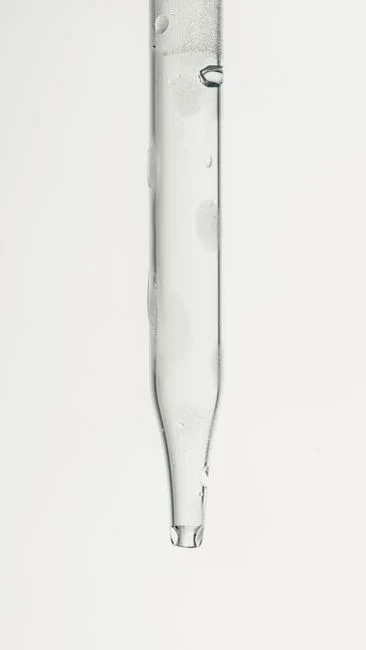
Standard A applies where the discharge point is upstream of any water supply intake; Standard B applies downstream of the last intake but upstream of estuarine limits (IER 2009, Fifth and Sixth Schedules). For a CRDMO with batch swings from 500 to 10,000 mg/L COD, pH excursions from 2 to 11, and TDS often above 5,000 mg/L, the practical answer is to design to Standard A. The Standard B ceiling is breached by a single solvent batch, and a BOD₃ or COD exceedance triggers a 24-hour DOE stop-work notice under Regulation 23 of IER 2009.
| Parameter | Standard A (Fifth Schedule) | Standard B (Sixth Schedule) |
|---|---|---|
| BOD₃ | ≤50 mg/L | ≤100 mg/L |
| COD | ≤100 mg/L | ≤200 mg/L |
| TSS | ≤100 mg/L | ≤200 mg/L |
| Oil & grease | ≤5 mg/L | ≤10 mg/L |
| pH | 6.0–9.0 | 5.5–9.0 |
| Temperature | ≤40 °C | ≤40 °C |
| Mercury (Hg) | ≤0.05 mg/L | ≤0.05 mg/L |
| Cadmium (Cd) | ≤0.10 mg/L | ≤0.10 mg/L |
| Lead (Pb) | ≤1.0 mg/L | ≤1.0 mg/L |
Self-monitoring is required at the frequency set out in the written approval letter — typically weekly composite sampling for BOD, COD, TSS, and pH, and monthly for the heavy-metal schedule. DOE retains the right to take independent samples at any time, and the composite sampler must be installed at the approved monitoring point before production starts.
90-Day Pre-Close Diligence Checklist (Wastewater Only)
Diligence should run on a 90-day window ahead of signing so the deal team walks into the SPA with a defensible view of the existing ETP's compliance posture. The five-point list below is what the engineer should hand to the deal counsel.
- Pull 24 months of DOE self-monitoring reports and any Section 31 directives or compound notices issued under the EQA 1974. A single unresolved directive is a material liability.
- Audit the existing ETP design versus the IER 2009 approved drawings. Look for capacity expansion, line additions, or API mix changes that were never re-permitted — this is the single most common compliance gap in Malaysian CRDMO sites.
- Run a 4-week sampling campaign across at least two production campaigns, covering the inlet and outlet of each unit operation. Target the COD 500–10,000 mg/L envelope, pH 2–11, TDS often above 5,000 mg/L, and any API markers on the GC-MS screen. Composite sampling is the default.
- Verify Scheduled Waste consignment notes (SW 1–SW 6 forms) for the past 12 months and confirm the receiving contractor is a DOE-licensed scheduled-waste facility under the 2005 Regulations.
- Confirm the sewerage discharge licence is current and check whether the receiving water utility has set pre-treatment limits tighter than DOE Standard A — Air Selangor's industrial tariff schedule is the usual example.
For the parallel due-diligence workflow covering the ETP mechanical condition, membrane integrity, and sludge-disposal chain, see the ETP due diligence guide.
The 180-Day Post-Close Re-Permit and Retrofit Window
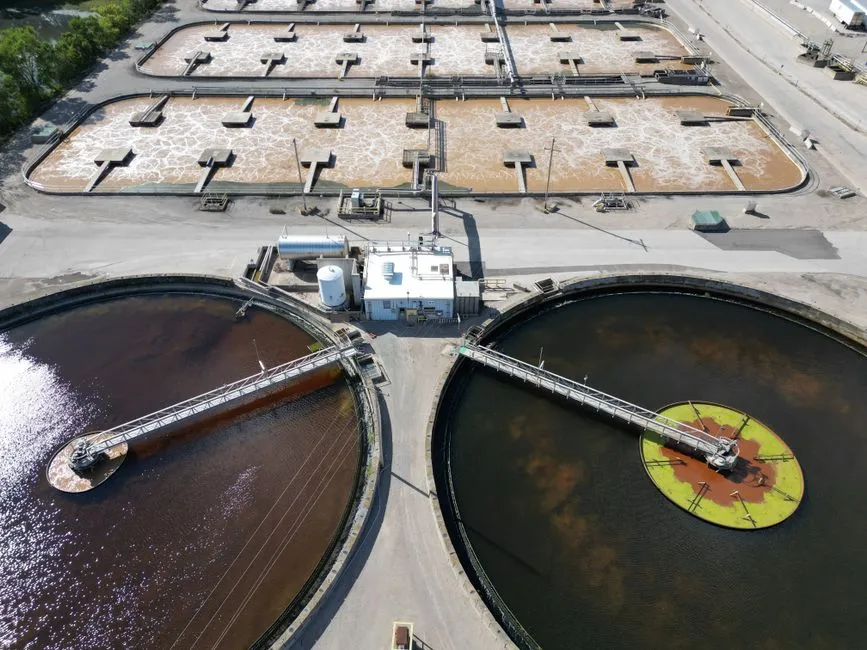
The first 180 days after close run the new ETP in parallel with the legacy system, and use that overlap to keep the plant in legal operation while the new legal entity is re-registered. The four moves that have to happen on the buyer's side, in order, are:
- Submit change-of-operator notice to DOE within 30 days, with fresh corporate documents, the IER 2009 written approval application, and an updated process flow diagram. DOE does not grant a grace period for re-issuing the written approval.
- Run the existing ETP in parallel with the new train for at least 60 days. Do not decommission the legacy aeration basin until the new train has hit design mass balance under a real production campaign, not a commissioning water trial.
- Re-issue the SPAN or state sewerage discharge licence in the buyer's name. If the new owner changes the production mix (broader API portfolio, larger reactors), pre-treatment limits must be renegotiated with the utility before the first batch runs.
- Update the Scheduled Waste generator registration and re-issue all consignment notes under the new company name. Until that paperwork is in place, the existing contractor agreement is invalid and any consignment is unlawful under the 2005 Regulations.
If a capacity increase pushes daily effluent volume across the 60 m³/day threshold — or triggers any of the categories in the 2007 EIA Order — a new Detailed EIA must be filed with the DOE EIA Division. The deal team should confirm the threshold against the 2007 Order before signing the SPA, because a required EIA adds 6–9 months to the re-permit window.
A Four-Stage Treatment Train Engineered for a Malaysian CRDDO
The train that reliably hits Standard A averages and produces a reuse-grade polishing stream is a four-stage configuration: equalization → DAF → MBR → RO/AOP. The unit-operation sizing below is anchored in the CRDMO envelope (COD 500–10,000 mg/L, pH 2–11, TDS often above 5,000 mg/L) and the Malaysian tropical climate, where reactor temperatures sit at 28–32 °C year-round and influent temperature rarely requires heating.
| Stage | Unit Operation | Design Parameter | Typical Removal / Performance |
|---|---|---|---|
| 1 | Equalization + pH correction | 24–48 h HRT; inline conductivity loop | Dampens COD 500–10,000 mg/L swings; protects downstream biology from TDS shocks above ~8,000 mg/L |
| 2 | DAF (dissolved air flotation) | Surface loading 15–25 m/h; polymer dose 5–15 mg/L | TSS 70–90%; FOG 80–95% |
| 3 | MBR (submerged PVDF, 0.1–0.4 µm) | MLSS 8,000–12,000 mg/L; anoxic zone ahead of aeration | COD 90–95%; near-reuse effluent; partial denitrification |
| 4 | RO + AOP (UV/H₂O₂ or O₃) | RO recovery 40–60%; permeate conductivity <50 µS/cm | Conductivity <50 µS/cm; TOC <1 mg/L; trace-API protection |
Stage 1 equalization with mechanical mixing and pH correction is sized to absorb a 500–10,000 mg/L COD swing and pH 2–11 excursions; an inline conductivity loop is the cheapest insurance against TDS shock to the downstream biology. Stage 2 DAF system removes suspended solids, colloids, and the high free-oil fraction typical of API salt precipitation. Stage 3 MBR system with submerged PVDF flat-sheet or hollow-fibre modules delivers 90–95% COD reduction on a stable influent and produces a near-reuse effluent; an anoxic zone ahead of the MBR tank handles partial denitrification. Stage 4 industrial RO system polishing with upstream AOP (UV/H₂O₂ or ozone) hits conductivity below 50 µS/cm and TOC below 1 mg/L, suitable for purified-water reuse, CIP rinse, and boiler feed; the AOP also breaks down trace APIs to protect membrane life and meet any AOX or trace-organic screening required by the receiving utility.
Sludge handling runs the DAF float and MBR waste-activated sludge through a plate and frame filter press to 18–22% dry solids, with automatic chemical dosing system controlling polymer feed to the press. The dewatered cake is consigned as Scheduled Waste SW 4XX series. If API residues push the waste into a T-coded classification under the 2005 Regulations, plan for 30–50% higher sludge-handling cost than a conventional activated-sludge system. A 40–60% RO recovery cuts both the sewerage load and the freshwater draw, which is a strong talking point with both the state water operator and DOE.
Day-One Cost and Schedule: What the Buyer Should Budget
The CAPEX envelope sits in the mid-single-digit to low-double-digit USD per m³/day installed range, and the four drivers are reactor volume (set by COD load), membrane area (set by flow), RO skid size (set by reuse %), and sludge dewatering (set by solids yield). For a 200 m³/day CRDMO train, the major equipment lines are the equalization tank and mixer, the DAF system, the MBR system with its membrane cassette, the industrial RO system, the plate and frame filter press, and the automatic chemical dosing system skid.
OPEX is dominated by energy (the largest line for MBR + RO combined), PVDF MBR membrane replacement on a 5–8 year cycle, scheduled-waste disposal cost per tonne, and chemicals (coagulant, polymer, NaOH/H₂SO₄ for pH). Two non-obvious costs should be in the budget: 24/7 effluent monitoring telemetry that DOE increasingly requires on sites with prior directives, and Site Supervisor training so the licensed signatory meets Regulation 9 of IER 2009. Designing to Standard A rather than Standard B adds roughly 15–25% to CAPEX, but eliminates the stop-work and reputational risk of a BOD₃ breach on a single batch day — which is the trade-off the deal team should see in writing before signing. For a regional comparison of the equivalent Mexican envelope, see the Mexico acquisition guide; for the European alternative, the Hungary acquisition guide covers the EU legal stack.
Frequently Asked Questions
What is the deadline for notifying DOE of a change of operator after a Malaysian plant acquisition?
The buyer must notify DOE in writing within 30 days of the operator change and simultaneously apply for a new IER 2009 written approval in the acquiring entity's name. No grace period is granted for re-issuing the existing approval, and operating under the seller's approval after closing is a Section 31 violation under the EQA 1974.
Does Standard A or Standard B apply to a CRDMO discharging to a Malaysian river?
The choice depends on whether the discharge point is upstream or downstream of the nearest water supply intake, per the IER 2009 Fifth and Sixth Schedules. For batch-variable streams with COD swings of 500–10,000 mg/L, the engineer should default to designing to Standard A; the Standard B ceiling is breached by a single solvent batch and triggers a 24-hour DOE stop-work notice under Regulation 23.
Are API residues classed as Scheduled Waste in Malaysia?
Yes, if the waste meets any of the CRETIB-style criteria (ignitability, reactivity, toxicity) under the Environmental Quality (Scheduled Wastes) Regulations 2005. API-bearing DAF skimmings and MBR waste-activated sludge typically fall under SW 4XX codes, and a generator producing more than 0.5 metric tonne/month must hold a DOE generator registration.
Can a WuXi AppTec plant in Malaysia serve US customers without triggering the Biosecure Act?
Yes. The Biosecure Act is a procurement-side restriction that follows US federal funding, not a country-side sanction. A Malaysian site that is not on the 1260H list and does not receive US federal funds can continue to serve US commercial pharma customers, subject to normal IER 2009 compliance.
What is the minimum self-monitoring frequency under IER 2009?
The default schedule is weekly composite sampling for BOD, COD, TSS, and pH, and monthly for the heavy-metal schedule. The exact frequency and the approved monitoring point are set in the IER 2009 written approval letter for the specific site, and DOE retains the right to take independent samples at any time.