
Why a Mexico Acquisition Is on the Table for WuXi AppTec in 2026
WuXi AppTec's June 2026 inclusion on the Pentagon's 1260H list of "Chinese military companies" made the Biosecure Act a binding constraint, exposing roughly 75% of the firm's revenue to federal-funding restrictions (C&EN, 2026-06). The Act allows a 5-year transition starting in 2028, with the practical restriction horizon extending to 2033; however, US customers must decide on alternative supply years earlier, per RBC Capital Markets' Charles Weston (cited in C&EN, 2026-06). WuXi told investors it supported 8 of the 30 small-molecule drugs the FDA approved in 2025, which means a single near-shore site failure can disrupt multiple commercial pipelines.
Mexico is the obvious hedge. A USMCA partner country allows WuXi to keep serving US pharma without triggering Biosecure procurement language tied to "biotechnology companies of concern." The earlier NAMSA deal — closing in February 2025 for WuXi's US medical-device testing operations — confirmed that the firm is willing to divest US-tied assets and consolidate CRDMO work outside the 1260H scope. From a buyer's perspective, a Mexican site purchase or greenfield conversion in 2026 means production can ramp before the 2028 transition clock starts, with three to four years of unrestricted US-pharma revenue before any residual 1260H drag. The wastewater story begins the day that entity is registered, which is the focus of the rest of this guide. This geopolitical and business logic also drives the need for a parallel compliance build-out for 2026 industrial wastewater growth planning.
Mexican Wastewater Regulations That Apply on Day One of Acquisition
A buyer of a Mexican CRDMO plant inherits four overlapping federal and state obligations on the closing date, plus a separate municipal sewer agreement if the site discharges to a SAPA/SADM system. Day one is defined as the day the corporate deed is transferred, as SEMARNAT does not offer a grace period for permit re-issuance when a legal entity changes. Missing any one of the four triggers fines under the Ley General del Equilibrio Ecológico y la Protección al Ambiente (LGEEPA) and can halt operations.
The four core instruments are:
- NOM-001-SEMARNAT-2021 — the federal surface-water discharge standard. The 2021 update replaced the 1996 version and tightened heavy-metal and COD reporting frequency from quarterly to monthly average compliance for industrial sources. Direct discharge to rivers or lakes must meet BOD ≤ 30 mg/L, COD ≤ 150 mg/L, TSS ≤ 60 mg/L, plus pH 6–9 and specified limits for heavy metals depending on the receiving water body classification. Discharge to municipal sewer typically has stricter local limits for BOD, COD, and fats/oils.
- MIA (Manifestación de Impacto Ambiental) — the environmental impact authorization issued by SEMARNAT for new or modified industrial operations. It must be transferred or re-issued to the new legal entity before any change in process mix, capacity, or hazardous-waste generation rate.
- CILA (Licencia de Funcionamiento Ambiental / operating license) — the state-level permit confirming the site meets local environmental regulations. The issuing authority varies (SEMARNAT del Estado, secretariat of sustainable development, or equivalent), and renewal timing is independent of the federal MIA.
- CONAGUA Registro de Descargas de Aguas Residuales — the national wastewater discharge registry. Annual reporting is mandatory, and any change in volume, contaminant profile, or receiving body triggers an update filing.
On top of the four federal/state instruments, a hazardous-waste generator registration under LGPGIR and NOM-052 governs DAF skimmings, MBR waste-activated sludge, spent solvents, and any API-bearing residues classified as industrial hazardous waste (CRETIB criteria). Municipal discharge into a SAPA or SADM sewer requires a pre-treatment agreement with the utility, which often sets stricter BOD and FOG limits than NOM-001 because the municipal plant is not designed for solvents or high TDS. The table below summarizes the day-one stack:
| Instrument | Issuer | Trigger | Day-One Action |
|---|---|---|---|
| NOM-001-SEMARNAT-2021 compliance | SEMARNAT (federal) | Any surface-water or municipal discharge | Confirm monthly analytical reports; verify receiving body classification |
| MIA | SEMARNAT (federal) | Construction, process change, capacity increase | Re-issue or transfer to new legal entity |
| CILA | State environmental authority | Operating license at site level | Update holder name, corporate address, RP (responsible person) |
| Registro de Descargas | CONAGUA | Any wastewater discharge > specified threshold | File change-of-operator notice; continue annual report cadence |
| Hazardous-waste generator registration | SEMARNAT (LGPGIR / NOM-052) | Generation of CRETIB-classified waste | Update generator status if product mix changes |
| Municipal pre-treatment agreement | SAPA / SADM / local utility | Discharge to sanitary sewer | Re-sign or re-issue agreement under new legal entity |
Pharmaceutical CRDMO Effluent Profile and the Treatment Train That Meets NOM-001
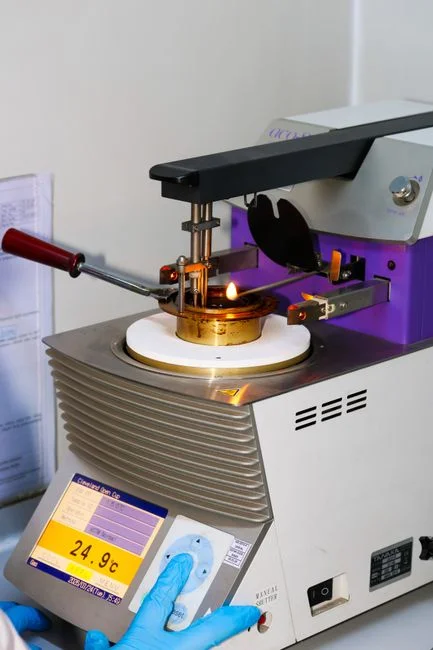
Pharmaceutical CRDMO wastewater requires specialized treatment due to the high variability of the waste stream. Synthesis campaigns generate intermittent batch loads with COD swings from 500 mg/L to over 10,000 mg/L, pH excursions from 2 to 11, TDS often above 5,000 mg/L, and trace levels of active pharmaceutical ingredients (APIs) that resist conventional biological treatment. Solvent residues, synthetic intermediates, and high TDS from API salt forms complicate biodegradation kinetics and require both robust equalization and a polishing step that targets recalcitrant organics.
The treatment train that reliably meets NOM-001 monthly averages while also supporting plant-internal purified-water reuse is a four-stage configuration:
- Equalization — a buffered, aerated equalization tank sized for 24–48 hours of hydraulic residence time is mandatory. Without it, batch peaks overload the biological stage and cause COD excursions that violate monthly averages. Equalization also stabilizes pH before downstream biological treatment.
- DAF (dissolved air flotation) — used as pre-treatment for TSS, FOG, and colloidal API carrier particles. A DAF system for TSS and colloidal API removal typically achieves 80–95% TSS removal and reduces the load on the downstream biological stage. Polymer coagulant dosing is normally tied to streaming current or zeta-potential control.
- MBR (membrane bioreactor) — the workhorse for COD/BOD reduction and biomass separation. A well-designed MBR membrane bioreactor for COD/BOD reduction produces effluent typically < 50 mg/L COD and < 5 mg/L TSS with MLSS in the 8,000–12,000 mg/L range, which is required to handle variable pharmaceutical loads without washout.
- RO or advanced oxidation polishing — either industrial RO polishing for water reuse or UV/H2O2 advanced oxidation is used to remove residual API traces, color, and recalcitrant organics. This stage enables the treated effluent to meet both NOM-001 discharge limits and internal purified-water reuse specifications for cleaning, boiler feed pre-treatment, or cooling-tower makeup.
The treated stream must hit two targets at once: NOM-001-SEMARNAT-2021 monthly averages for direct or municipal discharge, and the CRDMO's internal purified-water reuse spec (typically conductivity < 50 µS/cm and TOC < 1 mg/L). A single-stage biological plant cannot do both. The four-stage train also generates a smaller sludge volume than a conventional activated-sludge system because MBR biomass is more concentrated and DAF skimmings are dewatered separately; however, both the DAF float and MBR waste-activated sludge must be classified under NOM-052 CRETIB criteria, as API residues can elevate toxicity.
How the New Owner Re-permits, Retrofits, and Re-commissions the System
The first 12 months after close are split into a 90-day pre-close diligence window and a 180-day post-close re-permit and retrofit window. Running them in parallel is necessary to maintain legal operation through the transition.
90-day pre-close diligence checklist (wastewater only):
- Pull the MIA, CILA, and Registro de Descargas de Aguas Residuales and confirm they match the legal entity being acquired.
- Request the last 12 months of monthly analytical reports and verify all NOM-001-SEMARNAT-2021 monthly averages were met. Any non-conformity is a price-chipping data point.
- Confirm the municipal pre-treatment agreement is current and review the last three years of self-monitoring reports submitted to the SAPA/SADM.
- Audit the hazardous-waste manifests for the last three years (NOM-052 generator status, transporter, final disposal site).
- Inspect the equalization tank sizing against current and projected batch flows; undersized EQ is the most common retrofit trigger.
- Verify whether the site has online BOD/COD monitoring and SCADA. For spec language, an online BOD and COD monitoring for NOM-001 compliance buildout is the most effective insurance against monthly-average violations.
180-day post-close retrofit and re-permit window:
- Transfer the MIA, CILA, and Registro de Descargas to the new legal entity; update the SEMARNAT hazardous-waste generator registration (RP) and re-sign the municipal pre-treatment agreement.
- Add or upgrade an automatic chemical dosing for pH and coagulant control on the DAF stage if the existing system is manual.
- Install advanced oxidation (UV/H2O2) or RO polishing if API trace removal is not yet present.
- Re-rate the DAF skimmer if the surface-loading rate exceeds 15 m/h under the new operating schedule, and consider replacing an outdated DAF nozzle pack.
- Stand up SCADA and online BOD/COD sensors tied to the plant historian; budget a SCADA budget for a CRDMO wastewater plant sized for NOM-001 monthly-average reporting.
NOM-052 sludge classification is product-mix-sensitive. If the new owner broadens the API portfolio beyond what the prior MIA covered, the waste-activated sludge from MBR may shift classification and force a higher disposal cost or a new generator-status update with SEMARNAT.
Frequently Asked Questions
Which Mexican wastewater permits must a buyer of a WuXi AppTec CRDMO site transfer on day one?
The MIA (Manifestación de Impacto Ambiental), the CILA operating license, the CONAGUA Registro de Descargas, the SEMARNAT hazardous-waste generator registration, and the municipal pre-treatment agreement with the local SAPA/SADM must all be re-issued or formally transferred to the new legal entity. NOM-001-SEMARNAT-2021 compliance is a continuous monthly-average obligation that must be re-verified.
What are the NOM-001-SEMARNAT-2021 discharge limits for a pharmaceutical plant?
Direct discharge to surface water: BOD ≤ 30 mg/L, COD ≤ 150 mg/L, TSS ≤ 60 mg/L, pH 6–9, with heavy-metal limits tied to the receiving water classification. Municipal sewer discharge typically has stricter BOD, COD, and FOG limits set by the local utility pre-treatment agreement. Compliance is judged on monthly averages.