Why Atlanta Hotels Cannot Afford a Generic Wastewater Spec in 2026
McLemore Resort in Rising Fawn, Georgia, spilled 70,000 gallons of raw sewage into Mill Creek in two events — 60,000 gallons in October 2025 and 9,300 gallons in January 2026 — both triggered by lift station failures at the McLemore Water Reclamation Facility (Local 3 News, 2026-07-09). Since the current ownership took over the plant in 2022, the facility has accumulated 112 Georgia EPD permit violations, and the operator told EPD investigators that the plant was "short-circuiting in every aspect of the treatment process" once the Cloudland at McLemore hotel opened in February 2024. Effluent exceedances for E. coli, BOD5, TSS, and turbidity followed; the corrective-action and permit-renewal deadlines were missed; and EPD has now frozen all new construction at the resort — hotel, golf courses, pools, event space — until capacity expansion is proven. McLemore faces an $111,875 EPD penalty, offsettable only if corrective-action spending matches it.
The reputational arithmetic is worse. CDC's NORS surveillance for 2015–2020 recorded 214 U.S. drinking-water outbreaks, 2,140 illnesses, 563 hospitalizations, and 88 deaths; hotels, motels, lodges, and inns are an explicitly tracked exposure setting, and biofilm-associated pathogens — predominantly Legionella — caused 98% of the 88 outbreak deaths (MMWR Surveillance Summaries, 2025). For a 2026 Atlanta property, the question is not whether to treat wastewater but whether the spec is defensible to EPD, the lender, and a health department that already has a McLemore-shaped template for enforcement.
The 2026 thesis: a hotel wastewater system for metro Atlanta must be sized for peak occupancy (not average), designed to hit Georgia EPD narrative or local POTW effluent limits, paired with secondary disinfection, and bracketed by a premise-plumbing Legionella control plan. A packaged MBR or packaged A/O sewage treatment plant, sized at roughly 150–300 L per occupied room-day with a 1.5–2× peaking factor, is the typical envelope; BOD5 ≤30 mg/L, TSS ≤30 mg/L, site-specific NH3-N, and fecal coliform ≤200 CFU/100 mL are typical 2026 narrative-permit targets for upland streams.
Atlanta Discharge Rules: EPD Narrative, Local POTWs, and the Receiving-Water Question
Two permit pathways dominate 2026 hotel wastewater design in the metro area. The first is a Georgia EPD NPDES narrative permit for on-site discharge to surface water; the second is a domestic wastewater permit (or industrial pretreatment connection) to a local POTW — City of Atlanta, DeKalb County, Fulton County, Gwinnett County, or Cobb County. Each path drives different equipment choices, because a POTW typically cares about loadings and surcharges, while an NPDES narrative permit ties the spec to a fixed receiving-water effluent number.
For narrative permits in the Atlanta region, the effluent envelope most EPD permit writers apply includes BOD5 ≤30 mg/L, TSS ≤30 mg/L, NH3-N set site-specifically (commonly ≤2–4 mg/L during summer low-flow periods to protect dissolved oxygen), fecal coliform ≤200 CFU/100 mL for upland streams, and pH 6.0–9.0. Where the discharge reaches a North Georgia trout stream, total residual chlorine must be held below approximately 0.01 mg/L and metals limits tighten — which is why free chlorine is often displaced by ClO₂ or UV for disinfection in trout-watershed sites. Where specific city- or county-level limit values are not codified in the available record, designers should treat the parameter categories as fixed and the numeric values as site-specific, to be confirmed with the local pretreatment coordinator before bid.
Georgia also formally recognizes non-potable reuse for landscape irrigation, toilet flush, and cooling-tower makeup. A 2026 spec that produces reuse-quality effluent can offset a meaningful slice of City of Atlanta sewer capacity fees and annual sewer charges — but only if the disinfection train holds residual across the reuse loop.
| Permit Pathway | Regulator | Typical Effluent Targets (2026) | Disinfection Implication |
|---|---|---|---|
| NPDES narrative, upland stream | Georgia EPD | BOD5 ≤30 mg/L, TSS ≤30 mg/L, NH3-N site-specific (often ≤2–4 mg/L summer), fecal coliform ≤200 CFU/100 mL, pH 6.0–9.0 | ClO₂ or UV; free Cl₂ acceptable where TRC not constrained |
| NPDES narrative, trout stream (N. Georgia) | Georgia EPD | Same as above plus TRC <~0.01 mg/L, tighter metals | UV strongly preferred; ClO₂ in lieu of free Cl₂ |
| POTW discharge (Atlanta, DeKalb, Fulton, Gwinnett, Cobb) | Local POTW / EPD | Local surcharge thresholds; BOD/TSS limits site-specific via pretreatment permit | Disinfection often not required; high-strength surcharges apply |
| On-site non-potable reuse | Georgia EPD | Reuse-quality effluent for irrigation, toilet flush, cooling | ClO₂ polishing preferred to maintain residual |
Influent Characterization: What Atlanta Hotel Sewage Actually Looks Like
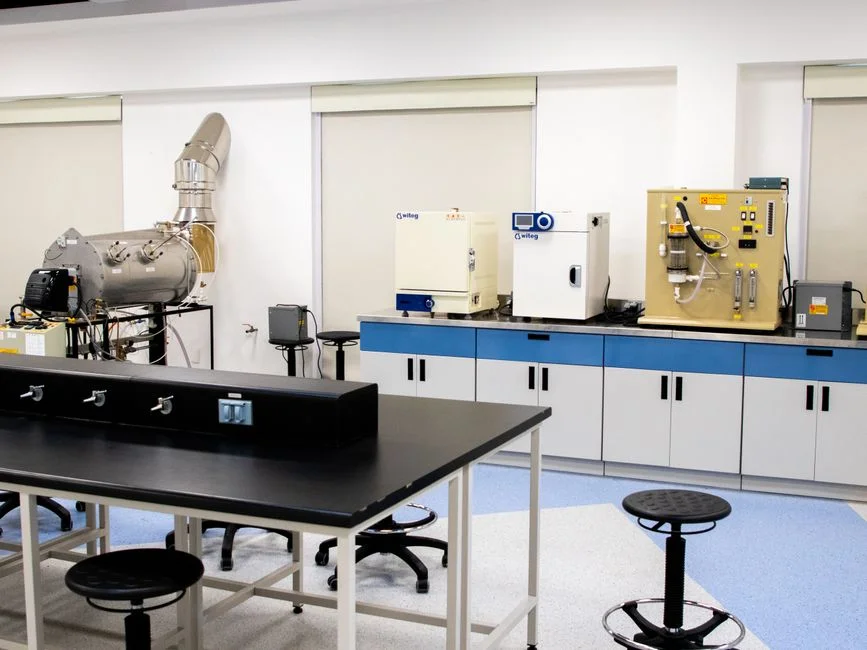
Raw sewage from a mid- to high-occupancy hotel in metro Atlanta typically lands at BOD5 250–400 mg/L, TSS 200–350 mg/L, FOG 50–150 mg/L, NH3-N 20–40 mg/L, with a meaningful surfactant load from on-site laundry and housekeeping. These ranges are the working basis for biological-reactor volume and aeration sizing; under-sizing to the average is exactly how the McLemore plant ended up in EPD's enforcement file.
What sinks a hotel plant is not the average — it is the peak. Tournament weekends, conference blocks, pool-area backwash, and event banquets can double instantaneous organic and hydraulic load within hours. The 2026 design norm is a packaged system rated for 1.5–2× the average daily flow, with a buffer tank or equalization basin ahead of the biological train. The hydraulic profile is bimodal: a morning peak between 7 and 10 a.m. (showers, breakfast, housekeeping) and an evening peak between 6 and 9 p.m. (dining, laundry, guest return), with low overnight flow that under-aerates fixed-film systems if not managed.
For a commercial hotel, the per-occupied-room design figure widely used by process engineers is 150–300 L per occupied room-day, multiplied by a 1.5–2× peaking factor for the biological reactor. That is the figure the McLemore plant failed to honor — and the figure a 2026 spec in metro Atlanta should anchor against.
MBR vs Packaged A/O vs SBR: Which Train Fits an Atlanta Hotel in 2026
Three packaged trains dominate 2026 hotel bids in the Atlanta region: packaged anoxic/oxic (A/O) contact-oxidation systems, membrane bioreactors (MBR), and sequencing batch reactors (SBR) or CASS variants. None of them is universally best; the choice is a function of footprint, reuse intent, nitrogen limit, and operator skill.
A packaged A/O sewage treatment plant in the WSZ family is the workhorse for urban infill — 50–150 keys, tight site, buried installation under a parking lot or landscape. The footprint is small, no membrane cleaning is required, and the unit is tolerant of intermittent operation. The trade-off is effluent quality: BOD/TSS in the 10–20 mg/L range and TN around 15–25 mg/L, which is adequate for narrative discharge to upland streams but does not earn reuse credits without polishing.
An MBR membrane bioreactor system (typically 10–2,000 m³/day) produces near-reuse effluent — BOD/TSS below 5 mg/L and TN under 15 mg/L — in roughly 60% of the footprint of a conventional activated-sludge train of the same capacity. The membrane cassette holds back solids to under 1 μm, which means the downstream disinfection load drops and the effluent becomes eligible for irrigation and toilet-flush reuse. The trade-off is operational: membrane cleaning every 6–12 months, aeration energy, and a service contract most small operators do not run in-house.
SBR and CASS reactors are concrete or package batch units, robust on shock load and easier to operate than MBR at sites without trained staff. They are a reasonable fit for large resorts with available land and lower operator skill, but the larger footprint and the batch-cycle effluent variability make them a weaker choice where reuse is on the table.
The decision tree: urban small footprint and no reuse intent → A/O; tight nitrogen limit or reuse credit required → MBR; large resort with land and minimal operator overhead → SBR/CASS.
| Parameter | Packaged A/O (WSZ-style) | MBR | SBR / CASS |
|---|---|---|---|
| Typical capacity range | 1–80 m³/h | 10–2,000 m³/day | 50–5,000 m³/day |
| Effluent BOD/TSS | ~10–20 mg/L | <5 mg/L | ~10–20 mg/L |
| Effluent TN | ~15–25 mg/L | <15 mg/L | ~10–20 mg/L |
| Footprint vs CAS | ~40–50% | ~40% | ~70–90% |
| Reuse eligibility | With polishing | Direct (with disinfection) | With polishing |
| Operator skill required | Low | Moderate–high (membranes) | Low–moderate |
| Best-fit Atlanta scenario | Urban infill, 50–150 rooms, no reuse | Reuse credit, tight TN, or premium sites | Large resort with land, low operator overhead |
For Atlanta-region hotels specifically, MBR's effluent quality advantage translates to lower sewer surcharges and eligibility for reuse credits — but only if the developer budgets membrane service. The same trade-off in reverse is documented in the packaged MBR STP for a hotel in Austin buyer's guide. A tropical-climate reference for similar decision logic is the hotel and resort wastewater treatment in Costa Rica engineering guide, though Atlanta's winter aeration demand and trout-stream criteria are different. For a Mediterranean-climate comparison, see what wastewater system does a hotel in Ankara need.
Disinfection, Reuse, and the Legionella Question Most Specs Miss
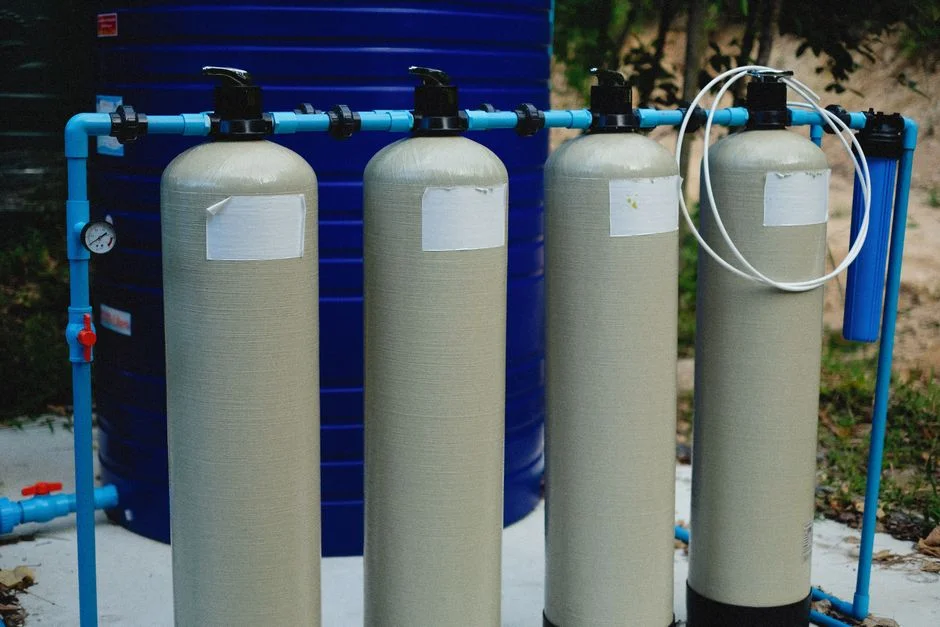
Disinfection is the cheapest insurance against a McLemore-style headline. UV handles virus credit without leaving a residual; ClO₂ inactivates Legionella and protozoan cysts and leaves a measurable residual across the reuse loop, with on-site chlorine dioxide generators available from roughly 50 g/h to 20,000 g/h to match any hotel scale. For sites that drain to a trout stream, the ClO₂ route is generally preferred over free chlorine because total residual chlorine is constrained and metals limits are tighter.
The Legionella question is the one most effluent-only specs miss. CDC NORS 2015–2020 attributes 786 illnesses, 544 hospitalizations, and 86 deaths — 98% of all drinking-water-outbreak deaths in the period — to Legionella, and 287 outbreak reports (63% of biofilm-related cases) cited the premise or point-of-use location as the contributing factor (MMWR Surveillance Summaries, 2025). Hotels are a tracked exposure setting. The 2026 spec must therefore address the hot-water system, not just the plant outfall: hot-water recirculation temperatures above 50 °C (122 °F), cold-water delivery below 25 °C (77 °F), and a documented flushing-and-monitoring program for low-use guest rooms.
On the reuse side, the configuration that closes the loop is MBR effluent → ClO₂ polishing → irrigation and toilet-flush reuse. Against typical City of Atlanta sewer capacity fees, a 60 m³/day reuse credit can offset a meaningful share of the connection charge; the developer should run that number with the local pretreatment coordinator before locking the train.
Sizing and Cost Reality Check for a 200-Room Atlanta Property
For a 200-room Atlanta hotel at 70% occupancy, the design math runs: 200 × 0.70 × 225 L/occupied room-day ≈ 31.5 m³/day average. Apply a 2× peaking factor for the biological reactor and the design flow lands around 60 m³/day, with the aeration basin sized for roughly 90 m³/day of organic capacity. The high-efficiency sedimentation tank ahead of the biological train is a common 2026 choice for FOG and TSS buffering at this scale.
Planning-level CAPEX for a 60 m³/day design in 2026 runs approximately $0.9M–$1.4M for packaged A/O, $1.2M–$2.1M for MBR, and $1.8M–$2.9M for SBR — bid numbers will vary with site constraints, effluent targets, and reuse scope. OPEX lands in the $0.45–$0.80 per m³ band for MBR (dominated by membrane cleaning and aeration energy) and $0.30–$0.55 per m³ for packaged A/O, with labor lower for both when PLC automation is specified. A single EPD enforcement action on the McLemore scale ($111,875) wipes out a year of OPEX for a mid-size property; sizing headroom and operator-grade controls are cheap by comparison.
| Cost Element | Packaged A/O | MBR | SBR / CASS |
|---|---|---|---|
| Design basis | 60 m³/day, 200-room Atlanta hotel | 60 m³/day, 200-room Atlanta hotel | 60 m³/day, 200-room Atlanta hotel |
| Planning-level CAPEX | $0.9M–$1.4M | $1.2M–$2.1M | $1.8M–$2.9M |
| OPEX ($/m³ treated) | $0.30–$0.55 | $0.45–$0.80 | $0.35–$0.65 |
| OPEX driver | Aeration, sludge hauling | Membrane cleaning, aeration | Sludge hauling, batch-cycle controls |
| Reuse offset potential | Limited (needs polishing) | High (direct reuse with ClO₂) | Moderate (needs polishing) |
| Risk anchor | McLemore-scale EPD action ≈ $111,875 — exceeds 12 months of OPEX at this scale | Same | Same |
These figures are planning-level, not bid — site geotechnics, effluent targets, and reuse scope move them materially. A developer taking this to a lender should pair the number with a contingency line sized to a 12-month permit-renewal cycle and one enforcement event.
Frequently Asked Questions
What size wastewater system does a 200-room Atlanta hotel need in 2026?
Plan for roughly 150–300 L per occupied room-day, so a 200-room property at 70% occupancy averages about 31.5 m³/day. Apply a 1.5–2× peaking factor for the biological reactor, putting design flow near 60 m³/day and basin capacity around 90 m³/day to absorb tournament and conference peaks.
Which Georgia permit applies to an on-site Atlanta hotel wastewater discharge?
Either a Georgia EPD NPDES narrative permit for surface-water discharge or a domestic wastewater permit to the local POTW (City of Atlanta, DeKalb, Fulton, Gwinnett, Cobb). Narrative permits typically require BOD5 ≤30 mg/L, TSS ≤30 mg/L, site-specific NH3-N, fecal coliform ≤200 CFU/100 mL for upland streams, and pH 6.0–9.0; trout-stream sites add TRC <~0.01 mg/L.
How does Legionella change a hotel wastewater spec in 2026?
CDC NORS 2015–2020 attributes 98% of U.S. drinking-water-outbreak deaths to Legionella, with 63% of biofilm-related outbreaks tied to premise- or point-of-use failures and hotels as a tracked exposure setting. The 2026 spec must address the hot-water side — recirculation above 50 °C, cold-water delivery below 25 °C, low-use-room flushing — not just plant effluent.
What does a packaged MBR cost for a mid-size Atlanta hotel?
Planning-level CAPEX for a 60 m³/day MBR runs $1.2M–$2.1M in 2026, with OPEX in the $0.45–$0.80 per m³ band dominated by membrane cleaning and aeration. The MBR's near-reuse effluent (BOD/TSS <5 mg/L, TN <15 mg/L) is what justifies the premium over a packaged A/O at $0.9M–$1.4M when reuse credits apply.
How long does installation take for a packaged hotel wastewater system?
Packaged A/O and MBR skids typically need 8–14 weeks from purchase order to factory acceptance, plus 4–8 weeks of on-site civil and utility work for a 60 m³/day train, depending on geotechnics and weather. EPD permit review can run 90–180 days for a narrative permit, so the permit clock should start ahead of the procurement clock.
Related Equipment
- packaged A/O sewage treatment plant — specifications, capacity range, and technical data
- MBR membrane bioreactor system — specifications, capacity range, and technical data
- on-site chlorine dioxide generator — specifications, capacity range, and technical data