Why Saukville Mining and Metals Plants Face a Real DAF-vs-Clarifier Choice in 2026
Saukville sits inside the Milwaukee River watershed, and any 2026 capex that touches industrial discharge has to clear Wisconsin DNR NR 106 metal limits plus local MMSD-style pretreatment limits on the interceptor. A pretreatment violation — not the equipment cost — is the single largest financial risk on a retrofit project right now, because the Village of Saukville discharges through a regional interceptor that carries its own enforcement teeth on top of state rules.
The stream profile here is not generic. Aggregate wash water from quarry operations, iron-bearing tailings from mineral processing, and metalworking coolants or cutting fluids from finishing shops all converge on a typical Saukville industrial lot. That mix produces two particle populations at once: dense, fast-settling mineral grit and a low-density fraction of emulsified oil plus ultrafine colloids. Mining, quarrying, and aggregate production are explicitly named on the standard DAF application list (WastewaterMachinery, S4), so DAF is a legitimate primary option — not a stretch — for 2026 specifications.
Procurement teams also have a real regional supplier base. Clearwater Industries engineers DAF and clarification equipment in Brown Deer, WI, about 30 miles from Saukville, and runs a rental fleet plus free jar testing (S1). That proximity turns a six-week rental pilot into a realistic 2026 de-risking step rather than a line-item excuse. For a deeper look at the equipment train itself, the DAF process flow walkthrough lays out the same hydraulic logic a Saukville engineer would specify.
How DAF and Clarifiers Actually Separate Solids in Mining Wastewater
DAF and lamella clarifiers solve the same problem with opposite physics. A DAF unit pressurizes a side stream of clarified effluent to typically ≥5 bar in a saturator, then injects that air-saturated recycle into the main flow through release nozzles. The pressure drop nucleates fine bubbles 10-50 µm in diameter that attach to flocculated particles, oils, and FOG, lifting them to the surface where a top-mounted skimmer pulls the float layer off (S4). Because the lifting force comes from buoyancy, not particle mass, DAF is the right tool for oils, greases, hydraulic fluids, and the ultrafine colloids that never settle on their own.
A lamella clarifier does the opposite. Wastewater flows upward between inclined plates spaced 50-80 mm apart at a 55-60° angle, and gravity pulls the dense fraction onto the plate face where it slides down into a hopper. Surface loading rates of 20-40 m³/m²·h are typical, and the inclined geometry cuts coagulant demand by roughly 30% versus a conventional circular clarifier of the same flow (HydropureWater catalog). For dense, fast-settling mineral solids, lamella is hard to beat on cost per cubic meter treated.
The catch for a Saukville plant is that the same influent carries both populations. A jar of aggregate wash water will throw down coarse grit in 30 seconds while leaving a persistent turbidity from metal-laden colloids that stays in suspension for hours. That is why the technology choice is genuinely non-obvious: the deciding question is which fraction dominates your specific stream — and for many plants, the honest answer is "both, depending on the day." DAF process parameters to capture in your spec sheet: hydraulic surface loading at the low end of the design range, saturation pressure ≥5 bar, A/S ratio tuned to jar tests, and a VFD on the recycle pump to handle flow swings without re-tuning the saturator (S4).
DAF vs Clarifier for Mining Wastewater: Side-by-Side Comparison
The table below is the one to screenshot and attach to your 2026 capex memo. Removal and CAPEX figures are drawn from the source data and HydropureWater catalog ranges; treat them as defensible order-of-magnitude inputs, not firm quotes, and validate with jar testing and a rental pilot before signing a PO.
| Parameter | DAF System (e.g. HydropureWater DAF system) | Lamella Clarifier |
|---|---|---|
| Removal mechanism | Buoyancy — fine bubbles attach to floc, oil, and colloids; float skimmed (S4) | Gravity — heavy particles settle on inclined plates, slide to hopper |
| TSS removal | Up to 97% on mining and metal-finishing streams (S4) | ~90% on heavy mineral-solids streams (S2) |
| COD removal | 60-80% (S4) | 40-60% on biodegradable mining loads; lower on refractory organics |
| Oil & FOG handling | ~95% oil and grease removal (S2) | ~70% oil removal; FOG interferes with plate settling (S2) |
| Flow range (standard catalog) | 3-120 m³/h per unit, 13 standard models; modular for higher flow (S4) | 20-40 m³/m²·h surface loading; sized by plate area |
| Relative footprint | ~1/3 the footprint of a conventional clarifier at equal flow (S4) | Larger basin; inclined plates reduce area but tank envelope remains |
| Best-fit stream | Oils, FOG, emulsified coolants, fine/buoyant colloids, low-FOG membrane pretreatment | Dense settleable grit, aggregate wash, coarse iron-ore tailings, retrofit of existing concrete tanks |
For a tight Saukville industrial lot, the footprint row is usually the tiebreaker. DAF units ship on skids in the 4-300 m³/h envelope, which fits into a 20-ft or 40-ft containerized footprint. A lamella basin for the same flow typically needs a poured concrete pad and several days of civil work — not impossible, but a real schedule item in a 2026 capex timeline.
When Saukville Mining Plants Should Choose a DAF System in 2026
Specify a DAF system as the primary clarifier when the stream carries emulsified oils, cutting fluids, or hydraulic fluids from on-site metalworking. The 95% oil removal versus 70% for a clarifier (S2) is the deciding margin once influent oil exceeds roughly 50 mg/L — below that, either technology works, and cost drives the call.
Specify DAF when the discharge permit requires sub-50 mg/L TSS consistently. DAF lets an engineer tune hydraulic surface loading and recycle ratio without rebuilding the tank: drop the saturator pressure, adjust the air-to-solids ratio, or add a polymer stage. That operating flexibility matters for plants that have to defend their numbers to a Wisconsin DNR pretreatment coordinator every quarter.
Specify DAF when space is the binding constraint. Skid-mounted units in the 4-300 m³/h range (S4) drop into existing mechanical rooms or outside pads without the concrete work a lamella basin demands. This is the case for most Brown Deer-region plants trying to add treatment capacity inside an active production footprint.
Specify DAF when the next downstream step is a membrane bioreactor, RO, or another reuse membrane. Consistent low-TSS, low-FOG effluent protects the membranes and reduces CIP frequency — a real OPEX line that often flips the lifecycle-cost math in DAF's favor on water-stressed sites. The same decision logic shows up in the parallel Watertown mining DAF-vs-clarifier guide, where the membrane-feed use case carries the recommendation.
When a Lamella Clarifier Is the Right Answer for Saukville Mining Wastewater
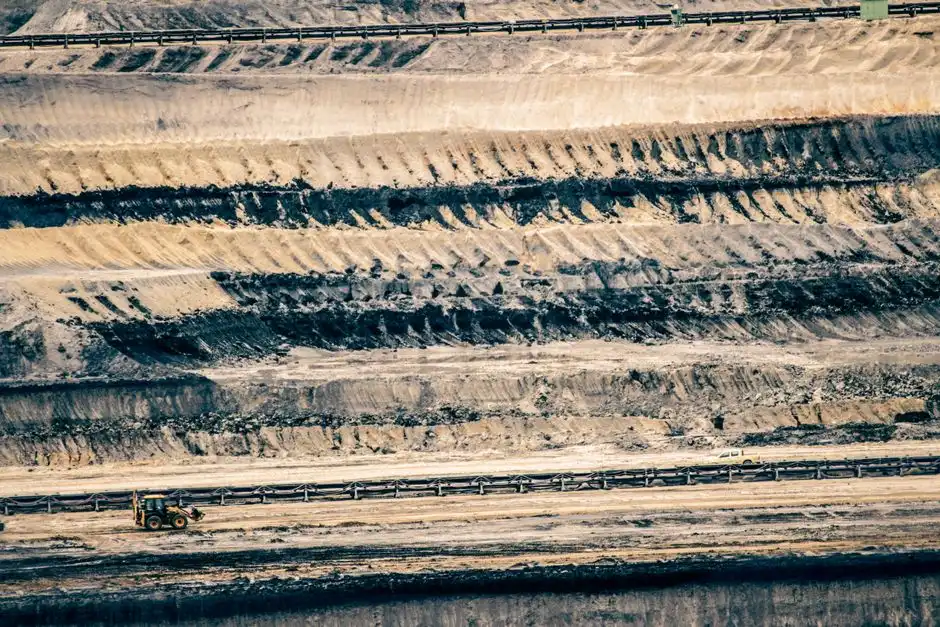
Choose a lamella clarifier when the stream is dominated by dense, fast-settling mineral solids — aggregate wash water, coarse iron-ore tailings, crushed-stone fines. A well-designed inclined-plate unit can hit 90% TSS reduction (S2) at lower chemical cost than a conventional clarifier and at meaningfully lower CAPEX than a DAF skidded package of equivalent flow.
Choose lamella when the chemical budget is tight. Inclined-plate geometry reduces coagulant demand by up to 30% versus a conventional clarifier (HydropureWater catalog), and there is no air-saturation system to power. For a high-throughput aggregate operation running 24/7, the OPEX delta across a year is not trivial.
Choose lamella when the plant already has gravity-separation infrastructure. Retrofitting an existing concrete tank with a plate pack is a smaller civil and instrumentation scope than installing a DAF pressure system, and the construction window fits inside a planned outage more comfortably. Choose lamella when the stream is essentially free of oils, FOG, and buoyant colloids — adding DAF in that case adds air-saturation OPEX with no removal benefit. A lamella clarifier sized on jar-test data is the cleaner 2026 spec.
The 2026 Hybrid Option: DAF Primary, Lamella Polisher
For Saukville plants whose stream carries both heavy grit and light oily fractions, a DAF-as-primary plus lamella-as-polisher train is the most defensible 2026 specification. The hybrid is not exotic — the source data explicitly confirms that hybrid DAF-plus-clarifier configurations address complex streams with both oil-removal and sedimentation duties (S2) — and it solves the dual-population problem cleanly.
Configure the DAF first to pull floatables, free oil, and the colloidal fraction. The DAF effluent is then low in FOG and most ultrafine TSS, which lets a downstream lamella polish the remaining settleable grit to a tight TSS ceiling. Combined TSS removal above 95% is realistic, and the lamella can be sized smaller because it no longer has to handle the colloidal load.
On a tight Saukville lot, both units ship on standard skids, which simplifies modular or containerized deployment and keeps the civil scope to a pad and interconnecting piping. For plants planning a 2026 capex that extends to water reuse, this train is also the right frontend for an MBR or RO — see the DAF process flow walkthrough and the downstream MBR integrated treatment option for the full reuse pathway.
2026 Cost, Footprint, and Procurement Checklist for Saukville Buyers
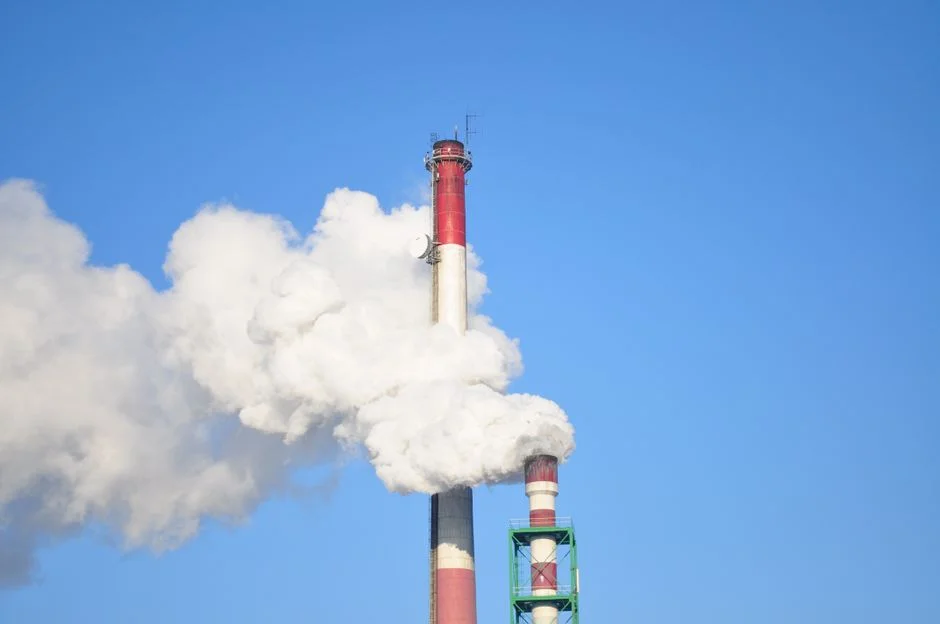
In 2026 North American industrial DAF systems typically run roughly 1.5-2.5x the CAPEX of an equivalent-flow lamella clarifier skidded package, with the gap narrowing at flows above 50 m³/h as DAF scale economies kick in. These are indicative ranges — not Saukville-specific quotes — because the source data does not pin down exact local pricing; treat them as the envelope to budget against before pilot results land. The operating-cost profile is different in shape: DAF needs an air compressor, saturator, and recycle pump on top of the sludge pump (S2), while lamella needs sludge pumps and periodic plate cleaning but no compressed-air system.
| Procurement Checklist Item | Why It Matters for a 2026 Saukville Spec |
|---|---|
| Influent characterization (TSS, FOG, metals, particle size distribution) | Determines whether DAF, lamella, or hybrid is defensible under NR 106 metal limits |
| Jar testing with site wastewater | Confirms coagulant/flocculant dose, A/S ratio, and achievable TSS before sizing equipment |
| Wisconsin DNR NR 106 + MMSD pretreatment compliance review | Defines the discharge envelope the equipment has to hit — drives removal-efficiency targets |
| Footprint sketch against existing civil | Forces the DAF-vs-lamella call where space is the binding constraint on tight Brown Deer-region lots |
| Hybrid vs single-unit decision | Resolves the dual-population problem (heavy grit + light oily fraction) without oversizing either unit |
| On-site pilot via Brown Deer rental fleet (S1) | De-risks capex with real wastewater data before signing a PO; rental credit typically applies to purchase |
The workflow that wins 2026 Saukville capex approvals is pilot-and-quote, not catalog-buy. Pull a rental unit from the Brown Deer fleet, run two to four weeks on the real stream with an automatic chemical dosing skid to optimize polymer, then issue a firm quote on a DAF system, a lamella clarifier, or the hybrid train based on the data. That sequence lines up with how Wisconsin-region mining and aggregate plants actually award equipment contracts.
Frequently Asked Questions
Is DAF or a clarifier better for mining wastewater in Saukville, USA, in 2026?
For Saukville mining and metals plants in 2026, choose a DAF system when the stream carries oils, greases, or fine buoyant solids (TSS removal up to 97%, COD 60-80%), and choose a lamella clarifier when the load is dominated by heavy settleable mineral solids (typical 90% TSS reduction at lower cost). For mixed tailings water with both heavy grit and light fractions, a DAF-as-primary plus lamella-as-polishing train is the most defensible specification.
What TSS removal can a DAF system achieve on mining and metal-finishing streams?
A well-tuned DAF system can reduce TSS by up to 97% and COD by 60-80% on mining and metal-finishing streams (S4), provided coagulant and flocculant doses are optimized through jar testing and the hydraulic surface loading rate is held at the low end of the design range.
Can a lamella clarifier handle oily metalworking wastewater?
A lamella clarifier is not the right primary tool when oil and grease exceed roughly 50 mg/L. DAF achieves about 95% oil and grease removal versus about 70% for a clarifier on the same stream (S2), because FOG interferes with plate settling and lamella geometry does not capture buoyant fractions.
How much floor space does a DAF system save versus a clarifier?
A DAF unit typically needs about one-third the footprint of an equivalent conventional clarifier (S4), and the catalog range from 3-120 m³/h per single unit (S4) lets Saukville plants scale capacity with skid additions rather than new basins — a real advantage on tight industrial lots.
Are hybrid DAF + clarifier systems common in US mining plants?
Yes, and the trend is strengthening in 2026 for combined grit-plus-oil streams. Hybrid configurations use DAF to pull floatables and colloids first and a clarifier to polish settleable grit, and the source data explicitly confirms that hybrid DAF-plus-clarifier trains address complex wastewater streams (S2). For related industrial use cases, the Watertown mining DAF-vs-clarifier guide and the Baltimore petroleum DAF-vs-clarifier guide walk through the same hybrid logic.