
Why Saudi Arabia Needs Decentralized Small Community Wastewater Systems in 2026
A small community wastewater system in Saudi Arabia is a decentralized, packaged treatment plant — typically 1 to 500 m³/day — designed for wadi villages, rural housing clusters, and remote camps. Under the 2000 Royal Order, all effluents must meet tertiary treatment standards, and under Vision 2030 Saudi Arabia targets a 43.6% rise in treated wastewater reuse to ~2,900 MCM/year by 2035. Modern systems use MBR or A/O packaged designs delivering reuse-quality effluent suitable for aquifer recharge and irrigation.
Saudi Arabia is classified by the UNESCO Water Scarcity Index as experiencing acute water scarcity, with no permanent lakes or rivers and over 90% of the land covered by desert (Alqahtany et al., 2025). Agriculture consumes 88% of national water resources while contributing only 3% to GDP (FAO 2024, as cited in Alqahtany et al., 2025). This imbalance is the structural reason decentralized treatment and reuse matter: every cubic meter of sewage recovered at a wadi village is a cubic meter that does not have to be desalinated or mined from a depleting fossil aquifer.
Centralized infrastructure has not closed the rural gap. In 2010, sewage collection and treatment coverage stood at approximately 60% in Riyadh, 50% in Jeddah, and over 78% in Dammam, with the 13 administrative regions of KSA mostly served by plants in large and medium cities (Alqahtany et al., 2025). Wadi communities, remote industrial camps, and worker housing sit outside the trunk-main envelope. Only about 10% of the wastewater generated in the Kingdom is currently reused in a beneficial manner (Dahdolan and Al-Hamaiedeh, 2014, as cited in Water 2014, 6(8), 2322), which is the gap Vision 2030 explicitly aims to close by funding small-scale reuse schemes that can be built quickly and tied to local demand.
Regulatory Framework: Vision 2030, the 2000 Royal Order, and Reuse Standards
Compliance basis in KSA rests on three layers: the 2000 Royal Order, the May 2000 "Treated Sanitary Wastewater and Its Reuse Regulations," and the engineering standards enforced by the Royal Commission of Yanbu and Jubail (RCJY 2010) (Alqahtany et al., 2025). The Royal Order mandates that all wastewater types generated in the country must undergo tertiary treatment without exception, and the implementing regulation requires secondary or tertiary treatment levels depending on the discharge or reuse pathway (MWE 2024, as cited in Alqahtany et al., 2025). For any 1-500 m³/day system, this means the design cannot stop at primary clarification or conventional activated sludge; a polishing step — membrane filtration, media filtration, or chemically enhanced clarification — must be in the train before reuse or aquifer discharge.
Approved reuse applications under the 2000 framework include agricultural and landscape irrigation, wetlands, industrial applications, aquifer recharge, and district cooling (Alqahtany et al., 2025). The 1978 fatwa from the Council of Leading Islamic Scholars permits reclaimed water for ablution and drinking when properly treated, but recommends against drinking reuse water to avoid health problems and in consideration of negative public sentiment (Water 2014, 6(8), 2322). For a procurement engineer this is more than a religious footnote: it sets the practical ceiling on indirect potable reuse at small scale, and pushes direct potable projects to the MAR/ARR pathway with full environmental buffer and monitoring.
Vision 2030 overlays a quantitative target on top of the regulatory floor: the Kingdom forecasts a 43.6% rise in treated wastewater use by 2035, reaching approximately 2,900 MCM/year, against a current beneficial reuse rate of only ~10% (Water 2014; Alqahtany et al., 2025). For small community systems, this is the funding narrative — every project above the regulatory floor that can demonstrate reuse compliance and aquifer or irrigation benefit is a stronger candidate under Vision 2030-aligned capital programs.
Sizing a Small Community Wastewater System: Flows, Loads, and Site Conditions
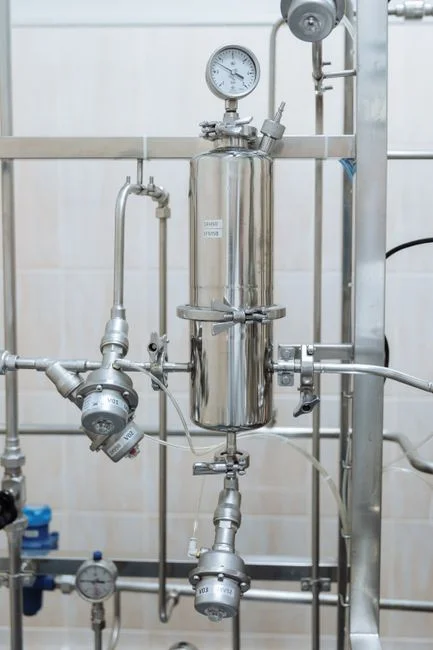
Small community scope for this guide is 1-500 m³/day, covering wadi villages, rural housing clusters, remote industrial camps, and worker housing. The first sizing input is per-capita wastewater generation. KSA planning uses lpcd (liters per capita per day) as the standard unit, with 120-200 lpcd as the working envelope for residential and worker-housing flows (Alqahtany et al., 2025). A 50-person worker camp at 150 lpcd generates 7.5 m³/day at peak factor 1.0; a 500-person rural cluster at 180 lpcd generates 90 m³/day before any peaking allowance. Multiply the average dry-weather flow by a peaking factor of 1.5-2.5 to size equalization and biological reactors.
Influent characteristics for Saudi municipal sewage vary with water-supply TDS, food habits, and the presence of kitchen grease from camps. The table below lists planning estimates to use as a starting point; site-specific sampling is required before final design and the values should be treated as planning estimates, not measured at any specific site.
| Parameter | Planning range (rural KSA municipal) | Design implication |
|---|---|---|
| BOD₅ | 200-400 mg/L | Sets biological reactor volume and oxygen demand |
| COD | 400-800 mg/L | Confirms biodegradability ratio (BOD/COD ≥ 0.4 expected) |
| TSS | 200-350 mg/L | Drives headworks sizing and sludge yield |
| Oil & grease | up to 50 mg/L | Requires grease trap upstream of biological stage |
| Temperature | 20-38 °C (diurnal/seasonal) | Favors fast biological kinetics but stresses nitrification above 35 °C |
Arid-climate factors shape the design envelope beyond standard municipal practice. High ambient temperatures accelerate biological kinetics — useful for organics removal but a stress on nitrifiers above 35 °C. High TDS in the local water supply pushes influent conductivity into a range that affects membrane selection and sludge settleability. Remote villages generate intermittent flow with long idle periods overnight and surge loads at morning/evening peaks, so equalization volume is not optional; a 12-24 h buffer is the minimum for stable biological performance.
Treatment Train Options: MBR vs Packaged A/O vs SBR for Small KSA Communities
Three architectures dominate the 1-500 m³/day KSA small-community segment. Each can be packaged, containerized, or buried depending on site constraints, and each meets the 2000 Royal Order tertiary requirement when properly configured.
MBR membrane bioreactor. Activated sludge coupled with submerged ultrafiltration membranes at nominal pore size below 1 μm. Produces near-reuse-quality effluent (typically TSS < 5 mg/L, turbidity < 1 NTU) suitable for direct aquifer recharge or irrigation. Highest effluent quality of the three options. Sits inside an above-grade containerized enclosure for membrane access and cleaning. Pairs naturally with an MBR membrane bioreactor system using DF-series flat-sheet MBR modules.
WSZ-style A/O packaged plant. Anoxic/oxic contact oxidation in a single buried or trailer-mounted tank, followed by sedimentation and disinfection. Produces tertiary effluent suitable for irrigation and indirect aquifer recharge. Smallest visual and footprint profile because the tank sits below grade. No on-site operator required; PLC and remote telemetry are standard. Specified as a WSZ buried A/O packaged plant.
SBR / CASS batch reactor. Sequencing batch reactor or cyclic activated sludge system operating in fill-react-settle-decant cycles. Effluent quality ranges from secondary to tertiary depending on cycle configuration. Requires civil tanks and moderate operator oversight. Lowest equipment cost for clusters above 200 m³/day.
All three fall within the 0.4-1.0 kWh/m³ specific-energy envelope reported for conventional wastewater treatment (Water 2014, 6(8), 2322). MBR clusters toward the upper end due to membrane aeration and cross-flow; WSZ and SBR cluster toward the lower end at small scale.
| Criterion | MBR | WSZ A/O packaged | SBR / CASS |
|---|---|---|---|
| Footprint (relative) | Small | Smallest (buried) | Larger (civil tanks) |
| Effluent quality | Reuse-ready, < 1 μm filtrate | Tertiary, irrigation-grade | Secondary to tertiary |
| Energy (kWh/m³) | 0.7-1.0 | 0.4-0.7 | 0.4-0.8 |
| Operator need | None on-site (PLC + remote) | None on-site (PLC + remote) | Moderate, daily checks |
| Installation | Above-grade enclosure | Buried or trailer-mounted | Civil tanks + equipment room |
| Best fit | Aquifer recharge, sensitive receptors | Worker camps, wadi villages, mobile deployment | Rural clusters 200-500 m³/day, budget-constrained |
For a deeper head-to-head including MBBR and cost deltas, see the engineering MBR vs SBR vs MBBR comparison.
Process Flow: From Headworks to Reuse-Ready Effluent
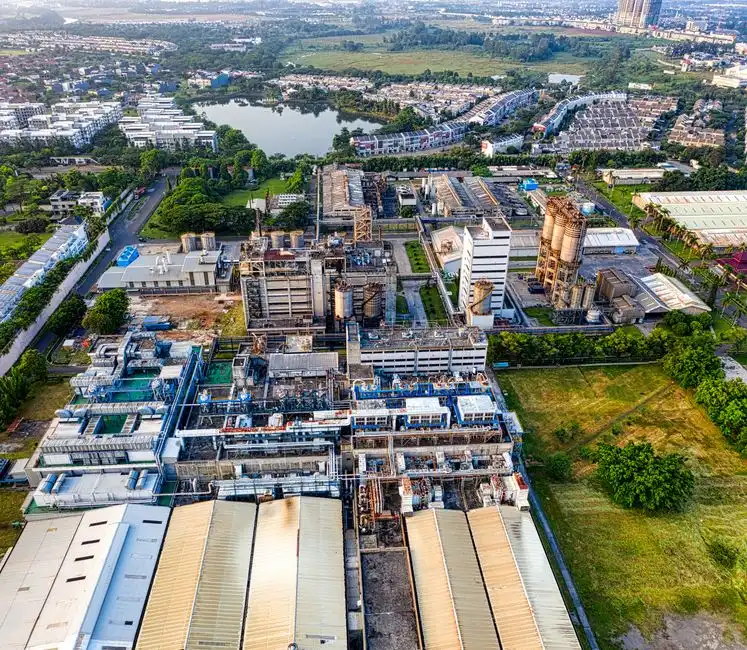
A reusable small community train in KSA runs through six unit operations, sized to the daily flow and the peak factor from Section 3.
Step 1 — Headworks screening. A GX-series rotary bar screen with 3-6 mm bar spacing protects downstream pumps, membranes, and clarifiers from rags, plastics, and coarse debris. For camps with significant oil and grease, a grease trap precedes the screen.
Step 2 — Flow equalization and grit removal. An equalization tank sized for 12-24 h of average flow buffers diurnal peaks and idle periods characteristic of remote villages. Grit is removed in a vortex chamber or by an aerated grit section to prevent abrasion of downstream blowers and membranes.
Step 3 — Biological treatment. Either A/O contact oxidation in the WSZ reactor or activated sludge with submerged MBR membranes. Hydraulic retention time for packaged A/O systems typically runs 8-24 h depending on influent BOD and target effluent quality. Aeration is controlled by dissolved-oxygen probes linked to the PLC. PLC architecture for small WWTPs is covered in the 2026 PLC control engineering guide.
Step 4 — Clarification / solids separation. A high-efficiency sedimentation tank with lamella plates handles WSZ and SBR trains; for MBR, the submerged membranes perform this step, with mixed liquor recycled back to the aeration zone and permeate drawn through the membrane.
Step 5 — Disinfection. A chlorine dioxide generator provides residual disinfection that is more stable than chlorine across the pH and temperature range seen in KSA summer operations, and complies with EPA, EU, and WHO reuse guidelines for irrigation and aquifer recharge.
Step 6 — Sludge handling. Waste activated sludge is thickened and dewatered by a plate-and-frame filter press (filtration area 1-500 m² across the standard product range) to a 20-25% dry solids cake for off-site disposal or co-composting.
Integrating Treated Effluent with Aquifer Recharge and Non-Potable Reuse
For a wadi village, the strategic reuse endpoint is Managed Aquifer Recharge with Aquifer Recharge and Recovery (MAR/ARR): treated wastewater recharges the alluvial aquifer through infiltration basins or injection wells, then is recovered down-gradient for irrigation or indirect potable use (Water 2014, 6(8), 2322). The economics are stark. Cost modeling for western Saudi Arabia shows that providing water via seawater desalination plus conveyance to the same end users runs roughly 300% higher than providing the same volume through treated wastewater reuse with MAR/ARR polishing (Water 2014, 6(8), 2322). For a 50 m³/day community plant, that delta is the line item that makes a packaged decentralized system financeable against a national desalination tariff.
One caveat matters at the design stage: some refractory trace organic compounds will not be removed by aquifer treatment alone, and further treatment may be required at extraction points closer to larger population centers (Water 2014, 6(8), 2322). For small wadi systems far from urban centers, the natural buffer is large enough that polishing is not required. For larger clusters near cities, plan an AOP or GAC polishing step at the recovery well head.
Non-aquifer pathways also qualify under the 2000 framework: landscape irrigation for municipal parks and roadside greenery, district cooling (a growing load in KSA mega-projects and mixed-use developments), and industrial reuse in cement, petrochemical, or power plants (Alqahtany et al., 2025). For a worker camp the simplest reuse loop is on-site landscape irrigation, which shortens the HDPE pipeline run and removes the permitting burden of an injection-well MAR scheme.
CAPEX, OPEX, and Energy Budget for 2026 Projects
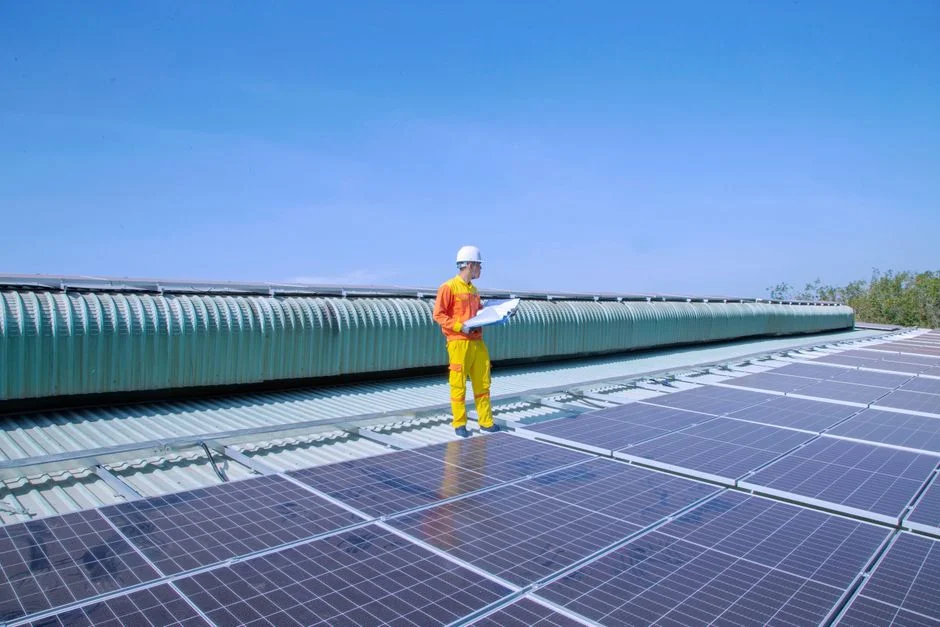
The reference cost benchmark for wastewater treatment facilities in western Saudi Arabia is roughly $500,000 per 5,000 m³/day of installed capacity, per industry-validated construction cost estimates referenced in the MAR/ARR study (Water 2014, 6(8), 2322). For smaller systems, allow a 20-40% small-plant premium to account for mobilization, custom packaging, and the loss of scale economies in civil and tank work. A 100 m³/day packaged plant therefore lands in the $12,000-$15,000 per m³/day band rather than the $100 m³/day benchmark's $10,000. This cost-estimate context comes from Moya Bushnak Water and Environmental Services Company, Jeddah (Water 2014, 6(8), 2322).
OPEX is dominated by energy. The specific energy consumption envelope is 0.4-1.0 kWh/m³ of treated water (Water 2014, 6(8), 2322). Real electricity cost in KSA is difficult to pin down because of subsidies, but the working range is $0.05-0.15/kWh (Water 2014, 6(8), 2322). Energy accounts for roughly 50% of total operating cost in the reference model, giving a usable annual OPEX formula:
Annual electricity (USD) = Q × 365 × E × P
where Q = average daily flow (m³/day), E = specific energy (kWh/m³), and P = unit electricity cost ($/kWh). For Q = 100 m³/day, E = 0.7, P = $0.10: annual electricity ≈ $2,555. Double that to estimate total OPEX including consumables, sludge handling, and remote monitoring.
HDPE pipeline cost in wadi valleys is a major non-equipment line item because trenching through rocky alluvium is slow and expensive (Water 2014, 6(8), 2322). This pushes siting decisions toward proximity to the reuse point — even if the inflow collection network is longer — to keep the reuse pipeline short.
| Cost line | Benchmark (2026) | Driver |
|---|---|---|
| CAPEX (≥ 5,000 m³/day) | ~$500,000 per 5,000 m³/day | Civil + equipment + installation |
| Small-plant premium (1-500 m³/day) | +20-40% per m³/day | Packaging, mobilization, loss of scale |
| Specific energy | 0.4-1.0 kWh/m³ | Blower, pump, and membrane loads |
| Real electricity cost | $0.05-0.15/kWh | Tariff and subsidy class |
| HDPE pipeline (wadi) | Site-specific, often dominant | Trench length, rock, distance to reuse point |
Selection Framework: Matching System to Site, Reuse Goal, and Budget
Translate the comparison into a procurement shortlist with a four-rule decision tree.
Rule 1 — Reuse goal is aquifer recharge, site is a remote wadi village. Specify an MBR membrane bioreactor system. The reuse-ready filtrate eliminates the need for a separate polishing step at the recovery well, and the small footprint suits constrained village sites. Confirm with a packaged MBR unit sized to the design flow with one standby train.
Rule 2 — Site is a worker camp or temporary development. Specify a WSZ buried A/O packaged plant, trailer-mounted if the camp is mobile. No on-site operator is needed; PLC and remote telemetry are sufficient. Burial eliminates noise, odor, and visual impact, which matters near worker housing.
Rule 3 — Site is a larger rural cluster (200-500 m³/day) with budget pressure and moderate reuse requirements. Specify SBR or CASS with chlorine dioxide disinfection. The civil-tank approach trades footprint for the lowest equipment cost at this scale, and tertiary compliance is met when the SBR is configured with a post-decant filtration stage.
Rule 4 — Community sits near a sensitive groundwater or wetland. Mandate tertiary treatment with chlorine dioxide disinfection regardless of train choice, and add redundancy on the disinfection generator. For KSA mega-projects near the coast, district cooling reuse is often the highest-value endpoint and may justify an MBR even when WSZ would otherwise suffice. For background on supplier evaluation in the Gulf market, the Gulf-region sewage equipment supplier evaluation guide covers spec sheets, cost models, and risk filters. A worked example of a packaged plant in a hospitality setting is in the decentralized packaged plant case study for Kampala.
Frequently Asked Questions
What counts as a small community wastewater system in Saudi Arabia?
A small community wastewater system is a decentralized, packaged treatment plant sized between 1 and 500 m³/day, serving wadi villages, rural housing clusters, remote industrial camps, or worker housing. Under the 2000 Royal Order, all effluents must meet tertiary treatment standards, and modern systems use MBR or A/O packaged designs to deliver reuse-quality effluent (Alqahtany et al., 2025).
How much energy does a small wastewater treatment plant use in KSA?
Specific energy consumption for conventional wastewater treatment is reported in the range of 0.4-1.0 kWh per cubic meter of treated water. At a real electricity cost of $0.05-0.15/kWh, a 100 m³/day plant running at 0.7 kWh/m³ and $0.10/kWh consumes roughly $2,555 in electricity per year, with total OPEX around double that (Water 2014, 6(8), 2322).
What is the CAPEX benchmark for a small wastewater plant in Saudi Arabia?
The industry-validated cost benchmark for facilities in western Saudi Arabia is approximately $500,000 per 5,000 m³/day of installed capacity. For 1-500 m³/day systems, allow a 20-40% small-plant premium to account for mobilization and packaging, giving roughly $12,000-$15,000 per m³/day at 100 m³/day scale (Water 2014, 6(8), 2322).
How does a small community plant support Vision 2030 reuse targets?
Only about 10% of wastewater in KSA is currently reused in a beneficial manner. Vision 2030 forecasts a 43.6% rise in treated wastewater use to approximately 2,900 MCM/year by 2035. Small decentralized plants tied to MAR/ARR or on-site irrigation close the rural service gap and feed directly into this target (Alqahtany et al., 2025; Water 2014, 6(8), 2322).
Is MAR/ARR cheaper than desalination for rural Saudi communities?
Yes. Cost modeling for western Saudi Arabia shows treated wastewater reuse with MAR/ARR polishing is approximately 300% cheaper than seawater desalination plus long-distance conveyance to the same end users, when population density and transport distances make a trunk-main desalination extension uneconomic (Water 2014, 6(8), 2322).