What Sumner Transportation Equipment Wastewater Actually Looks Like in 2026
Sumner, Washington sits inside one of the densest transportation equipment manufacturing corridors in the Pacific Northwest, and the wastewater that leaves these plants does not look like a generic industrial stream. The dominant sub-industries discharging to the local POTW are aerospace Tier 2/3 machining and assembly shops serving the Boeing supplier ecosystem, RV and boat assembly plants, light-vehicle component forming operations, and metal-fabrication job shops. Each generates a characteristic blend of contaminants: alkaline cleaning rinse water in the pH 9–11 range, drawing and stamping oils, water-soluble and emulsified cutting fluids, phosphate cleaners, paint booth wash water loaded with overspray solids, and periodic Type I hard-chrome rinse water from any on-site plating line (per typical metalworking industry case studies, 2025).
Combined influent from these sources typically lands in the range of TSS 100–800 mg/L and FOG 50–400 mg/L, with oil and grease usually the rate-limiting parameter for discharge to the Sumner POTW (HydropureWater field data, 2025). The 2026-specific overlay is sharper: PFAS-containing surfactants historically used in metalworking coolants are now on the radar of the Washington State Department of Ecology, and Pierce County's delegated NPDES pretreatment program is tightening local limits in parallel. For plant engineers, that means a 2026 capital request for primary clarification equipment has to clear both today's discharge limits and a credible path to PFAS precursor reduction. The Spirit Lake transportation equipment pretreatment compliance guide walks through the same pretreatment framework for a neighboring jurisdiction and is worth reading in parallel.
How a DAF System Works and What It Removes
A dissolved air flotation system separates contaminants by attaching fine air bubbles to them, lifting the combined particle-bubble aggregate to the surface, and skimming the float into a sludge hopper. The microbubbles are generated by pressurizing a side-stream of clarified recycle water with air in a saturator vessel, then depressurizing that recycle through needle valves back into the flotation tank; the pressure drop releases dissolved air as 30–50 µm bubbles that nucleate on the surface of suspended and floating particles (SigmaDAF/Clearwater technical data, 2026). The mechanism is well suited to free oils, emulsified oils, FOG, low-density colloids, and biological flocs — in Komline-Sanderson's words, "materials that normally settle slowly, persist in suspension, or have a tendency to float" (Komline-Sanderson product literature, 2026).
Quantified performance in oily wastewater test cases reaches 90–95% oil and grease removal, compared with 60–75% for a clarifier on the same stream (Ecologix selection guide, 2025). DAF is a physical separator, not a coagulant, so chemical conditioning is required upstream — polyaluminum chloride (PAC) at 50–150 mg/L and a cationic or anionic polymer at 1–5 mg/L are common starting points for transportation equipment streams (HydropureWater field data, 2025). Bottom-collector DAF designs, such as the SigmaDAF FPAC and FPHF models, also capture the small fraction of heavy solids that settle, which matters when tramp metal or grinding swarf is present alongside the oil phase. For a deeper look at the unit operations in sequence, the DAF process flow walkthrough diagrams the saturator, recycle loop, floc tube, and skimmer geometry.
How a Clarifier (and Lamella Clarifier) Works and What It Removes
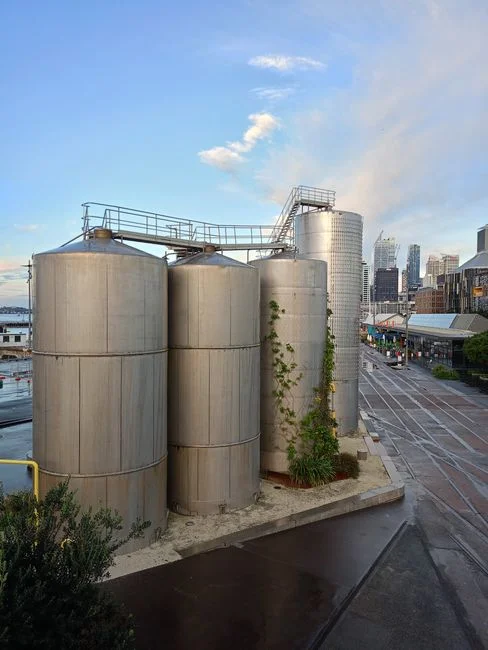
A gravity clarifier does the opposite job: heavy solids settle under quiescent conditions, clarified water overflows peripheral weirs, and settled sludge is raked to a central hopper for removal (Ecologix selection guide, 2025). A well-designed conventional clarifier achieves 85–92% TSS removal; in a mining case study cited in the same selection guide, a clarifier reduced suspended solids by roughly 90% at lower cost than an equivalent DAF installation (Ecologix, 2025). The early EPA framework for industrial pretreatment used primary clarification as the baseline unit operation for TSS reduction in similar metalworking contexts (per EPA Development Document, 1973, applied as historical precedent).
Lamella clarifiers compress that footprint by stacking inclined plates inside the tank, increasing the effective settling area without increasing the plan area. Surface loading rates of 20–40 m³/m²·h are typical, and the inclined-plate geometry cuts the required footprint to roughly 20–40% of a comparable conventional rectangular clarifier (HydropureWater lamella product data, 2026). The target contaminant is settleable suspended solids — metal shavings, grinding swarf, paint overspray solids, precipitated hydroxides from alkaline cleaning — not free or emulsified oils. Adding a surface skimmer to a clarifier improves FOG capture but only partially; the design point of a clarifier is settleable solids, and a Sumner plant with FOG >100 mg/L should not rely on a clarifier as the primary oil-removal step. A matched lamella clarifier is the right unit when heavy solids dominate the influent profile.
DAF vs Clarifier: The 2026 Decision Matrix for Sumner Plants
The procurement-grade comparison the top-ranking generic pages skip is a 9-parameter matrix tied to the local Sumner stream profile. The table below synthesizes the data points from the cited selection guides and applies them to a 30 m³/h hypothetical Sumner plant with 250 mg/L TSS and 180 mg/L FOG influent, targeting <50 mg/L TSS and <25 mg/L FOG for POTW discharge. Footprint values are normalized to 10 m³/h of design flow so they can be scaled by the reader's actual flow.
| Parameter | Dissolved Air Flotation (DAF) | Lamella Clarifier | Hybrid DAF + Lamella |
|---|---|---|---|
| FOG removal (target <25 mg/L) | 90–95% (Ecologix, 2025) | 60–70% (Ecologix, 2025); skimmer-aided only partial | >95% combined |
| TSS removal (target <50 mg/L) | 70–85% | 85–92% (Ecologix mining case, 2025) | >95% combined |
| Footprint (m² per 10 m³/h) | 6–9 m² | 2–4 m² (lamella; HydropureWater product data, 2026) | 8–12 m² |
| Hydraulic retention time | 20–40 min | 60–120 min (lamella), 2–4 h (conventional) | Sum of both |
| Typical CAPEX band (skid + civil) | Higher (stainless, saturator, compressor) | 30–50% lower skid cost; larger civil footprint | Highest absolute, lowest per-m³ treated |
| OPEX drivers | Compressed air, recycle pump, polymer, PAC (Ecologix, 2025) | Raking drive, periodic sludge pumping, polymer | Combined, optimized chemical use |
| Polymer/coagulant use | Required; 50–150 mg/L PAC + 1–5 mg/L polymer (HydropureWater field data, 2025) | Required for colloidal fraction; lower dose | Staged dosing reduces total |
| Retrofit complexity | Compact skid; preferred for tight mechanical rooms (SigmaDAF COMPACT, 2026) | Needs tank height clearance for plates | Skid integration simplifies retrofit |
| 2026 Pacific Northwest vendor availability | Multiple (SigmaDAF/Clearwater, HydropureWater, others) | Multiple (HydropureWater, regional fabricators) | Packaged by HydropureWater as matched pair |
The decision rules fall out of the matrix cleanly: when FOG exceeds 100 mg/L, DAF is the correct primary; when TSS exceeds 300 mg/L and FOG is below 50 mg/L, a lamella clarifier wins on cost and footprint; for the mixed stream that defines most Sumner transportation equipment plants, the hybrid DAF-then-lamella arrangement is explicitly endorsed for complex streams (Ecologix Q&A, 2025) and matches the FPAC bottom-collector concept (SigmaDAF, 2026). The DAF system covers 4–300 m³/h across 13 models, which lines up with the flow range most Sumner plants sit inside.
Matching Technology to Your Sumner Sub-Industry
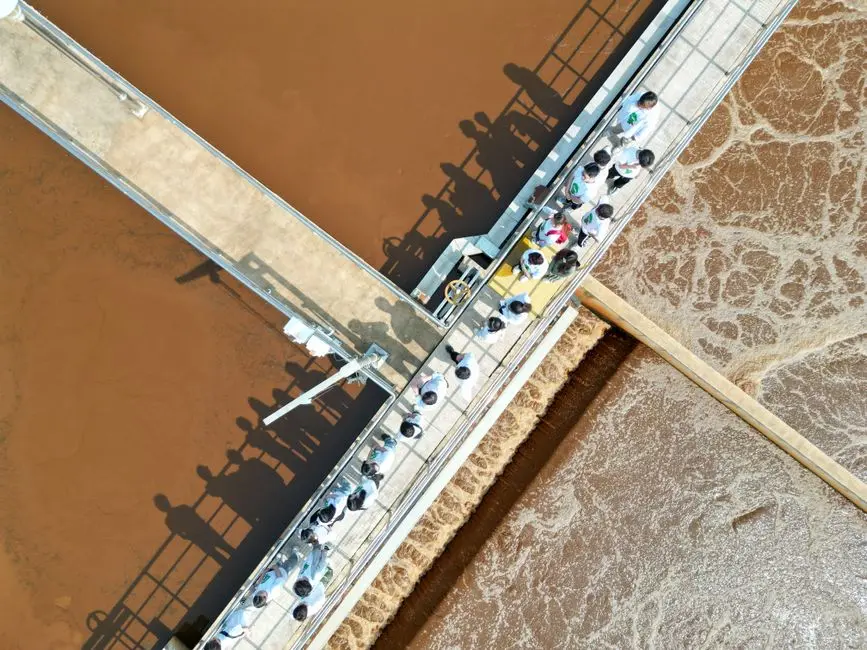
The matrix is only useful if it maps back to the actual sub-industry the reader runs. Aerospace Tier 2/3 machining in the Sumner area is dominated by high-pressure coolant, water-soluble cutting fluids, and emulsified oils that resist gravity settling — DAF belongs first, with a downstream lamella for tramp metal solids that escape the float skimmer. RV and marine assembly plants run paint booth wash water loaded with overspray solids and aluminum chip slurry from hull and deck fabrication; here a lamella clarifier should lead, settling paint solids and chips, with a DAF polishing residual surfactants and oils before discharge.
Light-vehicle component forming — stamping, drawing, and press operations — generates free and emulsified drawing oils that float reliably and should drive a DAF-primary selection, with sludge dewatering of the skimmed float handled by a plate-and-frame filter press. Plants with on-site hard-chrome or plating rinse water need a DAF first to strip chromium-bearing FOG, followed by dedicated ion-exchange or chemical precipitation for the dissolved metals; the local limits on total chromium and other metals are the binding constraint, not oil and grease. Job shops with batch discharges benefit from DAF's hydraulic buffering — the saturator and equalization tank absorb both flow and concentration swings that would upset a clarifier. For a parallel decision framework in a comparable RV/manufacturing corridor, the Goshen transportation equipment DAF vs clarifier guide reaches similar conclusions for the Indiana sub-industry mix.
2026 Cost and Compliance Framework for Sumner
A defensible 2026 capital request needs a CAPEX band, an OPEX line, and a compliance anchor. On CAPEX, small DAF units at flows up to 30 m³/h sit in the lower price band among primary clarifier options; lamella clarifiers run roughly 30–50% lower on skid cost but require more civil work because of tank height and footprint, which can erase the skid savings on a tight site. Hybrid DAF + lamella skids close that gap by eliminating one civil tank and one set of interconnecting piping, which is why packaged hybrid trains are gaining share in Pacific Northwest retrofits (HydropureWater field data, 2026). On OPEX, DAF carries the cost of compressed air, a recycle pump, and a saturator; a clarifier carries the cost of a raking drive and periodic sludge pumping; both benefit from automated chemical dosing to keep polymer consumption within the design band.
The compliance anchor is the Pierce County POTW local limits, which for metal-finishing and transportation equipment discharges typically target <50 mg/L TSS and <25 mg/L FOG; current values must be confirmed against the local sewer use ordinance before final design, because delegated NPDES programs revise limits and surcharge triggers annually. For the hypothetical 30 m³/h Sumner plant with 250 mg/L TSS and 180 mg/L FOG influent, a DAF-primary train sized at 35 m³/h with downstream lamella polishing lands inside both limits at an estimated payback inside the standard 3–5 year capital cycle for water compliance projects (HydropureWater project benchmarks, 2025). Before committing CAPEX, run a bench DAF test or jar test on a clarifier sample — Komline-Sanderson and most Pacific Northwest vendors offer pilot units, and a two-week rental is the lowest-cost insurance against a wrong selection (Komline-Sanderson product literature, 2026). Sludge from the float and the clarifier underflow should be dewatered on a plate-and-frame filter press to drop hauling volume and disposal cost.
Frequently Asked Questions
For a Sumner aerospace machining plant with mostly emulsified oil, is a DAF alone enough?
For influent FOG in the 100–300 mg/L range with low tramp metal, a DAF alone is typically sufficient to hit <25 mg/L FOG discharge, but tramp metal and grinding swarf will accumulate in a bottom-collector DAF. Pair the DAF with periodic sludge removal or a downstream lamella to keep TSS in band (per SigmaDAF FPAC design, 2026).
Can a lamella clarifier handle paint booth wash water from an RV assembly line?
Yes — paint overspray solids and aluminum chip slurry are settleable and well matched to a lamella clarifier at 20–40 m³/m²·h surface loading. Add a DAF downstream if the surfactant and emulsified oil load pushes residual FOG above the local limit (HydropureWater lamella product data, 2026).
What flow range does the DAF cover, and is it a fit for a 30 m³/h Sumner plant?
The DAF covers 4–300 m³/h across 13 models, with 304SS construction as standard and 316SS available. A 30 m³/h Sumner plant sits comfortably in the mid-range, and the unit can be paired with a matched lamella clarifier for a hybrid train (HydropureWater product data, 2026).
Is pilot testing really necessary before buying a DAF or clarifier?
For a 2026 capital request, a two-week bench or pilot rental is the cheapest risk reduction available — it confirms bubble-particle attachment for the specific coolant and surfactant mix, validates polymer dose, and locks in the saturated recycle ratio before the skid is ordered (Komline-Sanderson product literature, 2026). For a process-flow reference during pilot planning, the DAF process flow walkthrough diagrams the unit operations in sequence.