Why Pharmaceutical Wastewater in Peru Is a 2026 Compliance Priority
Any pharmaceutical plant discharging wastewater in Peru in 2026 must satisfy two parallel regulatory layers: the MINAM DS N° 003-2010-MINAM LMPs for industrial effluents (still in force, with no replacement D.S. published as of 2026-Q1) and the DS N° 010-2019-VIVIENDA sewer-discharge values, which Sedapal and the regional EPS apply at the manhole. On top of those, the ANA requires a discharge-point authorization, and the 2026 Resolución 034-2026-ANA/CD catastro re-registration has pulled roughly 38% of Lima-region industrial points into re-review (per ANA dashboard, 2026-02). The reputational layer is concrete: pharma is one of DIGESA's three most-inspected subsectors in Lima and Callao, and OEFA's 2026 escala de sanciones raises fines for repeated non-compliance by a factor of 2.4 over the 2024 schedule.
What makes the problem unforgiving is the influent itself. Veolia's 50-plant study found influent COD ranging from 400 to 62,000 mg/L across chemical-API, biological-API, and finished-product sites — a 155× spread inside one industry. Off-the-shelf containerized units designed for 1,000–3,000 mg/L food or textile effluent simply do not map to a Peruvian API batch releasing a 30,000 mg/L solvent slug. The two regulatory gates every plant must clear in 2026 are the DIGESA sanitary authorization for the manufacturing site and the ETP itself, and the ANA discharge authorization for the receiving body (river, irrigation channel, or sewer). Missing either one stops the commissioning certificate.
Influent Profile: What Peruvian Pharma Plants Actually Discharge
The Veolia 50-plant dataset puts daily flows between 30 and 600 m³/d; chemical-API sites sit at the upper end, finished-product plants at the lower end. Peruvian generic-drug plants in Lima and Callao cluster at 80–300 m³/d, while dedicated API facilities in the Ica and Arequipa industrial corridors land between 200 and 500 m³/d. A defensible design basis should treat 1.4× the average flow as peak, with a 4–6 h equalization window to absorb batch swings.
The same dataset records influent COD from 400 to 62,000 mg/L, with extreme values in chemical-API reactors. The pollutant mix is the harder problem: chemical reactors contribute acids, bases, metals, halides, nitrates, cyanides, sulfates, and API traces; fermentation contributes nutrients, surface-active agents, and high salinity. Veolia's biodegradability bands using the COD/BOD₅ ratio are the practical decision point: <2 is easily biodegradable, 2–3 is biodegradable, >3 may not be biodegradable. Across 50 plants the ratio ranged from 1 to 15, and roughly 35% of API sites sat above 3, meaning biological-only treatment is not viable for them. The 30+ solvents in use — ethanol, methanol, acetone, isopropanol, acetic acid, plus glycols — drive the COD load, suppress biomass, and trigger foaming events; low-boiling solvents (methanol, acetone) will not survive evapoconcentration and pass through to the distillate, which forces their removal upstream. The two biological-treatment inhibitors the operator must design around are salinity and refractory COD: salinity impairs biomass acclimation above roughly 8 g/L NaCl equivalent, and refractory COD limits the lowest achievable biological effluent regardless of SRT.
| Parameter | Low-end (finished products) | Mid-range (formulation) | High-end (chemical API) | Peruvian typical |
|---|---|---|---|---|
| Flow (m³/d) | 30–80 | 80–300 | 300–600 | 80–300 (Lima cluster) |
| COD (mg/L) | 400–3,000 | 3,000–15,000 | 15,000–62,000 | 5,000–20,000 |
| BOD₅ (mg/L) | 200–1,500 | 1,500–6,000 | 6,000–25,000 | 2,000–8,000 |
| COD/BOD₅ ratio | 1.5–2.0 | 2.0–3.5 | 3.0–15 | 2.5–4.0 |
| TSS (mg/L) | 200–600 | 600–2,000 | 2,000–8,000 | 800–2,500 |
| Salinity (g/L NaCl-eq) | <1 | 1–5 | 5–12 | 2–6 |
| pH | 6–8 | 5–9 | 2–11 (batch swings) | 6–9 after EQ |
The Four Treatment Trains That Work for Peru in 2026
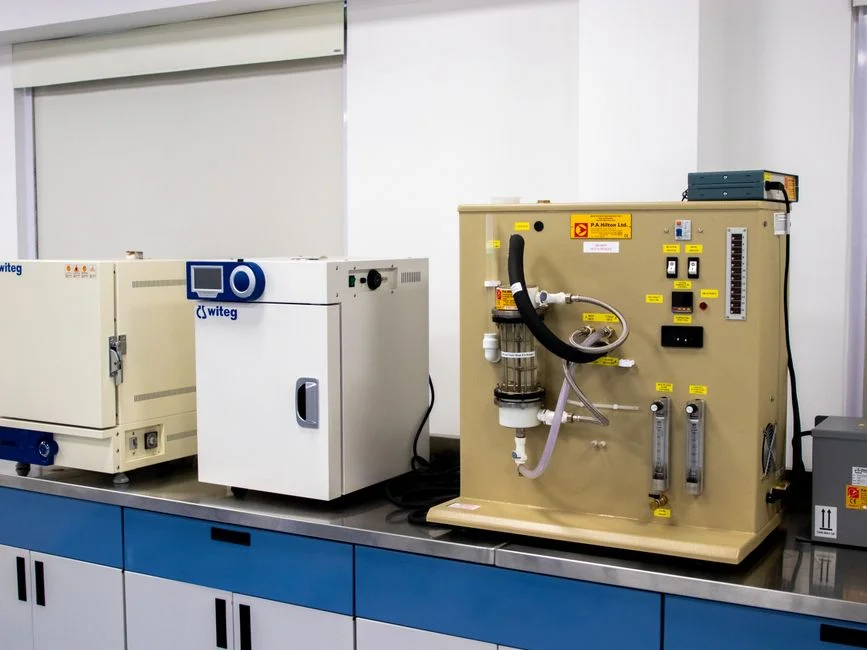
Train selection is driven by three questions: What is the biodegradability (COD/BOD₅)? Where does the effluent go (river, sewer, or reuse)? Is freshwater scarce at the site? The four canonical configurations below are the only ones that consistently hit the 50 mg/L COD discharge target that most Peruvian plants need to land under both DS 003-2010 and DS 010-2019.
Train 1 — EQ → MBBR → DAF → MBBR → GAC (Veolia line F). Best for low-to-medium COD (<5,000 mg/L) formulation and finishing plants discharging to sewer under DS 010-2019. First MBBR handles the bulk COD load; the dissolved air flotation system strips FOG and biomass before the second polishing MBBR; GAC removes residual API traces. Target effluent: COD <80 mg/L, BOD₅ <30 mg/L, TSS <20 mg/L. Footprint ~0.4 m²/m³·d; energy 1.8–2.4 kWh/m³.
Train 2 — EQ → Anaerobic (UASB/EGSB) → MBR (Veolia line E). The workhorse for high-COD API sites (>10,000 mg/L) where biogas offsets Lima's 2026 industrial tariff under the Osinergm BT5B pliego. A properly designed EGSB reactor with 4–8 m/h upflow velocity removes 60–80% of COD at 35–37 °C; the downstream MBR handles residual COD, TSS, and refractory fractions. Target effluent: COD <100 mg/L, BOD₅ <20 mg/L, TSS <5 mg/L. Footprint ~0.25 m²/m³·d; energy 1.4–2.0 kWh/m³ net of biogas credit.
Train 3 — EQ → MBR → RO. Specified when the 2026 plan includes water reuse for CIP, cooling-tower makeup, or low-pressure boiler feed. RO permeate targets <10 mg/L COD, conductivity <50 µS/cm. Energy 2.5–3.2 kWh/m³ including high-pressure pumping. Reuse rates of 60–75% are achievable on API effluent after MBR pretreatment.
Train 4 — EQ → Evapoconcentration → MBBR → Hydrostatic Filtration → GAC (Veolia line B). Suited to inland Peruvian sites where freshwater is binding (Arequipa, Ica, Tacna) or where zero-liquid-discharge is required by the local ANA authority. Distillate passes to the MBBR; concentrate is solidified for hazardous-waste disposal. Target effluent: COD <30 mg/L in the distillate, zero liquid discharge. Footprint 0.5–0.7 m²/m³·d; energy is the highest of the four at 3.0–4.0 kWh/m³.
| Parameter | Train 1: MBBR/DAF/GAC | Train 2: Anaerobic+MBR | Train 3: MBR+RO | Train 4: Evapo+MBBR |
|---|---|---|---|---|
| Best COD range (mg/L) | 400–5,000 | 5,000–62,000 | <15,000 | 3,000–30,000 |
| Discharge route | Sewer | River or sewer | Reuse + brine | ZLD (distillate to river) |
| Effluent COD (mg/L) | <80 | <100 | <10 | <30 |
| Footprint (m²/m³·d) | 0.4 | 0.25 | 0.35 | 0.55 |
| Energy (kWh/m³) | 1.8–2.4 | 1.4–2.0 (net) | 2.5–3.2 | 3.0–4.0 |
| Biogas credit | No | Yes (20–35% offset) | No | No |
Equipment Selection: What Each Unit Process Must Deliver
The first line of defense is a rotary mechanical bar screen with 3–6 mm aperture; finer protects the downstream MBR membrane fibers from ragging, and the GX series in the rotary bar screen catalog handles flows up to 1,000 m³/h at <0.5 m head loss. Equalization follows at 6–12 h HRT, with mechanical mixing and diffused-air injection to homogenize COD swings; the EPA's Pharmaceutical Manufacturing sector notebook recommends at least 8 h for API sites. pH correction to 6.5–7.5 is sized to handle the worst batch swing, and a dedicated acid and caustic skid should be specified with a 1.5× turndown on the dosing pumps.
Biological treatment sizing depends on the train. For medium-strength wastewater, an MBBR with surface loading of 8–12 g COD/m²·d at 2–4 g/L MLSS handles the load in a single stage; staged MBBRs in series improve refractory removal. For Train 2, an EGSB or UASB with 4–8 m/h upflow velocity, 35–37 °C mesophilic operation, and a properly designed gas-solids separator delivers 60–80% COD removal at HRTs of 6–12 h. MBR follows for both Trains 2 and 3; the MBR membrane bioreactor modules use PVDF flat-sheet or hollow-fiber membranes with 0.1–0.4 µm nominal pore, operating at MLSS 8,000–12,000 mg/L and a target effluent TSS below 5 mg/L. For tertiary polishing, GAC handles residual API traces and refractory COD, with a 10–15 min EBCT on 8×30 mesh carbon; RO provides 95–98% salt rejection when reuse-grade permeate is required. Sludge dewatering on a plate-and-frame filter press at 6–8 bar produces a 22–28% DS cake suitable for hazardous-waste disposal under DIGESA protocols.
2026 CAPEX and OPEX Benchmarks for a Peruvian API Plant
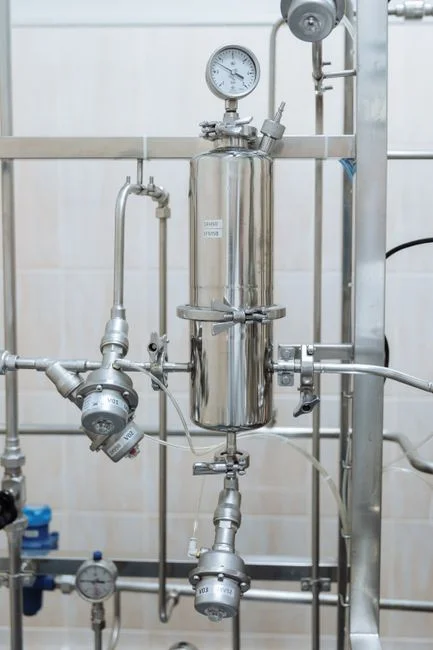
The numbers below assume a 2026 USD/PEN reference of 3.75 and the Osinergm BT5B industrial pliego for electricity. They are screening-level, not bid numbers, and should be calibrated against a site-specific quote before going to the board. CAPEX covers the complete ETP including civil works, mechanical, piping, instrumentation, and commissioning; OPEX covers electricity, chemicals, sludge disposal, and routine maintenance at 90% nameplate utilization.
| Plant size / train | CAPEX (PEN/m³·d) | OPEX (PEN/m³) | Energy share of OPEX | Notes |
|---|---|---|---|---|
| 50 m³/d, Train 1 (MBBR/DAF/GAC) | 28,000–38,000 | 9.5–13.0 | 45–50% | Sewer discharge, low biogas potential |
| 200 m³/d, Train 2 (Anaerobic+MBR) | 22,000–30,000 | 7.0–9.5 | 40–50% (net of biogas) | 20–35% electrical OPEX offset |
| 200 m³/d, Train 3 (MBR+RO) | 30,000–42,000 | 11.0–15.0 | 50–55% | Reuse 60–75%, brine to sewer if permitted |
| 500 m³/d, Train 2 (Anaerobic+MBR) | 18,000–25,000 | 6.0–8.5 | 40–50% (net of biogas) | Best economies of scale |
| 500 m³/d, Train 4 (Evapo+MBBR) | 55,000–75,000 | 16.0–22.0 | 55–60% | Arequipa/Ica ZLD cases |
Energy is typically 40–55% of OPEX, dominated by aeration in MBBR and MBR trains and by high-pressure pumping in RO. Anaerobic trains with biogas capture can offset 20–35% of electrical OPEX at sites with steady high-COD loading — a material number under Lima's 2026 BT5B tariff, where the regulated industrial rate is around 0.27 USD/kWh (roughly 1.01 PEN/kWh before distribution charges). Sludge disposal to a DIGESA-licensed site in Lima runs 280–420 PEN/t wet cake, which is why dewatering to 22–28% DS pays back quickly on an automatic plate-and-frame filter press sized correctly.
Compliance Checklist Before You Sign the RFQ
- Hold a current DIGESA sanitary authorization covering both the manufacturing plant and the ETP.
- Hold a current ANA Registro de Vertimientos; if the discharge point was registered before 2024, complete the Resolución 034-2026-ANA/CD catastro re-registration before commissioning.
- Baseline the ECA Agua (DIGESA) for the receiving body — Class III for irrigation, Class II for recreational contact — to set the correct discharge envelope.
- For plants above 500 m³/d, schedule the OEFA monitoreo ambiental participativo on a quarterly cadence.
- File a sludge management plan with the municipal authority (MML Ordenanza 2218 framework in Lima, equivalent ordinances in regional municipalities); specify dewatering to ≥22% DS.
- Include an API-trace characterization using LC-MS or HPLC-MS scan, ideally benchmarked against OECD 301-series analogue methods; Veolia flags this as the single most-frequent missing input in 2025 RFQs.
- Specify an automatic chemical dosing skid for pH, nutrients, and coagulant; ratio control should be linked to influent flow.
- Verify the vendor's documented compliance with the 2026 Osinergm BT5B industrial tariff metering and the DIGESA cross-reference list of approved monitoring laboratories.
- Confirm the design envelope covers at least 1.4× average flow and a 50,000 mg/L COD batch peak — anything less invites an OEFA finding within 12 months.
- Include a six-month process-guarantee clause tied to compliance sampling at the discharge point, not at the ETP outlet.
Frequently Asked Questions
What is the 2026 COD/BOD₅ discharge limit for pharmaceutical plants in Peru?
Under MINAM DS N° 003-2010-MINAM, the LMP for COD in industrial effluents into a sewer is 200 mg/L and into a natural water body is 250 mg/L, with BOD₅ capped at 100 mg/L. Many municipal sewer authorities apply the DS N° 010-2019-VIVIENDA limits, which Sedapal enforces at 500 mg/L COD and 350 mg/L BOD₅ for non-domestic discharges into the public network.
Is MBR or MBBR better for a 200 m³/d Peruvian API plant?
MBBR is the right choice when the influent COD/BOD₅ ratio is below 3 and the discharge target is the 100 mg/L COD LMP for surface water. MBR is the right choice when the ratio is above 3, when API traces are present, or when a downstream RO is being added for water reuse. For a 200 m³/d API plant above 5,000 mg/L COD, an EGSB+MBR configuration typically beats MBBR on footprint and on energy net of biogas.
How much does a pharmaceutical wastewater treatment plant cost in Peru in 2026?
For a 200 m³/d API plant on an Anaerobic+MBR train, total CAPEX runs 22,000–30,000 PEN/m³·d, which translates to roughly 4.4–6.0 million PEN for the full ETP. OPEX for the same plant is in the 7.0–9.5 PEN/m³ range at 2026 Osinergm industrial tariffs. A 500 m³/d plant of the same type lands at 18,000–25,000 PEN/m³·d CAPEX thanks to scale.
Which Peruvian authority issues the discharge permit for a pharma ETP in 2026?
The ANA issues the discharge authorization through the Registro de Vertimientos. DIGESA issues the sanitary authorization for the manufacturing plant and the ETP. OEFA enforces compliance. A new facility needs all three: DIGESA before construction completion, ANA before commissioning, and OEFA ongoing via the annual monitoring plan.
Can a Peruvian pharmaceutical plant reuse its treated wastewater for cooling?
Yes, with an MBR+RO train sized for the cooling-tower makeup demand. The RO permeate typically meets <50 µS/cm conductivity and <10 mg/L COD, which is suitable for cooling-tower makeup after standard corrosion-inhibitor dosing. The brine stream (25–35% of the feed) needs separate disposal, either to sewer under DS 010-2019 limits or to a hazardous-waste contractor if it concentrates API residues above the LMP.
Related Equipment
- industrial RO system — specifications, capacity range, and technical data