epa industrial effluent limits by industry 2026: EPA tables and compliance technology
epa industrial effluent limits by industry 2026 are national, technology-based starting points for U.S. industrial wastewater permits. Metal finishing examples include 0.2 mg/L cadmium and 0.14 mg/L lead, while meat and poultry examples include 40 mg/L BOD5 and 150 mg/L TSS daily maximums. The enforceable result still depends on discharge route, category, production basis, and the facility’s NPDES permit.
EPA’s Industrial Effluent Guidelines page was updated on March 11, 2026. It continues to identify national standards for wastewater sent to surface waters and publicly owned treatment works (POTWs), while its category table records a 2025 substantive revision for Meat and Poultry Products and a 2026 revision for Steam Electric Power Generating. Those dates are update signals, not a substitute for reading the applicable 40 CFR part and permit.
What Are Technology-Based Effluent Guidelines?
Technology-based effluent guidelines are national industrial wastewater standards based on the performance of treatment and control technologies, not on the receiving water’s risk profile alone. EPA establishes the standards for existing and new sources under Title III of the Clean Water Act (CWA), then organizes them by industrial category and process.
For NPDES facilities, technology-based effluent limits (TBELs) are derived from national Effluent Limitation Guidelines (ELGs) and standards, or from best professional judgment (BPJ) when no national guideline applies. The familiar technology levels include Best Practicable Technology (BPT), Best Available Technology Economically Achievable (BAT), and New Source Performance Standards (NSPS). The applicable level depends on the category, source status, pollutant, and discharge type.
EPA’s current category index covers dozens of regulated sectors and identifies the governing 40 CFR part plus the latest substantive revision. Engineers should therefore treat a quick-reference table as a screening tool. A permit application needs the exact subcategory, flow, production basis, monitoring basis, and receiving-water analysis.
npdes effluent limits by industry sector usa
npdes effluent limits by industry sector usa combine a category-specific technology floor with any stricter water-quality requirement in the receiving water. The sector name alone is not enough: the permit writer also evaluates the point source, discharge route, pollutant list, production data, and applicable state implementation requirements.
EPA states that a permit writer must consider both TBELs and water-quality-based effluent limits (WQBELs). If the technology baseline is insufficient to meet water-quality standards, the permit must include a more stringent WQBEL under the Clean Water Act and 40 CFR 122.44(d). That is why two plants in the same industry can receive different final limits.
Use this order when screening a project: identify the EPA category, confirm direct versus indirect discharge, map every process wastewater stream, separate concentration limits from mass limits, and compare the result with the draft permit. Most plants we size for compliance run at the lower end of their normal flow range, so peak flow and production variability need their own design check.
How to Read EPA Limit Tables (Mass vs Concentration)

Mass and concentration limits answer different compliance questions. Concentration is reported in milligrams per liter (mg/L) and describes the pollutant level in the sampled wastewater. A mass limit, such as kilograms per 1000 kilograms of product or kg/kkg, ties the allowable load to production and helps prevent dilution from becoming the compliance strategy.
Daily Maximum is the highest allowed value for a single day, while a 30-Day Average is a sustained monthly performance requirement. A plant can pass a monthly average and still violate a daily maximum, or meet a concentration number while exceeding a production-normalized mass load. The calculation basis and sampling frequency must match the permit language.
For example, the original screening values below show cadmium at 0.2 mg/L daily maximum and 0.11 mg/L 30-day average for metal finishing. Those values remain in the article as screening data; the facility must confirm the governing subcategory and current permit before using them for equipment guarantees.
| Parameter | Limit Type | Daily Maximum | 30-Day Average | Applicability |
|---|---|---|---|---|
| Cadmium (Cd) | Concentration (mg/L) | 0.2 | 0.11 | Metal Finishing (Direct Discharge) |
| BOD5 | Concentration (mg/L) | 40 | 20 | Meat & Poultry (Direct Discharge) |
| Chromium (Cr) | Concentration (mg/L) | 2.77 | 1.45 | Metal Finishing (Indirect Discharge) |
| AOX | Mass (kg/kkg) | 0.15 | 0.08 | Pulp & Paper (Bleached Kraft) |
2026 Effluent Limits by Major Industry (Quick-Reference Table)
The table below preserves the article’s illustrative BAT and NSPS screening values for 15 high-risk U.S. industrial sectors. These figures help an engineer compare pollutant families and treatment trains, but they are not a universal permit schedule. Direct-discharge values, indirect categorical pretreatment standards, local limits, and state WQBELs can differ.
EPA’s 2026 category index confirms that the governing rules remain organized by industry and 40 CFR part. It also shows that individual categories have different revision dates, so a year in a page heading should never be read as one across-the-board national limit update.
| Industry Category | Parameter | Daily Max. (mg/L or kg/kkg) | 30-Day Avg. (mg/L or kg/kkg) | Notes |
|---|---|---|---|---|
| Meat & Poultry Products | BOD5 | 40 mg/L | 20 mg/L | Direct Discharge (BAT) |
| TSS | 150 mg/L | 80 mg/L | ||
| NH3-N | 25 mg/L | 12 mg/L | ||
| Metal Finishing | Cadmium (Cd) | 0.2 mg/L | 0.11 mg/L | Pretreatment (BAT/NSPS) |
| Nickel (Ni) | 3.98 mg/L | 2.07 mg/L | ||
| Chromium (Cr) | 2.77 mg/L | 1.45 mg/L | ||
| Pulp & Paper (Bleached) | AOX | 0.15 kg/ton | 0.08 kg/ton | Direct Discharge (BAT/NSPS) |
| COD | 9.4 kg/ton | 5.0 kg/ton | ||
| Landfills (Proposed 2024 Rule) | TDS | 450 mg/L | N/A | Direct Discharge (NSPS) |
| Ammonia-N | 50 mg/L | N/A | ||
| Petroleum Refining | BOD5 | 45 mg/L | 20 mg/L | Direct Discharge (BAT) |
| Oil & Grease | 20 mg/L | 10 mg/L | ||
| Organic Chemicals, Plastics, Synthetic Fibers (OCPSF) | BOD5 | N/A | 1.0 kg/1000 kg production | Mass-based (BAT) |
| TSS | N/A | 1.3 kg/1000 kg production | ||
| Iron & Steel Manufacturing | TSS | 50 mg/L | 25 mg/L | Direct Discharge (BAT) |
| Phenol | 0.1 mg/L | 0.05 mg/L | ||
| Centralized Waste Treatment (CWT) | TSS | 60 mg/L | 30 mg/L | Direct Discharge (BAT) |
| Zinc (Zn) | 0.5 mg/L | 0.25 mg/L | ||
| Leather Tanning & Finishing | Chromium (Total) | 4.0 mg/L | 2.0 mg/L | Pretreatment (BAT) |
| Sulfide | 10.0 mg/L | 5.0 mg/L | ||
| Pharmaceutical Manufacturing | BOD5 | 150 mg/L | 75 mg/L | Direct Discharge (BAT) |
| COD | 300 mg/L | 150 mg/L | ||
| Steam Electric Power Generating | TSS | 30 mg/L | N/A | Direct Discharge (BAT/NSPS) |
| Mercury (Hg) | 0.00005 mg/L | N/A | ||
| Electroplating | Copper (Cu) | 2.07 mg/L | 1.07 mg/L | Pretreatment (BAT) |
| Cyanide (Total) | 1.2 mg/L | 0.65 mg/L | ||
| Aluminum Forming | TSS | 30 mg/L | 15 mg/L | Direct Discharge (BAT) |
| Oil & Grease | 15 mg/L | 10 mg/L | ||
| Nonferrous Metals Manufacturing | Lead (Pb) | 0.14 mg/L | 0.07 mg/L | Direct Discharge (BAT) |
| Fluoride | 2.5 mg/L | 1.5 mg/L | ||
| Textile Mills | BOD5 | 100 mg/L | 50 mg/L | Direct Discharge (BAT) |
| COD | 250 mg/L | 125 mg/L |
industrial wastewater discharge limits by pollutant usa
industrial wastewater discharge limits by pollutant usa are read by pollutant, averaging period, discharge point, and applicable production basis. BOD5 and COD usually drive biological oxygen-demand capacity; TSS and oil and grease drive clarification or flotation; metals, cyanide, sulfide, mercury, fluoride, and AOX require source control and pollutant-specific treatment.
The table’s values should be used as a screening matrix, not blended into one generic limit. A metal-finishing stream can need pH adjustment, oxidation-reduction control, hydroxide precipitation, clarification, filtration, and polishing. A food stream with 40 mg/L BOD5 and 150 mg/L TSS daily maximums needs a different biological and solids-separation strategy. Sampling by production mode is the fastest way to prevent an average-flow design from hiding batch peaks.
epa elg compliance technology for metal finishing
epa elg compliance technology for metal finishing should be selected around the actual metal species, pH window, chelation, flow equalization, and required daily maximum and 30-day average. Chemical precipitation removes dissolved metals only when chemistry and residence time are controlled; a DAF or clarifier then removes the formed solids.
For a preliminary equipment screen, the original performance data below reports a DAF with chemical precipitation achieving nickel (Ni) concentrations of ≤ 1 mg/L against the 2.07 mg/L 30-day average screening value, with typical OPEX of 4–6 $·m⁻³. These are field data stated in the source article, not an EPA guarantee. Pilot testing should confirm the result for the facility’s chelants and batch chemistry.
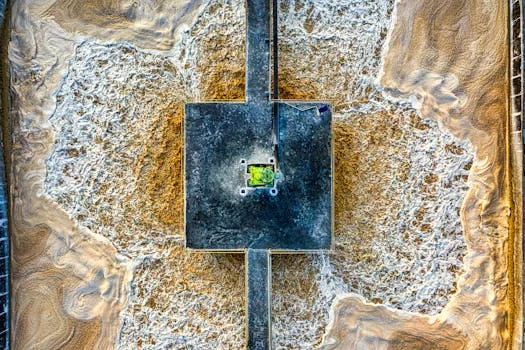
An integrated MBR package typically produces effluent with COD concentrations between 30–60 mg/L in the supplied field data and can reduce footprint by up to 60% compared with conventional activated sludge (CAS) systems. A plate filter press can dewater metal-hydroxide sludge to 35% solids content, while the same data reports a 28% average reduction in haul-away volume. These metrics help with short-listing; they do not replace a permit-specific guarantee.
| Pollutant/Parameter | Target Limit (e.g., from ELG) | Treatment Technology | Typical Influent Conc. | Typical Effluent Conc. | Removal Efficiency | Key Operational Metric |
|---|---|---|---|---|---|---|
| Nickel (Ni) | 2.07 mg/L (30-day avg) | DAF + Chemical Precipitation | 5–15 mg/L | ≤ 1 mg/L | >90% | OPEX: 4–6 $·m⁻³ (HydropureWater field data, 2025) |
| BOD5 | 20 mg/L (30-day avg) | MBR System | 200–500 mg/L | < 10 mg/L | >95% | Footprint: 60% smaller than CAS (HydropureWater field data, 2025) |
| COD | 150 mg/L (30-day avg) | MBR System | 500–1000 mg/L | 30–60 mg/L | >90% | Suitable for reuse applications (HydropureWater field data, 2025) |
| TSS | 80 mg/L (30-day avg) | DAF System | 200–500 mg/L | < 20 mg/L | >90% | Effective for FOG removal (HydropureWater field data, 2025) |
| Metal Hydroxide Sludge | (N/A - Solid Waste) | Plate Filter Press | 1–5% solids | 35–45% solids | N/A (Dewatering) | Sludge Volume Reduction: 28% (HydropureWater field data, 2025) |
| Ammonia-N | 12 mg/L (30-day avg) | MBR System | 30–80 mg/L | < 5 mg/L | >90% | Achieves nitrification/denitrification (HydropureWater field data, 2025) |
For additional strategies to meet biological oxygen demand limits, explore step-by-step BOD reduction tactics. The equipment links below are product references for the treatment stages shown above: DAF system, integrated MBR package, and PLC-controlled chemical dosing skid.
Choosing a Cost-Effective Treatment Train
Life-cycle cost depends on influent variability, discharge route, pollutant chemistry, permitted flow, solids disposal, operator workload, and the consequence of an excursion. Compare CAPEX and OPEX over a 10-year net present value (NPV) period rather than selecting equipment from one effluent sample.
For high TSS and fats, oils, and grease (FOG) at 50–500 m³/h, high-rate DAF is often a practical primary step where land is constrained. Where ammonia is mandated below 5 mg/L or reuse is central, an integrated MBR can justify higher CAPEX by reducing footprint and potentially removing a tertiary filtration stage. For smaller plants below 100 m³/h with suspended solids and metals, a lamella clarifier plus PLC-controlled chemical dosing skid can provide a simpler operating envelope.
- Confirm the permitted flow, peak flow, batch duration, and production basis before sizing tanks or pumps.
- Separate direct discharge, POTW discharge, stormwater, cooling water, and sanitary flows in the sampling plan.
- List every regulated pollutant, its daily maximum, 30-day average, mass basis, and analytical method.
- Run jar tests for coagulant, polymer, pH, oxidation-reduction, and sludge yield before freezing chemical equipment.
- Check membrane loading, aeration demand, sludge wasting, filter backwash, and spare-parts access for biological systems.
- Price residuals handling, laboratory testing, energy, chemicals, labor, and disposal alongside equipment CAPEX.
categorical pretreatment standards npdes permit
categorical pretreatment standards npdes permit requirements apply to industrial users that discharge indirectly to a POTW, while the POTW’s NPDES permit governs the municipal treatment system’s discharge to surface water. EPA states that categorical standards are codified in 40 CFR Parts 405–471 and are listed under each applicable ELG as PSES for existing sources and PSNS for new sources.
EPA’s current pretreatment page reports that PSES and PSNS are implemented for 35 out of 58 industrial categories. The same page states that applicable technology-based standards can apply whether or not the POTW has an approved pretreatment program and whether or not the nondomestic discharger has already received a control mechanism or permit. Confirm the category and local control-authority requirements before assuming that a sewer connection removes federal obligations.
Permit Tips: Water-Quality-Based Limits & Variances
TBELs are a national baseline, but WQBELs can be stricter when the receiving water would not meet its standards after technology-based controls. EPA’s permit-limits guidance explains that permit writers must evaluate the receiving water and, when TBELs are insufficient, develop a WQBEL under the CWA and 40 CFR 122.44(d). TMDLs and wasteload allocations can also shape the final mass or concentration limit.
For permit preparation, assemble at least 6-month 95th percentile monitoring data when a monitoring waiver or parameter removal is being considered. A surrogate such as turbidity for TSS or conductivity for TDS needs a demonstrated correlation, routine calibration, and approval by the permitting authority. A variance is not a design assumption; it needs a documented regulatory basis and approval from the responsible authority.
The phrase wastewater emission limits in usa is often used in searches, but industrial permits generally regulate wastewater effluent limits, monitoring, and reporting rather than an air-emissions standard. Keep the terminology aligned with the permit and use the final discharge point as the design boundary. For site-navigation context only, Industrial Wastewater Treatment in Sydney: 2026 Compliance Guide with Costs, Equipment & Sydney Water Standards is a separate article and is not a U.S. regulatory source.
Next step: compile the flow profile, pollutant results, discharge route, target limits, and solids data before selecting a treatment train, then request a treatment review for article 241.
Frequently Asked Questions
What are the primary types of industrial effluent limits?
The primary types are technology-based effluent limits (TBELs), water-quality-based effluent limits (WQBELs), and indirect categorical pretreatment standards. TBELs set a technology floor, WQBELs protect the receiving water when that floor is insufficient, and pretreatment standards control industrial users discharging to POTWs. A final permit can contain more than one type for different outfalls or pollutants.
How often do EPA effluent guidelines change?
EPA effluent guidelines change by category rather than through one annual limit revision. EPA’s current category index, updated on March 11, 2026, lists different substantive-revision years, including 2025 for Meat and Poultry Products and 2026 for Steam Electric Power Generating. Check the applicable 40 CFR part, rulemaking record, and permit before treating a year label as a current numeric limit.
What is the difference between direct and indirect discharge limits?
Direct discharge limits apply to a facility’s point-source release to surface water under an NPDES permit. Indirect discharge limits apply before wastewater enters a POTW and can include categorical pretreatment standards, general prohibitions, and local limits. The two routes can use different pollutants, averaging periods, sampling points, and enforcement authorities, so a direct-discharge table cannot be copied into a sewer permit.
Can my facility get a variance from EPA effluent limits?
A facility can request a variance only under specific regulatory circumstances, and approval is not automatic. The control or permitting authority may require evidence that the facility differs materially from the assumptions behind the standard, together with monitoring, technical justification, and a defined compliance path. Design the treatment system to meet the applicable limit while the variance request is reviewed.
How should a plant choose treatment equipment for compliance?
A plant should choose equipment from its permitted flow profile, pollutant chemistry, required averaging periods, discharge route, and residuals plan. Use equalization for variable loads, chemical precipitation for suitable dissolved metals, DAF for floatable solids and FOG, and MBR where biological removal, reuse, or footprint constraints justify it. Validate the train with representative samples and pilot or jar testing.