
EGSB Reactor Definition and the One Number That Matters
An EGSB (Expanded Granular Sludge Bed) reactor is a high-rate anaerobic wastewater treatment system that pushes influent upward through a bed of granular sludge at velocities high enough to partially fluidize ("expand") the bed. A patented three-phase separator keeps the granules inside while discharging clarified effluent and capturing biogas (CH₄ + CO₂). Commercial EGSB designs such as Econvert-EGSB® achieve volumetric loading rates up to 25 kg COD/m³/day — roughly 67% COD removal at 15 kg COD/m³/day in peer-reviewed slaughterhouse trials — and can be built over 30 m tall to shrink the plant footprint.
That 25 kg COD/m³/day figure is the single most important number in this technology. It is roughly 2.5–5× the upper limit of a conventional UASB reactor (typically 4–10 kg COD/m³/day) and indicates that EGSB is not a slightly faster UASB — it is a structurally different reactor running in a different hydraulic regime. The expanded bed, the recirculation loop, and the height-to-diameter flexibility all serve that one number. Every parameter comparison that follows in this article should be read back against it.
The Four Physical Zones Inside an EGSB Reactor
An EGSB reactor functions by lifting the sludge bed off the floor using rising water and biogas bubbles. This physical design allows for higher loading rates than a standard UASB. Walk it from bottom to top:
Zone 1 — Influent distribution. A header manifold at the reactor base delivers wastewater uniformly across the full cross-section. Uneven distribution is the primary cause of channeling and dead zones in high-rate anaerobic systems, so distributor nozzle count and spacing are sized to keep the inlet velocity differential below roughly ±10% across the bed. Nijhuis Saur's Econvert-EGSB® documentation calls the influent distribution system "proven" and credits it with enabling the 25 kg COD/m³/day ceiling (source: Nijhuis Saur Econvert-EGSB®).
Zone 2 — Expanded sludge bed. Upflow velocity — typically 4–10 m/h in EGSB versus 0.5–2 m/h in UASB — exceeds the settling velocity of the granules, so the bed partially fluidizes. This expansion increases the bed porosity from roughly 30% (settled) to 50–70%, which improves mass transfer between substrate and biomass. The granules themselves are 1–3 mm diameter, self-immobilized microbial consortia with settling velocities of 20–80 m/h — fast enough that they would settle, but the upflow keeps them suspended.
Zone 3 — Sludge blanket and gas-lift mixing. Above the fluidized bed sits a looser sludge blanket where rising biogas bubbles stir the biomass, intensifying substrate contact. This is passive gas-lift mixing, requiring no mechanical agitator. The combined effect of high upflow and bubble-driven convection is why an EGSB can sustain much higher organic loading than a UASB of the same volume.
Zone 4 — Three-phase separator. The patented module at the top of the reactor deflects gas to a collection hood, returns entrained granules down internal launders, and releases clarified effluent to the overflow weir. Without this device, the expanded bed would wash out. Nijhuis Saur specifies that the Econvert-EGSB® 3-phase separator handles all three phases inside a single module with no external piping, which minimizes clogging risk (source: Nijhuis Saur Econvert-EGSB®).
External recirculation ties the system together: a standpipe takes clarified effluent from above the separator, mixes it with incoming wastewater at the reactor base, and uses that dilution to dampen influent COD swings before they hit the granules. This recirculation loop allows EGSB to handle variable-strength streams that would shock a UASB.
The Microbiology in 60 Seconds: How Granules Make Biogas
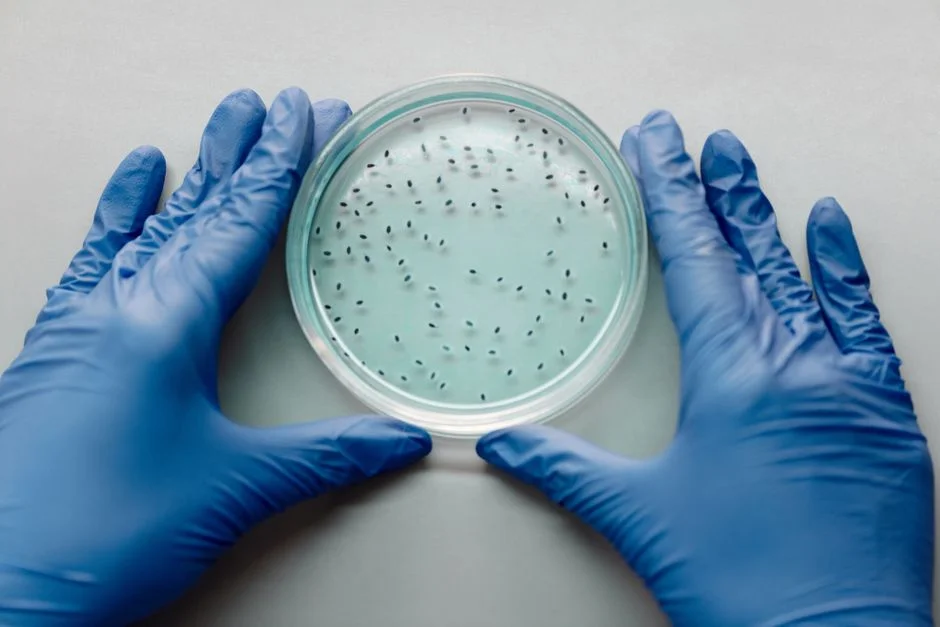
Anaerobic digestion is a four-stage microbial relay where each stage must keep pace with the others to prevent the chain from stalling. For an engineer sizing a reactor, the slowest stage sets the floor on hydraulic retention time.
Stage 1 — Hydrolysis. Extracellular enzymes break complex polymers (proteins, fats, carbohydrates) into soluble monomers (amino acids, fatty acids, sugars). Hydrolysis is rate-limiting for particulate or lipid-rich feeds such as slaughterhouse waste; this is why fat-rich streams require longer HRT or pre-hydrolysis.
Stage 2 — Acidogenesis. Fermentative bacteria convert monomers into volatile fatty acids (VFAs), lactate, alcohols, H₂, and CO₂.
Stage 3 — Acetogenesis. VFAs and longer-chain fatty acids are oxidized to acetate, H₂, and CO₂ by syntrophic acetogens. These organisms are thermodynamically marginal and only function when methanogens keep H₂ partial pressure low, which is why granular sludge architecture matters.
Stage 4 — Methanogenesis. Archaea convert acetate and H₂/CO₂ to methane (CH₄). This is the slowest step, with doubling times of 2–6 days for acetoclastic methanogens, so the reactor's job is to retain them. Granule retention is the reason an EGSB can run at 25 kg COD/m³/day while keeping a stable methanogen population inside the vessel.
Biogas off the reactor is roughly 60–70% CH₄ and 30–40% CO₂, with trace H₂S (source: Nijhuis Saur Econvert-EGSB®). This gas can be combusted on-site for heat, converted in a CHP unit to electricity, or upgraded to biomethane. Nijhuis Saur pegs the aeration energy offset at "on average 80% less aeration energy than aerobic alternatives" (source: Nijhuis Saur Econvert-EGSB®) — the dominant reason anaerobic is chosen over activated sludge.
EGSB vs UASB vs IC: Parameter Comparison
EGSB, UASB, and IC (Internal Circulation) are all high-rate anaerobic reactors optimized for different parts of the loading envelope. The table below places them side by side on the parameters an engineer cares about when specifying equipment.
| Parameter | UASB | EGSB | IC (Internal Circulation) |
|---|---|---|---|
| Typical OLR (kg COD/m³/day) | 4–10 | 10–25 (up to 25 kg COD/m³/day per Nijhuis Saur) | 20–35 |
| HRT range | 6–24 h | 2–6 h | 1–4 h |
| Upflow velocity | 0.5–2 m/h | 4–10 m/h | 10–30 m/h (driven by internal gas-lift) |
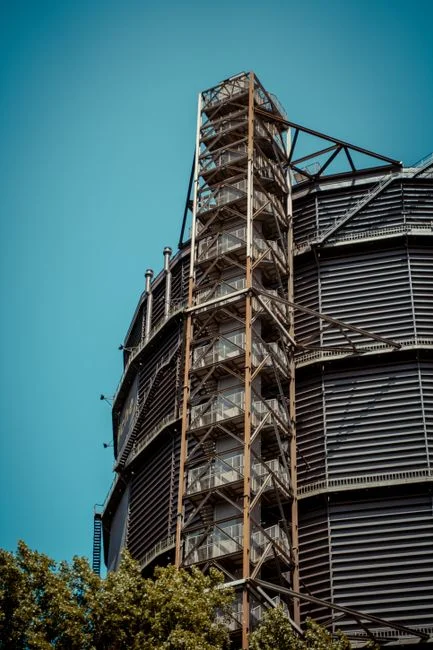
| Reactor height | 4–8 m typical | Up to >30 m (per Nijhuis Saur Econvert-EGSB®) | 15–25 m typical, two-stacked chambers |
| Footprint sensitivity | Larger footprint per kg COD removed | Compact — tall and narrow geometry possible | Compact, but two-stage structure is taller and more complex |
| Sensitivity to low temp / low strength | Poor below ~20 °C; needs high influent COD (>2,000 mg/L) | Tolerates 10–20 °C and lower influent COD via recirculation | Tolerates moderate variation; best on warm, soluble, high-strength feed |
| Granule retention mechanism | Settling in blanket + internal launder | Three-phase separator + expanded bed with recirculation | Two-stage internal settling + gas-lift recirculation |
| Complexity | Lowest — simple concrete/steel vessel, few internals | Moderate — recirculation pump, three-phase separator | High — internal gas riser, two-stage separator, tighter control |
The 1999 Water Science & Technology slaughterhouse study seeded its EGSB with granular sludge from a brewery anaerobic reactor, illustrating that granulation biology is foundational across all three reactor types (source: Water Science & Technology, 1999). Proper selection depends on specific site requirements and influent characteristics.
Selection rule of thumb. Choose EGSB for low-to-medium strength wastewater, cold or fluctuating influent temperatures (down to ~10–15 °C), and space-constrained sites. Stay with UASB for warm (>25 °C), very high-strength streams where simplicity and CAPEX dominate. Pick IC for very high OLR on soluble, easily degradable feed where biogas-driven internal circulation is an asset and the wastewater is well-screened.
What Real EGSB Plants Actually Remove
Vendor brochures lead with the ceiling, while plant data provides a realistic view of performance at commercial scale. The 1999 Water Science & Technology slaughterhouse study remains the benchmark for high-rate anaerobic performance on lipid- and protein-rich industrial wastewater.
Headline numbers from the study, run at 35 °C mesophilic with a 5-hour HRT:
- 67% average COD removal at total organic loading rates up to 15 kg COD/m³/day (source: Water Science & Technology, 1999).
- 90% TSS removal at total solids loads of 6 kg TSS/m³/day (source: Water Science & Technology, 1999).
- 85% fat removal with no observable fat accumulation on the sludge bed — a critical result, because lipid accumulation is the usual failure mode for anaerobic reactors on slaughterhouse or dairy streams (source: Water Science & Technology, 1999).
Translate the COD figure: a 15,000 mg/L influent drops to roughly 4,950 mg/L at 67% removal — still well above most discharge limits, which is why EGSB is almost always paired with a downstream polishing stage such as an MBR polishing stage after the EGSB. The 25 kg COD/m³/day commercial ceiling is achievable, but real plants typically operate below it because that ceiling assumes a soluble, easily degradable, mesophilic feed.
Where EGSB Fits in a Complete Treatment Train
An EGSB reactor functions best as the high-rate biological core of a larger treatment train. Upstream and downstream processes are required to protect the granules and meet discharge limits.
Upstream — headworks and equalization. A rotary bar screen for headworks protection removes rags, plastics, and large solids that would foul the influent distributor and the three-phase separator. Flow and load equalization tanks then buffer the reactor against diurnal COD and hydraulic swings — shock loads kill methanogens. If the influent carries high TSS or emulsified fats (slaughterhouse, dairy, edible oil), a DAF pre-treatment upstream of the EGSB strips FOG and colloids before they reach the bed, which is exactly the role the Econvert-DGF® family is designed for (source: Nijhuis Saur Econvert-EGSB®).
Mid-stream — the EGSB itself. This is the rate-limiting biological stage. Biogas is collected, optionally desulfurized via chemical scrubbing (Econvert-Dsulph®) or a regenerative trickling filter (Econvert-RTF®) (source: Nijhuis Saur Econvert-EGSB®), and routed to a CHP unit, boiler, or upgrading skid.
Downstream — aerobic polishing. Residual COD, BOD, and ammonia are removed to discharge consent by an aerobic stage — MBR, SBR, or conventional activated sludge. The MBR option is increasingly common because it produces a low-TSS effluent suitable for water reuse.
Side stream — sludge handling. Wasted granular biomass and chemical sludge are dewatered on a sludge dewatering for waste granular biomass press before disposal or land application. For facilities already running older presses, a filter press retrofit and upgrade guide can lift throughput without replacing the entire press. Anaerobic sludge yields are typically 0.05–0.10 kg TSS per kg COD removed — roughly 1/5 the wasted mass of an aerobic system.
Frequently Asked Questions
What is the maximum COD loading rate of an EGSB reactor?
Commercial EGSB designs such as Econvert-EGS
Frequently Asked Questions
What is an EGSB reactor and how does it work?
An Expanded Granular Sludge Bed (EGSB) reactor is an advanced high-rate anaerobic wastewater treatment system that utilizes a tall, slim vessel to facilitate the upward flow of wastewater through a dense bed of granular biomass. The reactor operates at high superficial upflow velocities, typically ranging from 2 to 10 meters per hour, which causes the sludge bed to expand by 10 to 30 percent, ensuring optimal contact between the organic pollutants and the anaerobic microorganisms.
The process works by leveraging the high-velocity hydraulic regime to promote efficient mass transfer and gas-liquid-solid separation. As the wastewater rises, organic matter is converted into biogas (primarily methane and carbon dioxide) by the granular sludge. A specialized three-phase separator at the top of the reactor captures the biogas and returns settled sludge to the bed, maintaining a high biomass concentration even under high organic loading rates.
What is the difference between EGSB and UASB reactor?
The primary difference lies in the superficial upflow velocity and the resulting mixing intensity. While an Upflow Anaerobic Sludge Blanket (UASB) reactor typically operates at upflow velocities below 1 meter per hour, an EGSB reactor is designed for much higher velocities, often exceeding 2 to 5 meters per hour. This increased velocity in the EGSB provides superior hydraulic mixing and mass transfer compared to the more quiescent UASB design.
Additionally, EGSB reactors are significantly taller than UASB reactors, which helps in achieving higher volumetric loading rates. While a UASB is generally suited for low-to-medium strength wastewater, the EGSB's enhanced contact mechanism allows it to treat low-strength, high-flow, or toxic industrial effluents that would otherwise cause channeling or dead zones in a conventional UASB configuration.
What is the typical COD removal efficiency of an EGSB reactor?
EGSB reactors are highly efficient, typically achieving Chemical Oxygen Demand (COD) removal efficiencies ranging from 75% to 95%, depending on the influent composition and organic loading rate. Under stable operating conditions with appropriate wastewater characteristics, these systems can consistently reduce COD levels even when treating complex industrial streams.
Performance is heavily influenced by the organic loading rate (OLR), which can reach 15 to 30 kg COD per cubic meter per day in optimized EGSB systems. Maintaining these efficiencies requires precise control of pH, temperature, and nutrient ratios to ensure the granular sludge remains active and structurally stable against the high shear forces generated by the upflow velocity.
What is the hydraulic retention time in an EGSB reactor?
Because of their high-rate design and intense mass transfer, EGSB reactors operate with very short hydraulic retention times (HRT), typically ranging from 2 to 8 hours. This is significantly lower than the 12 to 24 hours often required by traditional UASB or conventional anaerobic digesters, making the EGSB an ideal solution for facilities with limited spatial footprint.
The exact HRT is determined by the specific wastewater strength and the targeted organic removal rate. While short HRTs are technically feasible due to the high biomass concentration (often exceeding 30 to 50 grams of volatile suspended solids per liter), engineers must ensure that the organic loading does not exceed the kinetic capacity of the methanogenic bacteria to prevent process acidification.
When should I choose an EGSB reactor over an IC reactor?
An EGSB reactor should be chosen over an Internal Circulation (IC) reactor when dealing with low-strength wastewater or specific industrial effluents that require higher degrees of mixing to overcome mass transfer limitations. While IC reactors are superior for very high-strength wastewater due to their two-stage internal gas-lift system, the EGSB is often more cost-effective and easier to maintain for dilute waste streams where the IC’s complex internal piping is unnecessary.
Additionally, EGSB reactors are preferred in scenarios where the influent contains low concentrations of suspended solids that might otherwise clog the internal circulation mechanisms of an IC reactor. If the primary goal is maximizing biomass-liquid contact in a simple, tall-column geometry without the mechanical complexity of an IC's secondary stage, the EGSB is the preferred engineering choice.