What Counts as an AOP System Retrofit in 2026
An AOP system retrofit in 2026 means upgrading or adding an advanced oxidation step — Fenton, ozone, UV/H₂O₂, or a catalytic variant — to an existing wastewater train to push COD, color, or micropollutants below tightening permit floors. Typical retrofit capex lands at 20–60% of greenfield depending on pathway, with simple payback of 4–7 years at industrial electricity rates. Pathway choice is driven by influent matrix and target contaminant, not equipment preference.
Advanced oxidation processes (AOPs) are defined by the hydroxyl radical (•OH) mechanism, not by the hardware that generates it. The five pathways engineers specify in 2026 are Fenton (Fe²⁺/H₂O₂) and electro-Fenton, ozone (O₃, O₃/H₂O₂, O₃/UV), UV/H₂O₂, photocatalytic UV/TiO₂, and persulfate activation. Each produces •OH at a different yield and at a different electrical or chemical cost, which is why a "retrofit" cannot be specified as AOP in the abstract — it has to be specified as a pathway against an influent envelope.
Three retrofit scopes are common in 2026: (1) add an AOP step to an existing biological train that no longer meets discharge or reuse limits, (2) replace an existing under-sized AOP skid with a higher-efficiency unit, and (3) integrate AOP as a polishing step on a new MBR polish where the biology is fine but the polish floor is the constraint. The 2026 Sadri Moghaddam and Mahmoudisharabiani hospital wastewater upgrade (doi 10.66224/NMCE.2601.1123) is a useful small-footprint precedent for biological-to-AOP-adjacent retrofits on tight hospital sites, and the same logic maps onto pharmaceutical and chemical plant footprints.
The binding 2026 drivers are regulatory, not technical. EU UWWTD 91/271/EEC tightening, China GB 18918-2002 TN/TP limits, and emerging PFAS and micropollutant discharge floors in the U.S. and EU are pushing AOP into retrofits that would have stayed biological-only five years ago. Where the biological step is already stable, the AOP retrofit is now the lower-capex path to compliance than building a new basin.
Three AOP Pathways and When to Pick Each
Pathway choice is the single biggest driver of capex, opex, and permit risk on an AOP retrofit. The matrix below consolidates the operating envelope each pathway actually delivers, drawn from EPA 832-F-00-013 reference values and 2026 industrial field practice.
| Parameter | Fenton / electro-Fenton | UV / H₂O₂ | Ozone / O₃-catalytic / photocatalytic |
|---|---|---|---|
| Best influent envelope | High COD (≥1,000 mg/L), high-Fe-tolerant streams | Low COD (<500 mg/L), low-TDS polishing | Color, micropollutants, refractory organics |
| Hydroxyl radical driver | Fe²⁺ + H₂O₂ → Fe³⁺ + •OH + OH⁻ | UV (254 nm) photolysis of H₂O₂ | O₃ decomposition chain; O₃/H₂O₂; UV/TiO₂ |
| Dose range | H₂O₂/Fe²⁺ molar ratio 2–10; H₂O₂ 0.3–1.0× COD | H₂O₂ 5–20 mg/L; UV dose 20–40 mJ/cm² at 254 nm | O₃ dose 5–50 mg/L per stage |
| EE/O (electrical energy per order) | 0.5–3 kWh/m³/order (driven by mixing and pump) | <5 kWh/m³/order for low-COD polish | 2–10 kWh/m³/order, dominated by O₂ feed and generator |
| Sludge yield | 0.65 kg TSS/kg BOD applied (EPA 832-F-00-013) | Negligible | Negligible |
| Dominant opex | H₂O₂ (70% w/w) and FeSO₄ | Lamp replacement (typical 8,000–12,000 h life) | O₂ feed power; off-gas destruction |
| Best placement in train | Pre-DAF or post-biology before MBR polish | After MBR flat-sheet polish for reuse-grade effluent | Post-biology, pre-MBR or post-MBR depending on target |
Fenton and electro-Fenton win on high-COD chemical and pharmaceutical streams where the iron catalyst is acceptable and the operator can handle a 0.65 kg TSS/kg BOD sludge increment (EPA 832-F-00-013). UV/H₂O₂ wins on low-COD polishing where the engineer is chasing micropollutants or reuse-quality color and cannot tolerate Fenton sludge — the trade-off is lamp-replacement opex at 8,000–12,000 hour typical life. Ozone and O₃-catalytic variants win on color and refractory organics, particularly in textile and landfill leachate, but require a corrosion-resistant contactor and an off-gas destructor that the operator has to design for. Photocatalytic UV/TiO₂ sits in the same niche as O₃-catalytic but with a different catalyst-replacement cadence.
The 2026 industrial pattern in pharmaceutical and chemical plants is to follow the biological step with a DF series flat-sheet MBR module as the AOP polish step, per the oxidation-ditch-plus-MBR pattern discussed in this membrane fouling control on the post-AOP MBR polish reference. AOP typically sits between the biological step and the MBR polish, or after MBR for reuse-quality effluent. The Sadri Moghaddam 2026 hospital MBBR upgrade (doi 10.66224/NMCE.2601.1123) is the small-footprint biological retrofit precedent where AOP could be added as a downstream polish for pharmaceutical residues — the same train arrangement that solves the FOAM-control problem on surfactant-rich hospital effluent.
For Fenton retrofits, specify a PLC-controlled H₂O₂ and FeSO₄ dosing skid to hold the H₂O₂/Fe²⁺ molar ratio in the 2–10 operating band; ratio drift above 10 wastes peroxide, drift below 2 leaves iron residual in the MBR polish.
Capex, Opex, and Payback for an AOP Retrofit
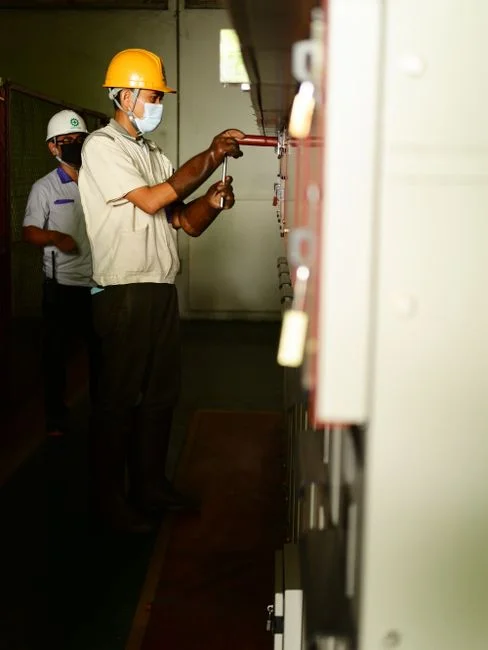
Capex for an AOP retrofit in 2026 runs at 20–60% of greenfield for the same treatment capacity, with the spread driven by pathway and how much of the existing biological train is being reused. The table below adapts the EPA 832-F-00-013 oxidation-ditch retrofit bands to AOP scope, which is the closest published analog for the install-labor and basin-dewatering logic that drives the swing.
| Retrofit scope | % of greenfield capex | Typical install time | Dominant cost line items |
|---|---|---|---|
| Pathway 1 — Fenton skid tie-in (no basin work) | 20–35% | 2–4 weeks | Reaction tank, dosing skid, pH adjust, sludge pumping to DAF unit as AOP sludge or pretreatment step |
| Pathway 2 — UV/H₂O₂ skid with lamp room | 40–60% | 6–10 weeks | Lamp reactor, H₂O₂ dosing, building HVAC for heat load, electrical upgrade |
| Pathway 3 — Full ozone system with off-gas destructor | 25–35% | 10–16 weeks | O₂ feed, O₃ generator, contactor (SS or HDPE), off-gas thermal destructor, corrosion-resistant piping |
Energy uplift on an AOP retrofit follows the same logic as the biological-retrofit reference case in S1: legacy equipment sits in a 2.5–3.5 lb O₂/Hp-hr transfer band, modern equipment moves into the 5–6 lb O₂/Hp-hr band, and the swing is 15–25% on the electrical line. For Fenton this shows up as pump and mixing energy, for UV/H₂O₂ as lamp electrical load plus H₂O₂ pumping, and for ozone as the O₂ feed and generator draw.
Chemical opex is the dominant line item, not energy. H₂O₂ at 70% w/w is the single largest chemical cost on Fenton and UV/H₂O₂ pathways; FeSO₄ is the second; O₃ generation power (roughly 8–12 kWh/kg O₃) is the second on ozone pathways. Simple payback lands at 4–7 years at industrial electricity rates of $0.08–0.12/kWh, with the band heavily dependent on whether the plant is avoiding a discharge penalty or qualifying for a reuse contract.
For plants that need post-AOP disinfection, a ClO₂ generator for the post-AOP disinfection step pairs cleanly with the AOP skid and avoids the bromate formation that comes from ozonation followed by free chlorine on bromide-rich effluent.
Integration With Existing Biological and MBR Steps
The default 2026 industrial pattern is biological step → AOP → MBR flat-sheet polish (DF series 0.1 μm). This is the lowest-capex, most-permissable path to reuse-grade effluent because it keeps the existing basin in service, treats the AOP skid as removable equipment, and uses the MBR to strip both residual TSS and the residual organics that the AOP did not fully mineralize. Engineers evaluating a new MBR polish should treat it as part of the same project envelope as the AOP retrofit, not as a separate scope.
Upstream AOP — placing the AOP before the biological step — is rare in 2026 and only used when influent toxicity would otherwise kill the biomass. In most chemical and pharmaceutical plants, the cheaper scope is to add 24–48 hours of equalization and a DAF pretreatment ahead of the biological step rather than to AOP the whole stream. Where upstream AOP does get specified, it is usually on landfill leachate with high ammonia and refractory COD, where partial oxidation makes the downstream biology work.
Headworks protection matters on every AOP retrofit, not just the biological ones. Pair the new skid with a rotary mechanical bar screen at the front end to keep rags and fibers out of the new pumps, dosing skids, and MBR piping. Plants that skip this typically lose the AOP retrofit's first six months of uptime to clogged strainers and fouled lamps.
Permit risk is the hidden line item. Under TCEQ 317, removable equipment is treated as a process change rather than a redundant-basin trigger, which means an AOP skid generally qualifies as removable and keeps the permitting path simple. A DF series flat-sheet MBR module as the AOP polish step on the back end is also typically removable. Where the new scope requires a permanent basin or anoxic-zone concrete work, the project crosses into a permit modification and should be flagged with the regulator before the bid goes out. Plants that skip that conversation typically lose 3–6 months to a permit re-issue.
For an integrated MBR system upstream of the AOP skid, the MBR handles the biology and the AOP handles the polish — this arrangement is common in pharmaceutical and landfill leachate retrofits where the influent variability is high but the discharge envelope is tight.
Compliance and Permitting Considerations for 2026
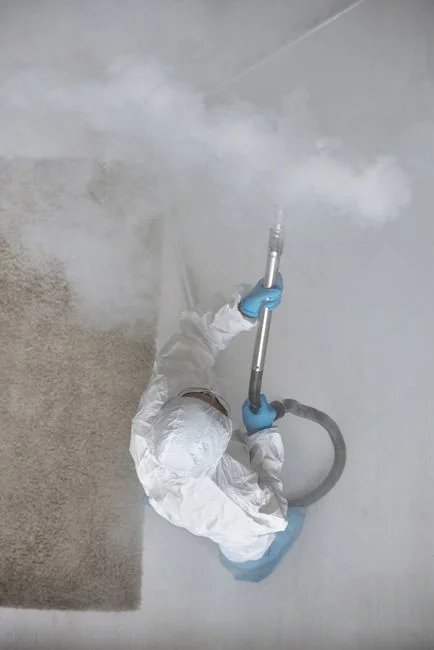
The 2026 compliance layer for an AOP retrofit is dominated by three regulatory drivers. EU UWWTD 91/271/EEC tightening and China GB 18918-2002 TN/TP limits are pushing biological-only plants in those jurisdictions toward either a polish AOP or a full nutrient-removal biological retrofit, with the AOP polish often being the faster scope. In the U.S., the binding driver in 2026 is the patchwork of state-level PFAS and micropollutant floors (notably the revised EPA PFAS NPDWR limits finalized in 2024 and the 2025 state implementation guidance), which biological steps cannot meet on their own. AOP, particularly UV/H₂O₂ and ozone, is the pathway most plants are selecting to bridge that gap.
Under TCEQ 317, the removable-equipment precedent lets plants add AOP skids without triggering a redundant-basin permit, provided the skid is documented as a process change rather than a new treatment train. Engineers should cite this precedent in the design basis where applicable.
Document the AOP scope as a four-piece submission: design basis with influent and effluent envelopes, contaminant mass balance across the AOP unit, hydroxyl radical yield or EE/O proof from bench- or pilot-scale data, and an updated mixing-energy or oxidation-power calculation. This mirrors the biological-retrofit submission checklist in S1 and is the format most U.S. state regulators will accept without modification. For plants that want tighter control on the new operating envelope, AI process control for chemical wastewater AOP skids is the cheapest way to defend the new operating envelope to regulators in real time. Plants scoping the dewatering side of the same project should reference the filter press retrofit and upgrade guide for the sludge line.
Frequently Asked Questions
When does an AOP retrofit beat building a bigger biological tank?
An AOP retrofit beats a basin expansion whenever the binding constraint is a non-biodegradable contaminant — PFAS, color, refractory COD, or a specific micropollutant — rather than bulk BOD or ammonia. A new basin costs more and takes 12–18 months longer to permit and build; an AOP skid can be specified and installed in the 2–16 week band depending on pathway.
Does an AOP retrofit require a full plant shutdown?
Only for an ozone system tie-in or any pathway that requires basin dewatering. Fenton skids and UV/H₂O₂ skids are installed online with parallel piping and a brief tie-in outage, typically 24–72 hours. The biological step stays in service throughout, which is why TCEQ 317 treats these as removable equipment.
What does an AOP retrofit cost in 2026?
Indicative capex is 20–35% of greenfield for a Fenton skid tie-in, 40–60% for a UV/H₂O₂ skid with lamp room, and 25–35% for an ozone system with off-gas destructor. Simple payback runs 4–7 years at $0.08–0.12/kWh industrial electricity, dominated by H₂O₂ chemical cost on Fenton and UV/H₂O₂ and by O₃ generation power on ozone pathways.
Which contaminant classes does AOP actually remove?
Hydroxyl radical chemistry is non-selective and will oxidize most organics, but the engineering-relevant target list in 2026 is: non-biodegradable COD above ~150 mg/L, true color above 50 Pt-Co units, specific PFAS compounds (PFOA, PFOS, GenX) on UV/H₂O₂ and ozone pathways, and pharmaceutical residues and endocrine disruptors on UV/H₂O₂ and photocatalytic variants. AOP is not a substitute for biological nitrogen or phosphorus removal — it is a polish on top of it.
Can AOP be added downstream of an MBR polish?
Yes, and for reuse-quality effluent it is the standard arrangement. The MBR strips TSS and most residual COD; the AOP then handles the dissolved micropollutants and color that the MBR cannot reject. This is the lowest-fouling operating point for UV/H₂O₂ in particular, because the MBR polish has already removed the suspended solids that would otherwise foul the lamp sleeves.