What Transportation Equipment Wastewater in Troy Actually Looks Like
A Tier-1 stamping and e-coat plant on the Troy, MI corridor typically runs four to six wastewater streams that converge at a single pretreatment header, and each one disqualifies a conventional clarifier before the first drop is treated. Phosphating and nanoceramic pretreatment rinses carry zinc, nickel, and phosphate in the 20–80 mg/L range plus 200–800 ppm TSS from drag-out. E-coat rinse overflow adds 100–400 ppm of paint solids and surfactants that emulsify any free oil they contact. Stamping and drawing lubricant lines contribute free and emulsified oils at 100–1,000 mg/L FOG with episodic spikes tied to press cycle drains. Machining coolant sumps leak 0.5–3% tramp oil, and parts-washer effluent adds another 50–300 ppm of TSS with alkaline cleaners. Daily composite sampling in this stream mix typically lands in the 200–2,000 ppm TSS window — the DAF Corp FC-150 Maximizer is rated at exactly 2,000 ppm suspended solids loading at 500 GPM, which is the operating envelope most Troy plants actually sit in (per dafcorp.com, 2025).
Flow is rarely steady. Shift-change dumps, batch washer discharges, and press-floor washdowns create 2–4× spikes over the daily average, so equalization matters as much as the clarifier itself. The relevant regulatory frame is the City of Troy WWTP industrial pretreatment program — local limits on oil & grease (typically <50 mg/L daily max), zinc, nickel, and total phosphorus — not the EPA Vessel General Permit, which governs vessel graywater under 40 CFR 122.2 (per EPA-800-R-11-001, 2011). The distinction matters because transportation equipment manufacturing is not generic metalworking: lubricant load is high, emulsion break is intermittent, and POTW caps on oil & grease and zinc/nickel are tight enough that gravity settling alone rarely meets the envelope.
How a DAF Clarifier Works — Microbubbles, Chemistry, and Skimming
A dissolved air flotation clarifier separates solids and oil by lifting them with 30–50 µm microbubbles rather than letting them settle. Pressurized recycle water saturated with air at 60–80 psig is released into the flotation cell, where the pressure drop nucleates a fine bubble swarm that attaches to flocculated or oil-coated particles and carries them to the surface in 3–5 minutes (per clearwaterind.com, 2026-04). A paddle skimmer sweeps the floated layer into a scum trough; heavier settleable solids drop to a bottom auger or collection cone. The two-solids handling tail — floated scum plus bottom grit — is what lets one unit replace both a clarifier and a separate oil skimmer.
Performance is not a function of tank size alone. Hahn's foundational work on flotation design identifies four variables that drive real DAF efficiency: air-to-solids ratio (typically 0.005–0.060 by mass), hydraulic loading (1–25 m/h depending on application), saturation pressure, and chemical conditioning (per Fundamentals of Wastewater Flotation, Hahn, 2010). Coagulation followed by flocculation is the step that turns sub-100 µm oil droplets and colloidal TSS into 200–500 µm flocs that bubbles can actually nucleate on — without it, performance collapses regardless of how much tankage is installed. Properly conditioned, a HydropureWater DAF system will reach ~90% oil removal and 92–98% TSS removal, with filterable solids dropping below 20 ppm and floated sludge thickening to 2–4% consistency on DAF Corp systems (per dafcorp.com, 2025).
How a Conventional Clarifier Works — Gravity, Lamella Plates, and Sludge Blankets
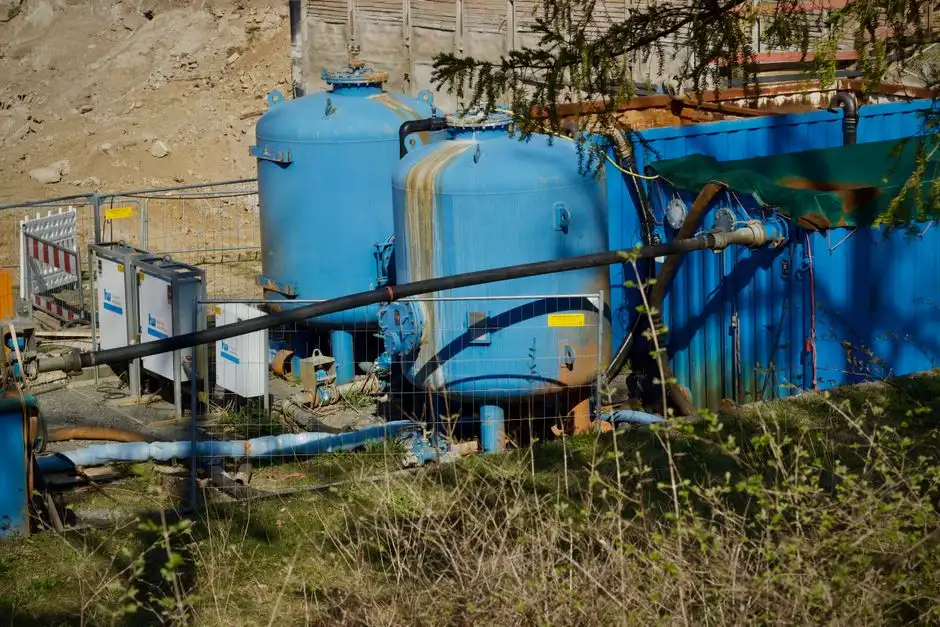
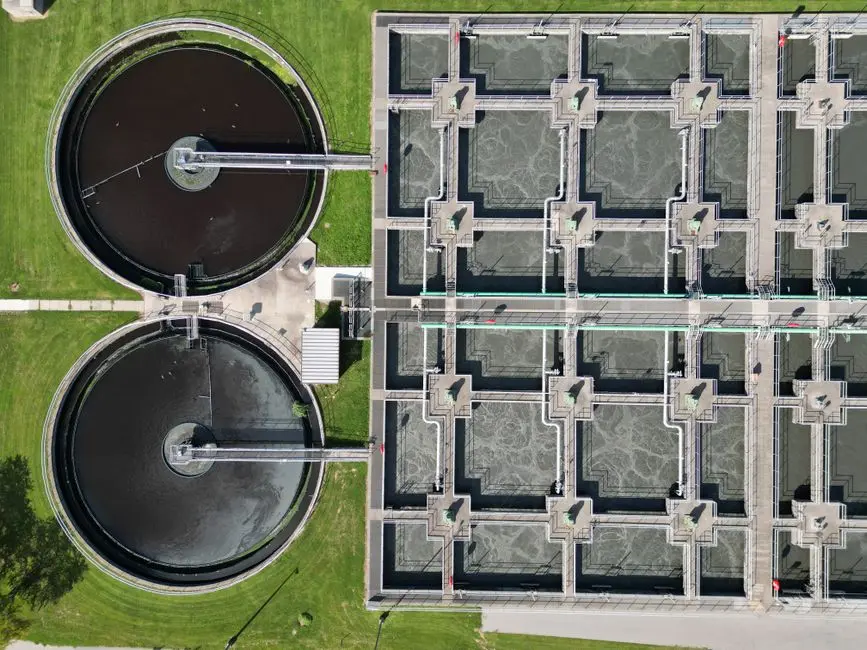
A conventional clarifier is a quiescent tank. Influent enters a center well or distribution header, solids settle under gravity into a sludge blanket at the bottom, and clarified water overflows peripheral launders or effluent weirs. There is no bubble mechanism, no oil-to-surface transport, and no chemical conditioning step in the basic configuration. Settling only works when particles have a density greater than water and a diameter large enough to overcome upflow velocity — which is why conventional clarifiers handle grit, metal fines, and hydroxide floc well but fail on emulsified oil and colloidal TSS.
Lamella (inclined-plate) clarifiers are the compact evolution of gravity settling. A high-efficiency sedimentation tank stacks 30–60° inclined plates at close spacing, multiplying the effective settling area inside a small footprint and pushing surface loading to 20–40 m/h versus the 1–3 m/h of a traditional circular clarifier. Performance is real: the DAF Corp RC UniMax rectangular clarifier hits 85–90% TSS removal at 10–1,000 GPM (per dafcorp.com, 2025). The ceiling is FOG. Emulsified oil droplets in the 1–20 µm range have near-neutral buoyancy and will pass straight through a lamella pack, which is why oily streams routed to a clarifier alone typically need an upstream oil-skimmer and still don't reach POTW-grade effluent without a polish step.
DAF vs Clarifier: Head-to-Head Comparison for Troy Plants
The honest answer is that these are different tools for different jobs, and the difference shows up in every row of the matrix below. A DAF removes TSS, FOG, and emulsified oil in one unit; a clarifier removes settleable TSS only and needs help with oil. Sizing anchors: the SigmaDAF COMPACT unit handles up to 66 GPM on a single skid and scales modularly above that (per clearwaterind.com, 2026-04); the DAF Corp FC Maximizer circular line covers 10–11,000 GPM at 92–98% TSS removal, and the FC-150 specifically is rated at 500 GPM with 2,000 ppm loading clarified to <50 ppm (per dafcorp.com, 2025). Hahn's variables — air/solids ratio, hydraulic loading, chemistry — are why a DAF's performance ceiling depends on conditioning, not tank volume, and why over-sizing a clarifier cannot close the FOG gap (per Hahn, 2010).
| Parameter | Dissolved Air Flotation (DAF) | Conventional / Lamella Clarifier |
|---|---|---|
| TSS removal | 92–98% (FC Maximizer, circular); 85–90% (RC UniMax, rectangular) | 85–90% (RC UniMax baseline); lower for circular conventional at high flow |
| FOG / oil removal | ~90% with coagulation/flocculation (Hahn, 2010) | Poor on emulsified oil; needs upstream skimmer |
| Flow range | 48 GPM pilot to 11,000 GPM (DAF Corp skid + FC line); SigmaDAF COMPACT ≤66 GPM single skid, modular above | 10–1,000 GPM (RC rectangular); lamella 20–40 m/h surface loading |
| Footprint | Compact skid, 6–15 ft diameter for 48–450 GPM units | Larger tanks for equivalent flow; lamella plate pack helps |
| Sludge consistency | 2–4% thickened (DAF Corp FC line) | 0.5–2%, depending on residence time |
| Chemical demand | Coagulant + flocculant required for design performance | Often none, or coagulant only for TSS boost |
| CAPEX band | Higher per kg TSS removed, lower per m² footprint | Lower per unit, higher per m² footprint |
| OPEX drivers | Polymer, saturation pump energy, paddle skimmer | Sludge pumping, occasional polymer, more floor space |
| Best fit | Oily, emulsion-rich, variable streams; primary clarification for automotive/Tier-1 | High-flow, low-oil, mostly settleable streams; polishing after DAF |
For a related industrial frame, see the DAF vs clarifier comparison for mining wastewater, and for a full enumeration of DAF strengths and weaknesses, the DAF system advantages and disadvantages guide. Local pretreatment framing for transportation equipment is covered in the transportation equipment pretreatment compliance guide.
Decision Framework: Which One Should Your Troy Plant Choose in 2026?
Three rules cover most Troy-area transportation equipment decisions, and they should be applied in order — flow first, influent character second, compliance envelope third.
Rule 1 — Flow-driven selection. Below ~1,000 GPM with FOG >100 mg/L, DAF is the primary clarifier and a lamella polish is optional if the effluent needs to land below 20 ppm TSS. Above 1,000 GPM with mostly settleable, low-oil TSS, lamella or DAF both work, and the tiebreaker becomes footprint and CAPEX. Above 2,000 GPM, a DAF-fed lamella polish trains is often the lowest-risk configuration: the DAF handles FOG and most of the TSS, the lamella polishes and stabilizes the effluent during shift-change spikes. Skid-mounted DAF Corp FC units from 48 to 450 GPM and the SigmaDAF COMPACT up to 66 GPM single skid cover the lower end of this range with pre-assembled, pre-wired packages (per dafcorp.com, 2025; clearwaterind.com, 2026-04).
Rule 2 — Influent-character rule. If free or emulsified oil, machining coolant, or drawing lubricant is present, DAF wins. If the stream is mostly inorganic TSS from parts washing or e-coat rinse without oil, either technology works, with DAF preferred when flows vary because equalization and chemistry make the DAF more forgiving of spikes.
Rule 3 — Compliance envelope. City of Troy POTW pretreatment limits on oil & grease (single-digit mg/L for the strictest SIU categories), zinc, nickel, and total phosphorus are not negotiable on a 2026 capex justification. A DAF paired with a PLC-controlled chemical dosing system is the lowest-risk primary step; a clarifier alone almost always needs an upstream oil-skimmer and a downstream DAF polish to meet the same envelope. For 2026 projects, run a jar test and, where flow justifies it, an on-site pilot — both DAF Corp and SigmaDAF/Clearwater run pilot feasibility studies and design systems to specific effluent standards rather than generic catalog cuts (per dafcorp.com, 2025; clearwaterind.com, 2026-04).
2026 Cost, Footprint, and Automation Trade-offs
DAF skids cost more per kilogram of TSS removed but deliver a smaller, fully automated footprint — SigmaDAF COMPACT and DAF Corp skid-mounted FC units ship pre-piped, pre-wired, and PLC-controlled (per clearwaterind.com, 2026-04; dafcorp.com, 2025). Lamella clarifiers are cheaper per square meter of footprint but need larger tanks, more operator attention, and an upstream skimmer on oily streams. Sludge handling tilts the lifecycle math: DAF floated sludge thickens to 2–4% on the FC line, which cuts hauling volume roughly in half versus a 0.5–2% clarifier underflow, and pairs cleanly with a plate-and-frame filter press for further dewatering. For 2026 capex reviews, expect PLC-controlled skimmers, automated chemical dosing, and remote monitoring to be baseline on both DAF and lamella units — but DAF benefits disproportionately from PLC control because its performance is chemistry-dependent and a feedback loop on TSS or streaming current directly stabilizes effluent quality.
Frequently Asked Questions
What is the best wastewater treatment for an automotive plant in Troy?
A DAF is the right primary clarifier for the oily, emulsion-rich streams generated by stamping, e-coat, and machining — typically 92–98% TSS and ~90% oil removal with proper chemistry. A lamella clarifier is the right polish step downstream when the POTW envelope requires <20 ppm TSS, or the right primary only on low-FOG, settleable streams.
How much oil can a DAF remove?
About 90% with proper coagulation and flocculation, per Hahn's Fundamentals of Wastewater Flotation (2010). Without chemistry conditioning, real-world removal drops sharply because sub-100 µm oil droplets do not attach to bubbles on their own.
Can a clarifier replace a DAF?
Only for low-FOG, settleable-TSS streams. Emulsified oils, machining coolant tramp oil, and stamping lubricants will pass through a lamella pack essentially untreated, so a clarifier-only configuration on an automotive waste stream will not meet typical POTW oil & grease limits without an upstream skimmer and a downstream DAF polish.
What flow rate does a skid DAF cover?
From 48 GPM (DAF Corp pilot FC-60) to 11,000 GPM (FC Maximizer circular line), with the SigmaDAF COMPACT covering up to 66 GPM on a single skid and scaling modularly above that. Skid-mounted FC units from 6 ft (48 GPM) to 15 ft (450 GPM) diameter are the common pre-assembled package size (per dafcorp.com, 2025; clearwaterind.com, 2026-04).
Does DAF meet POTW pretreatment limits in Troy?
Yes, when paired with chemical dosing and sized via jar or pilot testing. City of Troy POTW limits on oil & grease, zinc, nickel, and total phosphorus are achievable with a properly conditioned DAF as primary; a pilot study is the standard 2026 due-diligence step before committing capex.