Why a TI Malaysia Acquisition Triggers a Full Permit Re-Issuance
Under Section 34A of the Environmental Quality Act 1974, environmental liability attaches to the operator of the plant on the day effluent leaves the site — not the entity that held the original permit (per hydropurewater.com, 2026-02). When Texas Instruments closes on a Malaysia target, the seller's DOE discharge permit does not auto-transfer with the share purchase. A new permit, a new engineering plan submission, an EIA where the activity is prescribed under the Environmental Quality (Industrial Effluent) Regulations 2009, and a DOE site inspection are all required before the acquired plant can lawfully discharge under TI's name (per hydropurewater.com, 2026-02). For a clean A&T file, six months is the realistic lower bound; twelve months is more typical once DOE queries and site-specific conditions are negotiated into the issued permit (per hydropurewater.com, 2026-02).
Two diligence factors routinely extend that runway. EIA scope is the first: a full EIA runs 3–6 months from Terms of Reference approval to DOE endorsement, and a back-end A&T line that crosses a prescribed-activity threshold is unlikely to be excused from it (per hydropurewater.com, 2026-02). The second is the acquired site's prior compliance history — DOE pulls the file before issuing a transfer, and any open non-compliance notices, late IEQIS submissions, or prior Section 25 actions slow re-issuance regardless of how clean the new owner's process stack is (per hydropurewater.com, 2026-02).
Section 25 of the EQA 1974 sets the penalty floor at fines up to RM 500,000, imprisonment, and license revocation on repeat offence (per hydropurewater.com, 2026-02). Operating without a transferred permit between closing and re-issuance is the single most exposed piece of the deal, and a 2026 pilot in Selangor and Johor signals a near-term shift from quarterly composite sampling to continuous compliance verification (per hydropurewater.com, 2026-02) — a transition the term sheet should price in now.
The Binding Numerical Envelope: Standard A, Standard B, and the Inland-Water Framework
Standard B of the Environmental Quality (Industrial Effluent) Regulations 2009 is the binding numerical envelope for industrial discharges upstream of water intakes and sensitive catchments in Malaysia. Reproduced exactly from the cited dataset, the parameters are pH 5.5–9.0, COD 100 mg/L, BOD₅ (20 °C) 50 mg/L, TSS 100 mg/L, oil and grease 10 mg/L, mercury 0.05 mg/L, cadmium 0.02 mg/L, hexavalent chromium 0.05 mg/L, copper 1.0 mg/L, nickel 1.0 mg/L, zinc 2.0 mg/L, and boron 4.0 mg/L (Chemkimia proposal for Panasonic Appliances Air-Conditioning Malaysia, 2007-12). The broader inland-water framework sets slightly different boundaries: BOD ≤ 50 mg/L, COD ≤ 100 mg/L, SS ≤ 50 mg/L, NH₃-N ≤ 15 mg/L, pH 6.0–9.0, temperature < 40 °C, and oil and grease ≤ 10 mg/L (per hydropurewater.com, 2026-02). Standard A is stricter still — BOD 20 mg/L — and applies to discharges into the most sensitive catchments, typically upstream of water-treatment works (per hydropurewater.com, 2026-02).
| Parameter | Standard A (sensitive catchments) | Standard B (inland waters, upstream of intakes) | Broader inland-water framework |
|---|---|---|---|
| pH | 6.0–9.0 | 5.5–9.0 | 6.0–9.0 |
| BOD (mg/L) | 20 | 50 | 50 |
| COD (mg/L) | — | 100 | 100 |
| TSS / SS (mg/L) | — | 100 | 50 |
| NH₃-N (mg/L) | — | — | 15 |
| Temperature (°C) | — | — | < 40 |
| O&G (mg/L) | — | 10 | 10 |
| Cu (mg/L) | — | 1.0 | — |
| Ni (mg/L) | — | 1.0 | — |
| Zn (mg/L) | — | 2.0 | — |
| B (mg/L) | — | 4.0 | — |
| Cr⁶⁺ (mg/L) | — | 0.05 | — |
| Hg (mg/L) | — | 0.05 | — |
| Cd (mg/L) | — | 0.02 | — |
Site-specific conditions written into the issued permit can tighten any of these. The operational rule for a deal team is that the narrower of Standard B, the broader inland-water framework, and any site-specific condition is the design number. If Standard B allows SS at 100 mg/L but the broader framework caps SS at 50 mg/L, design for 50 mg/L — that is the audit number a closing condition can be measured against (per hydropurewater.com, 2026-02).
What TI's Own Disclosures Add on Top of the Legal Floor
TI's Water Management standard establishes minimum requirements for water, wastewater and storm water management, applies to TI's manufacturing and assembly/test sites around the world, and "often exceeds applicable regulatory requirements" (TI CDP Climate Change 2025 Rev. D). All TI sites are required to operate an industrial wastewater management program based on the Water Management standard and applicable regulations to identify potential water pollutants and comply with discharge limitations (TI CDP 2025 Rev. D). The standard's named pollutant categories at the corporate level are phosphates and "other physical pollutants," with direct-operations value-chain coverage and discharge treatment using sector-specific processes (TI CDP 2025 Rev. D).
TI's water-risk assessment process covers water stress and basin/catchment water quality, uses WRI Aqueduct alongside Enterprise Risk Management, applies ISO 14001, and operates at site-specific, local, sub-national, and national location-specificity (TI CDP 2025 Rev. D). The mapping extends to suppliers: TI employs "a comprehensive internal mapping process and platform to identify our Tier 1 and Tier 2 suppliers for critical raw materials and manufacturing operations," with the stated objective of aligning with stringent ESG due-diligence requirements (TI CDP 2025 Rev. D). The Malaysia footprint disclosed in the same filing is Texas Instruments Electronics Malaysia Sdn. (lat 2.299, lon 102.221) and Texas Instruments Malaysia (lat 3.153, lon 101.697) (TI CDP 2025 Rev. D).
The implication for a deal team is that the legal floor from DOE is the entry ticket, not the exit ticket. Once the acquired site sits inside TI's perimeter, it will be audited against the Water Management standard and the supplier-ESG mapping, and any "beyond compliance" gap shows up in the next CDP cycle.
The Process-Profile Risk: Why an A&T Acquisition Is Not a Generic Acquisition
TI's Malaysia expansion is specifically assembly-and-test (back-end), not wafer fab. The June 2023 announcement covers two A&T factories: one in Kuala Lumpur with up to MYR 9.6 billion in potential investment, more than 1 million square feet of cleanroom space, and approximately 1,300 new jobs; and one in Melaka with up to MYR 5 billion in potential investment, more than 400,000 square feet of cleanroom space, and approximately 500 new jobs, with production targeted to begin as early as 2025 and a LEED Gold construction target at both sites (ti.com, 2023-06-13). The two factories advance TI's stated plan to bring more than 90% of assembly and test operations in-house by 2030 (ti.com, 2023-06-13).
A back-end A&T line carries a different chemistry envelope from wafer fab or battery cell production. The pollutant stack includes solder flux residues, lead-free alloy wash water, solder mask / developing chemistries, epoxy molding compound overflow, Cu and Sn/Bi dross from solder dross handling, and trace organics from deflux and清洗 stages. The most-cited Malaysian design baseline — the Chemkimia proposal for Panasonic Appliances Air-Conditioning Malaysia, 2007-12 — reports raw water at pH 9.02–9.06, COD 740–850 mg/L, BOD₅ 280–310 mg/L, TSS 86–110 mg/L, oil and grease 28–34 mg/L, Cu 0.18–0.36, Ni 0.21–0.23, Mn 1.65–2.34, B 8.46–12.4, Fe 2.54–2.66, and phenol 0.1–0.2 mg/L (Chemkimia, 2007-12). That envelope is correct for an air-conditioning line and the wrong reference class for an A&T line. A process-profile change is exactly the case the DOE treats as a permit re-issuance event rather than a modification (per hydropurewater.com, 2026-02), so any stream the seller's 2007-era effluent profile does not already cover becomes a permit-design problem to solve before closing.
TI's named corporate pollutant categories — phosphates and "other physical pollutants" — sit at the disclosure level (TI CDP 2025 Rev. D). The A&T-specific heavy-metal envelope (Cu, Ni, Sn, Bi, and trace Pb from legacy lines) needs to be tested at the acquired site, not assumed. Tin/Bismuth dross and solder-paste stencil wash generate a high-Sn wash stream that requires dedicated precipitation ahead of any biological stage, and lead-free alloy wash carries a COD/BOD₅ load that is similar in magnitude to a battery-line process stream and equally under-designed by the 2007 air-conditioning baseline. For a parallel read on how a comparable acquirer's diligence file maps the same chemistry gap from a different angle, the legacy-wastewater audit checklist in the legacy-wastewater audit checklist is a useful cross-check.
Designing the A&T Effluent Train: What the 2007 Skeleton Needs Added
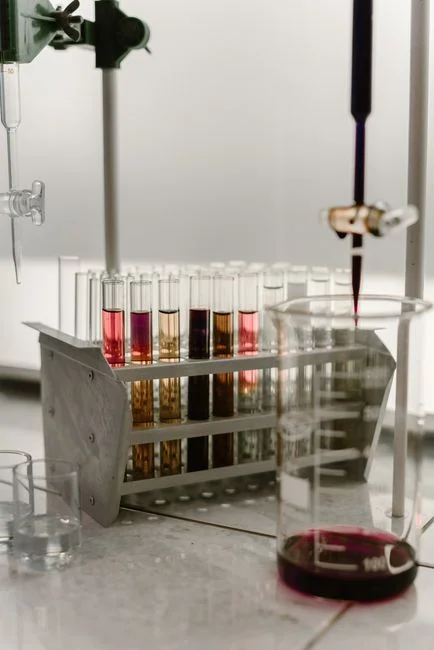
The Chemkimia reference train is a defensible skeleton for a Malaysian industrial ETP: equalization sump → oil and grease trap → coagulation (pH-corrected) → flocculation → dissolved air flotation → biological aeration → sedimentation → activated carbon filter → 0.2 µm microfiltration → sludge thickener → filter press (Chemkimia, 2007-12). A dissolved air flotation (DAF) system at the front end is the workhorse for FOG and TSS, with clarification rates up to 97% for fats, oils, greases, and suspended solids on that reference design (Chemkimia, 2007-12). For an A&T acquisition, the train extends: a tin/Bismuth precipitation stage (alkaline sulfide or hydroxide) must sit ahead of the biological stage to land Sn well inside Standard B's heavy-metal envelope, and coagulation chemistry must be re-tuned because the air-conditioning pH 9.02–9.06 correction is wrong for an A&T influent.
Solder flux and epoxy molding overflow carry a high-COD solvent load. Treatable configurations include an acclimated MBR with extended sludge age, or Fenton oxidation upstream of an MBR. For footprint-constrained sites — which is the typical condition inside an existing Malaysian industrial estate — the standard upgrade path is an integrated MBR membrane bioreactor system with PVDF submerged membranes at 0.1 µm pore size, sized to land effluent SS below 10 mg/L for a 60% water-reuse target tied to the 2027 circular-economy signal for Malaysian industrial parks (per hydropurewater.com, 2026-02). Polishing with activated carbon plus 0.2 µm microfiltration closes the envelope for water reuse; RO/UF polishing capacity sized for 60% reuse today is the cheaper path versus a 2028 retrofit (per hydropurewater.com, 2026-02).
Sludge handling is regulated. Dewatered cake must be sent to a licensed disposal facility, with inland disposal prohibited (per hydropurewater.com, 2026-02). A plate-and-frame filter press typically reaches 22–28% dry solids on Sn/Cu-rich cake — enough to pass the paint-filter test and to move by container to a licensed operator. The 2007 train's biology stage is the unit operation most likely to need a redesign for an A&T line; the front-end and the sludge end are largely transferrable.
| Unit process | 2007 reference (air-conditioning) | A&T addition / modification |
|---|---|---|
| Equalization + pH correction | Corrected from pH 9.02–9.06 to 5.5–9.0 | Re-tuned to A&T influent pH profile |
| O&G trap + DAF | ~97% FOG/TSS removal | Retained; surfactant-bearing flux may need emulsion break chemistry |
| Coagulation / flocculation | Standard chemistry | Re-tuned to flux / epoxy organics |
| Tin / Bismuth precipitation | Not present | Added ahead of biology (alkaline sulfide or hydroxide) |
| Biological stage | Conventional aeration | Acclimated MBR with extended sludge age, or Fenton + MBR |
| Polishing | AC + 0.2 µm MF | Retained; add RO/UF sized for 60% reuse |
| Sludge handling | Thickener + filter press | Retained; verify Sn/Cu-rich cake at 22–28% DS |
Indicative CAPEX Bands and the 2026 Compliance Tailwind
The following table adapts planning-level CAPEX bands for a 10–50 m³/h Malaysian industrial ETP to A&T process units. The bands are order-of-magnitude and exclude site work, civil works, and contingency.
| Process unit | Indicative CAPEX band (USD, 10–50 m³/h) | A&T note |
|---|---|---|
| Equalization + transfer pumping | Low | Standard; re-size buffer for shift-pattern wash dumps |
| DAF front-end (FOG / floatable TSS) | Low–mid | ~97% clarification; surfactant-aware emulsion break chemistry |
| Tin / Bismuth precipitation | Mid (A&T surcharge) | Alkaline sulfide or hydroxide; adds to heavy-metal envelope control |
| Biological aeration / MBR | Mid (higher if acclimated biomass) | COD/BOD to 100/50 mg/L; higher if acclimated for solvent/epoxy organics |
| Chemical dosing skid | Low–mid | Use a PLC-controlled chemical dosing skid with IEQIS-ready telemetry |
| AC + 0.2 µm MF polishing | Mid | Closes envelope for 60% reuse (2027 circular-economy signal) |
| RO / UF for 60% reuse | Mid–high | Cheaper today than 2028 retrofit (per hydropurewater.com, 2026-02) |
| Sludge thickener + plate-and-frame filter press | Low–mid | 22–28% dry solids on Sn/Cu-rich cake |
Two 2026 forward rules belong in the design now. First, the 2020 zero liquid discharge direction for high-risk sectors and the 2027 circular-economy signal for industrial parks make a 60% reuse target the safe minimum to avoid stranded capex (per hydropurewater.com, 2026-02). Second, vendor selection should require IEQIS-ready PLC/SCADA, MS ISO/IEC 17025-compatible sampling ports, and a documented OPEX model in MYR (per hydropurewater.com, 2026-02) — a build-vs-buy decision that is a term-sheet decision, not a plant-engineering one. For a full semiconductor-stream deep-dive including resource-recovery economics, the semiconductor wastewater resource recovery guide sits alongside this file.
Due-Diligence Checklist the Term Sheet Can Use as a Closing Condition
- Confirm the seller's discharge permit number, expiry, IEQIS submission history, and any open Section 25 actions before signing — DOE pulls the file before issuing any transfer (per hydropurewater.com, 2026-02).
- Commission an independent influent characterisation across at least three production campaigns covering solder flux, lead-free alloy wash, solder mask developing, and epoxy molding overflow. Do not accept a generic industrial baseline; the 2007 air-conditioning dataset is the wrong reference class.
- Pre-scope the EIA with DOE Selangor or DOE Melaka before term sheet signature if the activity is prescribed under the 2009 Regulations. EIA TOR-to-endorse runs 3–6 months (per hydropurewater.com, 2026-02), and a permit that has not been pre-scoped with DOE by the term-sheet stage is a write-down risk, not a CAPEX line.
- Treat the permit runway as part of the closing condition, not as a post-closing integration item. A 6–12 month realistic envelope (per hydropurewater.com, 2026-02) belongs in the closing condition alongside the SPA.
- Verify LEED Gold construction commitments and the energy/water intensity targets in the 2023 expansion announcement (ti.com, 2023-06-13) flow into the acquired site's CAPEX baseline; do not double-count savings the new build already assumed.
- Map Tier 1 and Tier 2 suppliers into TI's internal supplier-ESG platform on the same schedule as the engineering plan submission, so the acquired site is audit-ready by the next CDP cycle (TI CDP 2025 Rev. D).
For an analogous compliance scope applied to a parallel jurisdiction, the parallel Hungary acquisition compliance guide is a useful comparator on permit-transfer mechanics. For a Malaysian non-industrial site cross-check, the Kuala Lumpur wastewater system guide provides a side-by-side influent characterisation.
Frequently Asked Questions
Does TI's existing Malaysia discharge permit cover an acquired plant?
No. Under Section 34A of the Environmental Quality Act 1974, environmental liability attaches to the operator of the plant on the day effluent leaves the site, and the seller's permit does not auto-transfer with the share purchase (per hydropurewater.com, 2026-02). A new DOE permit, a new engineering plan submission, an EIA where the activity is prescribed under the Environmental Quality (Industrial Effluent) Regulations 2009, and a DOE site inspection are required before the acquired plant can discharge under TI's name.
What is the binding numerical limit for an A&T discharge in Malaysia?
Standard B of the Environmental Quality (Industrial Effluent) Regulations 2009 is the binding envelope, with pH 5.5–9.0, COD ≤ 100 mg/L, BOD₅ ≤ 50 mg/L, TSS ≤ 100 mg/L, O&G ≤ 10 mg/L, Cu ≤ 1.0 mg/L, Ni ≤ 1.0 mg/L, Zn ≤ 2.0 mg/L, and B ≤ 4.0 mg/L (Chemkimia/Panasonic Appliances Air-Conditioning Malaysia design basis, 2007-12). The operational rule is that the narrower of Standard B, the broader inland-water framework, and any site-specific permit condition is the design number — and for a process-profile change the site-specific condition is likely to be tighter than the standard.
How long does the DOE permit re-issuance take?
Six months is the realistic lower bound for a clean A&T file; twelve months is more typical once DOE queries and site-specific conditions are negotiated into the issued permit (per hydropurewater.com, 2026-02). Two factors routinely extend the runway: a full EIA running 3–6 months from TOR approval to DOE endorsement, and an acquired site with prior non-compliance notices, late IEQIS submissions, or open Section 25 actions.
Does the seller's prior compliance history matter to re-issuance?
Yes. DOE pulls the file before issuing a transfer (per hydropurewater.com, 2026-02). Open non-compliance notices, IEQIS-late submissions, and prior Section 25 actions will slow re-issuance regardless of how clean the new owner's process stack is. The Section 25 penalty floor is fines up to RM 500,000, imprisonment, and license revocation on repeat offence (per hydropurewater.com, 2026-02).
What is the 2026 Selangor/Johor real-time monitoring pilot, and what should be designed in now?
Pilot programs in Selangor and Johor are signalling a near-term shift from quarterly composite sampling to continuous compliance verification, expected to become the norm within 24–36 months (per hydropurewater.com, 2026-02). The cheaper path is to pre-wire PLC/SCADA to the IEQIS submission schema now, with MS ISO/IEC 17025-compatible sampling ports and IEQIS-ready telemetry on the chemical dosing skid, rather than retrofit continuous monitoring in 2027–2028.