Why a Malaysia Acquisition Forces a Full Permit Re-Issue, Not a Name Change
Under Section 34A of the Environmental Quality Act 1974, environmental liability follows the operator of the plant on the day effluent leaves the site, not the entity that held the original permit (per hydropurewater.com, 2026-02). When Samsung SDI closes on a Malaysian target, the seller's DOE discharge permit does not auto-transfer. A new permit, a new engineering plan submission, a new EIA where the activity is prescribed under the Environmental Quality (Industrial Effluent) Regulations 2009, and a DOE site inspection are all required before the acquired plant can lawfully discharge under Samsung SDI's name (per hydropurewater.com, 2026-02).
The deal-team headline risk is process-profile change. Samsung SDI's August 2026 acquisition of GM's 49.99% stake in the SynergyCells joint venture was explicitly framed around repurposing the New Carlisle, Indiana plant from EV prismatic cells to ESS production (samsungsdi.com, 2026-08-11). A process-profile change is exactly the case the DOE treats as a permit re-issuance event, not a modification. A Malaysia plant being converted to prismatic cell coating, electrolyte handling, or ESS module assembly triggers the same re-issuance pathway: a fresh IEQIS operator profile, a fresh engineering package, and counter-signature from DOE Selangor, DOE Penang, or the relevant state directorate before any new stream can leave the site boundary.
For due-diligence, the practical translation is this: any process stream that the seller's 2007-era effluent profile does not already cover becomes a permit-design problem that has to be solved before closing, not after. Acquirers that wait until integration planning to engage DOE consistently find their closing-to-reissue window straddles an operating period without a valid permit in the new owner's name. That window is the most exposed piece of the deal.
The DOE Permit Sequence and the 6–12 Month M&A Runway
The DOE process is sequential and largely non-negotiable: pre-application consultation, submission of engineering plans, EIA for specified activities under the prescribed activities order, DOE site inspection, license issuance, and time-limited renewal with periodic reassessment (per hydropurewater.com, 2026-02). For a battery-line acquisition, six months is the realistic lower bound for a clean file; twelve months is more typical once you account for DOE queries and site-specific conditions being negotiated into the issued permit.
Two due-diligence factors routinely extend the timeline. First, EIA scope. A cathode slurry line or a large fluorinated-waste stream is more likely to attract a full EIA than a discrete equipment addition, and the EIA term alone runs 3–6 months from Terms of Reference approval to DOE endorsement. Second, the prior compliance history of the acquired site. DOE pulls the file before issuing a transfer, and any open non-compliance notices, IEQIS-late submissions, or prior section 25 actions will slow the re-issuance regardless of how clean the new owner's process stack is.
The 2026 horizon adds a third factor. Pilot programs for real-time effluent monitoring are underway in Selangor and Johor, signalling a near-term shift from quarterly composite sampling to continuous compliance verification (per hydropurewater.com, 2026-02). Designing continuous-monitoring capability into the new ETP now is meaningfully cheaper than retrofitting it in 2027–2028. The build-vs-buy decision on a PLC/SCADA package that is IEQIS-ready and MS ISO/IEC 17025-compatible is a deal-team decision, not a plant-engineering one — make it on the term sheet.
For deal planning, treat the permit runway as part of the closing condition, not as a post-closing integration item. A battery-line permit that has not been pre-scoped with DOE by the term-sheet stage is a write-down risk, not a CAPEX line.
Standard A, Standard B, and the Inland-Water Framework: Which Numbers Actually Bind
Standard B is the binding numerical envelope for industrial discharges upstream of water intakes and sensitive catchments in Malaysia, and it is the limit set the design basis must hit (Chemkimia proposal for Panasonic Appliances Air-Conditioning Malaysia, 2007-12). Reproduced exactly from that dataset, Standard B parameters are: pH 5.5–9.0, COD 100 mg/L, BOD₅ (20 °C) 50 mg/L, TSS 100 mg/L, oil & grease 10 mg/L, mercury 0.05 mg/L, cadmium 0.02 mg/L, hexavalent chromium 0.05 mg/L, copper 1.0 mg/L, nickel 1.0 mg/L, zinc 2.0 mg/L, and boron 4.0 mg/L. The broader inland-water framework sets slightly different boundaries: BOD ≤ 50 mg/L, COD ≤ 100 mg/L, SS ≤ 50 mg/L, NH₃-N ≤ 15 mg/L, pH 6.0–9.0, temperature < 40 °C, and oil & grease ≤ 10 mg/L (per hydropurewater.com, 2026-02).
Standard A is stricter still — BOD 20 mg/L — and applies to discharges into the most sensitive catchments, typically upstream of water-treatment works (per hydropurewater.com, 2026-02). Site-specific conditions written into the issued permit can tighten any of these. The defensible posture for a battery-line design is to build to the stricter of Standard B and the site-specific condition DOE is likely to impose for a process-profile change. The table below shows the binding envelope as a deal-team reference.
| Parameter | Unit | Standard A (sensitive catchments) | Standard B (inland waters, upstream of intakes) | Broader inland-water framework |
|---|---|---|---|---|
| pH | — | 6.0–9.0 | 5.5–9.0 | 6.0–9.0 |
| BOD (5-day, 20 °C) | mg/L | 20 | 50 | 50 |
| COD | mg/L | — | 100 | 100 |
| TSS / SS | mg/L | — | 100 | 50 |
| Oil & grease | mg/L | — | 10 | 10 |
| NH₃-N | mg/L | — | — | 15 |
| Temperature | °C | — | — | < 40 |
| Mercury (Hg) | mg/L | — | 0.05 | — |
| Cadmium (Cd) | mg/L | — | 0.02 | — |
| Chromium VI (Cr⁶⁺) | mg/L | — | 0.05 | — |
| Copper (Cu) | mg/L | — | 1.0 | — |
| Nickel (Ni) | mg/L | — | 1.0 | — |
| Zinc (Zn) | mg/L | — | 2.0 | — |
| Boron (B) | mg/L | — | 4.0 | — |
For a deal team, the operational rule is that the narrower of Standard B, the broader inland-water framework, and any site-specific condition is the design number. If Standard B SS sits at 100 mg/L but the broader framework caps SS at 50 mg/L, design for 50 mg/L.
What the 2007 Chemkimia Baseline Misses for a Samsung SDI Process Stack
The only public Panasonic Malaysia influent dataset is the 2007 Chemkimia proposal for the Subang air-conditioning plant, and it remains the most-cited design baseline for Malaysian electronics effluent. Three raw-water grabs taken on 04/12/07, 05/12/07, and 05/12/07 (second batch) show: pH 9.02–9.06, COD 740–850 mg/L, BOD₅ 280–310 mg/L, TSS 86–110 mg/L, oil & grease 28–34 mg/L, copper 0.18–0.36 mg/L, nickel 0.21–0.23 mg/L, manganese 1.65–2.34 mg/L, boron 8.46–12.4 mg/L, iron 2.54–2.66 mg/L, and phenol 0.1–0.2 mg/L (Chemkimia/Panasonic Appliances Air-Conditioning Malaysia, 2007-12). The dataset is honest about the design duty: 85–88% COD removal, 85% BOD removal, 63–90% O&G removal, plus pH correction from ~9 into the 5.5–9.0 window and selective removal of boron and manganese to land inside the heavy-metal envelope.
It is also explicitly a 2007 air-conditioning plant. A battery or cell-fab acquisition adds chemistries that the dataset does not capture, and an ETP sized only against the 2007 influent will under-design for every one of them. The four chemistries a Samsung SDI prismatic/ESS process stack introduces are:
- Fluorides from LiPF₆ electrolyte hydrolysis. F⁻ is not a parameter in the 2007 dataset and does not precipitate with the standard coagulant chemistry. The design gap is a dedicated Ca²⁺ precipitation stage to land F⁻ below 10 mg/L before any RO polishing or before discharge, plus a F⁻-rich cake handling protocol (per hydropurewater.com, 2026-02).
- TMAH and other amines from photoresist developing. Conventional acclimated biology will not remove TMAH on a standard sludge age. The design gap is either an extended-aeration biological stage with acclimated biomass, or an advanced oxidation stage upstream of the MBR (per hydropurewater.com, 2026-02).
- NMP from cathode slurry coating. NMP is recoverable and economically worth recovering, but the recovery train is not in the Chemkimia scope. The design gap is a vacuum-distillation NMP recovery skid with the residual going to high-COD biological treatment (per hydropurewater.com, 2026-02).
- Copper from current-foil etching, plus lithium salts from cathode rinse. The 2007 dataset already shows Cu at 0.18–0.36 mg/L — within Standard B — but a current-collector etching line can push Cu orders of magnitude higher. The design gap is a precipitation stage and, increasingly, an electrolytic recovery unit. Panasonic Environmental Engineering launched a unit-type metal recovery device (RARELOOP) in April 2026 specifically to recover copper ions from etching waste liquids as reusable solid metal, using electrolytic technology in a smaller footprint than conventional plant-scale systems (Panasonic Environmental Engineering IR release, 2026-04). It is the in-house reference point for what "vendor-side copper recovery" looks like at a Panasonic-aligned site, and a relevant benchmark for a Samsung SDI cathode-coating line.
For a parallel view on the same blind-spot pattern in a comparable acquirer's diligence file, the ETP Due Diligence for Hyundai Factory M&A: 2026 Legacy Wastewater Audit Guide maps the same chemistry gaps from a different vehicle-maker's angle.
Defensible Treatment Train and Planning-Level CAPEX for 10–50 m³/h
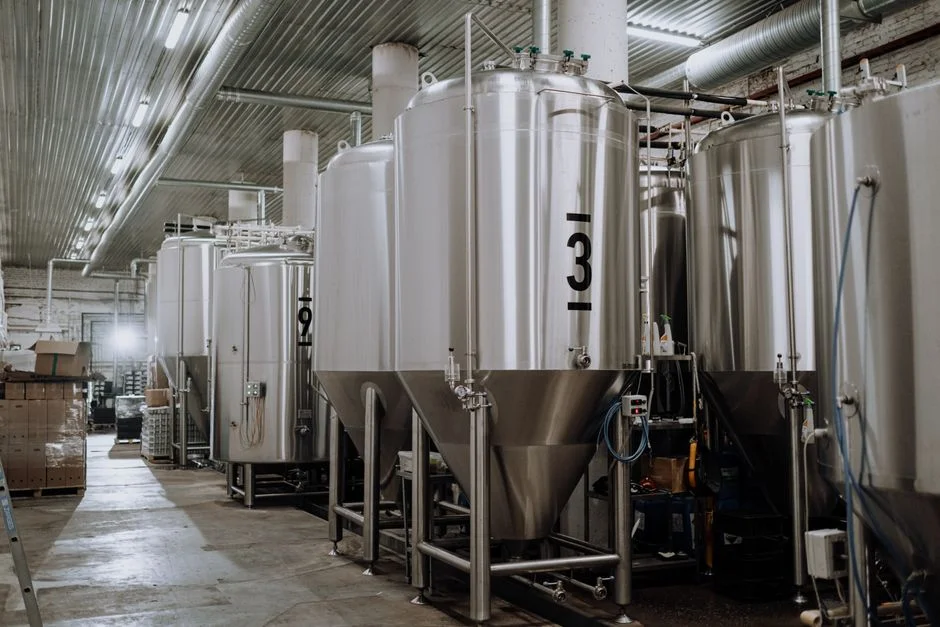
The Chemkimia reference train is a defensible skeleton: equalization sump → oil & grease trap → coagulation (pH-corrected) → flocculation → dissolved air flotation → biological aeration → sedimentation → activated carbon filter → continuous microfiltration (0.2 µm) → sludge thickener → filter press (Chemkimia, 2007-12). DAF is the workhorse for FOG and TSS at the front end, and the design documentation reports clarification rates up to 97% for fats, oils, greases, and suspended solids using a dissolved air flotation system (Chemkimia, 2007-12 verbatim). On the biology side, an integrated MBR membrane bioreactor is the standard upgrade path when footprint is constrained and effluent SS has to land below 10 mg/L — a deeper discussion of the trade-offs is in the MBR Advantages and Disadvantages: 2026 Engineering Buyer's Guide.
For a battery or cathode-line waste stream, the train extends. Fluorides from LiPF₆ require a Ca²⁺ precipitation stage before discharge or before any RO stage. TMAH and other amines require either acclimated biology with extended sludge age or advanced oxidation upstream of the MBR. NMP is recoverable by vacuum distillation but otherwise treatable as a high-COD solvent load. Copper can be precipitated or electrolytically recovered using a vendor unit. Chemical feed across all of this is best handled by a PLC-controlled chemical dosing skid with IEQIS-ready telemetry.
The table below shows planning-level CAPEX bands for a 10–50 m³/h Malaysian industrial ETP. These are order-of-magnitude bands, not quotes, and they exclude site work, civil works, and contingency.
| Treatment stage | Indicative CAPEX band (USD, 10–50 m³/h) | Battery-stream relevance |
|---|---|---|
| Equalization + transfer pumping | Low (anchor of the lower end) | Always required |
| Oil & grease trap + DAF train | Low–mid | Front-end FOG and floatable TSS; up to 97% clarification |
| Biological stage (SBR or MBR) | Mid | COD/BOD reduction to 100/50 mg/L; acclimated biomass for TMAH/amines |
| Chemical dosing + fluoride (Ca²⁺) precipitation | Mid (battery-stream surcharge) | LiPF₆ electrolyte or fluoride-bearing process; F⁻ to < 10 mg/L |
| Activated carbon + microfiltration (0.2 µm) | Mid | NMP trace removal; Li recovery option |
| RO / UF polishing | Mid–high | Closes the envelope for water reuse (60% target, 2027 circular-economy signal) |
| Electrolytic Cu recovery (e.g. RARELOOP-class) | Mid (battery-stream surcharge) | Etching line; reagent cost offset |
| Sludge thickener + plate-and-frame filter press | Low–mid | F⁻-rich cake handling; 22–28% dry solids |
Two forward-looking rules to design in now. First, the 2020 zero liquid discharge direction for high-risk sectors and the 2027 circular-economy signal for industrial parks mean a 60% reuse target is the safe minimum to avoid stranded capex (per hydropurewater.com, 2026-02). RO/UF polishing capacity sized for 60% reuse today is the cheaper path compared with a 2028 retrofit. Second, vendor selection should require IEQIS-ready PLC/SCADA, MS ISO/IEC 17025-compatible sampling ports, and a documented OPEX model in MYR — anything less will cost the deal team weeks of re-permitting later.
Compliance Verification, Sludge Handling, and Penalty Exposure
Compliance is verified through quarterly 24-hour composite sampling analysed at STANDARDS MALAYSIA-accredited labs under MS ISO/IEC 17025, with electronic submission via the Integrated Environmental Quality Information System (IEQIS) (per hydropurewater.com, 2026-02). High-risk facilities — and any site attracting an EIA — may be moved to monthly or, under the 2026 Selangor and Johor pilot, continuous monitoring. A defensible design therefore includes an in-plant sample sink with a flow-weighted composite sampler, an MS ISO/IEC 17025 contract in place before commissioning, and PLC/SCADA pre-wired to the IEQIS submission schema. The 2026 real-time pilot signals this will be the norm within 24–36 months; designing it in now is cheaper than retrofitting.
Sludge handling is regulated. Dewatered cake must be sent to a licensed disposal facility, with inland disposal prohibited (per hydropurewater.com, 2026-02). On battery-line waste — particularly F⁻-rich and Cu-rich cake — a plate-and-frame filter press typically reaches 22–28% dry solids, enough to pass the paint-filter test and to move by container to a licensed operator. The Sludge Dewatering System Maintenance Guide: 7-Step Protocol for 40% Longer Equipment Life is a useful reference for the operating cadence once the press is installed.
The penalty floor is set in Section 25 of the EQA 1974: fines up to RM 500,000, imprisonment for responsible parties, and license revocation on repeat offence (per hydropurewater.com, 2026-02). Operating without a valid permit under the new owner is not a defensible position, even for the weeks between closing and re-issuance. The operating risk is not theoretical — the DOE conducts regular and unannounced audits — and a post-closing operating period without a transferred permit is the single most exposed piece of any Malaysia battery M&A deal.
Frequently Asked Questions
Does environmental liability transfer to Samsung SDI on closing a Malaysian plant acquisition?
Yes. Under Section 34A of the Environmental Quality Act 1974, the prohibition on discharge of untreated sludge or effluent into inland waters binds the entity operating the plant on the day effluent leaves the site, and that liability transfers to the new owner on closing (per hydropurewater.com, 2026-02).
What is the binding effluent envelope for a Malaysian battery-line ETP?
Under Standard B of the Environmental Quality (Industrial Effluent) Regulations 2009, the binding values are pH 5.5–9.0, COD ≤ 100 mg/L, BOD₅ ≤ 50 mg/L, TSS ≤ 100 mg/L, oil & grease ≤ 10 mg/L, with heavy-metal caps including Cu ≤ 1.0 mg/L, Ni ≤ 1.0 mg/L, Zn ≤ 2.0 mg/L, and B ≤ 4.0 mg/L (Chemkimia/Panasonic Appliances Air-Conditioning Malaysia design basis, 2007-12). Site-specific permit conditions may tighten these.
Does the seller's DOE discharge permit automatically transfer to the acquirer?
No. The seller's permit does not automatically transfer with the share purchase. A new DOE discharge permit, engineering plan submission, EIA where the activity is prescribed, and site inspection are required before the acquired plant can discharge under the new owner's name (per hydropurewater.com, 2026-02). The acquired site's prior compliance history materially affects review duration.
What is the penalty exposure for non-compliance with Malaysian effluent regulations?
Under Section 25 of the EQA 1974, violations can attract fines up to RM 500,000, imprisonment for responsible parties, and license revocation on repeat offence (per hydropurewater.com, 2026-02). The DOE conducts regular and unannounced audits, so the operating risk is not theoretical.
Which battery-chemistry-specific treatment stages are missing from a 2007-era Malaysian ETP design?
Generic designs based on the 2007 Panasonic Malaysia air-conditioning dataset do not cover fluorides from LiPF₆, TMAH and amines from photoresist developing, NMP from cathode slurry, or copper from current-foil etching. A defensible design must add calcium precipitation for F⁻, acclimated biology or AOP for TMAH/amines, and either precipitation or electrolytic recovery for copper, on top of the standard equalization–DAF–MBR–polishing train (per hydropurewater.com, 2026-02).