
Why Pharmaceutical Wastewater in Kazakhstan Demands a Dedicated ETP
Kazakhstan's Ecological Code RK (entered force 2021, with the 2025–2026 enforcement cycle now binding) sets the regulatory floor for any API or formulation plant discharging to municipal sewer or surface water. Practical compliance targets are COD ≤ 80–125 mg/L and BOD₅ ≤ 15–25 mg/L to sewer, dropping to COD 30–50 mg/L and BOD₅ 3–6 mg/L for surface-water discharge under SanPiN No. 168, with NH₃-N held to 1.5–2.0 mg/L to sewer (HydropureWater field data, 2026).
Typical Kazakhstani API and formulation streams run 1,000–15,000 mg/L COD with BOD/COD below 0.3, high sulfate from synthesis reactions, plus residual solvents and antibiotic activity. A 2024 review of 229 pharma plants (Li et al., 2024, J. Water Process Eng.) documents the same envelope globally and confirms that standalone biology cannot close the spec on refractory APIs. Kazakhstan's centralized municipal WWTPs were designed for domestic load — not for antibiotic resistance genes, API residuals, or 10 g/L chloride pulses — so on-site pretreatment to strict sewer limits is the only defensible path to permit.
Add a Steppe winter that holds below −25 °C for weeks, and the ETP must be enclosed, heated, and biologically robust. The combination of tight ecological limits, refractory chemistry, and cold-climate operation is what forces a dedicated, multi-stage plant rather than a tie-in to the city sewer.
Influent Characterization for Kazakhstan API and Formulation Plants
A defensible mass balance starts with a defensible influent envelope. For a 2026 Kazakhstan API/formulation tender, the table below is the minimum envelope the design engineer should verify against the client's grab-sample data before sizing any tank.
| Parameter | Typical range | Design peak | Process implication |
|---|---|---|---|
| pH | 2–11 (batch swings) | 1–12 excursions | Equalization + inline pH correction mandatory |
| COD | 1,000–15,000 mg/L | 25,000 mg/L | Standalone MBR will not reach sewer spec |
| BOD₅ | 300–4,500 mg/L | 7,500 mg/L | BOD/COD often 0.2–0.3 (refractory) |
| TSS | 200–3,000 mg/L | 5,000 mg/L | DAF or lamella ahead of biology |
| TN | 50–800 mg/L | 1,200 mg/L | Nitrification/denitrification sized accordingly |
| NH₃-N | 20–400 mg/L | 600 mg/L | Toxic to biomass above 200 mg/L free NH₃ |
| Sulfate (SO₄²⁻) | 200–5,000 mg/L | 8,000 mg/L | UASB H₂S risk; control COD/SO₄ > 10 |
| Conductivity | 2–25 mS/cm | 40 mS/cm | Saline cephalosporin/macrolide streams suppress nitrification above 10 g/L NaCl |
| Residual solvents | Methanol, acetone, DMF, DMSO up to 500 mg/L | 1,500 mg/L | Fenton or ozone polishing required after biology |
Batch campaigns (e.g., a 5-day cephalosporin campaign followed by a formulation week) drive peak-to-average COD ratios of 3:1 to 5:1, so the equalization basin should be sized for ≥24 h HRT at average flow. High-salt API streams from cephalosporin or macrolide synthesis suppress nitrification above 10 g/L NaCl — either route to halophilic biomass or specify a salt-tolerant MBR with a controlled bleed (Li et al., 2024; Ng et al., 2016, Chem. Eng. J.). Residual solvents above 200 mg/L and antibiotic activity from tetracyclines, fluoroquinolones, and β-lactams will not break in biology alone; the carbon-electrode literature (Carbon Electrodes for Pharmaceutical Wastewater Treatment, CRC Press, 2026) confirms Fenton/ozone or RO polishing is required to reach spec.
Process Flow: Pretreatment → Anaerobic → MBR → AOP → RO
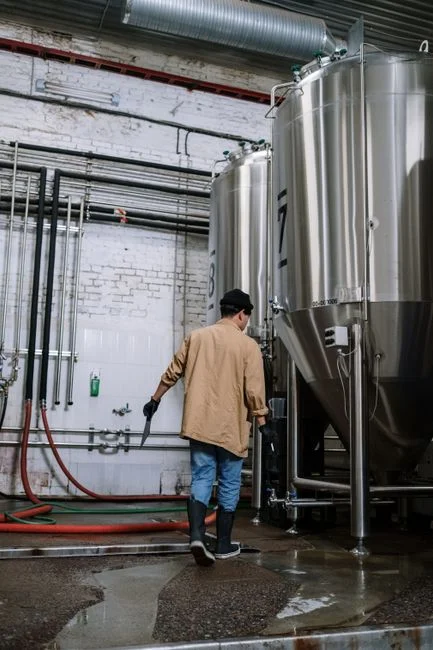
The 2026 reference train for a Kazakhstan pharma ETP is a five-stage chain. Each stage sits in this position for a specific reason.
| Stage | Equipment | Operating point | Removal / role |
|---|---|---|---|
| 1. Equalization + DAF | EQ basin + DAF for suspended solids and FOG removal | pH 6.5–8.0, 4–300 m³/h | Buffer 24 h; remove TSS, oil, partial COD |
| 2. Hydrolytic / UASB | Anaerobic reactor | 35 ± 2 °C, HRT 24–48 h | COD ↓ 40–60%, raises BOD/COD for downstream |
| 3. Submerged MBR | Submerged PVDF MBR for Kazakhstan pharma effluent | PVDF 0.1–0.4 μm, MLSS 8,000–12,000 mg/L, HRT 18–30 h | COD ↓ 85–95%, TSS < 5 mg/L |
| 4. AOP (Fenton / O₃) | Fenton reactor or catalytic ozone | H₂O₂/COD 1.5–2.5; O₃ 5–20 mg/mg DOC | Polishes residual API and recalcitrant COD |
| 5. RO or ClO₂ | RO polishing for water reuse (75–95% recovery) or ClO₂ for sewer discharge | Feed 5–45 °C, ≤ 2.0 m³/h per element | Final spec compliance or reuse |
| Side-stream sludge | Lamella clarifier for sludge thickening + plate-and-frame filter press for biological sludge | Cake ≥ 22% DS | Off-site incineration / landfill |
Equalization absorbs the 3:1 to 5:1 batch peaks before they hit biology; DAF strips emulsified oils and TSS that would foul the MBR. Hydrolytic acidification or UASB at 35 ± 2 °C breaks complex APIs into shorter-chain organics, lifting BOD/COD and taking 40–60% of the COD load off the aerobic stage (Li et al., 2024). The submerged MBR holds MLSS at 8,000–12,000 mg/L and delivers a TSS-free permeate that protects the downstream RO or polishing step. Fenton (Fe²⁺/H₂O₂ at H₂O₂/COD 1.5–2.5) or catalytic ozone at 5–20 mg O₃ per mg DOC oxidizes residual antibiotics and solvents; both reference the tetracycline Fe-Mn catalyst work by Chen et al. (2024, J. Clean. Prod.). RO at 75–95% recovery closes the loop for reuse, while ClO₂ disinfection is the lighter alternative for plants discharging only to municipal sewer. The aeration box, biology tank, and chemical dosing are managed through a PLC-controlled chemical dosing for Fenton and pH control skid.
For a side-stream, gravity thickening in a lamella clarifier followed by an automatic plate-and-frame press to ≥22% DS reduces sludge volume by 80–85% and keeps hauling costs inside the OPEX envelope.
MBR vs Conventional CAS: Head-to-Head for Kazakhstan Pharma
For a brownfield Kazakh plant with limited plot area and a sewer spec in the COD 80 mg/L band, the choice between a submerged MBR and a conventional CAS + clarifier train usually decides the plot plan. The table below normalizes both options to a 100 m³/d design basis.
| Criterion | Submerged MBR | Conventional CAS + clarifier |
|---|---|---|
| Effluent COD | ≤ 50 mg/L | 80–120 mg/L (tertiary needed for sewer) |
| Effluent TSS | < 5 mg/L | 20–30 mg/L |
| Footprint (100 m³/d) | ~25 m² | ~60 m² (incl. secondary clarifier) |
| HRT | 18–30 h | 30–48 h (aeration) + clarifier |
| Sludge yield | 0.2–0.3 kg MLSS/kg COD | 0.4–0.5 kg MLSS/kg COD |
| CAPEX index | 1.4–1.7× | 1.0× (base) |
| OPEX index | 0.8–0.9× (less polymer, no clarifier) | 1.0× (polymer, clarifier maintenance, sand-filter backwash) |
| Cold-weather operability | Enclosed tank + aeration box holds 5–40 °C | Clarifier hydraulics, settling, and nitrification all degrade < 10 °C |
MBR cuts footprint by roughly 60% versus CAS + secondary clarifier — a decisive factor on the typical 0.5–1.5 ha Steppe site. Sludge yield of 0.2–0.3 kg MLSS/kg COD versus 0.4–0.5 for CAS directly reduces downstream filter-press loading and hauling. CAS CAPEX is lower on day one, but the OPEX line (polymer, clarifier maintenance, tertiary sand filter) closes the 5-year TCO gap on most Kazakh pharma tenders. For a deeper dive on biology selection and equipment sizing, the biopharmaceutical ETP process design guide covers MBR train integration in detail.
Winterized Civil and Equipment Design for −30 °C Operation
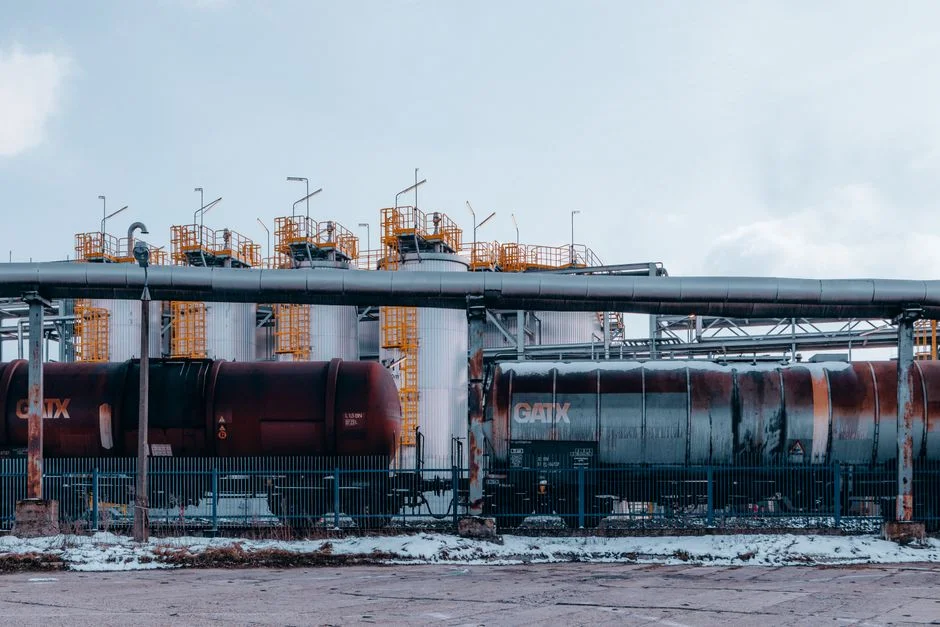
Kazakhstan's design winter (−30 °C in Astana, Karaganda, and Pavlodar regions; colder in the northeast) decides the civil envelope. Equalization, DAF, and all aerobic tanks must be enclosed in insulated, heated buildings, or buried below the local frost line (1.8–2.4 m in central and northern regions). Raw influent is pre-heated through plate heat exchangers using waste steam or boiler hot water so the biology holds at 25–35 °C year-round; below 10 °C, nitrification rates halve and clarifier settling degrades sharply. 0.1 μm PVDF flat-sheet MBR modules with an integrated aeration box are rated 5–40 °C by the manufacturer, but the design point should be confirmed with the vendor on a project-specific basis (HydropureWater DF series, 2026 spec). RO membranes are typically rated 5–45 °C, so feed heaters with concentrate-side heat recovery and heat-traced outdoor brine lines are mandatory. Chemical dosing rooms for NaOH, H₂SO₄, and H₂O₂ must be enclosed with ventilation interlocks so dosing lines cannot freeze; H₂O₂ storage at 35% loses 1% active oxygen per week at 25 °C and far more at sub-zero outdoor storage. For a broader cost-and-spec reference, the industrial wastewater engineering specs and cost blueprint walks through cold-climate design points in a comparable jurisdiction.
Equipment Shortlist and 2026 CAPEX/OPEX Benchmark
The shortlist below is sized for a 500 m³/d Kazakhstan pharma ETP, discharge to municipal sewer, with on-site sludge dewatering. All numbers are 2026 budget estimates and should be revalidated against vendor quotes at the time of tender.
| Item | Specification | 2026 budget range (USD) |
|---|---|---|
| DAF unit | DAF, 50 m³/h | $35,000–$60,000 |
| MBR skid | PVDF modules + blower panel, 200 m³/d (scale to 1,000 m³/d at $0.7M–$0.95M) | $180,000–$260,000 |
| Fenton + RO skid | 100 m³/d, RO polishing for water reuse | $150,000–$220,000 |
| Chemical dosing | PLC-controlled chemical dosing for Fenton and pH control, 5 pumps | $45,000–$75,000 |
| Filter press | Plate-and-frame filter press for biological sludge, 50 m², automatic | $60,000–$90,000 |
| Lamella thickener | Lamella clarifier for sludge thickening | $25,000–$45,000 |
| Turnkey 500 m³/d ETP | EQ + DAF + UASB + MBR + Fenton/RO + sludge | $1.4M–$2.2M CAPEX |
| OPEX (per m³ treated) | Chemicals, energy, sludge disposal, labor | $0.55–$1.10/m³ |
Energy is the dominant OPEX line (40–55%), driven by MBR aeration at 0.3–0.5 kWh/m³ and RO high-pressure pumps at 0.6–1.2 kWh/m³. Sludge hauling to off-site incineration in Almaty or Shymkent can swing OPEX by ±$0.10/m³ depending on cake dryness; the 22% DS benchmark from the filter press is what closes that gap. For a regional cross-check on equipment selection and CAPEX lines, see the pharmaceutical wastewater treatment in Senegal 2026 guide.
Frequently Asked Questions
What are the discharge limits for pharmaceutical wastewater in Kazakhstan?
Under the Ecological Code RK and SanPiN No. 168, COD to municipal sewer is set at 80–125 mg/L and BOD₅ at 15–25 mg/L; surface-water discharge tightens to COD 30–50 mg/L and BOD₅ 3–6 mg/L, with NH₃-N held to 1.5–2.0 mg/L to sewer. Always confirm the latest values with the local ecology committee (HydropureWater field data, 2026).
Is MBR or conventional activated sludge better for cold-climate pharma ETP?
Submerged MBR delivers TSS < 5 mg/L and COD ≤ 50 mg/L in roughly 25 m² per 100 m³/d, versus 60 m² for CAS plus clarifier at 80–120 mg/L COD. For a brownfield Kazakh plant on a tight site, MBR is the more defensible choice — see the head-to-head table above for the full TCO comparison.
How do you size the equalization basin for a batch API plant?
For a 3:1 to 5:1 peak-to-average COD ratio, size the EQ basin for at least 24 h HRT at average daily flow, with pH correction and aeration mixing to keep TSS in suspension. This is what protects the downstream UASB and MBR from shock loads during campaign peaks.
What is the 2026 CAPEX benchmark for a 500 m³/d Kazakhstan pharma ETP?
A turnkey EQ + DAF + UASB + MBR + Fenton/RO + sludge-dewatering plant lands in the $1.4M–$2.2M range, with OPEX of $0.55–$1.10 per m³ treated, inclusive of chemicals, energy, sludge disposal, and labor (HydropureWater field data, 2026).