Why Biopharmaceutical Effluent Treatment Plant Design Is Different in 2026
A biopharmaceutical effluent treatment plant in 2026 is designed around a four-barrier train: equalization + bar screening, anaerobic or anoxic/aerobic MBR membrane bioreactor system (HRT 6–10 h, SRT 30–60 days), UF/RO membrane polish (RO recovery up to 95%), and on-site ClO₂ or ozone disinfection. Influent COD typically 1,000–10,000 mg/L with residual antibiotics is reduced to <250 mg/L COD and >3-log ARB removal to meet EU, China GB, and FDA indirect-discharge expectations.
Biopharma streams are not interchangeable with small-molecule pharmaceutical wastewater. Fermentation broth carryover, vaccine cell-culture waste, and CIP rinses carry higher BOD/COD (1,000–10,000 mg/L COD versus 500–3,000 mg/L for synthesis plants), residual live or attenuated organisms, residual antibiotics at 0.1–50 mg/L, and complex solvents. The 2024–2026 EU BAT-AEL revisions and the 2025 update to China GB 21904–2008 have both added antibiotic-resistant bacteria (ARB) and antibiotic resistance gene (ARG) parameters to discharge permits — a shift that did not exist in permit documents before 2023. The design consequence is straightforward: a 2-barrier train (biological + clarifier) that was acceptable in 2021 is no longer defensible. The 2026 biopharma ETP needs physical, biological, membrane, and disinfection barriers in series, with the biological stage sized for ARG suppression, not just COD removal.
Influent Characterization: What the Plant Must Handle
Biopharma influent is a composite of three hard sub-streams, and the design numbers below assume they are blended in an equalization basin before biological treatment. Equalization at 24–48 h HRT plus bar screening at ≤5 mm aperture is what makes the downstream biology stable enough to hit permit numbers day after day.
| Parameter | Influent range (2026) | Effluent target (EU/China 2026) |
|---|---|---|
| COD | 1,000–10,000 mg/L | <250 mg/L |
| BOD₅ | 300–5,000 mg/L | <30 mg/L |
| BOD/COD ratio | 0.30–0.50 | — |
| TSS | 200–1,500 mg/L | <50 mg/L |
| Sulfate | 500–3,000 mg/L | <400 mg/L (tier-dependent) |
| Residual antibiotics | 0.1–50 mg/L | Not detected (method-dependent) |
| Total nitrogen | 50–400 mg/L | <40 mg/L |
| pH | 4–9 (spikes to 11 from CIP) | 6–9 |
| Temperature | 20–40 °C (CIP can hit 60 °C) | <40 °C |
The three hardest sub-streams are fermentation residuals (high COD and high ammonia from amino-acid catabolism, often 4,000–8,000 mg/L COD), CIP washwater (pH swings of 2–11, temperature spikes to 60 °C, and non-ionic surfactants that foam in the aeration tank), and purification reject (solvents such as acetonitrile and methanol, with a BOD/COD ratio below 0.2 that resists conventional biological oxidation). Without equalization, CIP pH spikes alone can knock a 5–15 day SRT sludge blanket off profile in under two hours. The effluent column in the table reflects the typical 2026 EU BAT-AEL and China GB 21904 baseline that most permits are converging on; site-specific permits in India and some U.S. states tighten TSS to <30 mg/L. Engineers should treat the table as a starting BOD sheet for a process basis-of-design document, then overlay the local permit.
Core Biological Stage: Why MBR Wins Over CAS and SBR
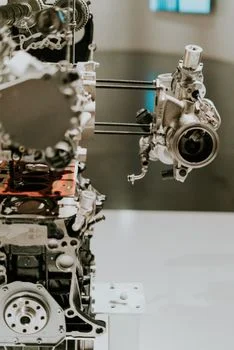
An MBR running at SRT 30–60 days and MLSS 8,000–15,000 mg/L delivers the long biomass age that suppresses horizontal ARG transfer in mixed liquor — a control mechanism that 5–15 day SRT conventional activated sludge cannot replicate. The submerged PVDF membrane at 0.1–0.4 µm pore size retains nearly all biomass and particulates, so MBR effluent routinely hits TSS <5 mg/L and turbidity <1 NTU, which is what makes the downstream RO stage viable.
| Parameter | MBR (2026 BAT) | Conventional activated sludge | SBR |
|---|---|---|---|
| SRT | 30–60 days | 5–15 days | 10–25 days |
| HRT | 6–10 h | 8–24 h (incl. clarifier) | 12–24 h batch |
| MLSS | 8,000–15,000 mg/L | 2,000–4,000 mg/L | 3,000–6,000 mg/L |
| Effluent TSS | <5 mg/L | 10–30 mg/L | 10–20 mg/L |
| Footprint (relative) | 1.0× (baseline) | 2.5–4× (clarifier + sludge zone) | 2–3× (batch tankage) |
| ARG suppression | Strong (long SRT, biomass retention) | Weak | Moderate |
| OPEX vs. CAS | Baseline + ~15% (membrane scour + CIP) | Baseline | Baseline + ~5% (cycle controls) |
CAS still has the lowest OPEX and the most operator familiarity, but the 2.5–4× footprint alone disqualifies it for most 2026 CDMO brownfield sites. SBR is competitive for small flows (under 200 m³/day) but the batch cycle time makes it difficult to absorb the diurnal swings from a multi-product CDMO. The operating trade-off for an MBR membrane bioreactor system is membrane scouring air at 0.3–0.6 m³/h per m² of membrane area and a chemical cleaning cycle every 6–12 months (typically 1,000–2,000 mg/L NaOCl + citric acid), which together add roughly 15% to OPEX versus CAS. For a 500 m³/day biopharma plant in 2026, that OPEX premium buys a permit-defensible ARG performance and a filtrate that can feed RO directly.
Membrane Polish and the Reuse Loop
The MBR filtrate still carries colloidal organics and bacteria, with silt density index (SDI) typically around 5 — too high for RO. A UF stage at 0.01–0.05 µm pore size, operated at 50–80 L/m²·h flux, brings the SDI below 3 and protects the RO membranes from irreversible fouling. The UF backwash stream (5–10% of feed) returns to the head of the ETP; it is small enough that the equalization basin absorbs it without a re-design.
The RO stage is sized for 70–95% recovery depending on feed salinity, with concentrate typically 5–15% of feed volume. For plants under a zero-liquid-discharge mandate, the concentrate is sent to a small thermal brine concentrator or crystallizer; for plants without that mandate, it is hauled off-site or sent to a cooling-tower blowdown stream. The reuse economics in 2026 are concrete: 60–80% of treated effluent reused as cooling-tower makeup or CIP pre-rinse saves $0.30–$0.80 per m³ against municipal freshwater tariffs in most coastal Chinese and Indian pharma clusters, and $0.50–$1.20 per m³ in EU CDMO sites. A dedicated industrial RO system is the unit operation that unlocks that offset, and a multi-media filter ahead of the RO is the cheapest insurance against premature cartridge replacement. WFI-grade reuse is outside the ETP scope — the RO permeate would still need EDI and a final 0.2 µm polish — but flag it for the upstream water system team early so the ETP discharge spec lines up with their intake spec.
Disinfection and the Antibiotic-Resistant Bacteria Problem
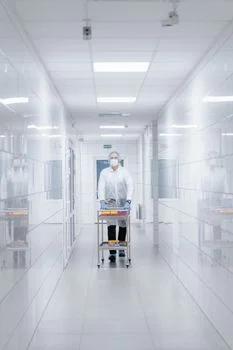
Sublethal chlorine doses (free chlorine <0.5 mg/L after 30 min) can enrich ARG populations in receiving water rather than suppress them, which is the regulatory mechanism behind the 2025–2026 ARG permit additions. The defensible 2026 BAT combination is ClO₂ at 0.5–2 mg/L residual with 30-min contact, or ozone at CT 5–15 mg·min/L, followed by a polishing UV dose of 30–40 mJ/cm² to deliver the >3-log ARB reduction most permits now require.
The practical selection logic is straightforward: ozone is preferred for high-COD polishing because it also reduces recalcitrant organics that survive the MBR, ClO₂ is the workhorse for routine disinfection because it holds residual through the discharge pipe, and UV is the dedicated ARG-damage step because 254 nm light damages DNA without selecting for chlorination resistance. A packaged ClO₂ generator sized at 5–20 g/h per 100 m³/day is the typical 2026 selection. For plants handling live biological agents (BSL-2 vaccine production), the disinfection stage also has to be validated for containment — typically by adding a 0.2 µm absolute filter after the UV and confirming integrity-test pressure.
Sludge Handling and Chemical Dosing: Closing the Mass Balance
Closing the mass balance is what separates a defensible ETP bid from a partial one. Biological sludge yield from a biopharma MBR is 0.2–0.4 kg MLVSS per kg COD removed — lower than CAS because the long SRT drives more COD to mineralization. Wasted sludge at 0.8–1.2% solids needs a dewatering stage; a plate and frame filter press operating at 1.5–2.5 bar feed pressure reaches 22–28% dry solids, which is the range that off-site incinerators and composting facilities will accept without a surcharge.
Automatic chemical dosing is the 2026 norm because permit repeatability is now a documented audit item, not a nice-to-have. NaOH or H₂SO₄ for pH trim into the MBR (target pH 7.0–7.5), antifoam (silicone or polyol blend) for the surfactant spikes from CIP, urea or phosphoric acid for N/P supplementation when the BOD:N:P ratio drifts outside 100:5:1, and a coagulant dose ahead of any tertiary clarifier — all of these belong on a PLC-controlled automatic chemical dosing system with flow-paced setpoints. Headworks protection matters too: a rotary mechanical bar screen at 3–5 mm aperture ahead of the MBR prevents rags and cell debris from blinding the membrane modules, which is the single most common cause of unplanned MBR downtime in CDMO service.
CAPEX, OPEX, and the 2026 Decision Framework
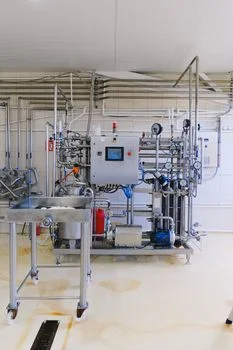
For a 500 m³/day MBR + RO biopharma ETP in 2026, turnkey CAPEX lands at $1.2M–$2.0M USD, with the MBR skid at roughly 40–45% of that total and the RO system at 20–25%; a 100 m³/day system sits at $0.4M–$0.8M and scales roughly linearly to about 2,000 m³/day before the economics shift toward dedicated parallel trains. OPEX runs $0.45–$0.75 per m³ treated, dominated by electricity at 30–40% (mostly membrane scour air and RO high-pressure pumps) and membrane replacement at 15–20%; the reuse loop typically subtracts $0.20–$0.50 per m³ from that figure, which is what makes the RO upgrade self-funding inside 3–5 years at most CDMO sites.
Use this decision framework for the bid review: MBR alone if the plant is discharge-only with a willing POTW and no ARG permit language; MBR + RO if reuse is above 50% or discharge limits are tighter than 250 mg/L COD; add ozone if the permit cites ARB or ARG numerical limits; add thermal ZLD only when the local jurisdiction has a published zero-discharge mandate — otherwise the brine hauler is cheaper. The basis-of-design checklist the engineer can paste into the project file: 24–48 h equalization HRT, ≤5 mm bar screening, MBR at HRT 6–10 h and SRT 30–60 days with MLSS 8,000–15,000 mg/L, UF at 50–80 L/m²·h flux, RO at 70–95% recovery, ClO₂ or ozone plus UV for >3-log ARB, plate-and-frame press to 22–28% DS, and PLC-controlled dosing on every chemical feed point. For a side-by-side look at why MBR is displacing CAS on permit grounds, the 2026 engineering comparison of MBR vs conventional activated sludge is the closest reference; for the permit numbers themselves, the 2026 global COD and BOD discharge limit guide covers the jurisdictional detail. Sensor spend for the monitoring package is typically 3–5% of CAPEX; budget ranges for that line item are in the 2026 IoT sensor pricing and spec guide.
Frequently Asked Questions
What is the minimum HRT for an MBR on biopharma wastewater in 2026? 6 hours is the minimum design HRT for a submerged MBR on biopharma effluent; 8–10 hours is the typical operating range when residual antibiotics and ARG suppression are permit drivers, with SRT held at 30–60 days.
Is conventional activated sludge still acceptable for a 2026 biopharma ETP? CAS is technically acceptable on COD alone, but it cannot meet 2026 ARG permit language because the 5–15 day SRT does not suppress horizontal gene transfer; MBR is the defensible selection for any new or retrofit biopharma plant in 2026.
What ARG-removal capability does MBR plus UV provide? MBR followed by 30–40 mJ/cm² UV delivers >3-log reduction of antibiotic-resistant bacteria and measurable ARG copy-number reduction in the effluent; chlorine alone at sublethal doses can enrich ARG populations and is no longer BAT.
What is the CAPEX for a 500 m³/day biopharma ETP in 2026? Turnkey CAPEX for a 500 m³/day MBR + RO biopharma effluent treatment plant sits at $1.2M–$2.0M USD in 2026, with OPEX of $0.45–$0.75 per m³ treated before reuse offset of $0.20–$0.50 per m³.