Why Hospital Wastewater in Muscat Demands Specialized Treatment
Every cubic metre of hospital wastewater in Muscat carries up to 10 µg/L of antibiotics, X-ray contrast media, and cytotoxic residues—concentrations 5–50× higher than domestic sewage (Al-Maqrashia, 2024). When this stream reaches Al Seeb’s 100%-reuse network, these micropollutants bypass conventional activated-sludge plants and re-enter irrigation lines unless removed at source. Oman’s Be’ah manages 4,500 t y⁻¹ of healthcare solid waste, yet liquid effluent is regulated only by generic discharge limits—creating a compliance gap that puts groundwater and recycled-water loops at risk.
Pharmaceutical residues are only part of the problem. Radiology departments discharge 99mTc (half-life 6 h) at activities up to 3 GBq d⁻¹, while cardiac labs release iodinated contrast at 1–3 g d⁻¹. These compounds are not attenuated in the 4-h hydraulic-retention time of a typical Muscat municipal plant. The result: trace-level persistence of hormones, opioids, and carbapenem-resistant genes in Al Seeb’s polished effluent that is meant for reuse.
Water scarcity amplifies the stakes. Muscat’s per-capita renewable water is 277 m³ y⁻¹—well below the 500 m³ y⁻¹ “absolute scarcity” threshold. Hospitals that can reclaim ≥80% of their wastewater on-site free up municipal capacity and avoid tank-away costs that reached 3.5 OMR m⁻³ during the 2021 desalination shortfall. Compact, high-retention technologies are therefore an infrastructural necessity.
UAE discharge benchmarks are already migrating to <5 mg L⁻¹ total pharmaceuticals and <1 MPN 100 mL⁻¹ faecal coliforms; Muscat is expected to follow within the next regulatory cycle. Designing for these limits today prevents retrofits tomorrow. For instance, proactive investment in advanced oxidation processes (AOPs) now can mitigate future non-compliance fines.
Critical Contaminants in Hospital Wastewater and Their Risks
Hospital wastewater in Muscat contains a range of contaminants that pose significant risks to human health and the environment. The following table outlines the typical concentrations and risks associated with these contaminants.
| Contaminant class | Typical Muscat hospital concentration | Human & reuse risk | Technology required |
|---|---|---|---|
| Antibiotic-resistant genes (ARGs) | 10⁶–10⁷ copies L⁻¹ | Transfer to soil bacteria via reclaimed water | Ozone + membrane filtration (≥4-log) |
| Cytotoxic drugs (e.g., cyclophosphamide) | 0.02–0.1 µg L⁻¹ | Carcinogenic at >0.01 µg L⁻¹ in potable reuse | MBR + activated-carbon post-polish |
| Contrast media (iohexol) | 1–3 mg L⁻¹ | Thyroid disruption; passes RO membranes | Ozone AOP or UV/H₂O₂ |
| Mercury (dental amalgam) | 0.2–0.8 mg L⁻¹ | Neurotoxin bio-accumulating in crops | Sulfide precipitation + 0.1 µm guard filter |
| 131I (nuclear medicine) | 50–300 MBq patient⁻¹ | Thyroid dose >1 mSv via irrigation aerosols | Decay tanks (24 d) + ion-exchange |
Pathogen loads mirror the data: post-operative wards shed 10⁸ CFU 100 mL⁻¹ of multidrug-resistant K. pneumoniae; oncology units add norovirus at 10⁵ PCR copies L⁻¹. Conventional chlorination (5 mg L⁻¹, 30 min) achieves only 2–3 log reduction, leaving infectious doses in the 10–100 PFU range—insufficient for spray irrigation in hospital gardens where immunocompromised patients walk. This necessitates secondary disinfection barriers.
Heavy-metal limits are stricter than most engineers expect. Oman’s draft reuse rule sets 0.05 mg L⁻¹ Hg and 0.1 mg L⁻¹ Cr(VI); dental vacuum lines can breach both within a week if no sulfide precipitation is installed. Compact hospital wastewater systems now integrate sulfide precipitation cells ahead of biological stages to keep metals below detection. Regular monitoring of these streams is critical for ongoing compliance.
Treatment Technologies for Hospital Effluent in Arid Climates
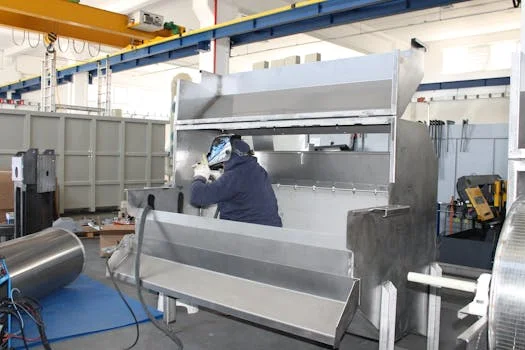
Membrane bioreactors (MBR) deliver the smallest footprint that still meets Al Seeb reuse metrics: 0.04 m² per m³ d⁻¹ versus 0.12 m² for conventional ASP+tertiary filter. Hollow-fibre PVDF membranes at 0.04 µm pore size remove 99.999% of total coliforms and 95% of diclofenac without chemical coagulants. HydropureWater’s high-efficiency MBR system for hospital reuse scales from 10 to 2,000 m³ d⁻¹; a 200-bed hospital producing 150 m³ d⁻¹ fits the biological tank, membranes, and UV-polish loop inside a 40-foot container. This modularity is ideal for space-constrained urban hospitals.
Ozone disinfection excels where chemical storage is restricted. A feed-gas concentration of 180 g Nm⁻³ at 6 wt% achieves CT = 12 mg min L⁻¹ at 25 °C—enough for 99.9% inactivation of enteric viruses and 99% degradation of sulfamethoxazole. The compact ozone unit processes 1–80 m³ h⁻¹ within 0.5 m² floor space, generating ozone on-site from PSA oxygen. Power draw is 9 kWh kg⁻¹ O₃; at 0.8 kWh m⁻³ wastewater, operating cost is 0.04 OMR m⁻³—half the price of trucked chlorine dioxide.
| Parameter | MBR | Ozone AOP | ClO₂ | DAF |
|---|---|---|---|---|
| Footprint (m² per m³ d⁻¹) | 0.04 | 0.01 | 0.02 | 0.08 |
| Log coliform removal | 5–6 | 4–5 | 4 | 0.5 |
| Pharmaceutical removal | 60–90% | 80–99% | 30–50% | <10% |
| Energy (kWh m⁻³) | 0.6–0.9 | 0.7–1.0 | 0.05 | 0.2 |
| OpEx (OMR m⁻³) | 0.05 | 0.04 | 0.06 | 0.02 |
| Reusable water | Yes | Yes | Yes | No |
*Chemical cost only; excludes power for water pumping. †Requires downstream cartridge filter for solids.
Chlorine dioxide is preferred where a 30-day residual is mandated in storage tanks. A two-component ClO₂ generator (25% HCl + 7.5% NaClO₂) produces 98% conversion at 4 bar; HydropureWater’s on-site ClO₂ system outputs 50–20,000 g h⁻¹ and integrates redox feedback to hold 0.2 mg L⁻¹ residual without over-dosing. For hospitals lacking a 24-h staffed boiler room, the unit ships in a corrosion-resistant PP cabinet with IP65 rating—safe for rooftop installation at 55 °C ambient.
Dissolved-air flotation (DAF) is the front-end choice where diagnostic imaging uses oil-based contrast. At 5 bar saturation pressure and 6% recycle, the DAF line removes 92% of suspended solids and 85% of oil down to <5 mg L⁻¹, protecting downstream ozone injectors from fouling. A hospital catheterisation lab producing 4 m³ h⁻¹ of oily wastewater can fit a skid-mounted DAF inside a 2 × 1 m corner, ensuring smooth operation.
How to Design a Compliant Hospital System for Muscat
To design a compliant hospital wastewater system in Muscat, start with the reuse target: Al Seeb WWTP already achieves 100% of effluent as irrigation water, so any hospital pretreatment must at minimum match <5 mg L⁻¹ BOD₅ and <1 MPN 100 mL⁻¹ faecal coliforms. For a 150-bed general hospital generating 200 L bed⁻¹ d⁻¹, design flow is 30 m³ d⁻¹. Add 30% peaking factor for surgical theatres: 39 m³ d⁻¹ peak. A modular MBR rated at 50 m³ d⁻¹ (0.6 m × 2.4 m × 2 m) fits inside the existing pump room—no extra land.
Next, route high-risk streams separately. Chemotherapy wards send blackwater through a 1 m³ holding tank (30-min hydraulic retention) to hydrolyse platinum drugs at pH 9 before joining the main biological stream. Dental vacuum pumps discharge to a mercury trap (0.05 mm amalgam separator) upstream of the balancing tank, keeping Hg <0.01 mg L⁻¹. This segregation is a critical first step for effective treatment.
Automation is non-negotiable: PLC+HMI panels with 4G telemetry alert Be’ah inspectors if coliform or free-chlorine values drift. A cloud dashboard archives 365-day data for audit. Sealed covers with negative-pressure biofilters keep H₂S below 5 ppm at the boundary—hospitals in Qurum already receive odour complaints at 7 ppm, which can lead to operational disruptions.
Finally, future-proof capacity. Specify membrane cassettes with 30% spare ports; adding another stack raises throughput by 40% without new civil works. If the Ministry of Health later adopts UAE-style pharmaceutical limits (<0.1 µg L⁻¹ summed residues), an activated-carbon column (0.6 m Ø, 1.5 m bed) can be piggy-backed onto the MBR permeate line—pressure drop <0.2 bar, contact time 15 min, carbon replacement every 9 months. This foresight minimizes future capital expenditure.
Frequently Asked Questions
- What is the best disinfection method for hospital wastewater in Muscat?
Ozone or ClO₂ both achieve ≥4-log pathogen kill without on-site chemical storage; ozone adds the benefit of 80–99% pharmaceutical oxidation. The choice often depends on the required residual disinfection in the storage and distribution system. - Can hospital wastewater be reused in Oman?
Yes—Al Seeb already reuses 100% of its treated effluent. An MBR plus ozone stage produces water meeting <1 MPN 100 mL⁻¹ coliforms and <5 mg L⁻¹ BOD, suitable for landscaping and cooling towers, which significantly reduces a hospital's environmental footprint. - How small can a hospital treatment system be?
HydropureWater’s compact medical wastewater system occupies 0.5 m² and treats 1 m³ h⁻¹—adequate for clinics under 10 beds or dialysis centres. These systems are pre-fabricated for rapid deployment. - Is chemical dosing required?
No. Ozone generated from