Why Cameroon's Textile Mills Face a Compliance Cliff in 2026
A mid-sized textile mill in the Douala industrial corridor can run for thirty years on a single MINEE visit, then lose its discharge permit in one quarter. The 2025 Cameroon Environmental Report shows roughly 68% of coastal industrial discharges exceed COD limits, and 42% of factories lack any functional treatment infrastructure (per the Cameroon 2026 industrial wastewater blueprint, 2025). For a reactive-dye house, that profile looks like COD swinging from 800 to 2,500 mg/L across dye batches, TSS peaking at 1,500 mg/L during wash-off, and pH bouncing between 4 and 12 — the exact failure pattern MINEE inspectors are now trained to flag.
Legal exposure is no longer theoretical. Law No. 96/12 of 5 August 1996, Articles 52–55, sets fines of XAF 1 million to XAF 50 million for non-compliant industrial discharges, with mandatory facility shutdowns and criminal liability for repeat offenders (per Law No. 96/12, cited in 2026). In 2026 the Ministry of Water Resources and Energy (MINEE) tightens coastal enforcement: stricter numerical limits, mandatory Environmental Impact Assessment, quarterly COD/BOD/TSS monitoring, and joint audits by MINEE, MINEPDED, and municipal councils. A reactive-dye plant that treats "textile" as a generic industrial category will under-specify the train, miss colour and salinity targets, and absorb the fine.
This is why the rest of this article is written as a textile-only specification — dye-class chemistry, ADMI colour, and salt loading included — rather than a borrowed brewery or food-plant framework.
MINEE 2025 Discharge Limits Every Cameroon Textile Plant Must Hit
Any vendor proposal must be benchmarked against MINEE's 2025 numerical limits, not against a generic "industrial wastewater" table. For coastal sites in Douala and Limbe, the binding envelope is COD ≤50 mg/L, BOD ≤30 mg/L, TSS ≤35 mg/L, pH 6.0–9.0 (per MINEE 2025, cited 2026). Inland mills around Yaoundé typically discharge against COD ≤125 mg/L and BOD ≤40 mg/L, but the exact value must be confirmed against the local municipal order before procurement.
Textile plants have two parameters that breweries, food, and metalworking plants do not: colour and salinity. MINEE does not publish a textile-specific ADMI limit in its 2025 dataset, so the safe move is to pre-agree a colour target — typically ≤50 Pt-Co / ADMI 50 — with MINEPDED during the EIA, and to design the MBR stage to meet it. Salinity is governed indirectly through conductivity; reactive-dye salt loads of 50–80 g/L NaCl in spent baths must be diluted or bled from the MBR concentrate before discharge.
| Parameter | Coastal (Douala, Limbe) | Inland (Yaoundé hinterland) | Textile-specific note |
|---|---|---|---|
| COD | ≤50 mg/L | ≤125 mg/L | Tightest parameter; MBR defines compliance |
| BOD | ≤30 mg/L | ≤40 mg/L | Confirms biological stage worked |
| TSS | ≤35 mg/L | ≤50 mg/L typical | DAF front-end must hit 92–97% removal |
| pH | 6.0–9.0 | 6.0–9.0 | Reactive-dye swings of 4–12 must be neutralised upstream |
| Colour (ADMI / Pt-Co) | Not numerically fixed in MINEE 2025 | Not numerically fixed | Pre-agree ≤50 Pt-Co with MINEPDED in EIA |
| Temperature | ≤30°C at point of discharge typical | ≤30°C | Cool MBR feed if influent >35°C |
Inside Cameroon Textile Effluent: What Comes Out of a Dyeing Machine
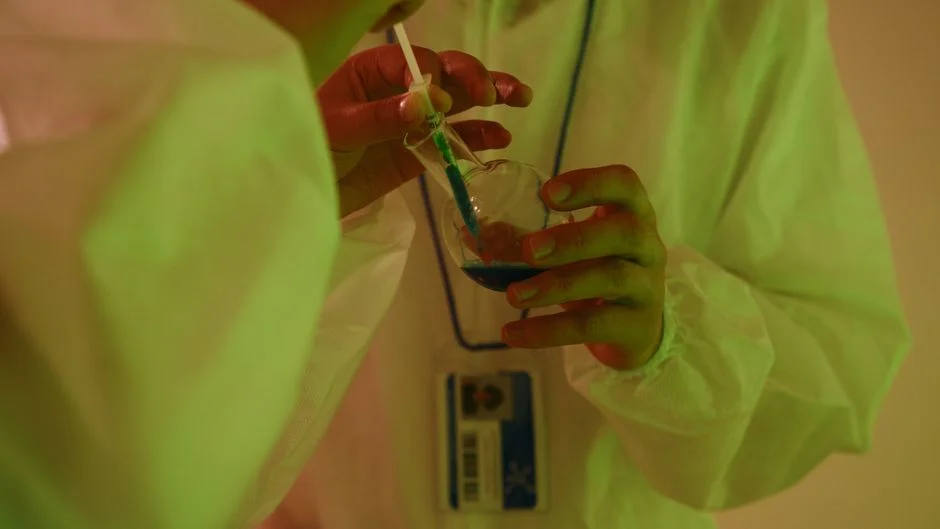
Textile effluent is not a homogeneous stream — it is a layered mixture of fibres, unfixed reactive dye, salt, and hot wash water that swings by the hour. Designing a treatment train starts with characterising that stream across a 7-day composite, not against an average. The Douala textile-mill baseline used here is a peak TSS of ~1,500 mg/L, pH swings of 4–12 across reactive dye batches, and discharge temperatures of 40–60°C (per the Cameroon 2026 industrial wastewater blueprint, 2025).
Four contaminant families define a reactive/disperse dye house. Suspended solids are loose fibres, size residues, and oligomers from the dye bath. Residual dyes break down by class: reactive dyes (e.g. Procion MX, Remazol) fix at only ~50% efficiency, so roughly half the hydrolysed chromophore leaves in the liquor; disperse dyes are water-insoluble and travel as fine colloidal particles; azo dyes add a nitrogen-bond concern under anaerobic conditions; sulfur dyes generate high BOD and dark colour loads. Salinity from reactive baths is the third family — 50–80 g/L NaCl plus Glauber's salt — and is what kills conventional activated-sludge biomass if it is sent straight to biology. The fourth is heat: 40–60°C discharge temperatures suppress oxygen solubility and damage membranes.
Two Cameroon-specific engineering points follow from this. First, design to peaks, not averages — log BOD, COD, TSS, pH, conductivity, and temperature on a 7-day composite before sizing any unit. Second, ambient temperatures in Douala and Limbe sit at 30–35°C, and oxygen solubility drops roughly 10% per 5°C rise; aeration equipment must be upsized ~15% versus temperate-climate designs to compensate (per Cameroon 2026 blueprint, 2025).
| Dye class | Fixation / loss to effluent | Main effluent signature | Pre-treatment implication |
|---|---|---|---|
| Reactive | ~50% unfixed chromophore + 50–80 g/L NaCl | High colour, high conductivity, high pH swing | pH correction, salt dilution, DAF for colloidal fraction |
| Disperse | Insoluble in water; colloidal particles | High TSS, persistent turbidity | DAF or lamella for solids; MBR polish for residual turbidity |
| Azo | Variable fixation; N=N bond | Strong colour, refractory organics | Biological degradation in MBBR; MBR polish |
| Sulfur | Water-soluble after reduction | Very high BOD, black colour, sulfide odour | Oxidation pre-stage, DAF, biological treatment |
The 4-Stage Treatment Train That Actually Meets MINEE for Textile
A compliant textile train is sequential, not parallel: equalisation, DAF, biology, then MBR polish. Each stage has a defined job, and skipping any of them drops the plant below MINEE coastal limits.
Stage 1 — Equalisation and pH correction. A buffer tank sized for ≥8 h HRT dampens the 4–12 pH swings, the 40–60°C temperature spikes, and the dye-batch shock loads. A PLC-controlled automatic chemical dosing system drives NaOH/H2SO4 dosing to hold pH inside the 6.5–7.5 window that downstream biology needs. Without this stage, the next three stages absorb all of the variability and fail.
Stage 2 — DAF pre-treatment. A dissolved air flotation system running at 3–5 bar saturates the stream with micro-bubbles that lift 92–97% of TSS and a large fraction of colloidal dye to the surface for skimming. The DAF range covers 4–300 m³/h and is the standard primary step for any Douala textile mill before biology.
Stage 3 — Biological treatment (MBBR or activated sludge). A Moving Bed Biofilm Reactor at 40–60% carrier fill ratio delivers 90–95% COD removal and is more tolerant of dye toxicity than conventional activated sludge because the biomass sits on protected carrier surfaces rather than free-floc (per the Cameroon 2026 industrial wastewater blueprint, 2025). This is the workhorse for a 30 m³/day reference textile line.
Stage 4 — MBR polish. An integrated MBR wastewater treatment system fitted with DF series 0.1 µm PVDF flat-sheet MBR modules (80–225 m², 32–135 m³/day per skid) removes the residual COD to ≤50 mg/L, eliminates the secondary clarifier entirely, and produces reuse-grade water for cooling tower make-up or fabric washdown. If the MBR feed exceeds 35°C, install a cooling heat exchanger — membrane integrity and biology both degrade above 40°C.
Sludge side-stream. A high-efficiency sedimentation tank thickens the DAF float, then a plate and frame filter press dewaters the cake to cut sludge volume by ~60% and avoid the XAF 8,000–12,000/ton landfill fee.
DAF vs MBBR vs MBR: Which Stage Does What for a Douala Mill

The most common buyer confusion in a Douala textile project is treating DAF, MBBR, and MBR as competing technologies. They are not — they are sequential stages with non-overlapping jobs. The matrix below resolves the confusion and shows the order in which each unit must be deployed.
| Unit | Role in textile train | Primary removal | Footprint / OPEX | Standalone MINEE compliance? |
|---|---|---|---|---|
| DAF | Primary — pre-treatment | 92–97% TSS; lifts colloidal dye and fibres | Low OPEX; no biological control | No — DAF alone leaves COD at 200–500 mg/L |
| MBBR | Secondary — biology | 90–95% COD; robust against dye/organic shock | Moderate; carrier fill 40–60% | No — biology alone cannot guarantee ≤50 mg/L COD |
| MBR (DF 0.1 µm PVDF) | Tertiary — polish | COD ≤50 mg/L; reuse-grade turbidity; no secondary clarifier | Higher; membrane cleaning; requires cooling >35°C | Yes — MBR is the only unit that defines coastal compliance |
The stack rules for a textile mill are therefore: DAF → MBBR → MBR for a coastal-discharge Douala plant; DAF → MBR is acceptable for a medium-strength mill with stable influent; DAF alone never meets MINEE COD ≤50 mg/L. Any vendor quote that omits the MBR polish for a coastal site should be rejected on paper before the site visit.
CAPEX, OPEX and ROI for a 50 m³/day Cameroon Textile System in 2026
Engineering becomes a purchase order only when the numbers defend themselves in front of a CFO. For a 50 m³/day textile train — DAF + MBBR + MBR + sludge dewatering, SS304/SS316 wetted parts, automated controls, and a 2026-vintage PLC — CAPEX in 2026 lands at €120,000–€180,000, inclusive of import duty, shipping to Douala, and local installation (per the Cameroon 2026 industrial wastewater blueprint, 2025, adjusted to textile scope).
OPEX runs €0.25–€0.40 per cubic metre of treated water. The largest line item is energy: industrial electricity in Douala averages XAF 80–100/kWh, so blower and pump selection drives the bill. Coagulants and flocculants add €0.10–€0.30/m³. Sludge disposal is bounded by the XAF 8,000–12,000/ton landfill fee, and is cut ~60% by the filter press.
ROI is driven by three factors: avoided MINEE fines (up to XAF 50M), 30–50% reuse credit on fresh-water intake, and reduced legal risk. For a 50 m³/day textile line, payback typically lands near 3.2 years — the same payback the brewery benchmark delivers, but with a textile-specific lift because MBR concentrate bleed removes 30–50% of the reactive-bath salt load, which lowers membrane-fouling OPEX, and because the MBR permeate is reused as dye-bath make-up water at roughly the same offset.
| Cost line | 2026 value (50 m³/day textile) | Driver |
|---|---|---|
| CAPEX | €120,000–€180,000 | DAF + MBBR + MBR + sludge dewatering, SS304/SS316, PLC, delivered to Douala |
| Energy OPEX | XAF 80–100/kWh industrial rate | Blowers and MBR permeate pumps dominate |
| Chemical OPEX | €0.10–€0.30/m³ | Coagulant, flocculant, pH correction |
| Sludge disposal | XAF 8,000–12,000/ton | Reduced ~60% by filter press dewatering |
| Total OPEX | €0.25–€0.40/m³ | Energy + chemicals + consumables |
| Payback | ~3.2 years | Avoided fines, 30–50% water reuse, salt-bath make-up offset |
5-Question Vendor Checklist Before You Sign a Textile Wastewater Contract in Cameroon
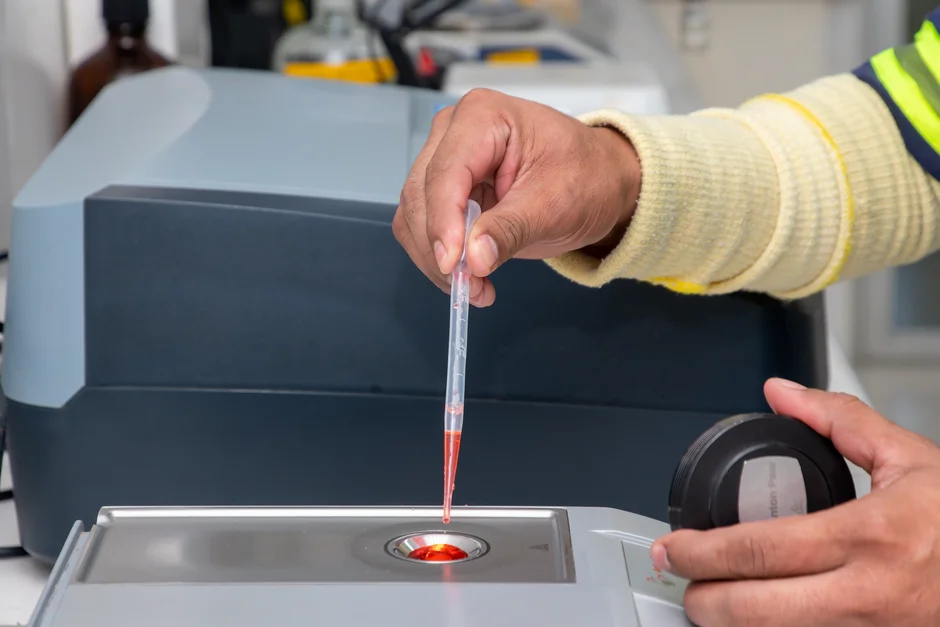
Carry this filter into the next vendor meeting. Any "yes" with no supporting data is a soft "no" until the data is provided.
- Will the system meet MINEE coastal COD ≤50 mg/L at your peak 1,500 mg/L TSS design load? Ask for a mass-balance and a 7-day composite pilot result, not a generic spec sheet.
- Are the MBR membranes 0.1 µm PVDF rated to 40°C, with a cooling plan if influent exceeds 35°C? Reactive-dye wash water runs hot; a vendor without a cooling answer is a vendor whose membranes will foul early.
- Is the DAF sized for ≥92% TSS removal at peak hourly flow, with SS304 or SS316 wetted parts? Anything less on either count fails in a salt-laden reactive stream.
- Is sludge dewatering included, and what is the dry-cake target? A filter press that delivers a 60% volume cut avoids the XAF 8,000–12,000/ton landfill fee; a vendor that excludes sludge handling is offloading OPEX onto you.
- Does the supplier offer remote monitoring and 2026-vintage PLC controls to offset local skilled-labour gaps? This is the single biggest reliability lever in the Douala and Limbe industrial corridors.
For a broader multi-industry spec, the Cameroon industrial wastewater treatment 2026 blueprint covers the same regulatory envelope. For a comparable West African textile scope, the West Africa textile wastewater treatment guide sets a useful regional benchmark.
Frequently Asked Questions
What are the MINEE 2025 coastal discharge limits for a Cameroon textile mill?
MINEE 2025 coastal limits for Douala and Limbe are COD ≤50 mg/L, BOD ≤30 mg/L, TSS ≤35 mg/L, and pH 6.0–9.0. Colour (ADMI / Pt-Co) and salinity are not numerically fixed, so they should be pre-agreed with MINEPDED in the EIA — typically ≤50 Pt-Co and conductivity suitable for the receiving environment (per MINEE 2025, cited 2026).
What is the best wastewater treatment system for a Douala textile mill?
A four-stage train is the standard answer: equalisation with pH correction via a PLC-controlled automatic chemical dosing system, DAF pre-treatment with a dissolved air flotation system for 92–97% TSS removal, MBBR biology for 90–95% COD removal, and an integrated MBR wastewater treatment system with DF series 0.1 µm PVDF flat-sheet MBR modules for the ≤50 mg/L COD polish. A plate and frame filter press closes the sludge loop.
How much does a 50 m³/day textile wastewater system cost in Cameroon in 2026?
CAPEX is €120,000–€180,000 for a 50 m³/day textile train (DAF + MBBR + MBR + sludge dewatering, SS304/SS316, PLC) delivered and installed in Douala. OPEX is €0.25–€0.40 per cubic metre, dominated by energy at XAF 80–100/kWh and coagulant/flocculant at €0.10–€0.30/m³. Typical payback is ~3.2 years (per the Cameroon 2026 industrial wastewater blueprint, 2025, adjusted to textile scope).
Can MBR systems handle the high temperatures of Cameroon textile effluent?
Yes, but with a caveat. PVDF flat-sheet membranes tolerate up to 40°C; if the MBR feed exceeds 35°C — common after reactive-dye wash-off — a cooling heat exchanger is required. Cooling adds roughly 10–15% to aeration energy use, so it must be priced into the OPEX line from day one (per the Cameroon 2026 industrial wastewater blueprint, 2025).
What are the penalties for non-compliance with Law No. 96/12 for a Cameroon textile plant?
Articles 52–55 of Law No. 96/12 set fines of XAF 1 million to XAF 50 million for non-compliant industrial discharges, with mandatory facility shutdowns and criminal liability for repeat offenders. For a Douala textile mill, a single failed quarterly COD/BOD/TSS report can trigger a MINEPDED/MINEE joint audit and an immediate shutdown order (per Law No. 96/12, cited 2026).