Why Beirut hotels and resorts need a dedicated wastewater treatment strategy in 2026
A Beirut or coastal-Mount-Lebanon resort in 2026 typically needs a packaged A/O or MBR wastewater treatment plant sized at 200–400 L per guest per day, with DAF pre-treatment if food-and-beverage (F&B) outlets are significant. Effluent must meet Lebanese Ministry of Environment Decision 8/1/2001 (BOD ≤30 mg/L, COD ≤125 mg/L, TSS ≤60 mg/L) for discharge to DAFRA sewer or for landscape irrigation reuse under Lebanon's reclaimed water framework.
The operating profile of Greater Beirut's five-star properties is the reason generic municipal-sewage guidance fails. InterContinental Phoenicia Beirut, Kempinski Summerland Hotel & Resort, Le Royal Beirut, Portaluna, and Le Six all run outdoor pools, jacuzzis, multi-restaurant F&B, and conference banqueting — a load mix dominated by organics and oil/grease rather than a residential black-water profile. Coral Beach Hotel & Resort Beirut, 5-star on the seafront near Ramlet al-Baida and 15 minutes from Rafic Hariri International, illustrates the constraints: outdoor pool, multiple F&B outlets, dense urban seafront site, tourism-driven peaks. None of the top three search results for the underlying query actually address wastewater engineering — they are booking and tourism pages — so the engineering buyer is working without a defensible reference.
Three 2026 drivers force a process-level design: (1) tighter enforcement of MOE Decision 8/1/2001 in coastal Greater Beirut; (2) DAFRA sewer capacity limits in Achrafieh and Ras Beirut that make on-site reuse attractive; (3) commercial water tariffs that make landscape irrigation from reclaimed effluent financially worthwhile within 8–12 months. Comparable Mediterranean and Asia-Pacific benchmarks (see the Athens hotel and resort wastewater treatment guide and the Hong Kong hotel wastewater treatment 2026 guide) confirm the same loading envelope applies across tourism-driven coastal cities.
What wastewater does a Beirut resort actually produce
Resort sewage is dominated by F&B, not guest rooms. Design flow for a luxury Beirut property is 200–400 L per bed per day, with peaks at 1.5–2.0× average during check-in/out and meal-service windows. BOD load runs 35–55 g per bed per day from guest rooms, plus 0.05–0.15 kg BOD per restaurant cover — the result is a headworks strength of 400–800 mg/L BOD before equalisation, roughly 2–4× stronger than a typical municipal sewer. Kitchen effluent carries 200–1,500 mg/L oil and grease and must be cut to the MOE 10 mg/L ceiling before biological or membrane treatment. Pool backwash from a single 25 m resort pool delivers 2–6 m³ per cycle with high free-chlorine residual and elevated TDS — it must be neutralised and routed through the main equalisation tank, not dumped to a clean-water drain. On-site laundry, if present, contributes 700–1,200 mg/L COD with surfactant load and is normally blended with the main stream rather than treated separately.
| Stream | Design flow | BOD/COD | FOG | Treatment note |
|---|---|---|---|---|
| Guest rooms (per bed) | 200–400 L/day | 35–55 g BOD/day | <50 mg/L | Equalise, biological |
| Restaurant (per cover) | 25–40 L/cover | 0.05–0.15 kg BOD/cover | 200–1,500 mg/L | DAF pre-treatment first |
| Pool backwash (25 m pool) | 2–6 m³/cycle | Low BOD | Negligible | Neutralise Cl₂, equalise |
| Laundry (on-site) | 30–60 L/kg linen | 700–1,200 mg/L COD | <30 mg/L | Blend with main stream |
| Total headworks (typical) | — | 400–800 mg/L BOD | 100–400 mg/L | Equalise 8–12 h |
Lebanese MOE Decision 8/1/2001 and DAFRA sewer connection rules
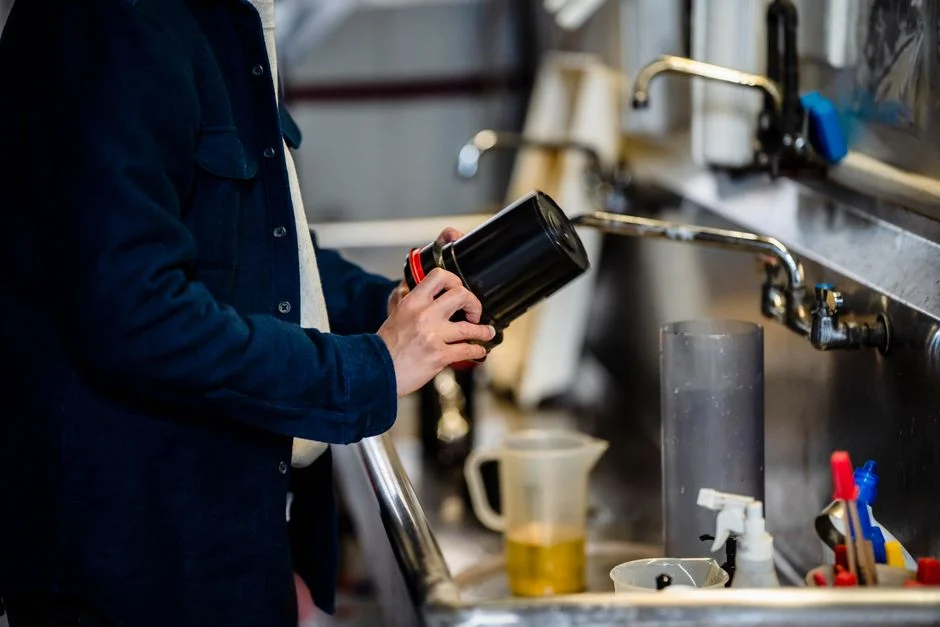
MOE Decision 8/1/2001 sets the national surface-water and sewer-discharge limits. The key parameters a Beirut resort spec must hit: BOD ≤30 mg/L, COD ≤125 mg/L, TSS ≤60 mg/L, oil & grease ≤10 mg/L, total nitrogen in the 30–40 mg/L band, pH 6–9. For a coastal property, the practical compliance route is indirect discharge to DAFRA's municipal sewer — direct Mediterranean outfall requires a separate MOE permit and is rarely granted inside Greater Beirut given the marine protected-area sensitivities offshore of Ras Beirut and Ramlet al-Baida. The 2018 reclaimed-water framework (Law 80/2018 and the MOE reclaimed-water guidelines) opens a second route: treated effluent reused on the same property for landscape irrigation, with stricter turbidity and disinfection targets. Sampling protocol under MOE practice is 24-h composite, monthly for sewer discharge, with weekly self-monitoring recommended for FOG and pH on F&B-heavy sites.
| Parameter | MOE 8/1/2001 limit (sewer) | Reuse (landscape) target | Sample frequency |
|---|---|---|---|
| BOD | ≤30 mg/L | ≤10 mg/L | Monthly composite |
| COD | ≤125 mg/L | ≤50 mg/L | Monthly composite |
| TSS | ≤60 mg/L | ≤10 mg/L | Monthly composite |
| Oil & grease | ≤10 mg/L | ≤5 mg/L | Weekly (F&B sites) |
| Total nitrogen | 30–40 mg/L | ≤15 mg/L | Monthly composite |
| pH | 6–9 | 6.5–8.5 | Continuous / weekly |
| Turbidity | — | ≤2 NTU | Continuous on reuse line |
Process train options: packaged A/O, MBR, and DAF + biological
Three realistic trains fit a Beirut coastal-resort site. The WSZ underground packaged A/O plant covers 1–80 m³/h, sits fully buried, runs unattended, and is the lowest CAPEX option — well suited to boutique properties or satellite buildings. Effluent typically lands at BOD 20–30 mg/L and TSS 20–30 mg/L, which meets MOE sewer limits but falls short of reuse targets. The MBR membrane bioreactor system uses submerged PVDF at 0.1 µm and cuts footprint by roughly 60% versus conventional activated sludge. Effluent is near-reuse quality — BOD ≤5 mg/L, TSS ≤1 mg/L, turbidity ≤1 NTU — making it the default for 150–2,000 m³/day coastal resorts with footprint pressure and a reuse business case. The third option pairs a dissolved air flotation unit upstream of conventional activated sludge or SBR. DAF removes >90% FOG and 80–95% TSS across 4–300 m³/h (13 standard models) and is the right call when F&B oil/grease loading is high — it protects downstream biology and membranes from fouling. Decision logic: packaged A/O if flow is under 150 m³/day and there is no reuse target; MBR if footprint, reuse, or seasonal peaks drive the design; DAF upstream if F&B exceeds 30% of hydraulic load or headworks FOG exceeds 150 mg/L. The same pattern shows up in comparable tourist markets such as the Alexandria hotel and resort wastewater treatment guide.
| Option | Capacity range | Effluent BOD | Effluent TSS | Reuse-ready | CAPEX band (USD/m³/day) | Best fit |
|---|---|---|---|---|---|---|
| WSZ packaged A/O (buried) | 1–80 m³/h | 20–30 mg/L | 20–30 mg/L | No | 800–1,400 | Boutique / satellite building, flow <150 m³/day |
| MBR (submerged PVDF 0.1 µm) | 50–2,000 m³/day | ≤5 mg/L | ≤1 mg/L | Yes | 1,400–2,400 | Footprint-bound, reuse-driven, peak-loaded |
| DAF + activated sludge / SBR | 4–300 m³/h DAF skid | ≤20 mg/L | ≤20 mg/L | Partial (polish needed) | 1,100–1,900 | High FOG / F&B, membrane protection |
Worked sizing example: a 250-key beachfront resort in Beirut
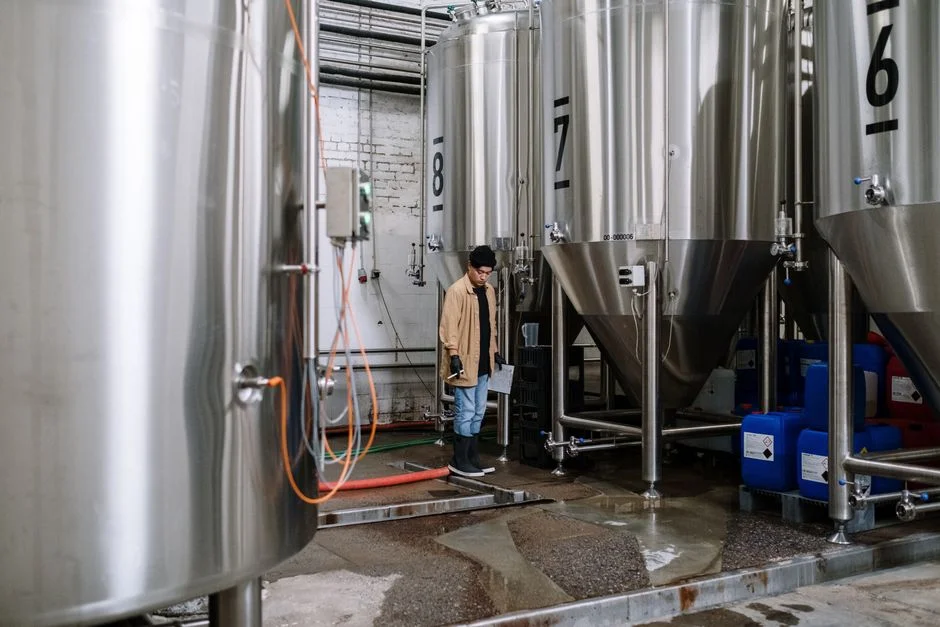
Use this method to size any Beirut property — the assumptions are deliberately conservative. Inputs: 250 keys, 1.8 guests/room average, restaurant seats 220, one 25 m pool, 75% shoulder-season occupancy, 95% summer peak. Average daily flow: 250 × 1.8 × 0.30 m³ = 135 m³/day base; add 25% for F&B and pool backwash to reach 170 m³/day average; apply a 2.0 peak factor to get 340 m³/day hydraulic peak. BOD load: 250 × 1.8 × 0.045 kg = 20.3 kg/day from rooms; 12 kg/day from F&B; total 32 kg/day; influent BOD after 10-hour equalisation is roughly 190 mg/L — well within the design range of any of the three trains. Selected train: a GX rotary bar screen at the headworks, equalisation, the DAF, the MBR at submerged PVDF 0.1 µm, a chlorine dioxide generator for disinfection, and a polishing cartridge before the reuse tank. Reclaimed-water target: 60–70% of treated flow to landscape irrigation, cutting potable draw by roughly 100 m³/day at summer peak.
Costs, footprint, and what to budget in 2026
For a 170 m³/day Beirut resort with MBR + DAF + disinfection, the realistic 2026 CAPEX band is USD 240,000–410,000 installed. The packaged A/O route (WSZ, buried) lands at USD 800–1,400 per m³/day of installed capacity, with OPEX 0.10–0.18 USD per m³ treated and a footprint of 0.3–0.5 m² per m³/day. MBR systems run USD 1,400–2,400 per m³/day installed, OPEX 0.20–0.32 USD/m³ once membrane replacement is amortised, with footprint cut to 0.10–0.20 m² per m³/day. The DAF pre-treatment skid sits at USD 25,000–90,000 for the 4–50 m³/h range typical of a resort kitchen stream — small relative to total plant cost but decisive for membrane protection. Sludge handling for a plant this size is usually a single plate and frame filter press on a 7–10% waste-activated sludge feed. At current Greater Beirut commercial water tariffs, 8–12 month payback on water-reuse savings is achievable for any resort reusing more than 60% of treated effluent for landscape irrigation (HydropureWater field data, 2026).
Frequently Asked Questions
What are the Lebanese discharge limits a Beirut hotel must meet in 2026?
MOE Decision 8/1/2001 sets BOD ≤30 mg/L, COD ≤125 mg/L, TSS ≤60 mg/L, oil & grease ≤10 mg/L, total nitrogen 30–40 mg/L, and pH 6–9 for sewer discharge to DAFRA. Direct Mediterranean outfall requires a separate MOE permit and is rarely granted inside Greater Beirut (per MOE Decision 8/1/2001).
Should a 250-key Beirut resort choose packaged A/O or MBR?
Choose packaged A/O (WSZ buried) when flow stays under 150 m³/day and there is no reuse target. Choose MBR for footprint pressure, seasonal peaks, or any reuse target — MBR delivers BOD ≤5 mg/L and TSS ≤1 mg/L, suitable for the MOE reclaimed-water framework.
Can a Beirut resort legally reuse treated wastewater for landscape irrigation?
Yes. Law 80/2018 and the MOE reclaimed-water guidelines allow on-site reuse of treated effluent for landscape irrigation on the same property, with stricter targets (BOD ≤10 mg/L, turbidity ≤2 NTU, continuous disinfection via ClO₂).
Does a packaged A/O plant in Beirut need a full-time operator?
No. Buried packaged A/O plants run unattended with weekly visits for screen cleaning and equalisation-tank inspection. MBR plants need a half-time operator for membrane cleaning, aeration checks, and reuse-line sampling (HydropureWater field data, 2026).