Why Cynthiana chemical plants face a real DAF-vs-clarifier choice in 2026
Cynthiana chemical plants discharging to the municipal POTW operate under a local pretreatment program rooted in 40 CFR 403 categorical standards, with effluent limits typically mirroring the federal 40 CFR 413 (organic chemicals) and 40 CFR 414 (inorganic chemicals) categorical requirements — so primary solids removal is non-negotiable before any discharge permit is signed. Chemical plant wastewater rarely behaves like a textbook steady stream: a single shift typically combines batch-reactor washdowns, condenser blowdown, and cleaning solutions, driving TSS swings from <200 mg/L during idle periods to >3,000 mg/L during a vessel dump. The ASABE 2012 high-strength benchmark of approximately 5,263 mg/L COD and 3,355 mg/L TS for pre-DAF poultry processing wastewater (source: Abboah-Afari & Kiepper, ASABE 2012) is a useful upper-bound reference for the kind of load a chemical washout can produce in a single slug. This is the operational reality that makes the primary-unit decision a real one: a DAF system and a lamella clarifier solve different problems, and selecting the wrong one compounds cost for the next 15–20 years of operation.
How each technology actually works in a chemical wastewater context
Dissolved air flotation (DAF) is a physical-chemical clarification process: a side-stream of clarified effluent is pressurized to 4–6 bar in an air-saturation drum, then released through a pressure-reduction valve as it re-enters the flotation tank (source: Wikipedia DAF, 2026). The sudden pressure drop nucleates 20–50 micron micro-bubbles that attach to particle surfaces at nucleation sites, lifting suspended matter to the surface as a floating scum layer that a rotary skimmer removes (source: DAF Corp, 2026). Coagulants — typically ferric chloride, aluminum sulfate, or cationic polymers — and flocculants are dosed upstream to enlarge colloids and improve bubble-particle contact, and per SigmaDAF USA (2026) DAF should always be paired with proper chemical conditioning for optimal performance. A PLC-controlled automatic chemical dosing skid makes that conditioning repeatable across batch discharges.
A lamella clarifier (inclined-plate settler) operates on gravity alone. Coagulated water flows upward between 60° inclined plates at a surface loading of 20–40 m/h (per HydropureWater product data, 2026); solids settle onto the plate surface, slide down the plates into a bottom hopper, and clarified water rises to the collection launder. The mechanism is simple, robust, and inexpensive to run — but it requires settleable floc and stable influent chemistry. DAF tolerates variable hydraulic and solids loads, handles emulsified oils and low-density particles that never settle in a clarifier, and produces a 2–4% thickened sludge stream that dewaters well downstream. Understanding these mechanical differences clarifies why the two technologies serve different wastewater profiles.
DAF vs lamella clarifier: head-to-head parameter comparison
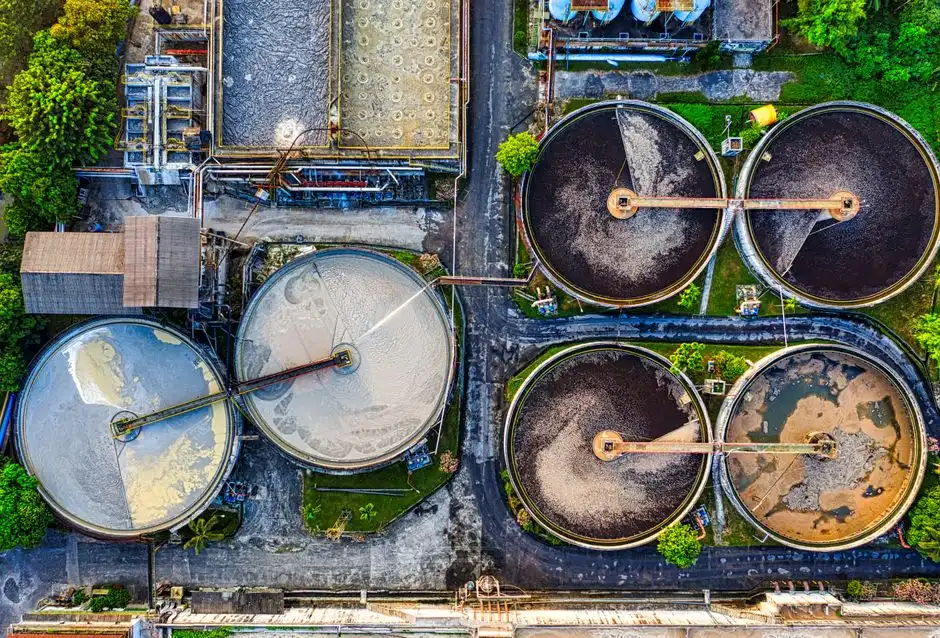
The table below provides the data procurement and EHS leads use to defend equipment recommendations. All ranges are drawn from manufacturer data and standard engineering references; the right column notes where chemical-plant influent characteristics tip the choice.
| Parameter | DAF system (circular / rectangular) | Lamella clarifier (inclined-plate) | Chemical-plant implication |
|---|---|---|---|
| TSS removal efficiency | 92–98% (circular FC Maximizer, per DAF Corp) / 85–90% (rectangular RC UniMax, per DAF Corp) | 60–85% on chemical wastewater (typical engineering range) | DAF wins when TSS >500 mg/L or limits are tight |
| Hydraulic residence time | ~3 min circular / 20–30 min rectangular (per Wikipedia DAF) | 30–60 min typical | DAF has far smaller tank volume per gpm |
| Footprint at 500 gpm | ~15 ft diameter circular skid (DAF Corp FC-150) | 1.5–2× the plan area of an equivalent DAF, taller basin | DAF wins for space-constrained retrofits |
| Typical CAPEX per gpm (US, 2026) | Higher upfront, $80–$180/gpm installed range | 20–40% lower upfront than DAF | Lamella wins on CAPEX-only procurement |
| Coagulant / polymer consumption | Higher (polymer typical 2–10 mg/L) | Up to 30% lower chemical use on settleable streams | Lamella wins on steady, settleable OPEX |
| Sludge consistency | 2–4% thickened (per DAF Corp) | <1.5% typical | DAF sludge cuts dewatering cycle time |
| Oil / FOG handling | Native — bubbles attach to oil droplets, skimmed with scum | Limited; emulsified oil passes through, requires separate oil-removal step | DAF wins for any FOG-bearing stream |
| Turndown / load variability | Tolerates 2–3× swings in TSS and hydraulic load | Sensitive to influent swings; floc washout above design | DAF wins for batch-discharge plants |
| Influent TSS threshold (decision cutoff) | Effective from ~100 mg/L up to >3,000 mg/L | Effective to ~500–800 mg/L on settleable solids | If avg >500 mg/L, default to DAF |
For chemical plant washwater above 500 mg/L TSS, FOG-bearing streams, or batch discharges, a DAF clarifier is the safer primary. For steady, low-FOG, settleable-solids streams under 500 mg/L TSS, the lamella clarifier wins on lifecycle OPEX despite the lower removal ceiling.
Decision framework: which technology fits your Cynthiana plant
Apply this four-question rule before you write the purchase order.
Question 1 — Is average influent TSS above 500 mg/L, or does FOG appear intermittently in the discharge? If yes, default to a DAF. The 92–98% removal range of a circular unit and its native FOG skimming (per DAF Corp, 2026) cover the failure modes that drive POTW violations. A lamella clarifier will let emulsified oil pass and frequently fails categorical oil-and-grease limits.
Question 2 — Are discharge limits for oil & grease, sulfide, or specific organics tight? DAF's 92–98% TSS removal plus skimming handles oil and grease in a single unit; a clarifier will need a separate API or coalescing oil-removal step upstream, adding CAPEX and footprint.
Question 3 — Is the plant space-constrained? A skid-mounted circular DAF from 48 gpm (6 ft diameter) to 450 gpm (15 ft diameter) (per DAF Corp, 2026) — or the HydropureWater DAF at 4–300 m³/h — fits a smaller envelope than an equivalent-capacity lamella basin, which needs both plan area and 4–5 m of hydraulic height.
Question 4 — Is the decision CAPEX-driven over lifecycle OPEX? Lamella clarifiers are typically 20–40% cheaper upfront; DAF recovers the gap through higher removal (less downstream polishing), thicker sludge at 2–4% (shorter filter-press cycles), and tolerance of batch swings. For a deeper CAPEX/OPEX breakdown, see the chemical wastewater COD removal process guide. A comparable city-and-industry decision for metals plants is laid out in the DAF vs clarifier buyer's guide for Muncie fabricated metals. These criteria allow plant managers to align equipment capabilities with specific site limitations.
Integrating the chosen unit with the rest of the treatment train
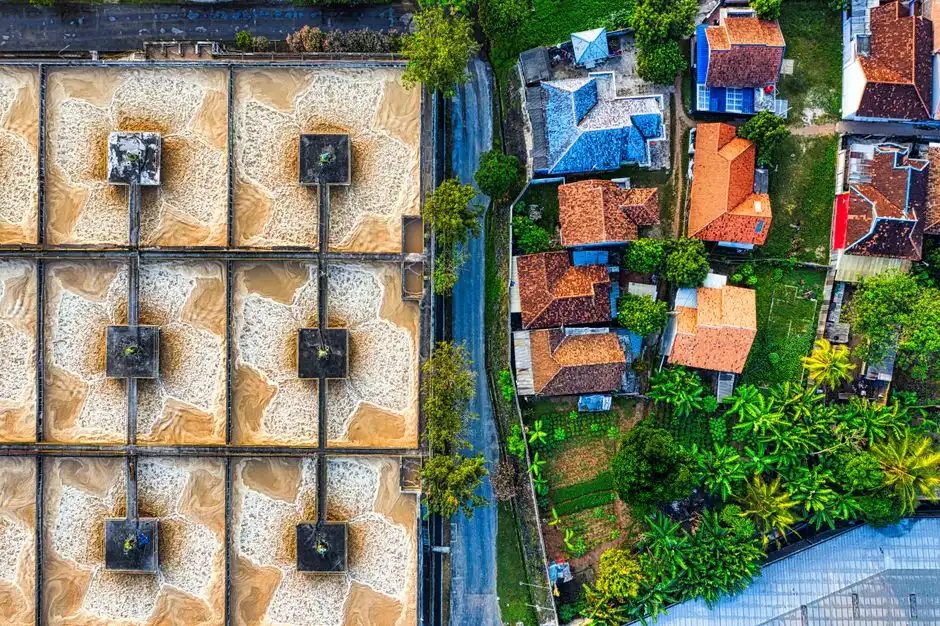
Primary clarification is one step in a Kentucky-compliant treatment train, not a stand-alone purchase. Either DAF or lamella effluent should target below 20 ppm of filterable TSS before biological or membrane polishing (per DAF Corp, 2026). Pair the primary unit with PLC-controlled chemical dosing for coagulant and pH control — on chemical-plant batch discharges, operator-driven polymer dosing is the single largest source of permit excursions. Sludge from a DAF at 2–4% consistency dewaters efficiently on a plate-and-frame filter press; lamella sludge at <1.5% increases press cycle time and cake-handling cost. For sites with residual COD or refractory organics, route DAF or clarifier effluent through an MBR integrated wastewater treatment unit for the biological polish. Confirm categorical applicability — 40 CFR 413 for organic chemicals, 40 CFR 414 for inorganic chemicals — with the Cynthiana wastewater utility before finalizing equipment selection, because the chosen categorical standard often dictates the final polish step. For an analogous compliance walkthrough in another jurisdiction, the Little Rock chemical plant pretreatment guide covers the same decision pattern.
Frequently Asked Questions
What influent TSS level should drive a Cynthiana chemical plant to choose DAF over a lamella clarifier?
Choose a DAF when average influent TSS exceeds 500 mg/L or when FOG appears intermittently. A lamella clarifier typically delivers 60–85% TSS removal on chemical wastewater and loses performance above ~800 mg/L; a circular DAF delivers 92–98% removal (per DAF Corp, 2026) and tolerates swings to >3,000 mg/L.
How much chemical (polymer and coagulant) does each system consume?
DAF systems typically dose 2–10 mg/L of cationic polymer plus ferric chloride or alum; lamella clarifiers can use up to 30% less chemical on settleable, steady streams (HydropureWater field data, 2026). On FOG-bearing or batch-discharge streams, DAF's higher chemical dose is recovered through better removal and 2–4% thickened sludge.
Can a lamella clarifier handle emulsified oils from chemical cleaning solutions?
No, not reliably. Emulsified oil droplets are too small and too low-density to settle on inclined plates; they pass through to the effluent. A DAF unit's 20–50 micron micro-bubbles attach to oil droplets and float them to the skimmer, so DAF is the correct primary for any FOG-bearing chemical wastewater.
What is the typical CAPEX difference between a DAF and a lamella clarifier of equal capacity?
For 2026 US installations, a DAF system runs roughly $80–$180 per gpm installed, while an equivalent-capacity lamella clarifier is 20–40% cheaper upfront. DAF recovers the CAPEX gap over the lifecycle through thicker sludge (2–4% vs <1.5%), higher TSS removal, and lower downstream polishing cost.