Why ETP Due Diligence Is a Deal-Defining Workstream
Legacy wastewater liabilities routinely erase 5–15% of an industrial acquisition's enterprise value when discovered post-close (HydropureWater field data, 2026). For a corporate development lead evaluating a Samsung SDI factory acquisition, the ETP — effluent treatment plant — is not a line item in the environmental checklist; it is a transaction risk that moves the purchase price, the escrow holdback, and the post-close capex roadmap.
A "legacy wastewater liability" is any of the following, alone or in combination: unpermitted historical discharges, contaminated soil or groundwater from past operations, treatment equipment that is non-functional or undersized, expired or transferred discharge permits, and undocumented production changes that invalidated the original ETP design basis. Each of these is a representation the buyer inherits the moment the share purchase agreement (SPA) is signed.
The downside is concrete. Solvent or heavy-metal plume remediation at a single industrial parcel typically exceeds USD 5 million when groundwater extraction, monitoring wells, and regulatory sign-off are included (per EPA CERCLA site experience, 2024–2025). A failed post-close ETP retrofit — common when the seller's plant was designed for one chemistry and the acquirer plans another — can halt production for 6–12 months while permits are re-issued and equipment is replaced. That lost throughput is what most acquirers underestimate.
This is why the ETP audit belongs in the same risk pricing workstream as financial quality of earnings and tax structuring, not in the EHS sign-off packet. The audit's purpose is to convert environmental findings into price-discovery artifacts: purchase-price adjustments, escrowed reserves, or specific indemnities. Routine compliance audits, by contrast, confirm the plant is operating safely, effectively and in compliance with local regulations on the day of inspection (Eurofins Assurance, 2025) — a baseline condition, not a deal-defining one. For an acquirer, the baseline is the floor; the ceiling is the worst-case remediation scenario that has to be priced into the deal.
The Two-Phase ETP Due Diligence Framework
M&A environmental due diligence follows a strict two-phase sequencing that is distinct from the annual compliance audit most EHS teams are familiar with. Phase I is paper-driven and pre-signing; Phase II is physical, sampling-driven, and typically post-signing-pre-closing or inside the first 100 days of ownership.
Phase I (2–4 weeks, pre-LOI or pre-signing) covers documentation review, permit verification, compliance history, and a contractual review. The deliverable is a red/amber/green issues memo that flags items requiring a price adjustment, an indemnity, or a Phase II sampling program.
Phase II (4–8 weeks, between signing and closing or within 100 days post-close) covers the site walk, composite sampling, third-party lab analysis, and equipment condition assessment. The deliverable is a quantified liability schedule with remediation cost ranges that the deal team uses to size the escrow or the post-close capex budget.
| Dimension | Phase I — Paper Review | Phase II — Site Sampling |
|---|---|---|
| Timing | Pre-LOI to pre-signing | Signing-to-closing or first 100 days |
| Duration | 2–4 weeks | 4–8 weeks |
| Primary activity | Documentation review, permit verification, compliance history | Site walk, composite sampling, lab analysis, equipment condition |
| Deliverable | Red/amber/green issues memo | Quantified liability schedule + cost ranges |
| Used for | Go/no-go decision, price-discovery scope | Escrow sizing, SPA reps and indemnities, post-close roadmap |
The distinction matters for budgeting. A Phase I engagement typically runs USD 25K–75K for a single industrial site; a Phase II sampling program with 5–7 days of composite sampling across influent, effluent, and sludge streams adds USD 60K–150K depending on parameter count and lab turnaround. Both are trivial against the USD 5M+ tail risk they are designed to price.
Phase I Documentation Checklist: 7 Categories, 39+ Records

The Phase I paper review is the highest-leverage deliverable in the entire audit. It is what the seller's counsel, the buyer's environmental advisor, and the deal team all read before deciding whether to proceed, reprice, or walk. Below is a consolidated checklist of 39+ records across seven categories, drawn from the standard ETP audit structure used in industrial facility reviews (Scribd ETP Audit Checklist, n.d.).
| Category | Key records to obtain | Item count |
|---|---|---|
| 1. General documents | Equipment list, spare parts inventory, water meter locations, testing instrument list, pump working hours, wastewater discharge permit, domestic wastewater discharge authorization, drainage plan, production records, future production plan, domestic STP design (if on-site) | 11 |
| 2. ETP design documents | Flow process chart, flow chart submitted to authority, designed flow rate, initial analysis from ETP constructor | 4 |
| 3. Water consumption and wastewater volume | 12-month overall consumption, water bills, breakdown by process, ETP inlet/outlet logs, improvement analysis | 5 |
| 4. ETP operations | O&M manual, O&M records, chemical dosing records, on-site water quality tests, instrument calibration certificates, internal calibration procedure, instrument manuals, internal testing procedure, testing plan, advanced treatment manual, exceedance action plan | 11 |
| 5. External documents | Sludge contractor agreement, contractor handling authorization, sludge disposal method, external lab test reports, lab ISO/certification | 5 |
| 6. ETP organization | ETP org chart, operator personnel files and experience, external training certificates, internal training records, external O&M training | 5 |
| 7. Emergency response | Factory risk assessment, ETP emergency plan, drill records, ETP failure action plan | 4 |
Two practical filters for the deal team. First, the seller's "yes" answer to a checklist item is not the same as a usable document — ask for the file, not the answer. Second, compare the equipment list against the as-built drainage plan: a mismatch means either undocumented process changes or unauthorized discharges, both of which move liability to the buyer if not surfaced before signing.
For acquirers, the future production plan is often the most under-requested item. Without it, the ETP cannot be sized for the buyer's intended use, and any post-close retrofit risk is impossible to quantify.
Phase II Site Sampling: What to Test and Why
Phase II sampling validates — or invalidates — the Phase I paperwork. The objective is not to certify the plant as compliant, but to detect the gaps between disclosed performance and actual operating reality. Five parameters cover roughly 80% of what regulators and acquirers care about: BOD, COD, TSS, pH, and heavy metals — the standard suite required by Departments of Environment globally (Green Mark Engineering, 2025).
Composite sampling over 5–7 consecutive days is the minimum credible program. A single grab sample is not — it captures neither the production-week variability nor the chemical dosing cycles. For legacy sites, run parallel influent and effluent composite samples so that removal efficiency can be calculated directly, rather than inferred from the design basis.
Inspect the biological stage on site. A primary clarifier achieving 60–70% TSS removal is the benchmark consistent with a properly operating biological train (Green Mark Engineering, 2025); anything materially below that on a sustained basis is a process-control problem, not a sampling artifact. If upstream screening is degraded, a rotary mechanical bar screen replacement is often the first capex item. If TSS and FOG removal at the primary stage is the bottleneck, a DAF system for TSS and FOG removal is the typical next step.
Audit the sludge chain end to end: on-site storage volume and condition, contractor handover manifests, and final disposal certificates. On older sites, this is the most common documentation gap and the one that most often turns into a hazardous-waste liability post-close. The Phase II report should include a sludge mass balance, not just a water balance.
Finally, verify that tertiary polishing is actually meeting the reuse or discharge standard — not just that the equipment is running. Operators frequently report compliant numbers on the SCADA while offline instruments drift; cross-check against the third-party lab results from the same week.
Red Flags Specific to Legacy Industrial Acquisitions
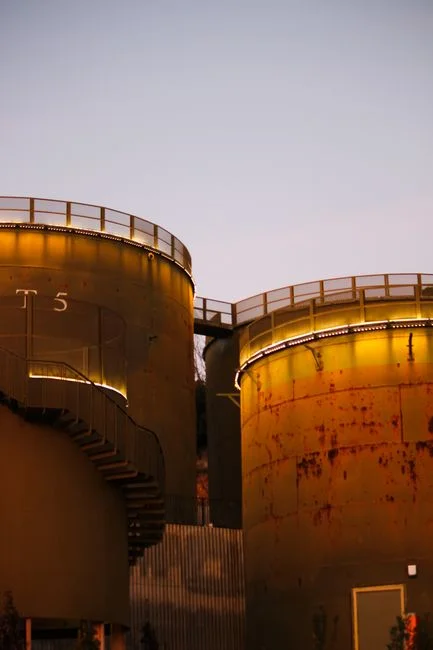
Several findings during a Phase I review reliably predict a material legacy liability and should trigger either a Phase II sampling program, a price adjustment, or a walk-away decision.
- Missing or expired discharge permits. Many jurisdictions issue a notice-of-violation automatically on a change of control if the permit is not in the new entity's name at closing. Confirm permit status in the regulator's public register, not just in the seller's file.
- Production records available but ETP inlet/outlet records missing. This pattern — common in older Asian and Eastern European sites — strongly suggests the ETP was operated informally, with compliance reporting reconstructed retrospectively.
- No sludge contractor agreement or disposal certificates. The sludge stream is the open loop for hazardous-waste liability. Absence of manifests means the waste has been disposed of through an undocumented pathway.
- Spare parts "not available" (Scribd ETP Audit Checklist, n.d.). Deferred maintenance on pumps, blowers, and membranes is a leading indicator of near-term capex — typically 15–25% of replacement value within 24 months.
- No future production plan from the seller. Blocks any sizing of the ETP for the acquirer's intended use and converts a known retrofit into an open-ended one.
Any one of these is a Phase II trigger. Two or more in combination are typically a repricing event.
Translating Findings into Deal Documents: Reps, Indemnities, Escrow
The most common gap in environmental M&A is a clean Phase I/II report that never makes it into the SPA in a form the buyer can enforce. Audit findings need to be converted into specific contractual language before signing.
First, the environmental representation and warranty should be specific, not general. It should cover: validity and currency of all discharge permits, no outstanding notices of violation or regulator inquiries, accuracy of disclosed production and influent/effluent data, and completeness of the sludge contractor chain. A blanket "to the best of the seller's knowledge, the company is in compliance" is a known weak form; push for direct representations with defined knowledge qualifiers.
Second, a special indemnity for pre-closing contamination is usually more useful than a general environmental basket. Scope it to the specific findings in the Phase II report, with a defined remediation standard (e.g., to local industrial-use cleanup levels) and a defined survival period of 3–5 years.
Third, escrow 5–15% of the purchase price for 12–24 months, sized to the remediation cost band in the Phase II report rather than to a percentage of deal value. A 10% holdback on a USD 50M deal is USD 5M — which only makes sense if the worst-case remediation cost is in that range. If the Phase II cost band is USD 0.5M–2M, a 3–4% escrow is sufficient and leaves less capital trapped.
Finally, expect a "no further investigation" clause that the seller's counsel will request, limiting the buyer's right to claim based on information discovered after signing. The standard compromise is to retain investigation rights for the Phase II scope only, with a defined claim window. The exact wording is where most of the deal value is either preserved or lost.
Remediation Cost Bands and Post-Close Action Plan
Order-of-magnitude remediation cost bands, framed as planning ranges rather than quotes, give the deal team a defensible reserve figure. The bands below reflect typical 2025–2026 industrial wastewater upgrade and retrofit costs (HydropureWater field data, 2026).
| Scope | Cost band (USD) | Typical trigger |
|---|---|---|
| Minor ETP upgrade (instrumentation, dosing, screening) | 50K–300K | Compliance gaps, calibration failures, undersized screening |
| Partial retrofit (biological stage rebuild, MBR or DAF add-on) | 300K–1.5M | Non-compliant BOD/COD/TSS, fouled membranes, hydraulically undersized |
| Full ZLD conversion (RO + evaporator/crystallizer) | 2M–10M+ | Water-stressed sites, ESG-driven zero-discharge mandates, high-salinity effluent |
| Soil/groundwater remediation (solvent or heavy-metal plume) | 1M–10M+ | Phase II sampling detects contamination above local cleanup levels |
For modern factory roadmaps, the typical end-state is ETP + RO + ZLD for total water recycling, increasingly a hard requirement in battery and electronics manufacturing ESG disclosures. Reference a current PCB wastewater ZLD blueprint for the engineering basis.
Post-close, sequence the action plan in three steps:
- Days 0–30: Operator interviews, immediate compliance check, and a permit-transfer status confirmation in the regulator's public register. No capex decisions yet.
- Days 30–60: Independent third-party performance audit of the ETP and a ZLD feasibility study. This is where the Phase II findings either reconfirm or revise the cost band.
- Days 60–90: Capex roadmap, BOQ development, supplier shortlist, and alignment of the ETP upgrade plan with Samsung SDI corporate EHS reporting standards (K-REACH, parent-company ESG disclosures).
The roadmap typically points to staged upgrades: an MBR membrane bioreactor for biological capacity, a industrial RO system for reuse-quality polishing, a plate and frame filter press for sludge dewatering, and a high-efficiency sedimentation tank for primary clarification. An automatic chemical dosing system is often the lowest-cost first step and the highest-control improvement for sites that currently dose manually.
Frequently Asked Questions
What is the difference between a routine ETP compliance audit and ETP due diligence for M&A?
A routine compliance audit confirms a plant is operating safely and in line with local regulations on the day of inspection (Eurofins Assurance, 2025). ETP due diligence for M&A is forward-looking risk pricing: it converts environmental findings into purchase-price adjustments, escrowed reserves, and specific SPA indemnities. The M&A version is deal-driven, scoped to a single transaction, and delivered with cost bands; the routine version is annual, regulatory, and delivered as a pass/fail.
How long does a Phase II ETP sampling program take, and what does it cost?
A standard Phase II program for a single industrial site takes 4–8 weeks, including 5–7 days of on-site composite sampling and 2–3 weeks of third-party lab turnaround. Cost typically ranges from USD 60K–150K depending on parameter count, heavy-metal screen scope, and sludge analysis requirements. This is small relative to the USD 5M+ tail risk it is designed to detect.
What is a typical escrow size for legacy wastewater findings in an industrial acquisition?
Escrow is typically 5–15% of purchase price, held for 12–24 months, but sized to the Phase II remediation cost band rather than to deal value. For a USD 50M acquisition with a USD 0.5M–2M remediation cost band, a 3–4% escrow is sufficient and avoids trapping capital. The cost-band-driven approach is preferred over a flat percentage because it ties the holdback to actual environmental risk.
Which ETP parameters are tested in Phase II for a battery or electronics manufacturing acquisition?
The standard parameter set is BOD, COD, TSS, pH, and heavy metals, with fluoride, nitrate, ammonia, and total dissolved solids added for sites using surface treatment or high-purity water processes. For battery cell manufacturing specifically, lithium, cobalt, nickel, and manganese in the influent and effluent streams should be added, along with NMP solvent tracking if the coating process is part of the acquired asset.