Residential Wastewater Treatment in Tanzania: A Decentralization Problem in 2026
Approximately 90% of Tanzania's urban population relies on on-site sanitation, with pit latrines accounting for 80% and septic tanks representing 10% of total coverage (Hydropure, 2025). Centralized sewerage networks in Dar es Salaam, Mwanza, and Arusha serve less than 10% of the population, and a $164.6M Dar es Salaam sewer renovation launched in 2003 by the Government of Tanzania with DAWASA has yet to extend trunk coverage to peri-urban housing estates (Pure Earth). The design consequence is direct: 100–2,000 m³/day decentralized package plants are the realistic scope for 100–2,000 PE housing estates, schools, hotels, and gated communities — not centralized tie-ins. With Tanzanian urban centers growing at 5%+ annually (Hydropure, 2025), modular, expandable systems win over concrete civil structures that cannot be scaled without shutdown.
Residential wastewater treatment in Tanzania in 2026 means designing for a population-equivalent-based flow with a 2.5–3.0× peaking factor, achieving NEMC effluent limits of BOD ≤ 30 mg/L, COD ≤ 60 mg/L and TSS ≤ 30 mg/L, and selecting between an underground A/O package plant (WSZ, 1–80 m³/h) and an MBR system (10–2,000 m³/day) based on footprint, reuse intent, and operator skill.
Residential Design Basis: Population Equivalent, Flow, and Peaking Factor
Population-equivalent (PE) sizing for multi-unit residential follows the methodology in ASTM E2717-18: factor home size, occupancy, and fixtures per household, then expand to the aggregate service area (ASTM International). For East African residential developments, use a per-capita flow of 150–200 L/person·day as the baseline. Municipal design in Tanzania typically targets 10,000–40,000+ m³/day, while decentralized community systems fall in the 100–2,000 m³/day band (Hydropure, 2025) — the latter is the range housing-estate engineers actually work in.
A wet-weather peaking factor of 2.5–3.0× is mandatory for tropical rainfall events. Raw sewage mixing with stormwater in unplanned drainages is the dominant failure mode in Tanzanian municipalities, and this factor protects the biological stage from hydraulic washout. Headworks should be sized for 1.5× peak to absorb solids from pit-latrine transition zones where legacy on-site systems are being decommissioned.
Worked example for a 500-PE gated estate: 500 × 180 L/c·d × 2.75 = 247,500 L/day average dry-weather flow, or 681 m³/day peak. This slots directly into the WSZ underground A/O package plant range (1–80 m³/h) or a small-footprint integrated MBR membrane bioreactor (10–2,000 m³/day), both standard for residential scale.
Tanzania Residential Influent Characteristics (2022–2023 Field Data)

The most recent published Tanzanian dataset on mixed domestic-strength wastewater comes from the Benjamin Mkapa Hospital horizontal-flow constructed wetland study in Dodoma (Mwegoha et al., 2023, ScienceDirect). Although the source is a hospital, the influent profile closely matches mixed residential sewage: BOD₅ 74.8 ± 33.5 mg/L, COD 170.4 ± 40.6 mg/L, TSS 49.17 mg/L, NO₃-N 45.4 mg/L, PO₄-P 4.52 mg/L, pH 7.48, electrical conductivity 2,441 µS/cm, and TDS 1,305.5 mg/L. The BOD₅/COD ratio of 0.4–0.5 signals readily biodegradable organic matter — well-suited to A/O biological contact oxidation rather than sedimentation alone.
Elevated electrical conductivity and TDS — typical of East African groundwater-influenced sewage — inform materials selection for any downstream MBR stainless frame, where chloride-induced pitting must be specified against. The residual E. coli loading of 1.1×10¹–1.1×10² CFU/mL after secondary treatment (Mwegoha et al., 2023) demonstrates that even a functioning biological plant leaves a disinfection gap that must be closed before discharge or reuse.
NEMC Effluent Discharge Limits and Compliance Path for Residential Projects
The National Environment Management Council (NEMC) enforces discharge compliance under the Environmental Management Act 2004, requiring Environmental Impact Assessment (EIA) during planning and continuous monitoring during operation (Hydropure, 2025). The residential-class effluent limits the design must hit are summarized in the table below. These are the design ceiling — tighter reuse specifications may apply for irrigation reuse.
| Parameter | NEMC Residential Discharge Limit | Notes |
|---|---|---|
| BOD₅ | ≤ 30 mg/L | Design ceiling for inland water-body discharge |
| COD | ≤ 60 mg/L | Typically 2× BOD₅ in well-operated biological systems |
| TSS | ≤ 30 mg/L | Requires filtration or membrane polishing |
| NH₃-N | ≤ 5 mg/L | Drives A/O or MBR nitrification stage sizing |
| Total Coliform | ≤ 400 CFU/100 mL | Disinfection barrier mandatory |
| pH | 6.5–8.5 | Buffered by biological activity |
| Oil & Grease | ≤ 10 mg/L | Addressed by grease trap at headworks |
Discharge destinations alter the target set. Lake Victoria basin and Indian Ocean coastline discharge carry stricter pathogen requirements; on-site soakaway for non-potable reuse adds nitrogen limits; irrigation reuse triggers WHO 2006 greywater guidelines for fecal coliform < 200 CFU/100 mL. The compliance paperwork chain runs: EIA → NEMC permit → design basis report → commissioning effluent testing → ongoing NEMC monitoring. A critical design lesson from the Dodoma constructed-wetland study: the CW removed only 48% of COD and 47% of BOD₅, leaving effluent non-compliant even with 82% TSS removal (Mwegoha et al., 2023). Secondary treatment alone is insufficient — tertiary polishing and disinfection are mandatory for NEMC residential discharge.
Technology Selection: A/O Package Plant vs. MBR for Tanzanian Residences
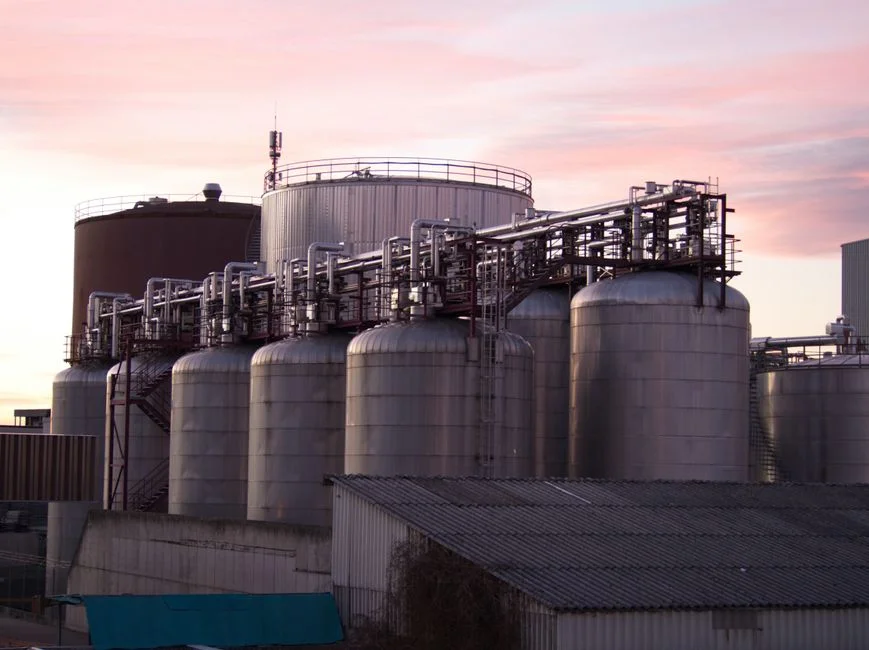
Two process trains are realistic for 100–2,000 PE residential developments. The WSZ underground A/O package plant (1–80 m³/h) is pre-engineered, buried, requires no full-time operator, and fits the 100–2,000 m³/day decentralized band (Hydropure, 2025). The integrated MBR membrane bioreactor (10–2,000 m³/day) combines activated sludge with submerged PVDF membrane filtration, operates at 8,000–12,000 mg/L MLSS — more than double the conventional activated-sludge tolerance — eliminates the secondary clarifier, and delivers a 60% smaller footprint (Hydropure, 2025). MBR effluent is suitable for non-potable reuse: irrigation, toilet flushing, and landscape.
| Criterion | A/O Package Plant (WSZ) | MBR Membrane Bioreactor |
|---|---|---|
| Footprint | Larger (buried concrete tank) | 60% smaller (no clarifier) |
| Effluent BOD₅ | ≤ 30 mg/L | ≤ 5 mg/L |
| Effluent TSS | ≤ 30 mg/L | ≤ 1 mg/L |
| Reuse Viability | Irrigation only | Toilet flush, cooling, irrigation |
| Energy | 0.3–0.5 kWh/m³ | 0.7–1.2 kWh/m³ |
| Operator Skill | Basic | Intermediate (membrane CIP) |
| Membrane Replacement | N/A | 5–8 years |
Decision rule: choose WSZ when land is available, reuse is not required, and operator skill is basic. Choose MBR when footprint is constrained, reuse is mandated, or discharge enters a sensitive water body (Indian Ocean coastline, Lake Victoria basin) where near-reuse-quality effluent is the safest design. Constructed wetlands (Typha latifolia) remain a low-OPEX option for very small communities, but the 48% COD and 47% BOD₅ removal recorded in Dodoma (Mwegoha et al., 2023) disqualifies them for NEMC-permitted residential discharge without an A/O or MBR polishing stage downstream. For a related hospital-scale application, see this hospital wastewater treatment in Kigali guide.
Headworks, Disinfection, and Sludge Handling for Residential Flows
Three support processes routinely take down otherwise compliant biological plants at residential scale. A rotary mechanical bar screen sized for 1.5× peak residential flow removes up to 95% of large debris and suspended solids (Hydropure, 2025). In Tanzanian residential collections, "flushable" wipes, plastic bags, and grit from unpaved access roads are constant — without automated screening, downstream pumps and membrane modules fail within months.
Disinfection closes the pathogen gap. A chlorine dioxide generator is preferred over chlorine gas due to superior efficacy against viruses and cysts and reduced disinfection by-product formation (Hydropure, 2025) — a critical factor when downstream rural communities may use the receiving water. For residential estates above 500 PE, integrated sludge handling becomes economic. A plate-and-frame sludge filter press reduces moisture from ~98% in liquid sludge to 65–75% cake solids, cutting transport cost to disposal sites and addressing the chronic illegal-sludge-dumping problem flagged as a Tanzania compliance issue (Hydropure, 2025). Smaller estates can route liquid sludge to a DAWASA-coordinated stabilization pond.
2026 CAPEX, OPEX, and 15-Year Lifecycle Cost Benchmarks
Procurement teams need numbers they can drop into a development budget. The table below distills planning estimates for residential scale; confirm against site-specific influent testing and vendor proposals before contract award.
| Scale | Technology | CAPEX (USD) | OPEX (USD/m³) | Energy (kWh/m³) | Key Lifecycle Driver |
|---|---|---|---|---|---|
| 100–500 PE | WSZ A/O Package | 25,000–80,000 | 0.08–0.15 | 0.3–0.5 | No membrane cost; blower service 10 yr |
| 500–1,500 PE | WSZ A/O Package | 80,000–200,000 | 0.06–0.12 | 0.3–0.5 | Tank corrosion inspection at 15 yr |
| 500–2,000 PE | MBR System | 80,000–350,000 | 0.18–0.35 | 0.7–1.2 | Membrane replacement every 5–8 yr |
| 15-Year Asset Life | Stainless screens, filter presses | — | — | — | 15–20 yr service life (Hydropure, 2025) |
Funding pathways for residential estates in Tanzania follow three channels: government budget for public housing, EIB/World Bank lines such as the €150M LVWATSAN project, and PPP structures for private developments (Hydropure, 2025). For private estates, ROI is driven by reuse-water offset (irrigation and cooling) and avoided NEMC fines. The procurement heuristic is unambiguous: buy on life-cycle cost — energy plus membrane replacement plus spares plus operator training — not on sticker price. A MBR priced 30% higher at purchase can win on 15-year cost if reuse revenue is captured. For comparable scope, see this package wastewater treatment plants reference and this hotel and resort wastewater treatment in Sri Lanka guide.
Frequently Asked Questions
What design flow per person should I use for a Tanzanian residential estate?
Use 150–200 L/person·day as the East African residential baseline, with a 2.5–3.0× wet-weather peaking factor. A 500-PE estate at 180 L/c·d × 2.75 = 681 m³/day peak, fitting a WSZ package plant (1–80 m³/h) or small MBR (10–2,000 m³/day).
What is the NEMC BOD limit for residential wastewater discharge?
NEMC enforces BOD₅ ≤ 30 mg/L, COD ≤ 60 mg/L, and TSS ≤ 30 mg/L under the Environmental Management Act 2004, with total coliform ≤ 400 CFU/100 mL and pH 6.5–8.5. Compliance requires EIA, NEMC permitting, and continuous monitoring (Hydropure, 2025).
Should I choose a WSZ package plant or an MBR for a residential estate?
Choose the WSZ A/O package plant when land is available, reuse is not required, and operator skill is basic. Choose an MBR when footprint is constrained, reuse is mandated, or discharge enters a sensitive water body (Lake Victoria, Indian Ocean) where near-reuse effluent is needed.
How often do MBR membranes need replacement?
MBR membranes typically require replacement every 5–8 years, depending on influent characteristics, CIP protocol, and operator skill. Stainless steel bar screens and filter presses last 15–20 years with proper maintenance (Hydropure, 2025).
What is the correct sludge disposal route for a residential estate?
For estates above 500 PE, on-site plate-and-frame dewatering to 65–75% cake solids is economic and reduces transport to disposal sites. Smaller estates can route liquid sludge to a DAWASA-coordinated stabilization pond, avoiding illegal dumping (Hydropure, 2025).