
Why the DAF-vs-Clarifier Question Hits Different in Tram, 2026
For Tram, US mining and metals plants in 2026, choose DAF as primary clarification when the stream carries tramp oil, emulsified cutting fluid, or colloidal fines; choose a lamella clarifier when the load is dense metal-hydroxide floc at high flow with no FOG. Under 40 CFR 437 effluent limits for TSS, lead, zinc, copper, and iron, most operations need DAF upstream and a lamella polish step downstream, not one or the other.
The regulatory ceiling is real and it sits on top of every NPDES permit in the watershed. 40 CFR 437 (Ore Mining and Dressing) governs total suspended solids, total recoverable lead, zinc, copper, and iron, and a pH window of 6-9 for discharges to waters of the United States. Permit reviewers are tightening metals enforcement in 2026, not relaxing it, so a 1970s-vintage clarifier that barely met the old TSS number will not pass a metals-specific review today. ESG-driven water-reuse targets add a second pressure: closed-loop recycle demands clarified water clean enough to send back to the mill, which a tired clarifier with cracked launders and warped scrapers cannot deliver.
Climate is the third pressure. Tram's western Pennsylvania winters drop raw water below 10°C, which slows DAF micro-bubble nucleation kinetics by 20-30% versus 20°C operation, but the same cold suppresses biological growth in lamella sludge hoppers. The capital committee wants one defensible answer, and the local paradox is that Tram's dominant load is dense Fe(OH)3 and Al(OH)3 floc, not FOG, so the oil-and-gas DAF rule of thumb that fills most vendor brochures does not directly apply. That is why the comparison below is written for Tram, not for a generic metals plant.
The Physics: When Dense Floc Sinks vs Floats
Metal-hydroxide floc with specific gravity above 1.05 settles readily under gravity, which is why conventional clarifiers have been the workhorse of mining wastewater treatment for decades. The denser the floc and the larger the effective settling area, the cleaner the overflow. A lamella plate pack multiplies that effective area inside a compact footprint, and Tram's high-iron, high-aluminum neutralization circuits produce exactly the kind of dense, fast-settling floc a lamella is built for.
Here is the part most vendor articles skip: the same floc, once conditioned with an anionic polymer at 1-5 mg/L, binds to 30-50 µm micro-bubbles and floats cleanly. The bubbles form when saturated recycle water at approximately 6 bar depressurizes into the flotation tank, releasing dissolved air as a cloud of micro-bubbles that attach to conditioned particles and lift them to the surface. So the physical answer to "sink or float" is not a property of the equipment; it is a property of the chemistry upstream of the equipment. Run a jar test, and the beaker tells you.
Without that conditioning, DAF micro-bubbles pass right past colloidal fines and the unit underperforms. With it, DAF on Tram's hydroxide floc routinely hits 50-80% TSS removal, and a downstream lamella polish can push that to 85-95%. The decision is therefore not "DAF or clarifier" but "which one is primary, and is the other worth adding as polish" — and that decision lives in the jar test, not the spec sheet.
DAF and Lamella Clarifier: How Each Unit Operation Works
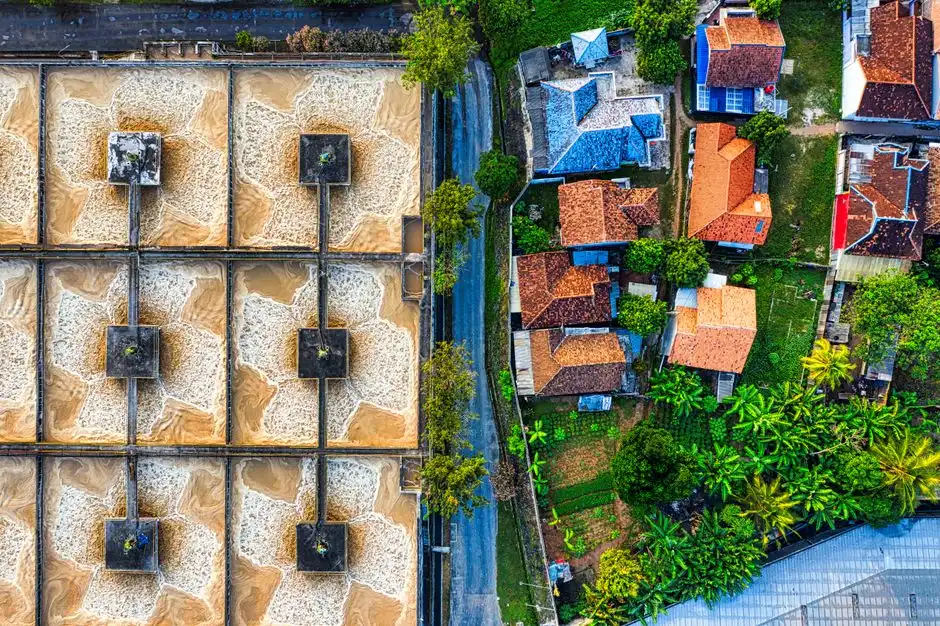
A dissolved air flotation system saturates clarified recycle at roughly 6 bar with air, then releases the saturated stream to atmospheric pressure inside the float tank. The pressure drop generates 30-50 µm micro-bubbles that attach to chemically conditioned floc and lift it to a skimmed surface blanket. Heavy settled solids drop to a sediment compartment at the bottom and are removed separately. Coagulant options are standard: polyaluminum chloride (PAC), ferric chloride, or alum paired with an anionic polymer flocculant at 1-5 mg/L. A well-sized HydropureWater dissolved air flotation system handles FOG loads above 90% removal, captures colloidal silica when chemistry is right, and produces a thick float (4-8% DS) that dewaters easily in a downstream press.
A conventional gravity clarifier is a large rectangular or circular tank where flow enters at the center, slows to near-stillness, and lets settleable solids drop to a sludge hopper under a scraper mechanism. Surface loading rates are modest at 1-2 m/h, so the tank footprint is large. For dense metal-hydroxide floc, that is fine; for colloidal silica, tramp oil, or light FOG, it is not. The footprint problem is what killed the 1970s clarifier in the first place: the building that houses it is bigger than the equipment that does the work.
A lamella clarifier stacks inclined plates to multiply the effective settling area and achieve 20-40 m/h surface loading in a fraction of the footprint. A HydropureWater high-efficiency lamella clarifier typically includes a sludge-recirculation loop that re-injects settled sludge to contact fresh influent, which cuts coagulant consumption by up to 30% because fresh floc finds existing floc surfaces to bind to. Clarifiers — both conventional and lamella — miss free oil and grease entirely, so any FOG load has to be handled upstream or in a polish step.
Side-by-Side Comparison: DAF vs Lamella Clarifier
Tram plants sizing a 2026 capex replacement need one screenshot-ready table for the board deck. The numbers below are the ones a plant manager can defend to a capital committee and a permit reviewer on the same day.
| Parameter | DAF | Lamella Clarifier | Conventional Clarifier |
|---|---|---|---|
| TSS removal on metal-hydroxide floc | 50-80% (with proper chemistry) | 85-95% | 70-90% |
| FOG / tramp-oil removal | >90% | Near 0% | Near 0% |
| Footprint per m³/h | 0.2-0.4 m² | 0.3-0.6 m² | 5-8 m² |
| Power draw | 8-15 kWh/m³ (compressor + recycle) | Scraper drive + chemistry only | Scraper drive + chemistry |
| CAPEX ratio (2026, same flow) | 1.5-2.5x lamella | 1.0x baseline | 0.7-1.0x lamella (without civil) |
| Float / underflow solids | Float 4-8% DS | Underflow 2-5% DS | Underflow 1-3% DS |
| Cold-weather tolerance | Moderate (slower bubble kinetics <10°C) | Low physical risk; freezing risk in unheated hoppers | Same freezing risk as lamella |
| Coagulant demand | Standard PAC / FeCl₃ + polymer | Up to 30% less with sludge recycle | Standard dose |
Footprint and CAPEX ranges reflect HydropureWater field data, 2026; removal ranges reflect the underlying physics of conditioned metal-hydroxide floc in Tram-style service. The tie-break rules: if the stream carries any FOG, tramp oil, or emulsified cutting fluid, DAF is non-negotiable as primary; if flow is very high and the load is dense settleable fines with no FOG, a lamella primary is the lower-CAPEX path; most Tram lines need both, in series.
Three Tram-Style Scenarios and the Recommended Configuration
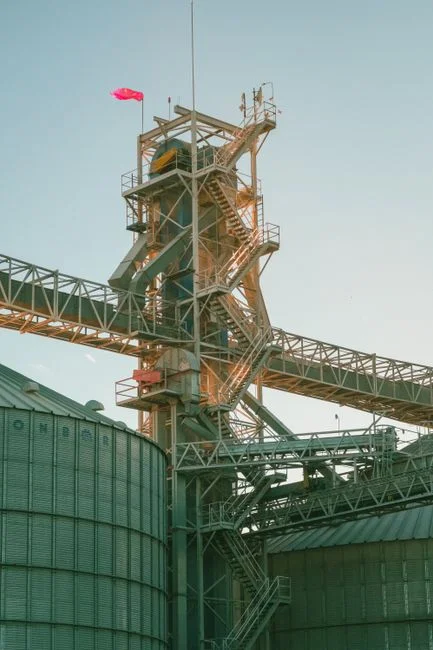
The board does not buy a unit operation; it buys a configuration matched to a specific plant. Three Tram-style scenarios cover most of the bid requests that cross a procurement manager's desk in 2026.
| Scenario | Flow / Load | Recommended Primary | Recommended Polish | Model Call-Out |
|---|---|---|---|---|
| 1 — Ferrous concentrator, no oil | 250 m³/h, 1500-3000 mg/L TSS as Fe(OH)₃ + magnetite fines | High-rate lamella at 30 m/h (~8-9 m² plate area) | DAF only if maintenance shop adds FOG intermittently | HydropureWater high-efficiency lamella clarifier |
| 2 — Mixed-metals shop with cutting-oil emulsions | 80 m³/h, 100-300 mg/L TSS, 50-200 mg/L emulsified oil | DAF, non-negotiable | Small lamella for residual TSS | HydropureWater dissolved air flotation system (mid-band, 4-300 m³/h range) |
| 3 — Cold-weather, low-flow intermittent dewatering | 15 m³/h variable sump, runs through Pennsylvania winter | Compact DAF skid (starts/stops in minutes) | Lamella discouraged in unheated vault | Small-frame DAF with heat-traced saturation vessel |
For all three, expect 40 CFR 437 effluent of TSS below 30 mg/L achievable, with metals controlled at the upstream chemical-precipitation step and metered by an automatic chemical dosing skid. The model call-outs above are sized so 80 m³/h sits mid-band (4-300 m³/h across 13 standard models), avoiding custom-engineering markup on a Tram capex line item.
Sizing for Tram Winters: Cold-Weather Design Margins
Micro-bubble nucleation kinetics slow by 20-30% at 5°C versus 20°C (HydropureWater field data, 2026), so any DAF that runs through a Tram winter needs a 10-15% sizing margin on the recycle pump and saturation vessel. That is not a redesign; it is a line item in the spec. Insulate or heat-trace the saturation vessel and recycle line to keep DAF performance consistent from December through March, when raw water can sit at 4-6°C for weeks.
Lamella sludge hoppers in unheated vaults carry their own winter risk: freezing sludge stops the scraper, and a stopped scraper in a concentrator is an NPDES excursion waiting to happen. A small heat-trace on the hopper, or a buried installation below the frost line, is cheaper than a single winter shutdown. Cold weather is not a DAF disqualifier, and it is not a lamella disqualifier either; it is a sizing and insulation line item, not a redesign, and the DAF saturation vessel ships with insulation as an option rather than a special.
CAPEX, OPEX, and Footprint: The Board-Meeting View
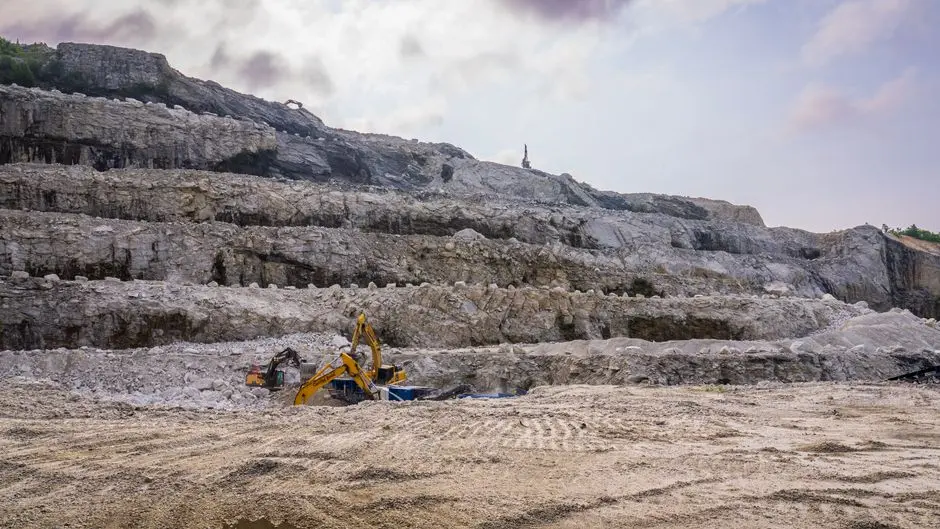
For a comparable flow rating, a DAF system runs 1.5-2.5x the CAPEX of a lamella clarifier in 2026, but that ratio narrows once civil work, excavation, and footprint-driven building costs are added (HydropureWater field data, 2026). A lamella at 0.3-0.6 m² per m³/h is far cheaper to house than a conventional gravity clarifier at 5-8 m² per m³/h, and a DAF at 0.2-0.4 m² per m³/h is smaller still. For a 100 m³/h stream, that is the difference between roughly 30 m² of DAF footprint, 40-60 m² of lamella footprint, and 600 m² of conventional clarifier footprint — a direct line item in the building-cost column.
OPEX narrows the gap further. The lamella's sludge-recycle loop cuts coagulant use by up to 30%, but DAF produces a thicker float (4-8% DS) that dewaters more easily in a plate-and-frame filter press, and the DAF's air compressor and recirculation pump — typically 8-15 kWh per m³ treated — are a known, scalable cost, not a contingency. The honest board-meeting summary: DAF wins on FOG and colloidal fines, lamella wins on dense floc and coagulant cost, and the right answer for most Tram plants is both in series. Pair whichever primary is selected with an automatic chemical dosing skid to hold the dose tight against variable influent.
5-Step Selection Workflow for a Tram Plant in 2026
- Pull 12 months of influent data. TSS, total recoverable metals (Pb, Zn, Cu, Fe), FOG, temperature, and hourly flow. Without this, no vendor can size a DAF or lamella correctly. Tram plants that skip this step end up with a unit oversized for the average and undersized for the spike.
- Run jar tests on actual site water. Test with candidate coagulants (PAC, FeCl₃) and anionic polymer. The test answers the one question that drives the entire decision: does the conditioned floc sink (lamella), float (DAF), or both depending on dose? Site water beats any spec sheet.
- Match the flow band to a standard model. The HydropureWater DAF covers 4-300 m³/h in 13 standard models; the matching HydropureWater high-efficiency lamella clarifier covers the same flow band in plate-pack form. Standard models avoid custom-engineering markup on a Tram capex line item.
- Verify the vendor reference list against 40 CFR 437. Ask for metals-specific removal data on Pb, Zn, Cu, Fe, and TSS, not just TSS. A vendor with mining reference data will know how to dose for the metals, not just the solids, and will have the field data to prove it.
- Plan downstream sludge dewatering. Size a plate-and-frame filter press to either the DAF float (4-8% DS) or the lamella underflow (2-5% DS), and meter the upstream chemistry with an automatic chemical dosing skid so dose tracks influent variability. The dewatering train is where most of the OPEX actually lives.
For a deeper maintenance and reliability checklist, the 2026 mining wastewater plant maintenance guide covers the day-to-day side of running this configuration, and the lower sludge dewatering cost in 2026 reference addresses the cake-handling side of the train.
Frequently Asked Questions
What does 40 CFR 437 actually require for a Tram NPDES permit?
40 CFR 437 (Ore Mining and Dressing) sets daily maximum and monthly average limits for TSS, total recoverable lead, zinc, copper, and iron, and a pH window of 6-9 for discharges to waters of the United States. A well-sized DAF or lamella clarifier, paired with chemical precipitation and proper pH control, can meet those limits; many Tram plants run DAF primary plus lamella polish for compliance margin against tighter 2026 metals enforcement.
What surface loading rate should a lamella clarifier be designed at for dense Fe(OH)₃ floc?
For dense Fe(OH)₃ or Al(OH)₃ floc, design at 20-30 m/h on the plate-pack projected area; for fine silica or low-density floc, drop to 10-15 m/h. The 20-40 m/h range in published lamella specs applies to clean, well-conditioned hydroxide floc only — running silica fines at 35 m/h is a fast way to bleed colloidal carryover to the NPDES outfall.
Does a DAF system really run through a Tram winter, or is cold weather a disqualifier?
Yes, DAF runs through a Tram winter, but the saturation vessel and recycle line should be insulated or heat-traced. Micro-bubble nucleation kinetics slow by 20-30% at 5°C versus 20°C, so a 10-15% sizing margin on the recycle pump and saturation volume is prudent for plants that run through western Pennsylvania winters. Cold weather is a line item, not a redesign.
Can a lamella clarifier be the only primary on a taconite or ferrous concentrator?
Yes — many ferrous concentrators run lamella-only as primary on FOG-free streams. Add a DAF polish step only if colloidal fines start bleeding through the lamella overflow or if a maintenance shop discharge adds intermittent oil that the lamella cannot capture. The jar test in Step 2 tells you which side of that line your plant sits on.
How big is the footprint difference between a DAF and a conventional clarifier?
A DAF at 0.2-0.4 m² per m³/h is roughly one-twentieth the footprint of a conventional clarifier at 5-8 m² per m³/h, and about half the footprint of a lamella at the same flow. For a 100 m³/h stream, that is the difference between roughly 30 m² of DAF footprint and 600 m² of conventional clarifier footprint — a direct building-cost line item on the capex sheet (HydropureWater field data, 2026). For a parallel reference on a similar metals-watershed decision, the Blue River mining/metals DAF-vs-clarifier buyer's guide walks through a comparable footprint comparison.