Why Fair Play Mining and Metals Plants Are Rethinking Clarification in 2026
Fair Play, South Carolina sits in Oconee County on the western edge of the Savannah River basin, where active kaolin operations, granite aggregate quarries, and vermiculite processors discharge to tributaries of the Tugaloo arm of Lake Hartwell. Legacy gold-pyrite prospects in the same drainage add an intermittent metals load to the local permit inventory. The 1980s-vintage circular clarifiers still running in many of these plants are reaching end-of-life: corrosion-through on launderers, scraper-drive failures, and undersized surface loading for today's higher throughputs. A 2026 replacement decision is no longer a question of like-for-like swap, because the regulatory envelope has tightened in two specific ways.
First, EPA's 40 CFR Part 437 (Ore Mining and Dressing) sets daily maximum and monthly average effluent limits for total suspended solids and total recoverable lead, zinc, copper, and iron, plus a pH range of 6-9. The 2026 enforcement push from EPA Region 4 and SCDHEC is targeting the metals limits, not just TSS (per EPA 40 CFR 437). SCDHEC administers the Industrial Wastewater program under S.C. Regulation R.61-43, which sits on top of the NPDES individual permit framework. Plants whose discharge goes to surface water hold a more stringent envelope than those routed to a POTW, and the metals compliance burden lands on the clarification step, not on a downstream filter.
Second, ESG-driven water-reuse and closed-loop recycle targets are pushing plants to recover more process water and to send cleaner effluent to the Savannah River basin, where downstream users (Savannah River Site, municipal intakes, the Augusta Diversion) compete for the same flow. A 2026 capex memo now has to defend both the technology choice and the closed-loop claim. The engineering question is straightforward: pick a dissolved air flotation (DAF) system, a high-rate lamella clarifier, or both in series, sized for the local influent and the local permit. This guide walks through the physics, the comparison, and three Fair Play scenarios that frame the decision.
The Physics: Why Floc Density Decides the DAF-vs-Clarifier Question
Fair Play mining influent is the opposite of the oil-and-gas FOG stream most generic DAF articles are written for. The dominant load is dense, high-specific-gravity metal-hydroxide floc — Fe(OH)3 and Al(OH)3 from lime or caustic neutralization circuits — plus silica fines, magnetite, and pyrite tailings. Tramp oil from haul-truck wash, crusher lube, and maintenance shops is intermittent rather than continuous, and cutting-fluid emulsions appear only when equipment rebuilds send floor wash to the sump.
That mix flips the rule of thumb most engineers carry over from food-and-beverage or oil-and-gas. Dense flocs with specific gravity above 1.05 settle readily under gravity, which favors a conventional or lamella clarifier. The same chemically conditioned floc, dosed with an anionic polymer at 1-5 mg/L, also binds tightly to 30-50 µm micro-bubbles and floats cleanly to the surface — which is why DAF also works on mining streams (S4, S5). The decision is not "which one is right"; it is "which one wins on this specific floc, at this specific flow, with this specific intermittent oil load."
Climate adds a second variable. Micro-bubble nucleation kinetics slow by 20-30% as raw water drops below 10°C (HydropureWater field data, 2026), and that is the design margin engineers price in for cold-climate sites. In Fair Play the winter air temperature rarely sits below freezing for long, and raw water holds near 8-15°C through January, so the saturation-vessel sizing penalty is modest. The bigger local risk is humidity-driven corrosion on the saturation vessel, recycle piping, and skimmer hardware, which must be priced into 2026 capex with a 5-10% coating or stainless upgrade. A high-efficiency lamella clarifier has fewer corrosion-vulnerable internals but still needs the right plate-pack material for the local humidity envelope.
DAF, Conventional Clarifier, and Lamella Clarifier: How Each Actually Works
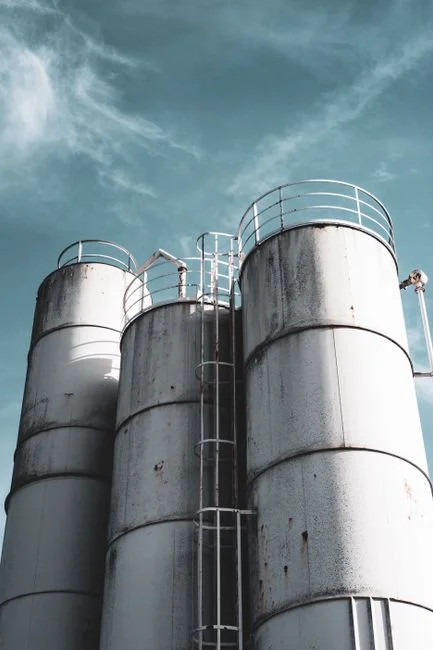
A DAF clarifier floats solids using micro-bubbles generated from a pressurized recycle stream. Clean clarified water is drawn off the DAF outlet, pressurized to approximately 6 bar, and saturated with air in a packed saturation vessel (S5). When the saturated recycle is depressurized back into the flotation tank at atmospheric pressure, dissolved air comes out of solution as 30-50 µm bubbles (S1, S5). Those bubbles attach to chemically conditioned floc and lift it to the surface, where a skimmer sweeps the float into a sludge trough. Clarified water exits below the float blanket; settled heavy solids drop to a sediment compartment and are removed separately (S1). Removal performance in this service class is above 90% for TSS, FOG, COD, and BOD (S5), and DAF also captures particulate metals and colloidal silica when upstream chemistry is right (S4). Without anionic polymer conditioning, micro-bubbles pass right past colloidal fines and DAF underperforms (S1, S4).
A conventional gravity clarifier is a large rectangular or circular tank where flow enters at the center, slows to near-stillness, and lets settleable solids drop to a sludge hopper under a scraper mechanism. Surface loading rates are modest at 1-2 m/h, so the tank footprint is large — typically 5-8 m² per m³/h. For dense Fe(OH)3 floc the geometry is fine. For colloidal silica, tramp oil, or light FOG, it is not: those particles simply do not settle in the residence time available, and the oil exits in the overflow to the NPDES outfall.
A lamella clarifier (also called an inclined-plate or high-rate sedimentation tank) stacks a series of inclined plates inside a compact tank. The plates multiply the effective settling area, so surface loading climbs to 20-40 m/h and footprint drops by roughly an order of magnitude versus a conventional clarifier at the same flow. The plate pack creates a counter-current flow pattern that lets sludge slide down the plate face into a hopper while clarified water rises through the pack. Many lamella designs include a sludge-recirculation loop that re-injects a portion of settled sludge to contact fresh influent; this cuts coagulant consumption by up to 30% (HydropureWater P10) because fresh floc finds existing floc surfaces to bind to. Clarifier overflow carries FOG straight to the NPDES outfall, so any oil load has to be handled upstream or in a downstream polish step.
Sludge handling is the other axis to plan. DAF float at 4-8% dry solids dewaters easily in a plate-and-frame filter press; clarifier underflow at 2-5% dry solids needs more press capacity or a thickener upstream. That single number is often the difference between a clean capex line and an under-spec'd dewatering train.
Side-by-Side: DAF vs Lamella vs Conventional Clarifier for Fair Play Plants
The table below is the comparison to walk into a 2026 capex board meeting with. The numbers are drawn from the same engineering envelope a vendor will size against; the tie-break rules under it translate the matrix into a defensible decision.
| Parameter | DAF | Lamella Clarifier | Conventional Clarifier |
|---|---|---|---|
| TSS / FOG removal | >90% across TSS, FOG, COD, BOD (S5) | 85-95% on metal-hydroxide floc | 50-80% on metal-hydroxide floc |
| Surface loading | Comparable effective throughput, <5 min residence | 20-40 m/h on plate-pack area | 1-2 m/h — the bottleneck |
| Footprint | 0.2-0.4 m² per m³/h | 0.3-0.6 m² per m³/h | 5-8 m² per m³/h |
| 2026 CAPEX ratio (same flow) | 1.5-2.5x lamella | Baseline | Lower unit, higher civil/building cost |
| OPEX drivers | Compressor + recycle pump 8-15 kWh/m³ + chemistry | Coagulant (up to 30% saved with sludge recycle) + polymer | Scraper drive + chemistry |
| Cold / humidity sensitivity | Modest (bubble kinetics slow 20-30% below 10°C); humidity corrosion real | Low; freezing risk in unheated vaults | Low; corrosion in launderers |
| FOG handling | Captures free and emulsified oil | Misses FOG — exits in overflow | Misses FOG — exits in overflow |
Two takeaways for the Fair Play buyer. First, the CAPEX premium on DAF narrows quickly once civil work, excavation, and building costs are added — a DAF at 0.2-0.4 m² per m³/h is roughly one-twentieth the footprint of a conventional clarifier and roughly half a lamella, which matters on dense industrial sites. Second, the FOG line is a hard pass/fail: any emulsified cutting fluid, lube oil, or haul-truck wash water disqualifies a clarifier-only design, because the oil carries through the overflow to the NPDES outfall and into the 40 CFR 437 effluent envelope.
Tie-Break Rules and Three Fair Play Scenarios
The matrix above gives the numbers; the rules below turn them into a decision a permit reviewer can sign off on.
Tie-break rule 1 — FOG forces DAF as primary. Any emulsified cutting fluid, tramp oil, or maintenance-shop wash water in the stream forces DAF as primary clarification. A clarifier will discharge the oil to the NPDES outfall, and there is no downstream polish step that reliably pulls emulsified oil back out at 50-200 mg/L influent concentrations. This is non-negotiable.
Tie-break rule 2 — high flow of dense, FOG-free fines favors lamella primary. When flow is in the hundreds of m³/h and the load is dense, well-conditioned settleable fines with no FOG, a lamella primary at 20-30 m/h is the lower-CAPEX path. Add a DAF polish only if colloidal fines bleed through or if a maintenance shop starts contributing intermittent oil.
Scenario A — Granite aggregate wash. A 200 m³/h granite aggregate wash with 800-1,500 mg/L TSS and no FOG. A lamella primary at 30 m/h on roughly 7 m² of plate area delivers expected effluent TSS below 30 mg/L, which meets 40 CFR 437 without DAF. A DAF polish is justified only if the wash bay starts seeing hydraulic-oil leaks from on-site equipment, in which case a small DAF skid upstream of the lamella is the cleanest fix.
Scenario B — Kaolin / mineral-processing plant with intermittent lube oil. An 80 m³/h kaolin or mineral-processing plant with 100-300 mg/L TSS plus 50-200 mg/L emulsified oil from the maintenance shop. DAF is non-negotiable as primary. The HydropureWater dissolved air flotation system covers 4-300 m³/h in 13 standard models, so 80 m³/h sits mid-band with no custom-engineering markup. A small HydropureWater high-efficiency lamella clarifier follows as a polish step to drop residual TSS before the NPDES outfall.
Scenario C — Legacy gold-pyrite / vermiculite operation, low and variable flow. A legacy gold-pyrite or vermiculite site running below 20 m³/h with intermittent winter flow and variable influent. A compact DAF skid handles the swing, starts and stops in minutes, and avoids the freeze and clog risk of a lamella plate pack in an unheated vault. The higher unit CAPEX pays back in operational uptime and metals compliance margin.
2026 CAPEX, OPEX, and Footprint: How the Numbers Land in Fair Play
For a comparable flow rating, a DAF system runs roughly 1.5-2.5x the CAPEX of a lamella clarifier in 2026 (HydropureWater field data, 2026). That ratio narrows quickly once civil work, excavation, and footprint-driven building costs are added. A lamella at 0.3-0.6 m² per m³/h is far cheaper to house than a conventional gravity clarifier at 5-8 m² per m³/h, and a DAF at 0.2-0.4 m² per m³/h is smaller still. The DAF CAPEX premium therefore looks largest in cold, space-rich sites and smallest in dense industrial sites where every square meter of building is expensive.
| Cost / footprint line | DAF | Lamella | Conventional clarifier |
|---|---|---|---|
| Unit CAPEX ratio (same flow, 2026) | 1.5-2.5x | Baseline | 0.7-0.9x lamella, but higher civil |
| Footprint per m³/h | 0.2-0.4 m² | 0.3-0.6 m² | 5-8 m² |
| Power draw | 8-15 kWh/m³ (compressor + recycle) | Marginal | Scraper drive only |
| Coagulant use | Standard dose + polymer | Up to 30% less with sludge recycle | Standard dose + polymer |
| Float / underflow %DS | 4-8% DS float (easy dewatering) | 2-5% DS underflow (needs more press capacity) | 2-5% DS underflow |
| Fair Play humidity risk line | Add 5-10% coating / stainless upgrade | Plate-pack material upgrade if needed | Launderer coating |
OPEX narrows the gap further. Both technologies use coagulant and polymer; lamella can save up to 30% on coagulant via sludge recycle (HydropureWater P10), but DAF produces a thicker float (4-8% DS) that dewaters more easily in a plate-and-frame filter press, which offsets downstream CAPEX. The DAF's air compressor and recirculation pump are real line items at 8-15 kWh per m³ treated, but they are a known, scalable cost rather than a contingency. Chemical dose should be metered by an automatic chemical dosing skid so the dose tracks the variable influent that DAF and lamella both handle well. The Fair Play-specific risk line — humidity-driven corrosion on the saturation vessel and recycle piping — should carry a 5-10% coating or stainless upgrade in the 2026 capex memo, versus an inland-arid site where that line item can be smaller.
A 5-Step Plan to Specify and Procure a DAF or Lamella in 2026
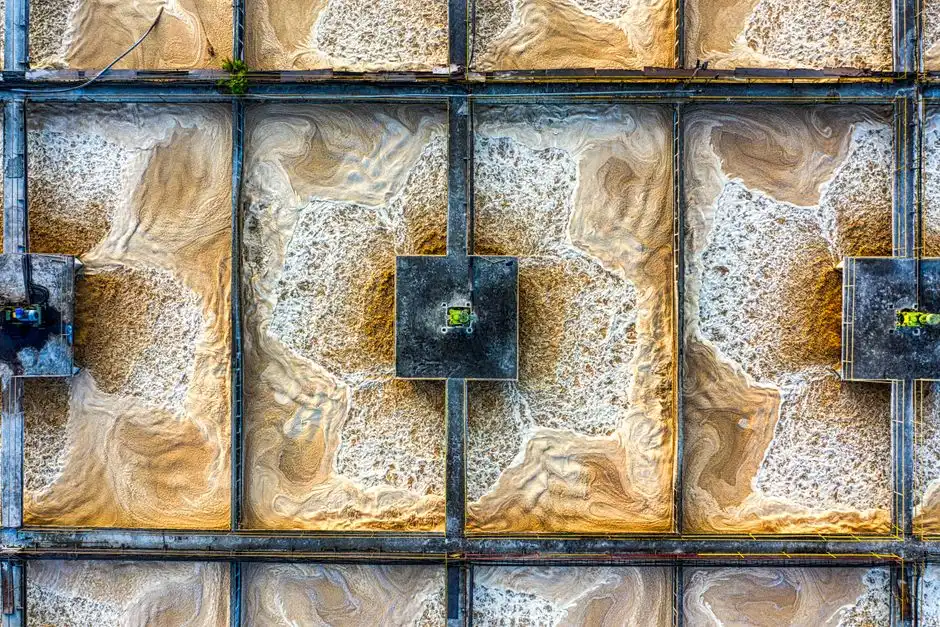
- Pull 12 months of influent data. TSS, total recoverable metals (Pb, Zn, Cu, Fe), FOG, temperature, and hourly flow. Without this record, no vendor can size a DAF or lamella correctly (S1).
- Run jar tests on actual site water. Test PAC or FeCl3 paired with an anionic polymer at 1-5 mg/L. The test answers the one question that drives the whole decision: does the conditioned floc sink (lamella), float (DAF), or both, depending on dose?
- Match the flow band to a standard model. The HydropureWater dissolved air flotation system covers 4-300 m³/h in 13 standard models, which fits the mid-range Fair Play flow band directly and avoids custom-engineering markup. The matching HydropureWater high-efficiency lamella clarifier covers the same flow band in plate-pack form.
- Verify the vendor's reference list against 40 CFR 437. Specifically Pb, Zn, Cu, Fe, and TSS. Ask for metals-specific removal data, not just TSS. A vendor with mining reference data will know how to dose for the metals, not just the solids.
- Plan the downstream sludge train. Size a plate-and-frame filter press for either the DAF float (4-8% DS) or the lamella underflow (2-5% DS), and meter the upstream chemistry with an automatic chemical dosing skid so dose tracks influent variability. The dewatering step is where most 2026 capex memos underestimate the load.
Frequently Asked Questions
What does 40 CFR 437 actually require of a Fair Play plant?
The rule sets daily maximum and monthly average effluent limits for TSS, total recoverable lead, zinc, copper, and iron, plus a pH range of 6-9 (per EPA 40 CFR 437). Neither DAF nor a lamella is explicitly mandated, but a well-sized unit paired with chemical precipitation can meet those limits. Most Fair Play plants run DAF as primary plus a small lamella as polish to give themselves compliance margin under the 2026 enforcement push on metals, not just TSS.
What surface loading should I design a lamella clarifier to in 2026?
For dense Fe(OH)3 or Al(OH)3 floc, design at 20-30 m/h on the plate-pack projected area. For fine silica or low-density floc, drop to 10-15 m/h. The 20-40 m/h range in published lamella specs is for clean, well-conditioned hydroxide floc only — running at the top of the band on a dirty granite or pyrite feed will bleed TSS over the 40 CFR 437 limit.
Can DAF run through a Fair Play winter without sizing margin?
Yes, but with two provisos. Insulate and heat-trace the saturation vessel and recycle line, and allow a 10-15% sizing margin on the recycle pump and saturation volume. Micro-bubble nucleation kinetics slow by roughly 20-30% at 5°C versus 20°C (HydropureWater field data, 2026), which is the design margin to price in. In Fair Play the winter penalty is smaller than in an inland-arid or UP Michigan site, but the humidity-driven corrosion on the saturation vessel and skimmer hardware is the real capex line to flag.
Can a lamella be the primary on a kaolin or pyrite stream?
Yes, on FOG-free streams many plants run lamella-only as primary. Add a DAF polish only if colloidal fines bleed through the lamella overflow or if a maintenance shop or truck wash starts contributing intermittent emulsified oil that the lamella cannot capture. For a 200 m³/h granite wash with 800-1,500 mg/L TSS and no oil, lamella primary at 30 m/h is the lower-CAPEX path.
What is the real footprint difference between DAF, lamella, and a conventional clarifier?
| Technology | Footprint per m³/h | Equivalent area at 100 m³/h |
|---|---|---|
| DAF | 0.2-0.4 m² | 20-40 m² |
| Lamella clarifier | 0.3-0.6 m² | 30-60 m² |
| Conventional clarifier | 5-8 m² | 500-800 m² |
A DAF at 0.2-0.4 m² per m³/h is roughly one-twentieth the footprint of a conventional gravity clarifier at 5-8 m² per m³/h, and about half the footprint of a lamella at the same flow. For a 100 m³/h stream, that is the difference between roughly 30 m² and 600 m² of clarifier footprint (HydropureWater field data, 2026) — material on a tight Fair Process site. For broader 2026 maintenance planning on the same plant, the mining wastewater plant maintenance guide covers the operational envelope around the clarification step.