
What Czech and EU rules actually demand of a Prague hotel in 2026
Any packaged biological treatment system installed for a Prague hotel or resort in 2026 must satisfy the discharge ceilings set by the EU Urban Waste Water Treatment Directive 91/271/EEC, transposed into Czech law through Nařízení vlády 401/2015 Sb. For agglomerations above 10,000 population equivalents (p.e.) — which covers virtually the entire Prague catchment including a single large hotel or a cluster of properties served by one plant — the binding effluent limits at the sewer connection point are BOD ≤25 mg/L, COD ≤125 mg/L, total suspended solids ≤35 mg/L, total nitrogen ≤15 mg/L, and total phosphorus ≤2 mg/L. These are not aspirational; they are the legal floor for any discharge into the Prague combined sewer operated by Pražské vodovody a kanalizace (PVK).
The day-to-day compliance layer sits on top of EU and Czech statute: PVK issues a trade-effluent permit (kanalizační řád) that sets site-specific maximum and average values, plus a peak-flow factor the plant must accept without breaching downstream capacity. Most generic hotel procurement guides skip this layer entirely, which is why so many Prague retrofits fail their first PVK inspection. A second layer that is consistently missed is the receiving-water rule: the Vltava river basin management plan (Povodí Vltavy, 2022 update) adds a total-P trigger in sensitive sub-catchments that drops the in-stream phosphorus budget well below 2 mg/L for the receiving water itself — meaning an MBR with chemical P-removal is the only packaged option that closes the mass balance for sites discharging close to a tributary.
Independent third-party equipment specifications confirm the 91/271/EEC limits remain the operative benchmark for packaged-plant vendors in 2026: medical-grade MBR modules published for the Central European market continue to cite the directive's Annex I numerical values as the reference compliance envelope for biological oxygen demand, chemical oxygen demand, and total nitrogen.
| Parameter | EU 91/271/EEC limit (Annex I, >10,000 p.e.) | Czech transposition (401/2015 Sb.) | Prague PVK trade-effluent permit (typical) |
|---|---|---|---|
| BOD₅ | ≤25 mg/L | ≤25 mg/L | ≤20 mg/L (avg. 24 h) |
| COD | ≤125 mg/L | ≤125 mg/L | ≤110 mg/L (avg. 24 h) |
| Total suspended solids | ≤35 mg/L | ≤35 mg/L | ≤30 mg/L |
| Total nitrogen | ≤15 mg/L | ≤15 mg/L | ≤15 mg/L |
| Total phosphorus | ≤2 mg/L | ≤2 mg/L | ≤1.5 mg/L in Vltava sensitive zones |
How much wastewater does a Prague hotel actually produce
The Aquapalace resort in Čestlice is the right archetype for sizing a 2026 Prague hotel plant: 250+ rooms, a 9,150 m² indoor aquapark, on-site laundry, three restaurants, a 1,200-delegate conference centre, and spa. At 75–95% summer occupancy (per Czech Statistical Office tourism data, 2025), the property generates roughly 250–400 m³/day — a flow profile that no small packaged plant in a basement can handle without a properly sized equalization tank. The takeaway for any developer benchmarking a Prague project is that the resort flow is not 0.2 m³/room/day; it is closer to 1.0–1.6 m³/room/day once the aquapark backwash, laundry liquor, and kitchen solids are folded in.
For a more typical Prague 1 or Prague 2 mid-range city hotel — 100 rooms, no spa, restaurant, small meeting space — the industry rule of thumb is 0.15–0.25 m³/room/day at 70% occupancy, or 80–150 m³/day for the property. Add a spa and the per-room figure rises to 0.3–0.5 m³/room/day; add an aquapark and it jumps again. The influent quality is also more aggressive than generic hotel guides suggest: BOD₅ of 250–400 mg/L, COD of 500–800 mg/L, and a surfactant load where laundry surfactants (linear alkylbenzene sulphonate, LAS) frequently exceed guest-room greywater contributions on a mass basis — a profile that makes a conventional septic tank legally and practically insufficient under Czech law.
The hydraulic peak factor is the most under-designed parameter in Prague hotel retrofits. Morning room turnover, breakfast service, and pool backwash routinely combine to deliver a peak flow 2.5–3.0× the daily average within a 60–90 minute window. Prague's combined sewer cannot accept that peak unbuffered, so any packaged plant that omits an equalization tank sized for at least 8 hours of average flow will fail its first high-season load. Operators who size the equalization basin for 6 hours or less report overflow events during the May–September peak and the December Christmas market window, when occupancy again pushes above 90%.
Process train: what a 2026 Prague hotel plant actually looks like
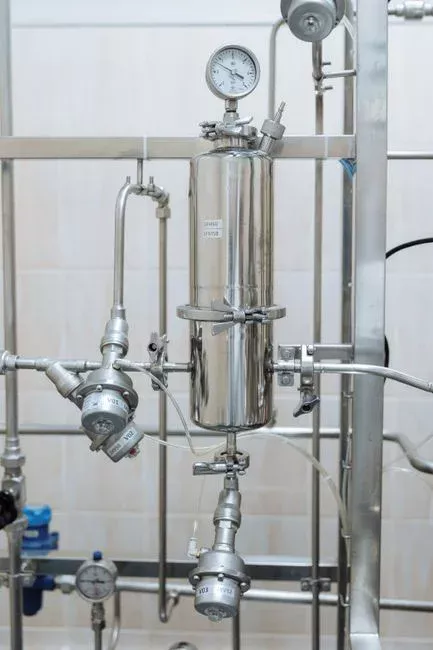
The process train below is the configuration most commonly specified for Prague hotel plants in 2026. Each stage has a defined job, and a vendor that tries to delete any of them — for capex reasons — will move the compliance risk downstream.
- Stage 1 — Screening. A rotary mechanical bar screen (GX series) with 3–5 mm aperture removes rags, hair, fibrous debris from laundry, and pool backwash lint before they enter the biological stage. Without it, downstream membranes or media clog within weeks.
- Stage 2 — Equalization. A buffer tank with coarse-bubble aeration sized for 8 hours of average flow absorbs the 2.5–3.0× peak factor. Prague projects that skip this stage fail their first high-season load test.
- Stage 3 — Biological treatment. Either a buried WSZ package with A/O contact oxidation for low-N sites, or an MBR membrane bioreactor system with submerged PVDF flat-sheet or hollow-fibre modules for sites that must hit total N ≤15 mg/L or want reuse.
- Stage 4 — Disinfection. A chlorine dioxide generator sized to deliver 0.5–1.0 mg/L ClO₂ residual at peak flow for sewer discharge, or a UV reactor at 40 mJ/cm² if the hotel reuses the effluent on site. ClO₂ is preferred over chlorine because it does not form trihalomethanes at the contact times typical of hotel effluents.
- Stage 5 — Sludge handling. A small plate and frame filter press producing 22–28% dry solids cake, sized for 4–6 hours of operation per week. Prague inner-city sites have no land for drying beds; mechanical dewatering is the only realistic option.
- Stage 6 — Optional reuse loop. UV disinfection plus a treated-water buffer feeds toilet flush and irrigation, sized to meet EU 2020/741 water reuse risk-management requirements. The 30% reuse rate typical of a Prague hotel using MBR + UV returns roughly €12,000–€18,000 per year against the 2026 Prague potable water tariff.
MBR vs WSZ buried package vs SBR: which fits a Prague hotel
The three packaged options a Prague hotel will be offered in 2026 are not interchangeable. The decision rule is straightforward once footprint, discharge target, and reuse intent are fixed.
A WSZ buried A/O contact-oxidation unit is the lowest-capex option (roughly €8,000–€18,000 per m³/day installed for the unit itself, or €25,000–€60,000 turnkey for a 100-room hotel). It is fully buried, requires no full-time operator, and reliably hits BOD and COD limits. The trade-off is nitrogen: a single-stage A/O package typically delivers total N of 25–40 mg/L, which fails the EU 91/271/EEC 15 mg/L ceiling for Prague's catchment. Adding a dedicated anoxic stage raises the capex by 20–30% and starts to close the gap with MBR.
An MBR submerged membrane bioreactor delivers effluent <1 μm turbidity, total N reliably below 15 mg/L with a modest anoxic zone, and total P below 2 mg/L with coagulant dosing. Footprint is 60% smaller than conventional activated sludge of the same capacity. The 2026 turnkey capex is roughly €20,000–€45,000 per m³/day installed, or €80,000–€180,000 for a 100-room hotel. The premium is recovered in 4–6 years through reuse savings on a 30% reuse rate. The MBR flat-sheet membrane module (DF series) is the lower-energy option — 10–20× lower than external cross-flow designs — and is the configuration most commonly specified for Prague hotels watching operating cost.
An SBR batch reactor handles variable flow well but needs a larger basin volume and a dedicated control skid. It is a poor fit for inner Prague where every square metre is at a premium; it remains viable only on suburban Prague 6, Prague 9, or Prague-east sites where land is available and the developer wants flexibility for future expansion.
| Criterion | WSZ buried package | MBR submerged | SBR batch |
|---|---|---|---|
| Capacity range | 1–80 m³/h | 10–2,000 m³/day | 20–500 m³/day |
| Footprint vs. CAS | ~70% | ~40% | ~80% |
| Effluent total N | 25–40 mg/L (single stage) | <15 mg/L | <15 mg/L with extension |
| Effluent total P | 2–4 mg/L | <2 mg/L with coagulant | <2 mg/L with coagulant |
| Capex turnkey (100-room hotel) | €25,000–€60,000 | €80,000–€180,000 | €60,000–€120,000 |
| Opex per m³ treated | €0.25–€0.55 | €0.45–€0.95 | €0.35–€0.70 |
| Operator hours/week | 2–4 | 4–8 | 6–10 |
| Reuse-ready | No | Yes | Partial |
Decision rule: choose MBR when footprint is tight (Prague 1, Prague 2, Prague 5), total N ≤15 mg/L is required, or on-site reuse is on the table. Choose buried WSZ package when flow is under 100 m³/day, the site has open ground for burial, and reuse is not on the table. Choose MBR membrane bioreactor over SBR when the hotel is in inner Prague, the developer wants reuse revenue, or the receiving sewer is hydraulically constrained.
2026 capex, opex and permit reality for a Prague hotel plant
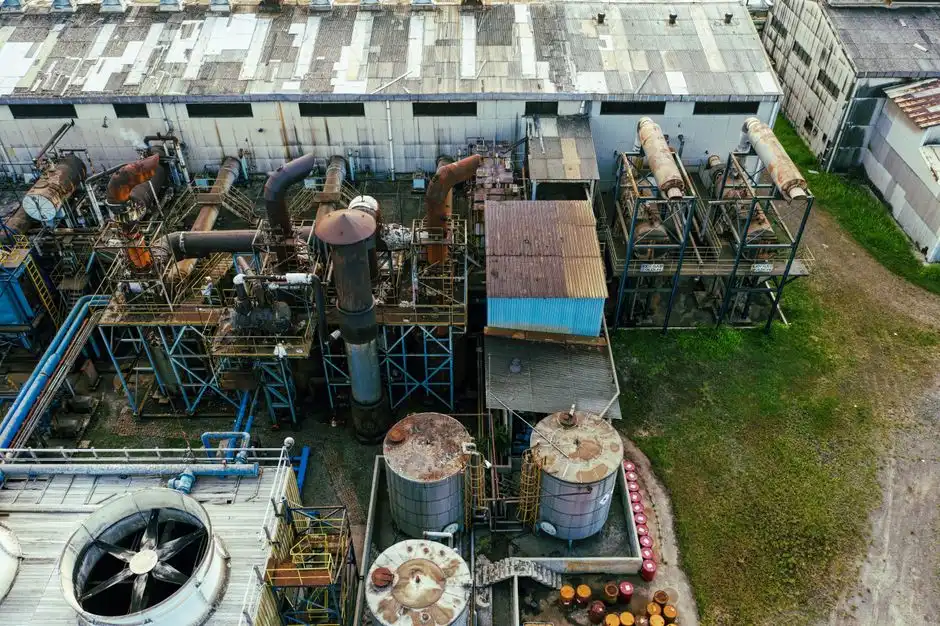
The 2026 budget a Prague hotel CFO should sign off on is the band below — these are turnkey figures including tanks, equipment, installation, commissioning, and PVK permit fees, but excluding the building-side electrical and civil works that vary widely by site.
For a 100-room city hotel at 80–150 m³/day, the WSZ turnkey capex is roughly €25,000–€60,000 and the MBR turnkey capex is roughly €80,000–€180,000. The opex bands — dominated by electricity and membrane replacement at year 7–10 — are €0.25–€0.55 per m³ treated for WSZ and €0.45–€0.95 per m³ for MBR (HydropureWater field data, 2026). On a 100 m³/day hotel running 330 days a year, that is €8,000–€18,000/year for WSZ and €15,000–€31,000/year for MBR before labour.
The permit stack is where Prague projects most often run over schedule. Three permits run in parallel: the PVK trade-effluent permit (kanalizační řád, 8–12 weeks), the Prague 1 or district building-authority sign-off for buried equipment (6–10 weeks), and EIA screening for hotels above the EU EIA Directive 2011/92/EU threshold (typically >100 rooms or >50 beds with on-site restaurant). Monthly operational reporting to the trade-effluent permit holder is mandatory, not annual — a frequent gotcha for foreign hotel brands whose EMEA compliance teams assume annual reporting. The reuse-payback layer is what flips an MBR decision: at the 2026 Prague potable water tariff of roughly CZK 110–140 per m³, a 30% reuse rate on a 100 m³/day hotel returns €12,000–€18,000 per year, giving a 4–6 year MBR premium payback against the WSZ baseline.
Frequently Asked Questions
What discharge limits does a Prague hotel wastewater plant have to meet in 2026?
BOD₅ ≤25 mg/L, COD ≤125 mg/L, total suspended solids ≤35 mg/L, total nitrogen ≤15 mg/L, and total phosphorus ≤2 mg/L at the sewer connection point, per EU Directive 91/271/EEC Annex I as transposed by Czech decree 401/2015 Sb. Prague's PVK trade-effluent permit tightens these further to roughly BOD ≤20 mg/L and total P ≤1.5 mg/L in Vltava sensitive zones.
How much wastewater does a 100-room Prague hotel produce per day?
A 100-room city hotel at 70% occupancy generates 80–150 m³/day at 0.15–0.25 m³/room/day. A resort with spa, aquapark, and on-site laundry runs 0.3–0.5 m³/room/day, so a 250-room resort like the Aquapalace archetype produces 250–400 m³/day at high season.
Is MBR or WSZ better for a Prague hotel wastewater treatment plant?
MBR is the right choice when the site must hit total N ≤15 mg/L, the footprint is tight, or on-site greywater reuse is planned — the capex premium pays back in 4–6 years at the 2026 Prague water tariff. WSZ is the right choice when the flow is under 100 m³/day, the site has open ground for burial, and reuse is not on the table.
What permits are required to install a packaged wastewater plant at a Prague hotel?
Three permits run in parallel: the PVK trade-effluent permit (kanalizační řád, 8–12 weeks), the district building-authority sign-off for buried equipment (6–10 weeks), and EIA screening under EU Directive 2011/92/EU for hotels above the size threshold. Monthly operational reporting to PVK is mandatory after commissioning.
Can a Prague hotel legally reuse treated wastewater for toilet flushing or irrigation?
Yes, under EU 2020/741 water reuse risk-management requirements, with an MBR plus UV disinfection as the minimum treatment train. A 30% reuse rate on a 100 m³/day hotel returns €12,000–€18,000 per year at the 2026 Prague potable tariff — the primary economic case for choosing an MBR membrane bioreactor system over a buried WSZ unit.