Why a Midstream Expansion Changes the ETP Question
After expanding a midstream facility, the engineering question is not "which ETP brand" but "what wastewater profile does the expanded unit actually generate?" Midstream covers gathering, processing, storage, and transport — gathering manifolds, separation trains, stabilization units, tank farms, and pipeline corridors. Adding any of these assets pushes hydrocarbon-laden streams (separator skim, desalter brine, tank-bottom draws, hydrotest water, contaminated stormwater) into the wastewater balance, on top of the sanitary load a conventional ETP handles. Treating that mixed stream with a municipal-template design is the most common reason midstream ETPs fail their first compliance audit.
The economic signal is real: the global produced-water treatment market sits at roughly USD 9.3 billion in 2025 and is projected to reach approximately USD 16.4 billion by 2033, a ~7.5% CAGR, with regulatory tightening, reuse mandates, and rising oil & gas throughput cited as the primary growth drivers (per a 2025 produced-water treatment market summary). That 7.5% line is the reason 2026 ETP capex is showing up on midstream board agendas, not just HSE budgets.
Finally, scope matters: an ETP is a single-facility treatment system dedicated to one plant, while a CETP is a centralized facility shared across an industrial cluster. Because no shared cluster treats a Shell-class midstream asset, a private ETP is the only defensible architecture — and the only one regulators will sign off on for a greenfield expansion.
Influent Characterization: What the Expanded Midstream Facility Actually Discharges
You cannot select unit operations without first bench-marking the influent. A midstream expansion typically generates five waste streams that must be co-treated or segregated:
- Separator skim — free oil and emulsified hydrocarbons from three-phase production separators; the dominant FOG source.
- Desalter brine — high-salinity, high-TDS water from crude desalting; can carry dissolved hydrocarbons and suspended solids.
- Tank-bottom draws — periodic draining of crude and product storage tanks; heavy in settled solids and sludge-bound oil.
- Hydrotest water — large episodic volumes from new-pipeline commissioning; typically low in oil but high in volume and occasional rust/scale.
- Contaminated stormwater — runoff from process areas, tank farms, and truck loading; intermittent, but with the highest instantaneous oil and TSS spikes.
Parameter ranges the engineer should design against (typical bands for conventional midstream operations):
| Parameter | Typical Midstream Range | Design Implication |
|---|---|---|
| FOG (free & emulsified oil) | 50–500 mg/L; spikes higher on slug loads | Drives DAF sizing and coagulant selection |
| Total Suspended Solids (TSS) | 200–2,000 mg/L | Drives primary clarifier / CPI sizing and sludge yield |
| Total Dissolved Hydrocarbons | 10–100 mg/L post-separation | Drives carbon-polishing or RO selection |
| Chloride / Salinity (desalter brine blend) | 5,000–50,000 mg/L Cl⁻ | Sets RO feed pressure and recovery ceiling |
| Sulfides (H₂S) | 1–50 mg/L; volatile in skim streams | Drives closed-vessel primary treatment and odor control |
| BTEX (benzene, toluene, ethylbenzene, xylene) | Trace to low mg/L | Drives air-stripping or activated-carbon polishing |
| COD / BOD | 500–3,000 mg/L COD; BOD₅ typically 30–60% of COD | Drives biological stage sizing and aeration demand |
Produced-water-to-oil ratios in conventional onshore midstream operations commonly run from roughly 3:1 to 10:1 by volume, which means a 50,000 bbl/d crude handling train can generate 150,000–500,000 bbl/d of wastewater on the high side. That ratio is what sets the hydraulic envelope the ETP must be sized to handle, and it is also why the biological and tertiary blocks typically dominate plot area — not the oil-water separator.
The Five-Stage Process Train a Midstream ETP Needs in 2026
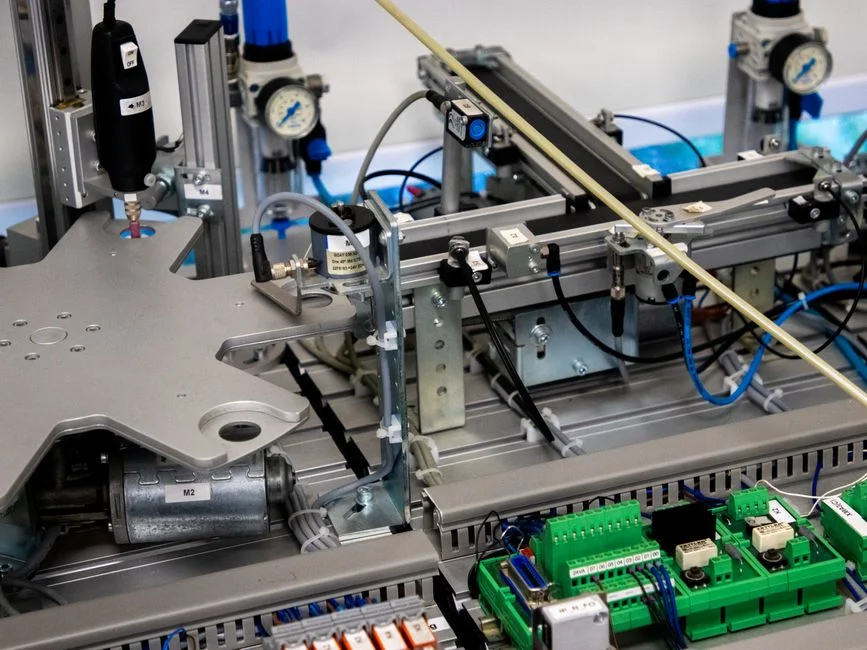
A defensible midstream ETP is a five-stage train. Each block is justified by what it removes, and each can be defended to a Shell environmental lead or a state regulator without rebuilding the design from scratch.
Stage 1 — Preliminary treatment. A rotary mechanical bar screen removes rags, debris, and large solids that would otherwise blind downstream equipment. This stage is the grit-removal step described in standard ETP process references and is non-negotiable for any train handling stormwater or hydrotest water.
Stage 2 — Primary treatment (oil/water separation + DAF). An API or corrugated-plate interceptor (CPI) oil-water separator knocks out free oil and settles coarse solids; a DAF system for oil and FOG removal (4–300 m³/h, 13 models) then polishes emulsified oil and suspended solids with coagulation, flocculation, and air-flotation skimming. DAF is the standard primary block for petrochemical pre-treatment in 2026 because it handles the slug loads that a gravity separator alone cannot.
Stage 3 — Secondary (biological) treatment. Conventional activated sludge still works, but the 2026 default for space-constrained midstream sites is a MBR membrane bioreactor with a sub-1 µm membrane cutoff, a roughly 60% smaller footprint than a comparable activated-sludge basin, and a capacity envelope of 10–2,000 m³/day. The 60% footprint reduction is the single biggest plot-area lever in the entire train, which is why MBR has displaced CAS as the default in retrofits.
Stage 4 — Tertiary (polishing and reuse). A multimedia filter strips residual TSS, followed by an industrial RO polishing system capable of up to 95% permeate recovery. RO is justified the moment the design includes hydrotest reuse or cooling-tower makeup; without a reuse driver, multimedia filtration plus disinfection is sufficient for discharge-only sites.
Stage 5 — Sludge handling. DAF float and biological waste-activated sludge are dewatered on a plate and frame filter press (1–500 m² filtration area) to a 20–35% dry-solids cake suitable for offsite disposal or, where permitted, thermal recovery.
| Stage | Unit Operation | Primary Removal Target | Typical Performance |
|---|---|---|---|
| 1 — Preliminary | Rotary bar screen | Rags, debris, grit > 2–5 mm | Protects downstream equipment |
| 2 — Primary | API/CPI oil-water separator + DAF | Free & emulsified oil, TSS, FOG | FOG < 20–30 mg/L; TSS < 50 mg/L post-DAF |
| 3 — Secondary | MBR (or CAS) | Soluble COD/BOD, residual hydrocarbons | COD < 60–80 mg/L; BOD < 10–20 mg/L |
| 4 — Tertiary | Multimedia filter + RO (optional) | TSS polishing, TDS, residual organics | RO permeate TDS < 50 mg/L at 95% recovery |
| 5 — Sludge | Plate & frame filter press | Water reduction from DAF float + WAS | Cake dryness 20–35% DS |
Regulatory Targets the ETP Must Hit After Expansion
Midstream ETP design in 2026 is shaped by oil-and-gas-specific limits, not generic municipal numbers. Typical discharge targets across the major U.S. producing jurisdictions sit in the following bands: oil & grease in the low tens of mg/L (commonly 10–29 mg/L monthly average), TSS in the 30–50 mg/L range, and COD/BOD₅ in the 100–200 mg/L and 20–50 mg/L ranges respectively. Produced-water permits run tighter, and offshore or reuse-driven permits can drop O&G limits into the single-digit mg/L range.
Two market signals matter here. First, the produced-water market summary explicitly cites "stringent environmental regulations" as a 2026 growth driver, meaning legacy permit limits are tightening rather than loosening, and a 2026 expansion is unlikely to be grandfathered under older thresholds. Second, the same source lists "increasing focus on water reuse and recycling" as a parallel driver, which means reuse yield — not just discharge compliance — is becoming a permit-shaping parameter in water-stressed basins (Permian, Eagle Ford, DJ).
Engineers should design to the tightest anticipated envelope (single-digit mg/L O&G, sub-50 mg/L TSS) from day one and accept that the biological and tertiary stages will carry the load if regulations move further.
Choosing the ETP Architecture: DAF-Led, MBR-Led, or RO-Led
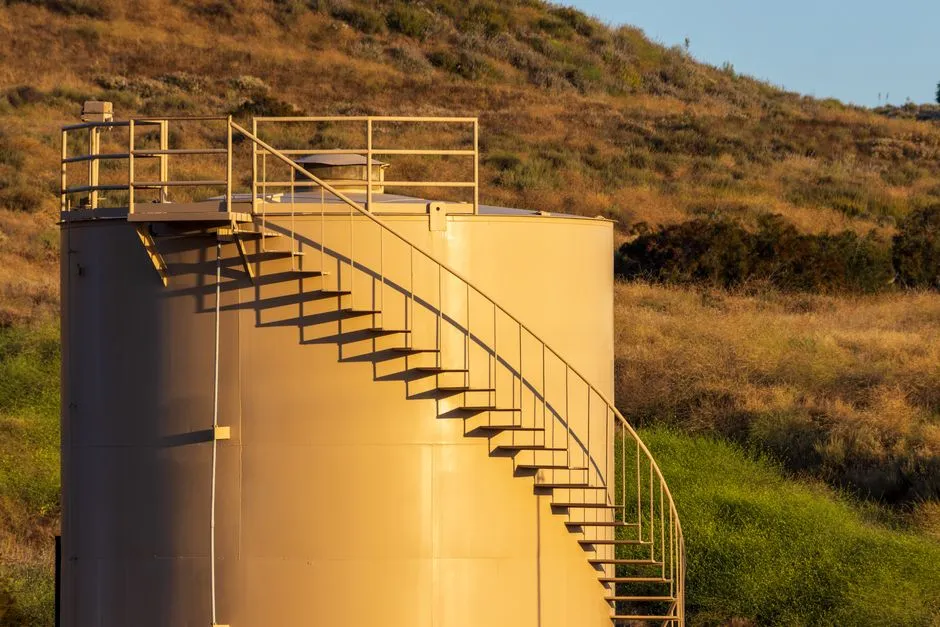
Three architectures dominate 2026 midstream bid lists. The choice is driven by site constraints — plot area, fresh-water cost, and reuse mandate — not by vendor preference.
DAF-led architecture. Lowest capex, suited to sites with cheap fresh water, a large plot, and a discharge-only permit. Relies on DAF + multimedia filter + disinfection; biological treatment is often minimal because hydrocarbons and BOD are removed upstream.
MBR-led architecture. The 2026 retrofit default. Combines a DAF primary block with an MBR membrane bioreactor for secondary treatment, then multimedia filtration for polishing. The 60% footprint reduction versus conventional activated sludge (per MBR module spec) is the decisive lever for brownfield expansions where plot area is fixed. Operational complexity is moderate, and reuse is optional rather than mandatory.
RO-led architecture. Highest capex and opex, but the only credible answer where hydrotest reuse or cooling-tower makeup exceeds ~20% of design flow. The industrial RO polishing system delivers up to 95% permeate recovery, which converts a disposal problem into a fresh-water offset and changes the project's water balance. For commissioning details on the biological block that typically feeds the RO, see the MBR installation and commissioning guide.
| Architecture | Best Fit | Footprint | Reuse Yield | CAPEX Tier |
|---|---|---|---|---|
| DAF-led | Discharge-only, large plot, cheap fresh water | Largest | None (or limited filter backwash recycle) | Lowest |
| MBR-led | Space-constrained brownfield, moderate reuse | ~60% smaller than CAS trains | Optional, modest | Mid |
| RO-led | Water-stressed basin, mandated reuse > 20% of design flow | Mid (RO skids add area) | Up to 95% recovery | Highest |
Decision rule: if hydrotest or cooling-tower makeup exceeds 20% of design flow, RO is defensible. Otherwise, MBR + multimedia filter is the 2026 default for midstream-scale ETP design.
2026 CAPEX Envelope and Footprint for a Midstream-Scale ETP
The honest answer on capex is that midstream ETP pricing is site-specific, but order-of-magnitude bands are useful for project-finance framing. The bands below are budgetary envelopes for a complete turnkey ETP in the 50–500 m³/h design-flow range, not firm bids; final pricing depends on influent matrix, reuse yield, and site conditions.
| Architecture | Indicative CAPEX (USD) | Relative Footprint | Reuse Yield | Notes |
|---|---|---|---|---|
| DAF-led | Low seven-figure | Largest (CAS-equivalent biological basin or no biological) | None / minimal | Suits discharge-only permits with cheap fresh water |
| MBR-led | Mid seven-figure | ~60% smaller than CAS trains (per MBR spec) | Optional, modest | Default 2026 choice for space-constrained sites |
| RO-led | High seven-figure to low eight-figure | Mid; RO skids add area vs MBR alone | Up to 95% recovery (per RO spec) | Justified only when reuse exceeds 20% of design flow |
Two numbers carry the most weight in board-level discussions. First, the MBR 60% footprint reduction is the single largest plot-area lever and often decides whether a brownfield expansion fits inside an existing battery limit. Second, the RO 95% recovery is the single largest operating-cost lever on water-stressed sites, because every percentage point of recovery offsets fresh-water purchase and produced-water disposal. CAPEX decisions that ignore these two numbers tend to be re-scoped within 18 months.
Equipment Selection Checklist for the 2026 Procurement Package
The fastest way to get a clean bid is to issue the enquiry as a complete line-item list, not a generic "midstream ETP" RFQ. Seven equipment items cover the core train, and two supporting items cover the chemistry that specs often forget.
- Screening: rotary mechanical bar screen sized to peak stormwater flow.
- Oil-water separation: API or CPI separator sized to design flow and slug-load criteria.
- DAF: DAF system for oil and FOG removal (4–300 m³/h range), selected to handle 1.5–2× average hourly flow for slug resilience.
- Biological reactor: MBR membrane bioreactor (10–2,000 m³/day) for space-constrained sites; CAS otherwise.
- Multimedia filter: sand + anthracite, sized to 1.25× design flow for backwash headroom.
- RO (reuse only): industrial RO polishing system sized to target reuse volume at 95% recovery.
- Sludge dewatering: plate and frame filter press (1–500 m²) for DAF float and biological WAS.
Two items the spec almost always omits: an automatic chemical dosing system for coagulant, polymer, and pH adjustment, and a chlorine dioxide generator (or equivalent disinfection skid) sized to the disinfected-effluent flow. For pretreatment-limit context relevant to petroleum operations, the petroleum plant pretreatment compliance guide walks through how comparable facilities hit their discharge envelopes.
Frequently Asked Questions
What ETP does Shell need after expanding its midstream facility?
A five-stage train built around a DAF primary block, an MBR secondary block (60% smaller footprint than conventional activated sludge), and RO polishing only if hydrotest or cooling-tower reuse exceeds 20% of design flow. Discharge-only sites can stop at DAF + multimedia filter + disinfection; reuse-driven sites need the full train to hit 95% RO recovery.
Is an MBR or conventional activated sludge better for a midstream ETP?
For 2026 midstream expansions, MBR is the default because it delivers a roughly 60% footprint reduction (per the MBR module specification) and produces a tighter effluent (sub-1 µm membrane cutoff) that downstream RO can handle without excessive fouling. CAS remains acceptable on unconstrained greenfield sites where plot area is not a constraint.
When does a midstream ETP justify RO polishing?
When the design includes hydrotest water reuse, cooling-tower makeup, or any reuse stream exceeding 20% of design flow. The industrial RO polishing system delivers up to 95% recovery, which converts a disposal liability into a fresh-water offset and typically pays back the RO capex premium within 2–4 years on water-stressed midstream hubs.
What are the typical oil & gas discharge limits a 2026 midstream ETP must meet?
Across major U.S. producing jurisdictions, oil & grease limits sit in the low tens of mg/L (commonly 10–29 mg/L monthly average), TSS in the 30–50 mg/L range, and BOD₅ in the 20–50 mg/L range. Produced-water permits and reuse-driven permits trend tighter, so designing to single-digit mg/L O&G and sub-50 mg/L TSS from day one is the defensible 2026 posture.