
How a Midstream Terminal Expansion Changes the Wastewater Picture
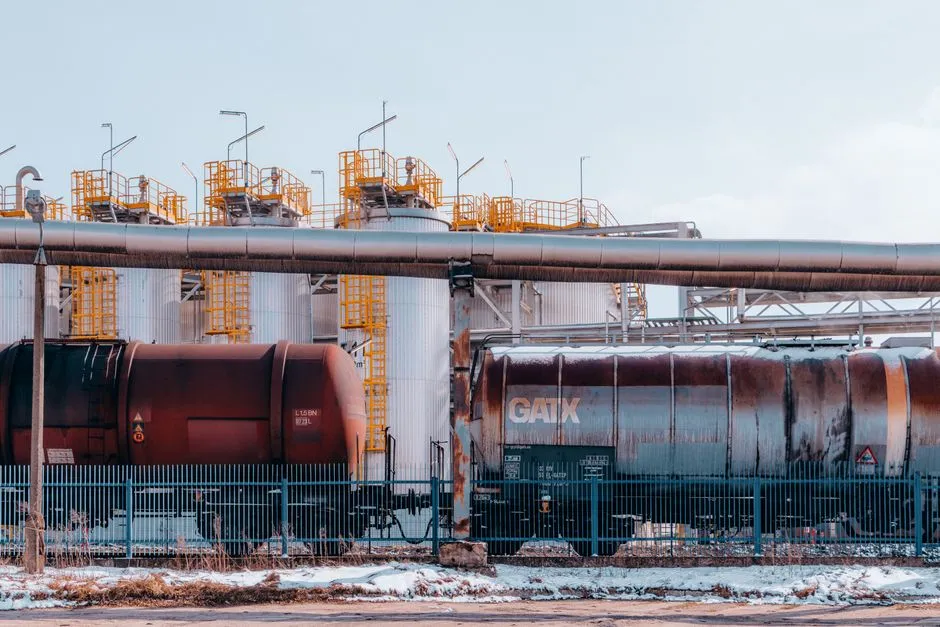
A midstream terminal expansion adds four segregated wastewater streams with distinct load profiles that legacy ETP systems, sized for original operating envelopes, cannot handle. A typical scope includes a new crude stabilization train, additional storage capacity, slug catchers, hydrotested pipelines, and upgraded stormwater management around tank-farm bunds. The resulting wastewater inventory includes: produced water from slug catchers (high O&G, 200–800 mg/L free oil, with entrained gas and sand), oily condensate from stabilization overheads (high COD, 1,000–3,000 mg/L, with dissolved and emulsified hydrocarbons), hydrotest discharge (large volumes, low strength, but chemically sporadic due to biocide and oxygen-scavenger residuals), and oily runoff from tank-farm bunds during high-volume rainfall events.
This inventory requires selecting a specific treatment train and compliance target. New streams do not average together cleanly; for example, hydrotest water can swing pH and add tens of thousands of cubic metres in a single campaign, while slug-catcher produced water can push O&G levels beyond the capacity of an old DAF unit. An ETP reused from a pre-expansion design will either over-shoot on capex or under-shoot on compliance. Saudi Aramco has specified comparable vendor packages for ETP, AGRU, and NGLRU at the Jafurah Gas Plant Phase-II and for the ETP and tank-farm packages at the Jazan refinery (per S2); these project baselines serve as realistic reference points for a buyer writing a Basis of Design.
The Compliance Ceiling: SASO 1465, MEWA, and Aramco Reuse Standards
Every unit operation in the treatment train must be benchmarked against a numeric ceiling determined by the final effluent destination. For sewer discharge to NWC infrastructure, the binding standard is SASO 1465: BOD ≤30 mg/L, TSS ≤100 mg/L, COD ≤250 mg/L, and O&G ≤10 mg/L (per S4). MODON industrial-estate conditions can layer additional limits on top of SASO 1465; site-specific permit review is mandatory, as MODON operators use environmental conditions inside industrial licences to tighten the national floor (per S4).
For midstream expansions that send polished water to cooling-tower makeup, desal make-up lines, or irrigation reuse networks, the relevant target is the Aramco Industrial Reuse Standard. This tighter envelope—typically TDS <500 mg/L, residual oil <2 mg/L, and specific conductivity windows for cooling service—exceeds SASO 1465 sewer limits. The policy driver pushing Aramco-adjacent projects toward reuse is MEWA's National Water Strategy 2030, which targets treating and reusing 70% of generated wastewater (per S4), moving reuse from an optional feature to a bid requirement.
Buyers must also account for ambient wastewater temperature. Saudi summer influents commonly sit at 35–45°C (per S4), which accelerates biological metabolism but increases MBR membrane fouling rates and ammonia stripping losses. Any MBR sizing in this climate must incorporate these thermal factors.
| Target | BOD (mg/L) | TSS (mg/L) | COD (mg/L) | O&G (mg/L) | When it applies |
|---|---|---|---|---|---|
| SASO 1465 sewer discharge | ≤30 | ≤100 | ≤250 | ≤10 | Discharge to NWC sewer |
| MODON industrial estate | Site-specific, often tighter than SASO 1465 | Site-specific | Site-specific | Site-specific | Inside a MODON-licensed plot |
| Aramco Industrial Reuse Standard | ≤5 (typical reuse envelope) | ≤5 | ≤50 | ≤2 | Cooling tower / utility / irrigation reuse |
The Standard Aramco Midstream Treatment Train: DAF → Biological → RO
The treatment train that recurs across Aramco-adjacent midstream scopes is a four-stage flow: dissolved air flotation (DAF) pre-treatment → equalization and pH correction → biological oxidation (MBBR or MBR) → RO polishing. Each stage serves a distinct purpose, and skipping stages compromises compliance or reuse revenue.
Stage 1 is DAF. Micro-bubble flotation strips free and emulsified oil, FOG, and a large fraction of TSS before the water reaches biological processes. Realistic performance on petrochemical feed is 95–98% FOG removal and 80–90% TSS removal (per S3). On midstream feed dominated by condensate and slug-catcher water, DAF is mandatory; sending emulsified oil into an MBBR or MBR collapses the biology and damages the membranes.
Stage 2 is equalization plus pH correction. Hydrotest discharge can swing pH and introduce biocide residuals, while stabilization condensate swings in the opposite direction with acidic carryover. A properly sized EQ basin (typically 8–24 hours of hydraulic retention) flattens these spikes. Stage 3 is the biological step. MBBR is the compact, robust choice for variable loads and discharge-only duty. MBR is the choice when the effluent requires reuse-grade quality; a membrane bioreactor with 0.1 µm PVDF membranes delivers 99% TSS removal and 98% BOD removal, producing the low-SDI feed that an RO stack requires (per S3). For Aramco-adjacent midstream terminals with a reuse mandate, the standard 2026 specification is an MBR membrane bioreactor upstream of RO. Stage 4 is RO polishing to reach the Aramco Industrial Reuse Standard, achieving up to 95% recovery on the right feed.
Buyers often under-spec sludge handling. DAF skimmings and waste biological sludge must be dewatered to >25% dry solids cake for off-site disposal. A plate-and-frame filter press is the typical fit, and any ETP scope that omits this leaves a compliance risk regarding regulated waste streams (per S4).
Head-to-Head: DAF-Only, MBBR+Clarifier, MBR, and MBR+RO
Four configurations cover almost every midstream expansion bid. The comparison below provides the data an EPC buyer can use in a bid clarification response.
| Parameter | DAF only | MBBR + clarifier | MBR | MBR + RO |
|---|---|---|---|---|
| Typical flow range | 5–200 m³/hr (pre-treatment only) | 10–500 m³/day | 10–500 m³/day | 10–500 m³/day (with reuse loop) |
| Effluent BOD | Not compliant alone | ≤30 mg/L | ≤5 mg/L (98% removal) | ≤2 mg/L post-RO |
| Effluent TSS | 30–60 mg/L downstream | ≤100 mg/L | ≤5 mg/L (99% removal) | ≤1 mg/L post-RO |
| FOG removal | 95–98% | Limited polish | Polished to <2 mg/L | <1 mg/L post-RO |
| Footprint | Smallest | Medium | ~60% smaller than CAS (HydropureWater field data, 2026) | Medium + RO room |
| CAPEX ballpark | Low | Low–medium | Medium | Medium–high |
| Aramco reuse suitability | No | No | Partial (irrigation only) | Yes — full reuse envelope |
| 35–45°C climate fit | Good | Good (with ventilation) | Good with membrane derate | Good with RO feed conditioning |
DAF alone serves as pre-treatment, not a full ETP. MBBR + clarifier is the appropriate choice for brownfield upgrades where a sewer connection is available and reuse is not required. MBR is the choice when reuse is on the table and the climate is hot. MBR + RO is the choice for greenfield Aramco midstream scopes with a reuse mandate, which is the default assumption for Aramco-adjacent expansions in 2026 (per S4).
Why the Aramco Pre-Qualified Vendor List Decides the Schedule
Technology selection is often secondary to project schedule. Many Aramco-adjacent projects require equipment from the company's pre-qualified vendor list, a gating step that influences technology choices early in the process (per S3). The schedule impact is significant: a listed local or regional vendor delivers in 3–6 months, while an international vendor outside the list runs 12–18 months (per S3). On a midstream expansion with a fixed commissioning window, this 6–12 month gap determines project success.
Buyers increasingly specify pre-engineered, skid-mounted, or containerised packaged ETPs from listed vendors—factory-assembled, FAT-tested, and shipped for site hookup. Contract conditions typically require design-build scope, performance guarantees on effluent quality and uptime, and an O&M training package (per S3). Auxiliary packages like an automatic chemical dosing system and a rotary mechanical bar screen are usually bundled into the vendor package to maintain the pre-qualification envelope.
Decision Framework: Matching the ETP to Your Midstream Expansion
Four questions define the configuration before vendor discussions begin. Q1—Discharge or reuse? If the goal is cooling tower makeup, desal make-up, or irrigation, the answer is MBR + RO. If the goal is discharge to an NWC sewer with no reuse target, MBBR + clarifier is often sufficient. Q2—What is the O&G load? If condensate and slug-catcher water dominate the feed, DAF pre-treatment is mandatory upstream of any biological stage to ensure FOG removal. Q3—How tight is the plot? On a constrained MODON or Aramco plot, MBR provides a ~60% smaller footprint than conventional activated sludge (HydropureWater field data, 2026) and eliminates the secondary clarifier. Q4—What is the commissioning window? If the window is tight, select a pre-engineered packaged ETP from a pre-qualified vendor rather than a stick-built international supply. The high-efficiency sedimentation tank and MBR + RO combination typically fit within this packaged scope.
The 2026 rule of thumb for an Aramco midstream ETP is: DAF pre-treatment + MBR biological + RO reuse, delivered as a pre-engineered package from a listed vendor, sized for 35–45°C feed, and benchmarked against SASO 1465 sewer limits as the floor and the Aramco Industrial Reuse Standard as the ceiling.
Frequently Asked Questions
What ETP does Saudi Aramco need after expanding its midstream terminal?
The standard configuration is a three-stage train: DAF pre-treatment (95–98% FOG removal, 80–90% TSS removal) feeding an MBR biological stage (98% BOD removal, 99% TSS removal), followed by an RO polishing system targeting the Aramco Industrial Reuse Standard. Vendor packages of this configuration have been specified for sites including the Jafurah Gas Plant Phase-II and the Jazan refinery tank-farm packages.
What are the SASO 1465 effluent limits an ETP must hit for sewer discharge?
SASO 1465 mandates BOD ≤30 mg/L, TSS ≤100 mg/L, COD ≤250 mg/L, and O&G ≤10 mg/L for industrial effluent discharged to the NWC sewer network (per S4). MODON industrial-estate permit conditions often impose additional, tighter limits, making site-specific permit review mandatory before finalizing the ETP datasheet.
Why is MBR preferred over MBBR for an Aramco midstream expansion?
MBR delivers reuse-grade effluent (98% BOD removal, 99% TSS removal)