Why Rio de Janeiro hotels need a purpose-engineered wastewater system in 2026
A Rio de Janeiro hotel or resort in 2026 needs a packaged biological treatment system — typically an MBR or buried A/O packaged STP rated 150–250 L per guest per day — designed to meet CONAMA Resolution 430/2011 effluent limits (BOD ≤ 120 mg/L for release to waterways, or ≤ 40 mg/L for more sensitive receiving waters) and INEA state requirements, with FOG removal upstream and disinfection before discharge or reuse for irrigation.
Compliance is not optional. CONAMA Resolution 430/2011 sets the federal effluent standard, but in Rio de Janeiro state enforcement runs through INEA (Instituto Estadual do Ambiente), which issues the Licença de Instalação and Licença de Operação, and may impose stricter local limits for sites discharging to Guanabara Bay, the lagoons of the Barra region, or the Atlantic coastal strip. When the project connects to the municipal sewer, CEDAE and RIO-ÁGUAS apply their own pre-treatment thresholds before the utility assumes biological treatment downstream. A system that clears federal CONAMA numbers without satisfying the state or municipal add-ons will still fail inspection.
Climate changes the engineering problem. Tropical wastewater arrives at the headworks at 25–30 °C, which accelerates biological kinetics — nitrification rates roughly double between 15 °C and 30 °C — but it also drives sulfide generation in collection lines, intensifies odor complaints from neighboring lots, and increases FOG emulsification in kitchen drains. Carnival, New Year, and the December–March high season push occupancy to 110–130% of design, sometimes higher for event-driven properties. The Tripadvisor and Expedia listings for Rio de Janeiro state — all-inclusive properties from USD 124/night and ten top-rated resorts on the platform — confirm that the hospitality market is active enough that both greenfield construction and retrofit work will continue through 2026 (Expedia, 2025; Tripadvisor, 2025).
Search the same question today and you get booking portals and travel content, not engineering answers. This guide fills that gap with the specification numbers, the regulatory thresholds, and the CAPEX/OPEX benchmarks a Rio hotel GM, developer, or project engineer actually needs to procure correctly. The regional cost reference used throughout is the Rio de Janeiro wastewater treatment plant cost benchmark for 2026.
Hotel wastewater characteristics: flow, loading, and what makes it different
Tropical resort wastewater is stronger per guest than temperate-climate design manuals suggest, and Brazilian practice already accounts for that. The conservative design default is 200 L per guest per day, with a working envelope of 150–250 L/person/day depending on whether the property is a business hotel (lower end) or a beachfront all-inclusive with pools, spas, and multiple F&B outlets (upper end). Per-guest organic loading runs 40–60 g BOD/person/day and 30–50 g TSS/person/day; kitchens contribute an additional 10–20 g FOG/person/day before any grease trap credit is taken. These are the numbers to use when sizing a packaged plant for a 150-, 300-, or 500-room property, not the lower 80–120 L and 30 g BOD figures carried over from European hotel design guides.
Peak factors determine whether the equalization basin and the biological stage are sized correctly. Daytime resort loading from pool decks, beach clubs, and restaurants routinely hits 2.5–3.0× the daily average; banquet and event peaks can reach 4.0×. A buried A/O packaged plant or an MBR selected on average flow alone will wash out during a Saturday-night wedding or a Carnival-week check-in surge. Size the biological stage and the membrane tank on peak-hour flow, not on average daily flow, and provide at least 4–6 hours of equalization upstream.
Coastal sites add two parameters that inland hotel design manuals ignore. Lift stations and beachfront collections can see chloride intrusion of 1,000–2,000 mg/L during king-tide events, which requires corrosion-resistant materials (FRP or coated steel) in the headworks and a salinity-tolerant biomass acclimation protocol in the biological stage. Wastewater temperature of 25–32 °C is favorable for nitrification kinetics but accelerates sulfide generation in the collection network — budget for enclosed headworks, forced ventilation, and either chemical oxidation or biological scrubbing for odor control on any hotel near residential lots.
| Parameter | Design value (tropical resort) | Notes |
|---|---|---|
| Per-guest flow | 150–250 L/person/day (200 L default) | Brazilian convention; European 80–120 L underestimates |
| BOD load | 40–60 g/person/day | Lower for business hotels, upper for all-inclusive |
| TSS load | 30–50 g/person/day | Includes pool filter backwash contribution |
| FOG load (kitchen) | 10–20 g/person/day | Pre-grease-trap; FOG strip via DAF |
| Peak factor — daytime | 2.5–3.0× | Pool, F&B, beach club |
| Peak factor — events | 4.0× | Banquets, conferences, Carnival week |
| Wastewater temperature | 25–32 °C | Favors nitrification, raises sulfide risk |
| Chloride intrusion (coastal) | 1,000–2,000 mg/L | Requires FRP / coated steel in headworks |
Brazilian compliance framework: CONAMA 430 and INEA for hotel effluent

CONAMA Resolution 430/2011 (which amended and supplemented 357/2005) is the federal effluent standard every Brazilian discharger must clear. The headline limit is BOD ≤ 120 mg/L for release to waterways, with tighter thresholds — typically BOD ≤ 40 mg/L — applied to discharges into Class 1 and Class 2 receiving waters such as the more sensitive sections of Guanabara Bay and its tributaries. COD is not a stand-alone federal limit but is operationally targeted at 1.5–2× the BOD number to keep treatment performance inside its envelope. TSS, pH 5–9, oils and greases, and fecal coliforms (set per receiving-water class, with thermotolerant coliforms typically ≤ 1,000 CFU/100 mL for less-sensitive waters) round out the standard parameter set.
INEA's role is licensing and enforcement, not setting federal numbers. The institute issues the Licença de Instalação before construction and the Licença de Operação before commissioning, and on projects near sensitive receiving waters it layers site-specific effluent conditions on top of the federal floor. For hotels in the Guanabara Bay watershed, near the Rodrigo de Freitas lagoon, or along the Atlantic-front beaches, expect a tighter coliform target and a more frequent monitoring cadence than the federal default. When a hotel cannot meet a tight receiving-water limit directly, the practical path is reuse — treating to a quality that supports on-site irrigation or toilet flushing and eliminating the surface-water discharge point.
Two different compliance paths exist for a Rio hotel. The first is discharge to the municipal sewer (rede coletora) administered by CEDAE and RIO-ÁGUAS, which is pre-treatment only — typically BOD ≤ 300 mg/L, TSS ≤ 200 mg/L, FOG ≤ 50 mg/L, pH 6–10. The utility takes the biological load downstream. The second is on-site treatment to CONAMA/INEA surface-water or reuse standards. The reuse route references CONAMA and NBR 13969 for non-potable reuse and typically targets BOD ≤ 20 mg/L and TSS ≤ 5 mg/L for unrestricted irrigation or toilet flushing. MBR technology has become the workhorse for reuse-grade hotel effluent globally; the worldwide MBR market sits at USD 3.4–5.4B in 2026 with a 5.3–7.75% CAGR, per HydropureWater's MBR market analysis, which signals that membrane systems are no longer a premium option but a mainstream specification for hospitality projects aiming at reuse or sensitive-water discharge.
| Parameter | CONAMA 430 (standard surface water) | CONAMA/INEA (sensitive waters) | Reuse (CONAMA + NBR 13969) | CEDAE/RIO-ÁGUAS sewer pre-treatment |
|---|---|---|---|---|
| BOD | ≤ 120 mg/L | ≤ 40 mg/L | ≤ 20 mg/L | ≤ 300 mg/L |
| COD | Operational ≤ 1.5–2× BOD | Operational ≤ 1.5–2× BOD | ≤ 45 mg/L (typical reuse target) | Not typically set |
| TSS | ≤ 100 mg/L (typical) | ≤ 30 mg/L (typical) | ≤ 5 mg/L | ≤ 200 mg/L |
| FOG | ≤ 50 mg/L (oils & greases) | ≤ 30 mg/L | Not typically set | ≤ 50 mg/L |
| pH | 5–9 | 5–9 | 5–9 | 6–10 |
| Thermotolerant coliforms | Per receiving-water class (≤ 1,000 CFU/100 mL typical) | Site-specific, often tighter | ≤ 200 CFU/100 mL (unrestricted reuse) | Not typically set |
Choosing the right system: packaged STP vs MBR vs containerized plant
The buying decision for a Rio hotel comes down to flow, site constraints, and whether on-site reuse is part of the project scope. Three technology classes cover the hospitality segment, and the right one depends on what the engineer is trying to optimize for.
A buried A/O packaged STP (1–80 m³/h capacity range, typically the WSZ series) is the right call for small-to-mid urban hotels under 200 rooms, especially where the site has limited surface area and landscaping must be preserved. Sub-grade install removes the equipment from the architectural sightline, requires no full-time operator for plants under 50 m³/h, and handles BOD/COD to CONAMA 430 compliance using anaerobic/aerobic biological contact oxidation. The trade-off is effluent quality: A/O packaged plants typically deliver BOD in the 20–40 mg/L range and TSS around 20–30 mg/L — fine for discharge to a municipal sewer or a non-sensitive receiving water, but not tight enough for unrestricted reuse or for sensitive-water sites.
An MBR membrane bioreactor system (10–2,000 m³/day) is the right call for any resort pursuing on-site water reuse, any site discharging to Guanabara Bay or other sensitive waters, and any project with a tight footprint. PVDF submerged membranes at 0.1–0.4 μm pore size deliver near-reuse effluent (BOD ≤ 5 mg/L, TSS ≤ 1 mg/L, near-zero coliforms after disinfection), and the membrane tank replaces the clarifier, cutting the required footprint by roughly 60% versus a conventional activated-sludge plant of equal capacity. The trade-off is energy and operator skill: MBR runs at 0.6–0.9 kWh/m³ versus 0.3–0.5 kWh/m³ for a buried A/O, and membrane cleaning-in-place must be on the maintenance schedule.
A containerized or skid-mounted plant is the right call for remote beach resorts, pilot-phase projects, or any site where factory testing, fast deployment, and trailer-mountability matter more than buried aesthetics. Containerized plants integrate screening, biology, membrane or settling, and disinfection in a single ISO frame that arrives tested and is commissioned in days rather than months. The trade-off is shipping cost and the visual footprint, which makes containerized plants a poor fit for urban resort sites where burial or enclosure is the architectural preference.
One item that applies regardless of the biological stage: any hotel with significant kitchen, laundry, or spa flow needs a dissolved air flotation (DAF) pre-treatment unit upstream. DAF strips emulsified FOG, lint, and colloids before they reach the biology, protects the membranes in an MBR, and prevents the biomass washout events that lead to failed inspections. DAF units in the 4–300 m³/h range cover the full hospitality scale across roughly 13 standard models.
Decision rule of thumb: under 80 m³/h, no reuse, urban site → buried A/O packaged plant; over 80 m³/h or any reuse goal → MBR; remote or temporary deployment → containerized; significant FOG load → add DAF regardless of biological stage.
| Criterion | Buried A/O packaged STP (WSZ) | MBR membrane bioreactor | Containerized / skid-mounted plant |
|---|---|---|---|
| Capacity envelope | 1–80 m³/h | 10–2,000 m³/day | 5–500 m³/day (per ISO frame) |
| Effluent BOD | 20–40 mg/L | ≤ 5 mg/L | 10–30 mg/L (membrane option tighter) |
| Effluent TSS | 20–30 mg/L | ≤ 1 mg/L | 5–20 mg/L |
| Reuse-ready | No (irrigation only, restricted) | Yes (unrestricted with disinfection) | Yes, if membrane-equipped |
| Footprint vs ASP | ~40% smaller | ~60% smaller | Variable; minimal site prep |
| Energy (kWh/m³) | 0.3–0.5 | 0.6–0.9 | 0.4–0.7 |
| Operator requirement | Minimal under 50 m³/h | Skilled (membrane CIP) | Minimal (factory controls) |
| Best fit | Urban hotel, no reuse, sewer discharge | Resort, reuse goal, sensitive water | Remote site, pilot, fast deployment |
Recommended process train for a 2026 Rio resort
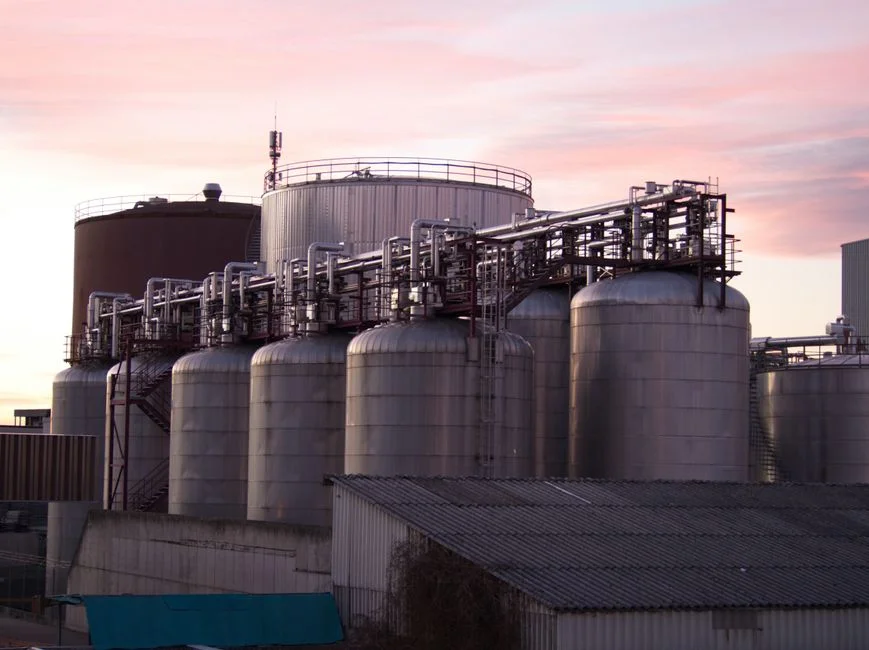
The defensible specification for a 200–500-room Rio resort in 2026 runs through six stages. The exact equipment models scale with flow, but the process logic does not change.
Stage 1 — Screening. A rotary mechanical bar screen handles hair, rags, plastics, and the leaf and sand load from pool decks and beach entryways. For mid-to-large resorts, a rotary mechanical bar screen (GX series) with 3–5 mm aperture is the standard.
Stage 2 — FOG and lint removal. A dissolved air flotation (DAF) pre-treatment unit sized at 10–20% of average daily flow strips emulsified FOG from kitchen drains, lint from laundry, and colloidal solids before they overload the biology. A surface skimmer handles the floated layer; the underflow goes forward to the biological stage.
Stage 3 — Biological treatment. For resorts pursuing reuse or discharging to sensitive waters, the answer is an MBR module with flat-sheet PVDF membranes at 0.1 μm, 32–135 m³/day per module. For standard discharge to a municipal sewer, a buried A/O packaged sewage treatment plant in the 1–80 m³/h range handles the load with no operator requirement.
Stage 4 — Disinfection. A chlorine dioxide generator (50–20,000 g/h output range) provides reliable microbial control at the coliform levels CONAMA and INEA require, with a broader pH tolerance than chlorine and no THM formation concern at typical hotel effluent temperatures.
Stage 5 — Sludge handling. A plate and frame filter press (1–500 m² filtration area) dewaters wasted biological solids to 25–35% dry solids for off-site disposal. A chemical dosing skid ahead of the press optimizes polymer use, which is the single largest variable in cake dryness.
Stage 6 — Reuse polish (optional). For projects sending treated effluent to cooling towers, boiler make-up, or unrestricted irrigation, a multi-media filter followed by an RO unit drops conductivity and residual organics to fit the end use.
CAPEX, OPEX, and ROI benchmarks for Rio hotel STPs
Rio de Janeiro hotel STPs span an order of magnitude in CAPEX depending on flow, technology class, and reuse scope. Compact skid systems for small properties start in the low six figures USD. Mid-range buried A/O packaged plants for 150–300-room urban hotels typically land in the high six to low seven figures USD installed. Full resort-scale MBR plants with reuse polishing and sludge handling run into USD millions. The detailed 2026 regional reference is the Rio de Janeiro wastewater treatment plant cost benchmark for 2026.
OPEX lines that scale with the equipment choice: electricity is the largest single cost for an MBR because membrane aeration runs continuously, while a buried A/O plant spends most of its energy budget on intermittent aeration. Membrane replacement is the second MBR cost line, with PVDF modules typically rated for 5–8 years of service before flux decline forces replacement. Chemical dosing for the DAF polymer, ClO₂ precursor, and CIP cleaners is the third. Sludge hauling is the fourth and the most variable — a well-run filter press cuts this by 70–80% versus undigested liquid sludge.
Reuse ROI is the offset that justifies the membrane premium on water-scarce coastal sites. A 200-room resort using treated effluent for landscape irrigation and toilet flushing can offset 30–60% of municipal water purchases, depending on the irrigation area and the reuse end uses. In the coastal Rio context, where water rates are rising and reuse incentives exist for hospitality properties, the typical payback for an MBR over a conventional activated-sludge plant is 3–6 years.
| Cost / performance line | Buried A/O packaged STP | MBR membrane bioreactor | Containerized plant |
|---|---|---|---|
| CAPEX range (Rio, 2026) | Low-to-mid six figures USD | Mid-six to low-seven figures USD | Low-to-mid six figures USD |
| Energy use | 0.3–0.5 kWh/m³ | 0.6–0.9 kWh/m³ | 0.4–0.7 kWh/m³ |
| Membrane replacement | N/A | Every 5–8 years | Every 5–8 years (if equipped) |
| Reuse offset (200-room resort) | 10–20% of water purchases | 30–60% of water purchases | 20–40% (membrane-equipped) |
| Payback vs sewer-only discharge | N/A (baseline) | 3–6 years (reuse credit) | 2–4 years (fast deployment credit) |
Procurement and commissioning checklist for 2026

The permit sequence is the first place projects slip. For a Rio hotel, the order is environmental feasibility study (EIA/RIMA or simplified study depending on size) → INEA Licença de Instalação → detailed engineering design → procurement and factory build → Licença de Operação before commissioning. Skipping ahead on the LI/LO sequence is the most common reason new hotel STPs sit idle for months after construction finishes.
Factory acceptance testing matters. The MBR installation and commissioning guide walks through the FAT protocol step by step, but the principle applies to any packaged plant: witness-test the membrane modules, control panels, and dosing skids at the factory before shipment. The site acceptance test then verifies integration — electrical, instrumentation, and the PLC-to-SCADA handshake — under real load. Skipping FAT is a false economy; field fixes are ten times the cost of factory fixes.
Operator training has to be on the project plan from day one, not added at handover. PLC interface, membrane cleaning-in-place cycle, sludge press operation, and the alarm response tree should each have a written procedure and a hands-on session. For hotels under 100 rooms, an O&M service contract typically costs less than hiring a dedicated plant operator in Rio, and it shifts the membrane-replacement liability to the service provider. For larger resorts, a hybrid — one in-house chief operator plus a service contract for membrane CIP and annual overhaul — is the standard structure.
Spare parts: budget for a one-year commissioning spares kit at handover. Membrane modules, dosing pump heads, ClO₂ precursor chemicals, bar screen rake teeth, and the standard set of instrumentation probes and gaskets. Hotels that skip the kit pay for it later in 3 a.m. service calls.
Frequently Asked Questions
What size wastewater treatment system does a 200-room Rio de Janeiro hotel need in 2026?
A 200-room resort at the Brazilian design default of 200 L per guest per day and 1.8 guests per occupied room needs roughly 72 m³/day average, with daytime peaks of 180–216 m³/day. A 100–150 m³/day MBR or a 5–8 m³/h buried A/O packaged plant covers the load. Sizing must be on peak hour, not daily average, to handle Carnival-week occupancy surges and banquet peaks.
What are the CONAMA 430 effluent limits for a hotel in Rio de Janeiro?
CONAMA Resolution 430/2011 sets BOD ≤ 120 mg/L for standard surface-water discharge and BOD ≤ 40 mg/L for sensitive receiving waters. TSS, pH 5–9, oils and greases, and thermotolerant coliforms per receiving-water class round out the parameter set. INEA may impose site-specific tighter limits for properties in the Guanabara Bay watershed or near the coastal lagoons. For reuse under NBR 13969, BOD ≤ 20 mg/L and TSS ≤ 5 mg/L are the typical targets.
Does a hotel in Rio need an MBR or a conventional packaged STP?
It depends on the discharge point and whether reuse is in scope. A small-to-mid urban hotel under 200 rooms with sewer discharge to CEDAE/RIO-ÁGUAS can use a buried A/O packaged plant — the utility takes the biological load downstream. A resort pursuing on-site reuse for irrigation or toilet flushing, or any site discharging to a sensitive receiving water, should specify an MBR to meet the tighter BOD, TSS, and coliform targets in a single compact package.
Related Equipment
- MBR membrane bioreactor system — specifications, capacity range, and technical data