Why Vienna Hotels Need a Purpose-Built Treatment Train in 2026
A Vienna hotel or resort in 2026 needs a packaged wastewater train built around an MBR (membrane bioreactor) system or compact SBR preceded by a grease interceptor and fine screening, sized for 200–300 L per guest-night and 50–80 g per guest-night of FOG. Effluent must meet Austrian AEV/1H limits (BOD₅ ≤ 25 mg/L, COD ≤ 90 mg/L, TSS ≤ 30 mg/L) and the EU Urban Waste Water Directive 91/271/EEC, while supporting EU Ecolabel water-footprint criteria for Green Globe recertification.
Two Viennese reference points set the bar. Hotel Sans Souci Wien, Green Globe-recertified since 2017, builds its sustainability reporting around waste and water minimization — every department is measured, and linen-reuse, plastic-free F&B, and BMS-driven HVAC all sit inside that same audit envelope (Green Globe, 2025). Boutiquehotel Stadthalle, holder of the EU Ecolabel and the world's first zero-energy-balance city hotel (2002 retrofit), added rainwater harvesting for toilet flushing and garden irrigation, but that reuse model only becomes defensible when the upstream effluent is controlled to AEV-grade clarity (EU Cluster Collaboration, 2025).
The 2026 shift is regulatory rather than aspirational. Wien Kanal's Indirekteinleiterverordnung now tightens enforcement on FOG, ammonia, and phosphorus from commercial kitchens, so a passive septic tank or stand-alone grease trap is no longer defensible. Any 4–5 star urban property in districts 1–9 or in a Wienerwald-adjacent catchment must show a designed pretreatment-plus-biological train with documented log sheets — the same auditable records EU Ecolabel and Green Globe auditors now request as part of recertification.
Influent Characteristics of a Vienna Hotel or Resort
Hotel wastewater loadings vary sharply by star rating, F&B intensity, and on-site laundry. A 4-star urban Vienna property typically generates 200–300 L per guest-night; a resort or spa property with pools and hammams climbs to 350–500 L per guest-night, comparable to the EU Ecolabel benchmarks reported for Boutiquehotel Stadthalle (EU Cluster Collaboration, 2025). BOD₅ settles at 30–60 g per guest-night, with sharp peaks at breakfast (~07:00–09:00) and dinner service (~18:30–21:30) — the design basis any biological stage must be sized against.
Kitchen FOG runs 50–80 g per guest-night, with surge loads during banquet events where a single 200-cover function can discharge more FOG in two hours than a normal day's lunch service. Hotel Sans Souci Wien's plastic-free breakfast and glass-straw F&B programme (Green Globe, 2025) reduces packaging waste and single-use plastics but does not touch cooking-oil FOG, which still requires engineered removal upstream of any biological stage. Laundry typically contributes 15–25% of total flow but a disproportionate share of COD and surfactant load; Sans Souci's optional linen-change programme lowers frequency but does not eliminate the stream. Total phosphorus from cleaning products and personal care — shampoos, spa salts — is the parameter that triggers biological or chemical polishing in the AEV/1H envelope.
| Parameter | 4-star urban hotel | Resort / spa property | Design implication |
|---|---|---|---|
| Flow (L per guest-night) | 200–300 | 350–500 | Hydraulic load on equalization |
| BOD₅ (g per guest-night) | 30–60 | 50–80 | Biological stage sizing |
| FOG (g per guest-night) | 50–80 | 70–120 | Grease trap + DAF sizing |
| COD load (g per guest-night) | 80–150 | 120–200 | Surfactant tolerance of MBR |
| Total phosphorus (mg/L) | 6–12 | 8–15 | Chemical polishing trigger |
| Peak factor (banquet) | 2.5–3.5× | 2.0–3.0× | Equalization tank volume |
Austrian and EU Discharge Limits a 2026 Hotel Must Meet
Every equipment recommendation downstream must be anchored to a specific regulatory number. The binding domestic/community discharge envelope in Austria is the Abwasseremissionsverordnung AEV/1H for municipal sewer discharge, with BOD₅ ≤ 25 mg/L, COD ≤ 90 mg/L, TSS ≤ 30 mg/L, total phosphorus ≤ 2 mg/L, and ammonia-N bounded by temperature and receiving-water sensitivity (BMK, AEV/1H consolidated text). The EU Urban Waste Water Directive 91/271/EEC sets the European floor and is enforced through Austrian federal law; properties whose sewer ultimately drains to a sensitive alpine catchment in the Vienna Woods see tighter phosphorus triggers, sometimes ≤ 1 mg/L.
Where the hotel reuses treated effluent for toilet flush or irrigation — as Boutiquehotel Stadthalle does with rainwater and greywater (EU Cluster Collaboration, 2025) — the EU Drinking Water Directive 98/83/EC and ÖNORM B 2572 govern the reuse loop's microbial quality, typically E. coli < 10 CFU/100 mL for toilet flush and < 200 CFU/100 mL for restricted irrigation. Wien Kanal's Indirekteinleiterverordnung is the gatekeeper: pretreated wastewater must clear oil/grease and gross solids before the public sewer, which is why a stand-alone biological system without FOG pretreatment is non-compliant from day one.
| Parameter | AEV/1H limit (sewer) | EU UWWTD floor | Reuse (toilet flush / irrigation) |
|---|---|---|---|
| BOD₅ | ≤ 25 mg/L | ≤ 25 mg/L | ≤ 10 mg/L recommended |
| COD | ≤ 90 mg/L | ≤ 125 mg/L | ≤ 60 mg/L recommended |
| TSS | ≤ 30 mg/L | ≤ 35 mg/L (under 10,000 PE: 60) | ≤ 10 mg/L for drip irrigation |
| Total phosphorus | ≤ 2 mg/L (sensitive: ≤ 1 mg/L) | ≤ 2 mg/L (sensitive: ≤ 1 mg/L) | ≤ 2 mg/L |
| Ammonia-N | ≤ 5 mg/L (T > 12 °C) | Site-specific | ≤ 5 mg/L |
| FOG (sewer inlet) | ≤ 50 mg/L (Wien Kanal) | — | — |
Process Train Options: Grease Trap + DAF + MBR vs. SBR vs. Constructed Wetland
Four process trains are technically defensible for a Vienna hotel; only two meet the urban site envelope, the AEV/1H numbers, and the EU Ecolabel audit trail in parallel.
Option A — Grease interceptor + DAF + MBR (the urban benchmark): A buried WSZ underground packaged sewage treatment plant handles 1–80 m³/h of equalized flow, preceded by a dissolved air flotation system for FOG and TSS polishing. The DAF stage routinely delivers FOG removal > 90% and TSS removal of 60–95% (HydropureWater field data, 2026), which protects the downstream MBR. The DF-series flat sheet MBR modules then produce a < 1 µm filtrate with stable BOD₅ < 5 mg/L, TSS < 1 mg/L, and consistent nitrification — comfortably inside AEV/1H even during banquet peaks.
Option B — Grease interceptor + SBR: A sequencing batch reactor in a single tank is smaller-footprint than continuous-flow activated sludge and suits 50–200 m³/day resort properties with steady hydraulic loads. The limitation is effluent stability under the 2.5–3.5× banquet surge factors seen in urban 4-star hotels, where fill-react-decant cycles can leak suspended solids if the equalization upstream is undersized.
Option C — Constructed wetland / subsurface flow: Only viable for suburban or Alpine resort sites with available land. Compatible with EU Ecolabel water-footprint criteria but disqualified in central Vienna where the courtyard or basement footprint cannot accommodate a 30–60 m² wetland cell.
Option D — Direct biological with no FOG pretreatment: Not defensible. Kitchen FOG shock loads collapse nitrification, breach AEV/1H ammonia limits, and generate the very FOG spikes that the Indirekteinleiterverordnung is now actively enforcing. Both Sans Souci Wien and Boutiquehotel Stadthalle produce the documented FOG, TSS, and BOD₅ data that EU Ecolabel and Green Globe auditors require; only Options A and B can deliver that audit trail in real time.
| Train | Footprint (m² per 10 m³/day) | FOG removal | BOD₅ effluent | Surge tolerance | Vienna urban fit |
|---|---|---|---|---|---|
| Grease trap + DAF + MBR (A) | 4–6 | > 90% | < 5 mg/L | High | Yes |
| Grease trap + SBR (B) | 6–9 | 70–85% | < 15 mg/L | Moderate | Yes (with buffer) |
| Constructed wetland (C) | 60–100 | 60–75% | < 20 mg/L | Low | No |
| Direct biological (D) | 3–5 | < 30% | Breaches AEV/1H | Very low | No |
Footprint, Noise, and Aesthetics for a Historic Vienna Site
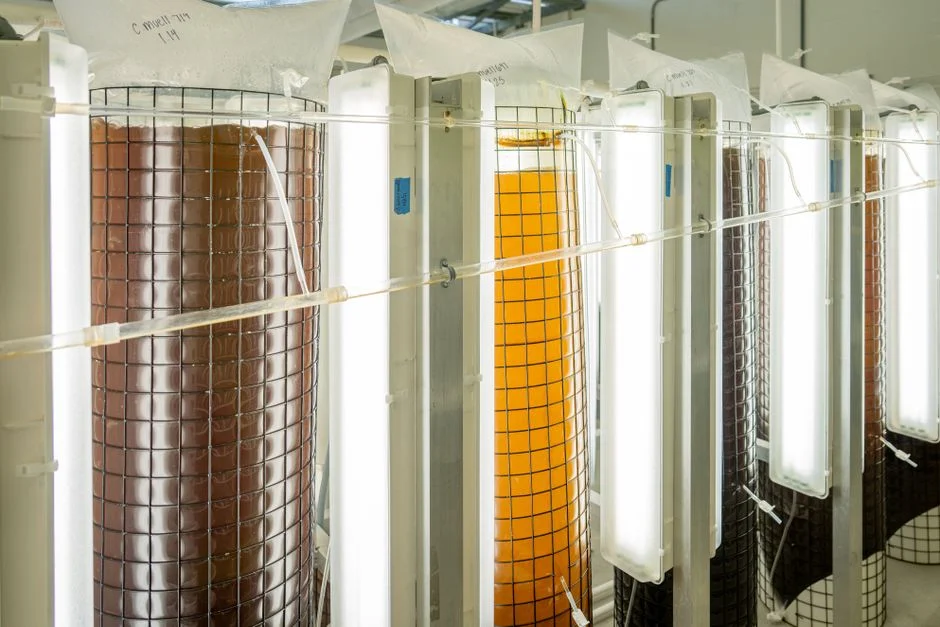
The single most common Vienna-specific objection to packaged treatment is that the system must fit a basement, courtyard, or service lane without disturbing guests or listed-building façades. The WSZ underground packaged plant is fully buried with landscaping above, so the courtyard sub-basement in any 1st–9th district property can host a 10 m³/day unit inside roughly 4–6 m² of plan area. The MBR membrane bioreactor system with DF-series flat sheet modules occupies 60% less area than conventional activated sludge with a secondary clarifier (HydropureWater field data, 2026), because the membrane cassette replaces the clarifier and most of the return-sludge pumping.
Noise and odour are controlled by buried installation plus enclosed aeration with activated-carbon scrubbing, which keeps both inside Vienna's TA Luft and TA Lärm residential-buffer expectations — typically < 35 dB(A) at the property line and < 500 GE/m³ odour. Visible tops of packaged systems are an underused design opportunity: Boutiquehotel Stadthalle's lavender roof and green vine insulation (EU Cluster Collaboration, 2025) shows how a buried plant's access hatches and vent stacks can disappear under a planted feature. Existing 1st–9th district hotels typically retrofit into the courtyard sub-basement over 2–4 weeks with a packaged skid design, avoiding the 8–12 week disruption of a poured-concrete conventional plant.
CAPEX, OPEX, and Payback for a Vienna Hotel Installation
For a 100-room urban hotel, a packaged WSZ + DAF + DF-MBR system lands in the EUR 180,000–420,000 installed CAPEX band (HydropureWater engineering estimates, 2026), with OPEX running EUR 0.40–0.90 per m³ treated — covering energy, chemicals, and membrane replacement amortized over 8–10 years. MBR aeration drives 1.2–1.8 kWh per m³, but pairing the plant with the building's existing solar thermal or PV — analogous to Stadthalle's 130 m² solar and 80 m² PV array (EU Cluster Collaboration, 2025) — drops net energy below 0.5 kWh per m³ on an annual basis.
Revenue-side benefits matter. EU Ecolabel and Green Globe recertification are linked to a 6–12% RevPAR uplift on certified-segment bookings (Green Globe case data, 2025), and FOG recovered by the DAF can be sold to rendering at EUR 2,000–6,000 per year for a 200-room property. The combined payback window is 4–7 years when certification uplift and FOG recovery are credited against CAPEX; longer for a property not pursuing either certification.
| Cost line | 100-room urban hotel | 200-room resort | Notes |
|---|---|---|---|
| CAPEX (installed) | EUR 180,000–420,000 | EUR 320,000–680,000 | Skid + civil + commissioning |
| OPEX (per m³) | EUR 0.40–0.90 | EUR 0.35–0.80 | Energy, chemicals, membranes |
| Energy (kWh per m³) | 1.2–1.8 | 1.0–1.5 | With PV offset: < 0.5 |
| FOG recovery revenue (EUR/yr) | 1,200–3,000 | 2,000–6,000 | Rendering sale |
| Payback (with certification) | 4–7 years | 4–6 years | RevPAR uplift credited |
5-Step Selection Checklist for a 2026 Vienna Hotel Project
Step 1 — Pull baseline data. Request the last 12 months of water and FOG consumption from utility bills to confirm design flow and FOG loading against the 200–300 L per guest-night and 50–80 g FOG per guest-night benchmarks.
Step 2 — Lock the regulatory envelope. Request an AEV/1H compliance letter from Wien Kanal and confirm whether the site discharges to a sensitive catchment (Wienerwald) requiring phosphorus polishing to ≤ 1 mg/L.
Step 3 — Shortlist packaged trains. Evaluate packaged MBR + DAF trains (WSZ + DAF + DF modules) for footprint, then confirm buried-installation feasibility with a structural survey of the courtyard or basement slab — typical slab loading is 5–8 kN/m² for a full WSZ unit.
Step 4 — Validate certification compatibility. Ask the supplier for documented FOG recovery, TSS, and BOD₅ logs from a comparable Viennese or Alpine installation — Sans Souci Wien and Boutiquehotel Stadthalle both produce that data (Green Globe, 2025; EU Cluster Collaboration, 2025).
Step 5 — Lock OPEX service first. Sign a service contract covering membrane cleaning every 6–12 months and sludge dewatering via a plate-and-frame press (such as the plate-frame filter press) with an automatic chemical dosing system for coagulant feed, before signing the CAPEX contract. For a deeper equipment walkthrough, see our MBR installation and commissioning guide; for a non-EU comparator, the Brisbane hotel wastewater system guide shows the same packaged-train logic in a different regulatory envelope.
Frequently Asked Questions
What flow rate should a Vienna hotel wastewater system be sized for?
Size for 200–300 L per guest-night in a 4-star urban Vienna property, and 350–500 L per guest-night for a resort or spa with pools — figures consistent with EU Ecolabel benchmarks reported for Boutiquehotel Stadthalle (EU Cluster Collaboration, 2025).
What are the AEV/1H discharge limits a hotel must meet in 2026?
Austrian AEV/1H requires BOD₅ ≤ 25 mg/L, COD ≤ 90 mg/L, TSS ≤ 30 mg/L, total phosphorus ≤ 2 mg/L (≤ 1 mg/L in sensitive alpine catchments), and ammonia-N ≤ 5 mg/L at T > 12 °C; FOG at the sewer inlet must stay ≤ 50 mg/L under Wien Kanal rules.
How much footprint does an MBR save versus conventional activated sludge?
A DF-series flat sheet MBR occupies roughly 60% less plan area than conventional activated sludge with a secondary clarifier (HydropureWater field data, 2026), because the membrane cassette replaces both the clarifier and most return-sludge infrastructure.
How does the EU Ecolabel interact with Wien Kanal indirect-discharge rules?
EU Ecolabel water-footprint criteria require auditable FOG, TSS, and BOD₅ data; the same logs satisfy Wien Kanal's Indirekteinleiterverordnung, so a packaged MBR + DAF train delivers both compliance streams in one record set — the model Boutiquehotel Stadthalle uses (EU Cluster Collaboration, 2025).
Should a hotel reuse loop use chlorine dioxide or UV for disinfection?
For toilet-flush and irrigation reuse, UV (30–40 mJ/cm²) handles the clarified MBR filtrate without forming trihalomethanes; chlorine dioxide (0.5–1.0 mg/L residual) is preferred when the reuse line has a long retention time or biofilm risk in the storage tank, common in older Vienna retrofits.